 Preview
 Send
Send Share
Share
 Details

 Download
 Similars
 X-Ray
X-Ray Diaporama
Colombo


 Read More
Hand Made Oil Reproduction
Hand-painted oil on canvas in your size and frame, made to order by our artists. ( Buy Print Buy Image)




P118B $10

P118H $10

P118W $10

P438Z $10

P508JH $12

P508YH $12

P805H $10

P805Z $10

P919BZ $10

P919G $10

P919XJ $10

P959ZH $10

P968JZ $12

W106C $8

W218G $10

W218JH $8

W218Y $10

W307PJ $10

W316G $10

W316PJ $8

W316Y $10

W398PJ $8

W4111J $10

W500HY $15

W500JH $15

W692G $12

W849H $8

W940BG $15

W953PJ $8




Pick from our preset sizes that match the artwork's original proportions.

You may enter your own dimensions to fit a specific frame or space. If your selected size does not match the original image's proportions, we will either crop the artwork or extend the painting with additional hand-painted elements. A digital mockup will be sent for your approval before production begins.
Please note that the on-screen preview does not reflect the actual cropping or extension. Only the mockup will accurately show the final composition.
While custom sizes are available, we recommend selecting a dimension from the predefined list to preserve the original proportions.
After order, ArtsDot.com team will email client for instructions and provide a mockup preview
Worldwide Delivery () in 3/4 weeks instead of standard 5 weeks. (16 August). No compromise on quality.

Free Worldwide Express Shipping

High-Quality Linen Canvas

Full Shipping Insurance

Customs Tax Refund Guarantee

True Color Matching Guarantee

60-Day Return Policy (Defects Only)

100% Money-Back Guarantee

Bulk Discount Offer
 Glass option is only available in size under 110 CM

Colombo
Reproduction Medium
Reproduction Size
-


Total Price
$ 263
Artwork Description
A Window Into Colombo’s Soul: Charles Edward Conder's Masterpiece
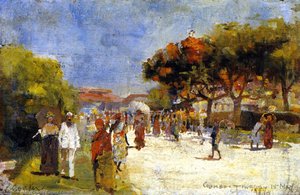
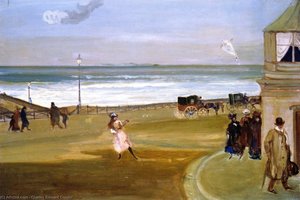
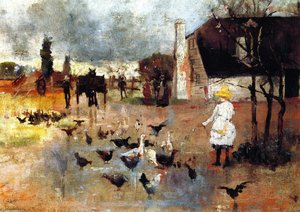
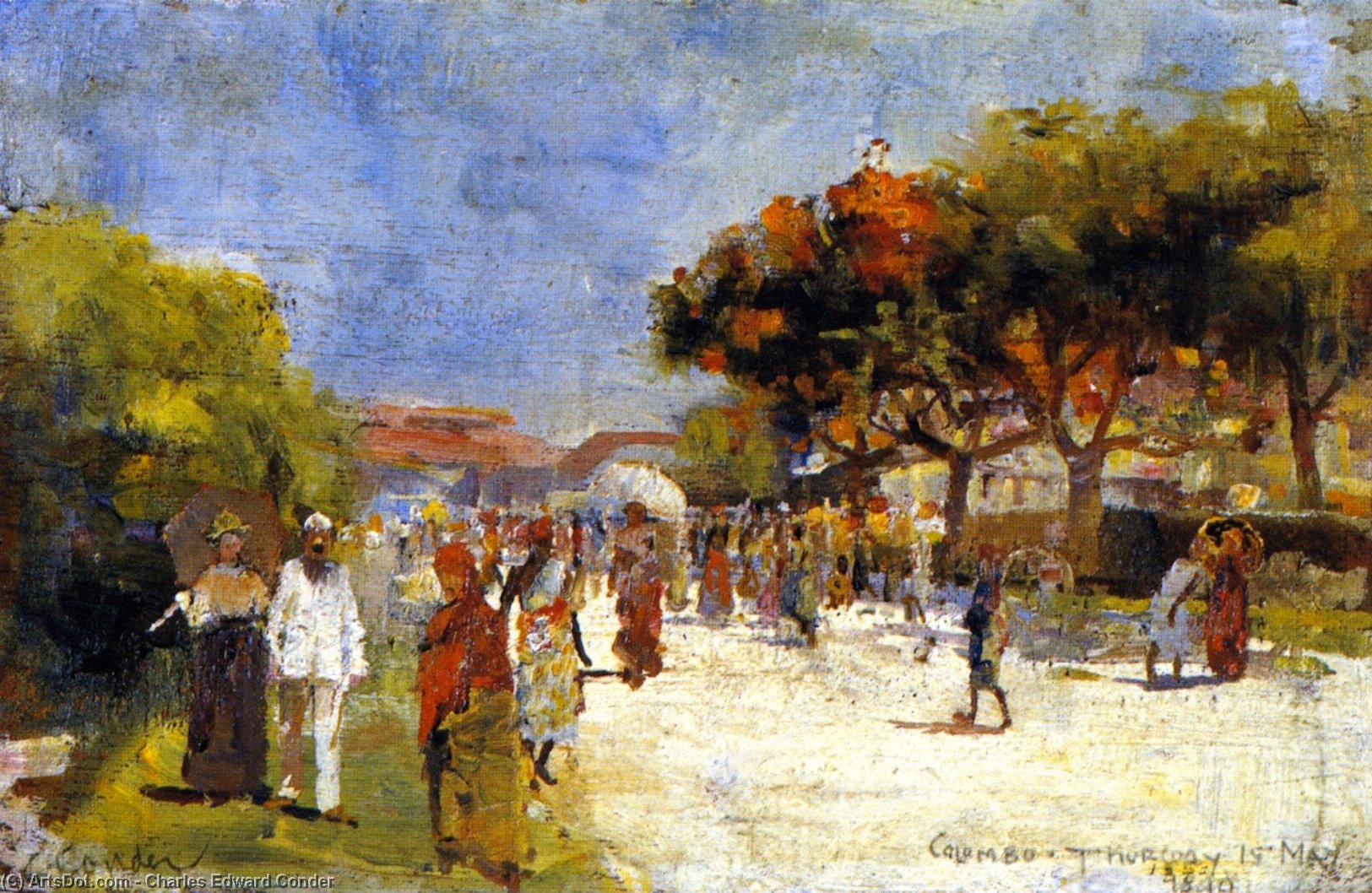
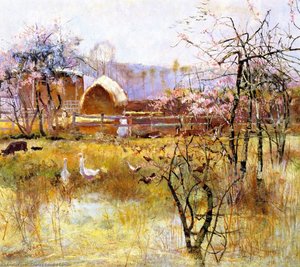
The painting “Colombo” by Charles Edward Conder isn’t merely a depiction of a bustling street scene; it’s an encapsulation of Melbourne’s artistic spirit at the turn of the century and a testament to Conder’s extraordinary ability to capture not just what he saw, but how he felt about it. Completed in 1890, this oil on panel resides proudly within the National Gallery of Victoria, inviting viewers into a moment frozen in time—a snapshot of Colombo's vibrant energy against the backdrop of colonial Australia.- The Scene: Conder’s gaze focuses squarely on Galle Face Green, Colombo’s waterfront promenade, teeming with life. Horse-drawn carriages jostle alongside bicycles and pedestrians, creating a dynamic tableau that speaks volumes about the city's commercial activity and social interactions. The artist meticulously rendered the details—the dappled sunlight filtering through the trees, the faces of passersby absorbed in their daily routines—transforming an ordinary street into a stage for human drama.
- Style & Technique: Conder’s approach aligns perfectly with the Heidelberg School's ethos – Impressionism infused with Australian landscapes. He employs loose brushstrokes and vibrant color palettes to convey atmosphere rather than precise representation. Notice how Conder utilizes tonal variations to sculpt the forms of buildings and trees, creating a sense of depth that draws the eye into the canvas.
Historical Context: Melbourne’s Artistic Renaissance
The Heidelberg School emerged during a period of significant artistic experimentation in Australia. Influenced by Impressionism originating in France, artists like Conder sought to depict the Australian landscape with unprecedented sensitivity and immediacy. This movement challenged academic conventions and championed plein air painting—working outdoors directly from nature—a radical departure from studio practice at the time.
- The Heidelberg School’s Influence: Conder's work stands alongside masterpieces by Albert Henry Fullwood and Frank Mahony, establishing a distinct Australian artistic identity. The Heidelberg School championed a humanist aesthetic that celebrated the beauty of everyday life and the natural world—values that resonate powerfully with contemporary audiences.
- National Gallery Victoria’s Significance: The National Gallery of Victoria houses an impressive collection of Australian art, showcasing artists from across generations. “Colombo” occupies a prominent position within this gallery, ensuring its enduring legacy as one of Melbourne's most celebrated artworks.
Symbolism Beyond the Surface
More than just a record of Colombo’s cityscape, Conder’s painting carries symbolic weight. The abundance of trees represents resilience and vitality—a reflection of Australia’s pioneering spirit during its formative years. Furthermore, the figures depicted embody the diverse tapestry of society—representing both wealth and poverty, ambition and contemplation.
- Light & Atmosphere: Conder skillfully captures the interplay of light and shadow, conveying a palpable sense of warmth and optimism. The dappled sunlight illuminates the scene, casting an ethereal glow over the buildings and trees—creating an emotional resonance that transcends mere visual observation.
- Reflection of Victorian Values: “Colombo” embodies the Victorian ideals of industriousness and moral responsibility—values that underpinned Melbourne’s burgeoning prosperity during Conder's time. The painting serves as a poignant reminder of a bygone era, capturing its spirit in vivid detail.
Emotional Impact & Legacy
“Colombo” continues to captivate viewers with its evocative depiction of urban life and its masterful execution. Conder’s ability to convey emotion through color and brushwork elevates the painting beyond a simple visual record—transforming it into an experience that stirs the imagination and invites contemplation.
- A Timeless Masterpiece: The painting's enduring appeal speaks to its universal themes of human connection, beauty, and observation. It remains a cornerstone of Australian art history, inspiring artists and collectors alike.
- Exploring Conder’s Oeuvre: For those eager to delve deeper into Charles Edward Conder’s artistic vision, the National Gallery of Victoria website offers invaluable resources—including biographical information and reproductions of his other celebrated works like “Springtime” and “Rickett’s Point.”
Discover more about Conder's extraordinary talent at ArtsDot.com.
Related Artworks

Artist Biography
early life and artistic journey
charles edward conder, a british-born painter, lithographer, and designer, left an indelible mark on the art world. born in tottenham, middlesex, on october 24, 1868, conder's early life was marked by his mother's passing in india when he was just four years old.artistic career in australia
in 1884, at 16, conder moved to sydney, australia, working for his uncle as a land surveyor. however, he soon discovered his true passion lay in drawing the landscape rather than surveying it. by 1886, he had become an artist for the illustrated sydney news, alongside notable artists like albert henry fullwood and frank mahony.the heidelberg school and notable works
conder's masterpiece, departure of the orient – circular quay (1888), showcased his newfound mastery of form and brushwork. this dockside scene, depicting the bustling harbour at sydney cove, was quickly purchased by the art gallery of new south wales, making it conder's first work to enter a public collection.- a holiday at mentone (1888), a fun-loving painting showcasing men and women relaxing on the beach, is another notable example of conder's work.
- conder's association with g. p. nerli, an itinerant italian painter, significantly influenced his development as an artist.
- his contributions to the 9 by 5 impression exhibition in melbourne, alongside tom roberts and arthur streeton, solidified his position within the heidelberg school movement.
legacy and later life
conder's later years were plagued by poor health, including paralysis and a bout of delirium tremens. despite this, he continued to paint, leaving behind a legacy as a key figure in the heidelberg school. his art was better received in england than in paris, with his portrait being painted by henri de toulouse-lautrec in 1892. view conder's works at the art gallery of new south wales or explore more about the heidelberg school on ArtsDot's charles edward conder page.- discover more about conder's life and works on wikipedia's charles conder page.
- explore ArtsDot's collection of conder's paintings, including a holiday at mentone (1888) and departure of the orient – circular quay (1888), on ArtsDot's website.
conclusion
charles edward conder's impact on australian impressionism is undeniable. his legacy, marked by his captivating paintings and association with the heidelberg school, continues to inspire art enthusiasts worldwide.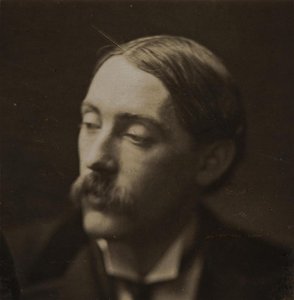
Charles Edward Conder
1868 - 1909 , United Kingdom
Quick Facts
- Artistic Movement Or Style: Heidelberg School
- Artists Who Influenced This Artist:
- Alfred Daplyn
- Victor Mann
- Julian Ashton
- Date Of Birth: October 24, 1868
- Full Name: Charles Edward Conder
- Nationality: British
- Notable Artworks:
- Departure of the Orient – Circular Quay
- A holiday at Mentone
- Under The Southern Sun
- Place Of Birth: Tottenham, United Kingdom
Related Articles

Giclée Prints: Archival Quality & Aesthetic Nuances for the Discerning Collector
Explore the world of giclée prints with ArtsDot. Learn about archival quality, aesthetic nuances & investment potential. Expert guidance for discerning art collectors seeking museum-quality reproductions and lasting value.

The Enduring Legacy of Fine Art Prints: Technique, History & Aesthetic Impact
Explore the rich history & techniques of fine art prints. Discover investment potential, assess authenticity, and learn how to preserve your collection with expert guidance. Trusted insights for discerning collectors.

Echoes of Time: Exploring the Enduring Appeal & Historical Context of Vintage Art Prints
Explore the captivating world of vintage art prints! Discover their history, collecting tips & enduring appeal. Expert insights on chromolithography and building a legacy collection with ArtsDot.
Renoir's Masterpieces: Explore 25 Iconic Paintings & Bring Art Home | ArtsDot
Explore 25 iconic Pierre-Auguste Renoir paintings! Discover the stories behind Impressionist masterpieces like 'Dance at Le Moulin de la Galette' & 'Luncheon of the Boating Party'. Find museum-quality art reproductions and elevate your home decor with ArtsDot.com.

Impressionist Landscapes: 10 Masterpieces for Your Home | ArtsDot
Journey through 10 iconic Impressionist landscapes by Monet, Renoir & Degas. Explore the history, techniques & emotions behind these masterpieces. Find museum-quality reproductions for your home at ArtsDot.com – where art comes to life! Discover all masterpieces on ArtsDot.com