Preview
 Send
Send Share
Share
 Details

 Download
 Similars
 X-Ray
X-Ray Diaporama
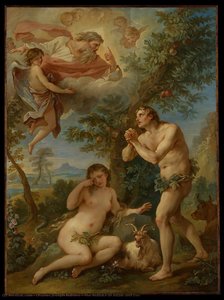
The Rebuke of Adam and Eve
 Oil On Copper
- WallArt
- Baroque
 1740
1740 68.0 x 50.0 cm
 Metropolitan Museum of Art
 Read More
Giclée / Art Print
Museum-quality giclée or canvas print with fast production and flexible finish options. ( Buy Hand Made Painting Buy Image)




P118B $10

P118H $10

P118W $10

P438Z $10

P508JH $12

P508YH $12

P805H $10

P805Z $10

P919BZ $10

P919G $10

P919XJ $10

P959ZH $10

P968JZ $12

W106C $8

W218G $10

W218JH $8

W218Y $10

W307PJ $10

W316G $10

W316PJ $8

W316Y $10

W398PJ $8

W4111J $10

W500HY $15

W500JH $15

W692G $12

W849H $8

W940BG $15

W953PJ $8




Pick from our preset sizes that match the artwork's original proportions.

You may enter your own dimensions to fit a specific frame or space. If your selected size does not match the original image's proportions, we will either crop the artwork or extend the image with a mirrored or solid-fill edge. A digital mockup will be sent for your approval before production begins.
Please note that the on-screen preview does not reflect the actual cropping or extension. Only the mockup will accurately show the final composition.
While custom sizes are available, we recommend selecting a dimension from the predefined list to preserve the original proportions.
Worldwide Delivery () in 2 weeks instead of standard 4/5 weeks. (30 August)

Free Worldwide Express Shipping

High-Quality Linen Canvas

Full Shipping Insurance

Customs Tax Refund Guarantee

True Color Matching Guarantee

60-Day Return Policy (Defects Only)

100% Money-Back Guarantee

Bulk Discount Offer
 Glass option is only available in size under 110 CM

The Rebuke of Adam and Eve
Giclée / Art Print
Reproduction Size
-


Total Price
$ 63
A Moment of Divine Judgment
Charles-Joseph Natoire’s “The Rebuke of Adam and Eve,” painted in 1740, isn't merely a depiction of a biblical story; it’s a profound meditation on transgression, consequence, and the enduring tension between human desire and divine authority. This copper painting, now rendered in exquisite detail through reproduction, transports us to the heart of Eden’s fall, capturing not just the event itself but the raw emotional landscape surrounding it. Natoire, deeply influenced by the traditions of his mentor François Le Moyne, masterfully blends elements of Baroque drama with a distinctly Rococo sensibility – a delicate balance that elevates the scene beyond simple narrative illustration.
Image courtesy of Artvee
A Symphony of Form and Emotion
Natoire’s technical prowess is immediately evident in the painting's dynamic composition. The pyramidal structure, anchored by the figures of Adam and Eve, directs our gaze upwards towards God, who looms in the heavens – a figure rendered with an almost austere severity. The artist employs a masterful use of chiaroscuro, creating dramatic contrasts between light and shadow that sculpt the bodies of the figures and heighten the sense of drama. Note particularly the stark illumination on Adam’s muscular form, emphasizing his strength and defiance, while Eve is bathed in a softer, more melancholic light, reflecting her shame and regret. The rosy flesh of Eve, a deliberate choice by Natoire, adds a subtle layer of sensualism, hinting at the allure of temptation that ultimately led to their downfall.
- Color Palette: Dominated by rich browns, golds, reds, and greens – evoking both the beauty of Eden and the impending doom.
- Brushwork: Natoire’s brushstrokes are meticulously layered, creating a luminous surface texture that brings the figures to life while simultaneously conveying a sense of weight and solemnity.
- Composition: The pyramidal structure guides the eye towards God, reinforcing his role as judge and arbiter of fate.
Symbolism Woven into the Narrative
Beyond the immediate story of Adam and Eve’s disobedience, “The Rebuke” is laden with symbolic meaning. The serpent, coiled at their feet, represents not just temptation but also deceit and evil – a potent visual reminder of the corrupting influence of sin. God's judgmental gaze, piercing through the clouds, signifies the irreversible consequences of their actions. The forbidden fruit itself—a single, glistening apple—becomes a symbol of knowledge, desire, and ultimately, loss of innocence. The setting, a lush garden teeming with life, stands in stark contrast to the barren landscape that awaits humanity after the fall – a visual representation of paradise lost.
A Legacy of Rococo Elegance
“The Rebuke of Adam and Eve” is more than just a religious painting; it’s a testament to Natoire's skill as a history painter and his mastery of the Rococo style. Originally intended as a pendant to another work by Le Moyne, this copper panel exemplifies the era’s fascination with the nude, its exploration of human emotion, and its embrace of opulent detail. It reflects a shift towards greater psychological depth in religious art, moving beyond simple didacticism to explore the complexities of human experience. Today, reproductions of this captivating artwork offer a window into a pivotal moment in Western art history – a timeless reminder of our capacity for both great beauty and profound transgression.
Related Artworks
Artist Biography
The Elegance of Rococo: The Life and Legacy of Charles-Joseph Natoire
Charles-Joseph Natoire (1700–1777) stands as a pivotal figure in the artistic landscape of late Baroque and early Rococo France, embodying the refined sensibilities of his era. Born in Nîmes, Provence, he possessed an innate talent nurtured by his father’s sculptural training—a formative influence that instilled in him a meticulous attention to detail and a profound understanding of form. This foundation was further polished through instruction from François Lemoyne, arguably the foremost painter of Louis XV's court. This dual mentorship cemented Natoire’s stylistic trajectory toward the opulent aesthetic championed by Rococo, characterized by asymmetrical compositions, delicate pastel hues, and an obsession with illusionistic effects designed to captivate the viewer’s gaze.
Natoire’s formative years were marked by a dedication to mastering drawing techniques—a cornerstone of artistic training during his time—under Lemoyne's tutelage at the Académie royale de peinture et de sculpture in Paris. This rigorous discipline instilled within him an unwavering commitment to accuracy and observation, skills that would prove invaluable throughout his prolific career. Beyond formal instruction, Natoire’s exposure to humanist scholarship fostered a deep appreciation for classical ideals, informing his artistic vision and contributing to his masterful rendering of mythological subjects—a genre particularly favored by the Rococo movement.
Mastery of Myth and Tapestry
Natoire achieved considerable renown during his lifetime thanks to commissions from influential patrons and institutions. His most celebrated achievement remains the series of paintings depicting Psyche for Germain Boffrand’s oval salon in the Hôtel de Soubise, Paris—a monumental undertaking that showcased Natoire's unparalleled ability to synthesize classical grandeur with Rococo dynamism. In these works, the boundaries between reality and myth blur, as light and color dance across the canvas to create a dreamlike atmosphere of ethereal beauty.
Beyond the confines of oil on canvas, Natoire left an indelible mark on the decorative arts through his extraordinary contributions to tapestry design. His ability to translate complex narratives into intricate textile patterns allowed his vision to permeate the very fabric of French aristocratic life. Notable achievements in this medium include:
- The Don Quixote Series: A masterful translation of literary drama into woven splendor, showcasing his narrative prowess.
- Allegorical Compositions: Works such as Allegorie demonstrate his skill in utilizing classical figures to convey profound symbolic themes through delicate textures and intricate details.
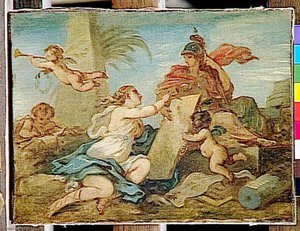
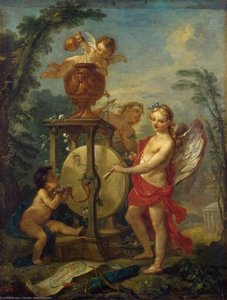
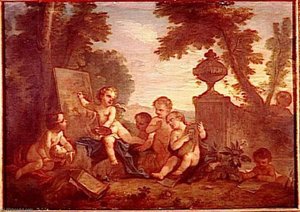
- La Peinture: A stunning depiction of cherubic artists that reflects the influence of the French Academy, blending innocence with technical sophistication.
Historical Significance and the Roman Legacy
The trajectory of Natoire's career was not merely confined to the salons of Paris; his influence extended across Europe through his prestigious appointment as the Director of the French Academy in Rome. This role allowed him to bridge the gap between the classical heritage of Italy and the burgeoning Rococo spirit of France, ensuring that the principles of classical antiquity continued to inform contemporary French art. His time in Rome solidified his reputation as a scholar-painter, capable of interpreting the weight of history through a lens of modern elegance.
As the 18th century progressed, Natoire’s work served as a bridge between the heavy, dramatic shadows of the Baroque and the light, airy whimsy of the Rococo. His legacy is found in the way he utilized soft palettes and fluid lines to evoke emotion, leaving behind a body of work that remains a testament to the grace and sophistication of the French Enlightenment. Through his paintings, tapestries, and leadership, Charles-Joseph Natoire ensured that the delicate beauty of the Rococo era would be etched permanently into the annals of art history.
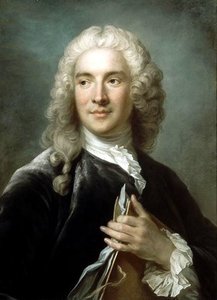
Charles-Joseph Natoire
1700 - 1777 , France
Quick Facts
- Artistic Movement Or Style: Rococo
- Artists Or Movements Influenced By This Artist: ['Baroque']
- Artists Who Influenced This Artist: ['François Lemoyne']
- Date Of Birth: 1700
- Full Name: Charles-Joseph Natoire
- Nationality: French
- Notable Artworks:
- Italian Fall Landscape with Monte Porzio
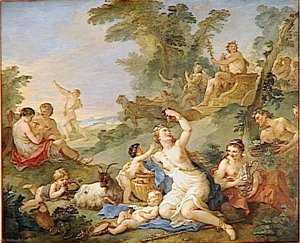
- Offering to Pan
- Place Of Birth: Nimes, France
Related Articles

Baroque Classicism: Reconciling Drama & Order in 17th-Century Art
Explore the captivating world of Baroque Classicism! Discover its history, key artists like Caravaggio & Rubens, and defining characteristics. Expert insights & high-quality reproductions at ArtsDot.

Baroque Drama: Bringing Opulence & Emotion into Contemporary Interiors
Explore the opulent world of Baroque interior design! Discover key elements, modern applications & how to bring dramatic elegance into your home with 's authentic reproductions.
Neo-Classicism's Greatest Hits: 10 Masterpieces for Your Home |
Journey through Neo-Classicism's finest! Explore 10 iconic masterpieces by David, Ingres & Canova. Discover art history, techniques & timeless beauty – perfect for inspiring your home decor. Find museum-quality reproductions at

Baroque Masterpieces: 10 Paintings That Defined an Era |
Journey through the drama & grandeur of Baroque art! Explore 10 masterpieces by Caravaggio, Rembrandt, Rubens & more. Discover stunning oil paintings, rich colors & timeless stories. Find museum-quality reproductions at .

Decoding Baroque Grandeur: A Guide to the Drama and Emotion of 17th-Century Art
Explore the breathtaking drama of 17th-century Baroque art. Our expert guide decodes the use of chiaroscuro, emotional intensity, and historical grandeur to help you appreciate and curate timeless masterpieces for your collection.