 Preview
 Send
Send Share
Share
 Details

 Download
 Similars
 X-Ray
X-Ray Diaporama
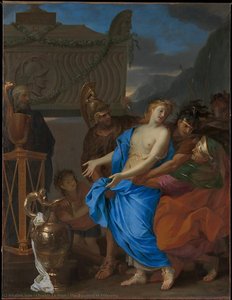
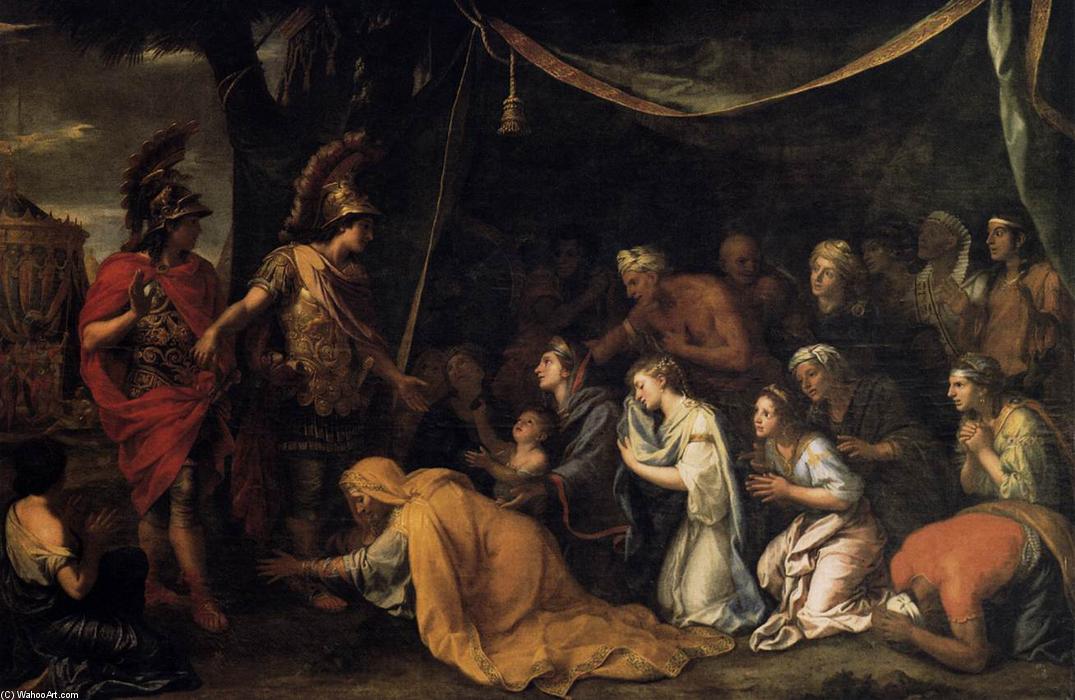
The Family of Darius before Alexander
 Oil On Canvas
- WallArt
- Baroque
 1660
1660- Early Modern
 164.0 x 260.0 cm
 Musée National du Château
 Read More
Hand Made Oil Reproduction
Hand-painted oil on canvas in your size and frame, made to order by our artists. ( Buy Print Buy Image)




P118B $10

P118H $10

P118W $10

P438Z $10

P508JH $12

P508YH $12

P805H $10

P805Z $10

P919BZ $10

P919G $10

P919XJ $10

P959ZH $10

P968JZ $12

W106C $8

W218G $10

W218JH $8

W218Y $10

W307PJ $10

W316G $10

W316PJ $8

W316Y $10

W398PJ $8

W4111J $10

W500HY $15

W500JH $15

W692G $12

W849H $8

W940BG $15

W953PJ $8




Pick from our preset sizes that match the artwork's original proportions.

You may enter your own dimensions to fit a specific frame or space. If your selected size does not match the original image's proportions, we will either crop the artwork or extend the painting with additional hand-painted elements. A digital mockup will be sent for your approval before production begins.
Please note that the on-screen preview does not reflect the actual cropping or extension. Only the mockup will accurately show the final composition.
While custom sizes are available, we recommend selecting a dimension from the predefined list to preserve the original proportions.
After order, ArtsDot.com team will email client for instructions and provide a mockup preview
Worldwide Delivery () in 3/4 weeks instead of standard 5 weeks. (25 August). No compromise on quality.

Free Worldwide Express Shipping

High-Quality Linen Canvas

Full Shipping Insurance

Customs Tax Refund Guarantee

True Color Matching Guarantee

60-Day Return Policy (Defects Only)

100% Money-Back Guarantee

Bulk Discount Offer
 Glass option is only available in size under 110 CM

The Family of Darius before Alexander
Reproduction Medium
Reproduction Size
-


Total Price
$ 263
Artwork Description
A Grand Spectacle of Magnanimity and Power
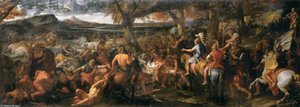
In the hallowed halls of the Mars Room at Versailles, there exists a window into a moment of profound historical drama: Charles Le Brun’s 1660 masterpiece, The Family of Darius before Alexander. This monumental oil on canvas is far more than a mere historical record; it is an orchestrated theatrical spectacle designed to evoke awe and command respect. The scene captures the pivotal aftermath of the Battle of Issus, where the young, indomitable Alexander the Great receives the defeated Persian King, Darius III, and his royal family. As the family kneels in a poignant display of submission, the painting breathes life into Plutarch’s ancient chronicles, presenting a narrative of conquest tempered by unexpected mercy. For the discerning collector or designer, this work offers an unparalleled sense of prestige, bringing the weight of classical history and the splendor of the French Baroque directly into a contemporary space.
Le Brun, the preeminent architect of Louis XIV’s visual identity, utilizes a sophisticated Baroque vocabulary to immerse the viewer in this royal encounter. The composition is a masterclass in trompe l’oeil technique, creating an illusionistic depth that seems to extend the grandeur of the palace itself beyond the edges of the frame. His palette is a rich tapestry of regal hues—deep crimsons, shimmering golds, and authoritative blues—which serve to reinforce the divine right of kings. The lighting is nothing short of dramatic, casting sharp highlights on the intricate textures of silk, armor, and heavy drapery, ensuring that every meticulous detail captures the light and directs the eye through the complex social hierarchy depicted on the canvas.
Symbolism and the Art of Royal Diplomacy
Beyond its visual opulence, the painting is a dense web of symbolic gestures intended to resonate with the humanist ideals of 17th-century Europe. Every movement within the frame carries weight; Alexander’s decisive gesture toward Hephaestion is not merely a point of recognition but a profound statement on wisdom, leadership, and the shared glory of allies. Conversely, the kneeling figure of Sisygambis embodies the virtues of humility and grace in the face of overwhelming power. This interplay between strength and submission creates an emotional tension that elevates the work from a historical anecdote to a universal meditation on human character.
For those looking to integrate such a profound piece into an interior, The Family of Darius before Alexander serves as a powerful focal point. It is a work that demands attention, offering a sophisticated dialogue between the classical past and the elegance of modern decor. Whether placed in a formal study or as a centerpiece in a grand salon, a high-quality reproduction of this Le Brun triumph brings with it an atmosphere of intellectual depth and timeless luxury, making it an essential acquisition for anyone dedicated to the pursuit of true artistic excellence.
Related Artworks

Artist Biography
Early Life and Training
- Born: Paris, France (1619)
- Baptised: 24 February 1619
- Died: 12 February 1690 Paris, Kingdom of France
- Charles Le Brun displayed artistic talent from a young age. At the age of eleven, he entered the studio of Simon Vouet under the patronage of Chancellor Séguier.
- He further studied with François Perrier and received early commissions from Cardinal Richelieu, demonstrating considerable skill even at fifteen.
- A pivotal period in his development was a four-year stay in Rome (1642-1646), where he worked under the guidance of Nicolas Poussin. This experience profoundly shaped his artistic style and theoretical understanding of art.
- During this time, Le Brun studied ancient Roman sculpture and copied works by Raphael, absorbing influences from both classical antiquity and contemporary Italian masters.
Artistic Development and Style
- Upon returning to Paris in 1646, Le Brun quickly gained recognition and patronage. His early style reflected the influence of Vouet and Poussin, but he gradually developed a more personal approach.
- Le Brun's artistic evolution involved moving away from strict adherence to classical models towards a more dynamic and expressive Baroque style.
- He became known for his grand historical paintings, portraiture, and decorative work, often characterized by dramatic compositions, rich colors, and meticulous detail.
- A significant series of works depicting the history of Alexander the Great showcased his ability to combine historical narrative with artistic grandeur.
Major Achievements and Royal Service
- Le Brun's career reached its peak during the reign of Louis XIV, who appointed him First Painter to the King in 1664. This position granted him immense influence over French art.
- He played a crucial role in decorating the Palace of Versailles, creating iconic works such as the Ambassadors’ Staircase, the Hall of Mirrors, and the Peace and War Rooms. These projects cemented his reputation as a master decorator and designer.
- Le Brun was also responsible for designing many statues in the gardens of Versailles, demonstrating his versatility across various artistic disciplines.
- He founded the Académie Royale de Peinture et de Sculpture (Royal Academy of Painting and Sculpture) in 1648, solidifying his position as a leader within the French art world. He served as its director for many years.
Legacy and Historical Significance
- Charles Le Brun's influence on French art was profound. His work helped define the Baroque style in France and established him as one of the most important artists of his time.
- As a theorist, he emphasized the importance of intellectual engagement over mere visual appeal, shaping artistic education for generations to come.
- His decorative schemes at Versailles set a standard for royal palaces throughout Europe.
- Le Brun's legacy extends beyond his individual works; he played a vital role in establishing and promoting French art on an international stage.

Charles Le Brun
1619 - 1690 , France
Quick Facts
- Artistic Movement Or Style: Baroque
- Artists Who Influenced This Artist:
- Nicolas Poussin
- Simon Vouet
- Date Of Birth: February 24, 1619
- Date Of Death: February 12, 1690
- Full Name: Charles Le Brun
- Nationality: French
- Notable Artworks:
- Ambassadors’ Staircase
- Hall of Mirrors
- Peace and War Rooms
- Place Of Birth: Paris, France
Related Articles
Paolo Veronese: A Renaissance Master of Color, Composition, and Venetian Splendor
Explore the vibrant world of Paolo Veronese, a Renaissance master renowned for his opulent compositions, masterful use of color, and dramatic Venetian scenes. Discover key artworks & legacy.

Baroque Drama: Bringing Opulence & Emotion into Contemporary Interiors
Explore the opulent world of Baroque interior design! Discover key elements, modern applications & how to bring dramatic elegance into your home with 's authentic reproductions.

The Dramatic Flourish: Exploring the Baroque Movement's Enduring Legacy in Art History
Explore the dramatic world of Baroque art! Discover iconic artists like Caravaggio & Rubens, defining techniques, and its lasting impact on art history. Expert insights for collectors & enthusiasts at ArtsDot.
Jacopo Tintoretto's Masterpieces: 25 Paintings That Define Venetian Drama | ArtsDot
Explore 25 breathtaking masterpieces by Jacopo Tintoretto, the Venetian master of drama and light. Discover the stories behind iconic Renaissance paintings & find museum-quality art reproductions to elevate your home decor on ArtsDot.com.

Baroque Masterpieces: 10 Paintings That Defined an Era |
Journey through the drama & grandeur of Baroque art! Explore 10 masterpieces by Caravaggio, Rembrandt, Rubens & more. Discover stunning oil paintings, rich colors & timeless stories. Find museum-quality reproductions at .