 Preview
 Send
Send Share
Share
 Details

 Download
 Similars
 X-Ray
X-Ray Diaporama
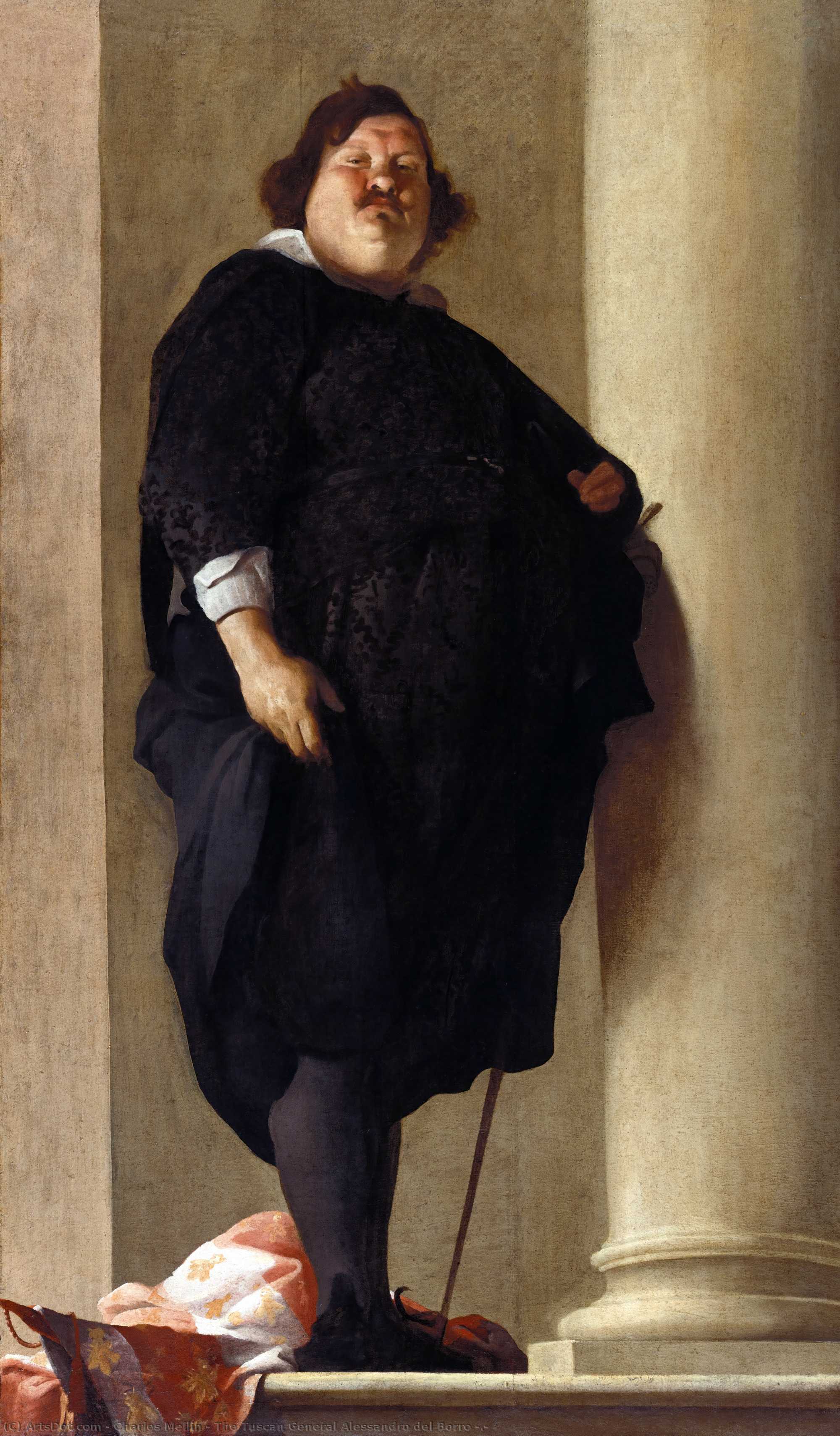
The Tuscan General Alessandro del Borro (.)
 Oil On Canvas
- WallArt
- Baroque Portraiture
 1645
1645 203.0 x 121.0 cm
 Staatliche Museen
 Read More
Hand Made Oil Reproduction
Hand-painted oil on canvas in your size and frame, made to order by our artists. ( Buy Print Buy Image)




P118B $10

P118H $10

P118W $10

P438Z $10

P508JH $12

P508YH $12

P805H $10

P805Z $10

P919BZ $10

P919G $10

P919XJ $10

P959ZH $10

P968JZ $12

W106C $8

W218G $10

W218JH $8

W218Y $10

W307PJ $10

W316G $10

W316PJ $8

W316Y $10

W398PJ $8

W4111J $10

W500HY $15

W500JH $15

W692G $12

W849H $8

W940BG $15

W953PJ $8




Pick from our preset sizes that match the artwork's original proportions.

You may enter your own dimensions to fit a specific frame or space. If your selected size does not match the original image's proportions, we will either crop the artwork or extend the painting with additional hand-painted elements. A digital mockup will be sent for your approval before production begins.
Please note that the on-screen preview does not reflect the actual cropping or extension. Only the mockup will accurately show the final composition.
While custom sizes are available, we recommend selecting a dimension from the predefined list to preserve the original proportions.
After order, ArtsDot.com team will email client for instructions and provide a mockup preview
Worldwide Delivery () in 3/4 weeks instead of standard 5 weeks. (17 August). No compromise on quality.

Free Worldwide Express Shipping

High-Quality Linen Canvas

Full Shipping Insurance

Customs Tax Refund Guarantee

True Color Matching Guarantee

60-Day Return Policy (Defects Only)

100% Money-Back Guarantee

Bulk Discount Offer
 Glass option is only available in size under 110 CM

The Tuscan General Alessandro del Borro (.)
Reproduction Medium
Reproduction Size
-


Total Price
$ 263
Artwork Description
The Tuscan General Alessandro del Borro: A Portrait of Robustness and Renaissance Dignity
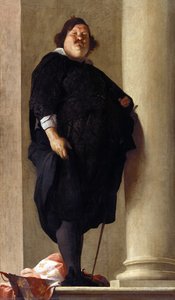
Charles Mellin’s “The Tuscan General Alessandro del Borro” is more than just a portrait; it's a quietly revolutionary depiction of the human form, a window into the 17th century’s evolving understanding of beauty and representation. Painted in 1645 during the height of the Baroque period, this oil-on-canvas masterpiece housed within the Staatliche Museen in Berlin immediately captivates with its directness and surprising honesty. The subject, Alessandro del Borro himself – a Tuscan general renowned for his service alongside Mattias de’ Medici – is presented not as an idealized hero, but as a man of substance, embodying both military prowess and a palpable physicality.
Mellin's skill lies in his masterful use of light and shadow, creating a dramatic interplay that draws the viewer into the scene. The general stands before a simple stone pillar, his gaze lowered slightly, suggesting contemplation or perhaps a weighty decision made on the battlefield. His attire – a dark, richly patterned coat, indicative of his rank – is complemented by the warm tones of his thick, ruddy hair and the subtle highlights catching on his double chin and rounded cheeks. This isn’t a striving for youthful perfection; rather, it's an acceptance and celebration of the body in all its fullness. The painting was commissioned by del Borro himself, a man who sought to immortalize not just his military achievements but also his character – a frankness that challenged conventional notions of beauty prevalent at the time.
A Revolutionary Representation: Obesity and Artistic Convention
What makes “The Tuscan General Alessandro del Borro” so significant is its unprecedented portrayal of obesity. In an era where artistic representations often idealized the human form, Mellin’s decision to depict a man with a considerable amount of flesh was remarkably bold. While not entirely unique – earlier examples of robust figures exist – this painting stands out for its directness and lack of shame. It's a moment of visual honesty that predates later explorations of body image in art by centuries, offering a valuable glimpse into the social attitudes surrounding weight and appearance during the Renaissance.
The inclusion of the stone pillar behind del Borro adds another layer of interpretation. Pillars frequently symbolized strength, stability, and authority – qualities fitting for a general. However, its stark simplicity also serves to emphasize the subject’s physicality, grounding him in the material world. The banner at his feet, bearing an emblem likely associated with the Barberini family (a prominent Italian dynasty), further reinforces his status and legacy.
Baroque Technique and Artistic Influence
Mellin's technical prowess is evident in every brushstroke. His use of oil paint allows for a rich, vibrant palette and a remarkable level of detail. The meticulous rendering of del Borro’s features – the texture of his hair, the folds of his clothing, the subtle nuances of light and shadow – demonstrates a deep understanding of anatomy and perspective. The painting's composition is balanced and harmonious, reflecting the principles of Baroque art, which emphasized drama, emotion, and movement.
While Mellin’s style initially leaned towards Mannerism, influenced by artists like Simon Vouet, he evolved into a master of classical elegance, as evidenced in this portrait. The influence of Italian masters such as Lanfranco is also apparent in the dramatic lighting and dynamic poses. The painting's attribution to Mellin highlights his skill as a portrait artist and his ability to capture the essence of his subjects – a testament to his artistic vision and technical mastery.
A Timeless Masterpiece: Symbolism and Enduring Appeal
“The Tuscan General Alessandro del Borro” transcends its historical context, offering a profound meditation on beauty, representation, and the human condition. It’s a painting that invites contemplation, prompting us to consider how we perceive and value different body types. More than just a portrait of a military leader, it's a powerful statement about acceptance, honesty, and the enduring appeal of a subject rendered with both skill and compassion. Its continued presence in the Staatliche Museen collection ensures its legacy as a pivotal work in art history – a reminder that true beauty lies not in idealized perfection but in the richness and complexity of human experience.
Related Artworks

Artist Biography
early life and career
charles mellin, a french painter, was born in nancy, lorraine in 1597. despite his origins, he spent most of his artistic career in italy, earning him the nickname carlo lorenese ("charles the lorrainer"). this moniker reflects the significant influence italian art had on his style.artistic style and influences
mellin's work is characterized by its baroque flair, with a focus on dramatic lighting and intense emotions. his early collaborations with simon vouet showcased a more mannerist approach, but as he matured, his style evolved into a classically elegant yet simple form, likely influenced by lanfranco.notable works and locations
- the tuscan general alessandro del borro (staatliche museen, berlin, germany) - a prime example of mellin's baroque style.
- chapel of the virgin at san luigi dei francesi (rome, italy) - demonstrates his early work in italy.
- abbey of monte cassino (italy) - features a cycle of 15 paintings, unfortunately destroyed during world war ii.
- key dates: - born: 1597, nancy, lorraine - active in italy: from 1622 until his death in 1649
legacy
despite the destruction of some of his notable works, mellin's influence on the baroque period is undeniable. his evolution from a mannerist to a classically elegant style, inspired by italian and parisian schools, has left an indelible mark on art history. explore more about charles mellin on ArtsDot: https://ArtsDot.com/@/charles-mellin read more about charles mellin on wikipedia: https://en.wikipedia.org/wiki/charles_mellin
charles mellin
1597 - 1649 , France
Related Articles
The Grandeur of Baroque Portraiture: Power, Emotion & Artistic Innovation
Explore the grandeur of Baroque portraiture! Discover Rubens, Van Dyck & the masters of 17th-century art. Uncover symbolism, techniques & lasting influence. Expert insights for collectors and enthusiasts.

Baroque Masterpieces: 10 Paintings That Defined an Era |
Journey through the drama & grandeur of Baroque art! Explore 10 masterpieces by Caravaggio, Rembrandt, Rubens & more. Discover stunning oil paintings, rich colors & timeless stories. Find museum-quality reproductions at .

Baroque Drama: Bringing Opulence & Emotion into Contemporary Interiors
Explore the opulent world of Baroque interior design! Discover key elements, modern applications & how to bring dramatic elegance into your home with 's authentic reproductions.

The Dramatic Flourish: Exploring the Baroque Movement's Enduring Legacy in Art History
Explore the dramatic world of Baroque art! Discover iconic artists like Caravaggio & Rubens, defining techniques, and its lasting impact on art history. Expert insights for collectors & enthusiasts at ArtsDot.

The Visceral Stage: Exploring Dramatic Narratives & Emotional Intensity in Baroque Art
Explore the dramatic world of Baroque art! Discover iconic masters like Caravaggio & Rembrandt, their techniques, and the movement's lasting impact. Expert insights for collectors & enthusiasts at ArtsDot.