 Preview
 Send
Send Share
Share
 Details

 Download
 Similars
 X-Ray
X-Ray Diaporama
Evening


 Read More
Hand Made Oil Reproduction
Hand-painted oil on canvas in your size and frame, made to order by our artists. ( Buy Print Buy Image)




P118B $10

P118H $10

P118W $10

P438Z $10

P508JH $12

P508YH $12

P805H $10

P805Z $10

P919BZ $10

P919G $10

P919XJ $10

P959ZH $10

P968JZ $12

W106C $8

W218G $10

W218JH $8

W218Y $10

W307PJ $10

W316G $10

W316PJ $8

W316Y $10

W398PJ $8

W4111J $10

W500HY $15

W500JH $15

W692G $12

W849H $8

W940BG $15

W953PJ $8




Pick from our preset sizes that match the artwork's original proportions.

You may enter your own dimensions to fit a specific frame or space. If your selected size does not match the original image's proportions, we will either crop the artwork or extend the painting with additional hand-painted elements. A digital mockup will be sent for your approval before production begins.
Please note that the on-screen preview does not reflect the actual cropping or extension. Only the mockup will accurately show the final composition.
While custom sizes are available, we recommend selecting a dimension from the predefined list to preserve the original proportions.
After order, ArtsDot.com team will email client for instructions and provide a mockup preview
Worldwide Delivery () in 3/4 weeks instead of standard 5 weeks. (21 August). No compromise on quality.

Free Worldwide Express Shipping

High-Quality Linen Canvas

Full Shipping Insurance

Customs Tax Refund Guarantee

True Color Matching Guarantee

60-Day Return Policy (Defects Only)

100% Money-Back Guarantee

Bulk Discount Offer
 Glass option is only available in size under 110 CM

Evening
Reproduction Medium
Reproduction Size
-


Total Price
$ 263
Artwork Description
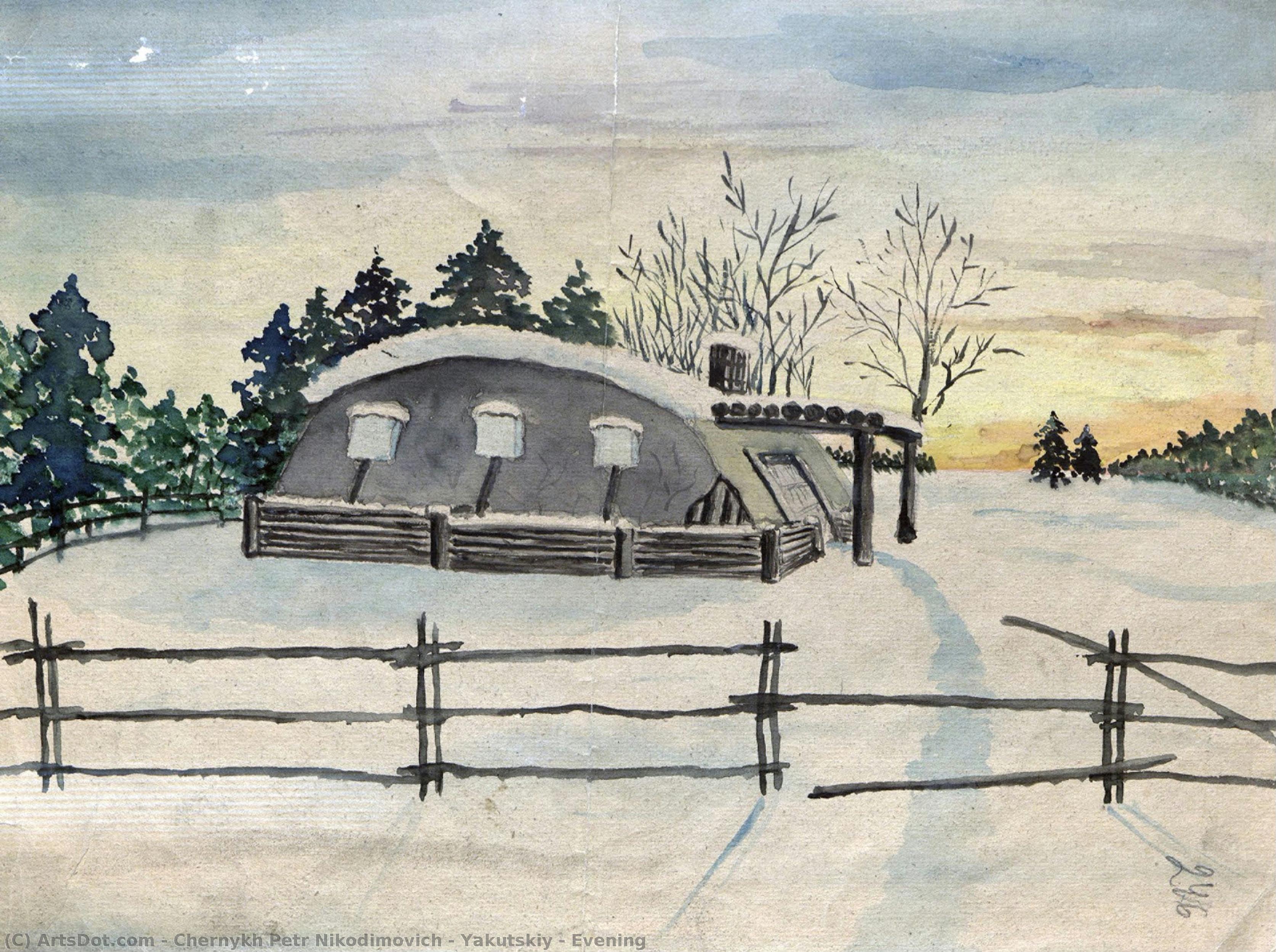
A Glimpse of Yakut Winter: "Evening" by Petr Chernykh
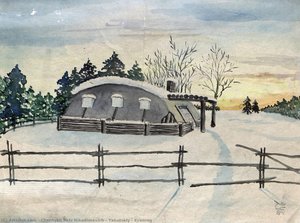
This evocative watercolor painting, titled “Evening,” offers a poignant glimpse into rural life in Yakutia during winter. Created by the Russian poet and artist Petr Nikodimovich Chernykh (1882-1933), also known as Chernykh Petr Nikodimovich - Yakutskiy, the artwork captures a moment of quiet solitude amidst a snowy landscape. The scene depicts a traditional round dwelling – reminiscent of a yurt or similar structure – nestled within a snow-covered expanse. The composition is dominated by horizontal lines—the ground, fence, and roofline—creating a sense of stability and grounding. A simple wooden fence in the foreground adds depth, while a solitary tree silhouetted against a pale yellow sky hints at either a sunset or dawn, bathing the scene in soft, diffused light. The overall impression is one of peacefulness and resilience in the face of harsh conditions.Style & Technique: Naive Folk Art with Poetic Sensitivity
Chernykh’s style can be characterized as naive folk art, demonstrating a simplified perspective and an illustrative quality. He wasn't striving for photographic realism; instead, he focused on conveying the essence of the scene through bold lines and expressive color washes. The watercolor technique is skillfully employed, with layered washes building up form and creating an atmospheric effect, particularly noticeable in the depiction of snow. This blurring contributes to a sense of tranquility and distance. The artist’s background as a poet shines through; the painting feels less like a purely visual representation and more like a poetic vignette captured on paper – a moment frozen in time.Historical & Cultural Context: A Voice from Yakutia
Petr Chernykh was a pivotal figure in Yakut literature, one of the first major writers to express his soul through Russian verse while deeply rooted in his Yakut heritage. "Evening" provides valuable insight into the traditional lifestyle and architecture of Yakutia during the early 20th century. The dwelling itself represents a vital element of Yakut culture – a symbol of shelter, community, and adaptation to the challenging climate. Chernykh’s work aimed to bridge the gap between Russian and Yakut cultures, and this painting serves as a visual testament to that ambition, offering a window into a world often overlooked in mainstream Russian art.Symbolism & Emotional Impact: Solitude, Resilience, and Hope
Beyond its aesthetic appeal, "Evening" carries significant symbolic weight. The solitary dwelling represents resilience against the harsh winter environment—a testament to the strength and adaptability of the Yakut people. The snowy landscape evokes a sense of solitude and stillness, while the soft light suggests hope and the promise of renewal. The painting’s emotional impact is one of quiet contemplation; it invites viewers to reflect on themes of isolation, perseverance, and the beauty found in simplicity. It's an artwork that resonates with a universal longing for peace and connection amidst life's challenges.Related Artworks
Artist Biography
A Voice from the North: The Life and Legacy of Petr Chernykh
Petr Nikodimovich Chernykh, known as Yakutskiy to distinguish him within the rich tapestry of Russian literature, emerged as a pioneering voice in the early 20th century. Born in Iinna, Russia, in 1882, his life was deeply interwoven with the soul of Yakutia – a vast, sparsely populated region in Siberia renowned for its breathtaking landscapes and unique indigenous culture. Chernykh wasn’t merely a poet; he was a cultural bridge, translating the aspirations and spirit of the Yakut people into the Russian language at a pivotal moment in history. He passed away in 1933, leaving behind a body of work that continues to resonate as a testament to his profound connection with his homeland and his dedication to fostering a new literary identity for Yakutia.Early Life and Cultural Roots
Chernykh’s upbringing was steeped in the traditions of the Yakut people. This early immersion profoundly shaped his artistic sensibility, instilling within him a deep reverence for the oral storytelling tradition – particularly the *olonkhos*, epic poems that served as repositories of Yakut history, mythology, and worldview. While formally educated, Chernykh never fully detached from these roots; instead, he sought to integrate them into his poetic expression. This unique synthesis became the hallmark of his style. He observed a world undergoing rapid change, witnessing the encroachment of modern life upon ancient customs, and it was this tension – between tradition and progress – that fueled much of his early work. The National Library of the Republic of Sakha (Yakutia) holds invaluable archive material documenting these formative years, revealing a young man deeply engaged with both the Russian literary canon and the vibrant folklore of his native land.The Fusion of Two Poetic Traditions
Chernykh’s poetry is characterized by an extraordinary blend of Yakut and Russian cultures. He didn't simply translate Yakut themes into Russian; he *transfigured* them, imbuing them with a distinctly lyrical quality while retaining their essential spirit. His work often explores the beauty and harshness of the Yakutian landscape – its vast steppes, frozen rivers, and resilient flora and fauna. Themes of love for his native land, the moral strength of the Yakut people, and the development of Yakut poetry are central to his oeuvre. He was a prolific writer, publishing collections such as ‘Tikhie struni’ (Quiet Strings) in 1909 and ‘Stikhotvoreniia’ (Poems) in 1926. These works demonstrate a remarkable ability to capture the nuances of Yakut life – from the everyday struggles of rural communities to the grandeur of its natural wonders.Major Achievements and Literary Impact
Chernykh is widely regarded as one of the first major talented writers of Yakutia, paving the way for subsequent generations of Yakut authors. His significance lies not only in his poetic skill but also in his role as a cultural ambassador, bringing the stories and values of the Yakut people to a wider audience. He was celebrated as “a singer of Yakutia,” whose love for his homeland permeated every aspect of his creative output. Critics have rightly recognized his fundamental contribution to the development of Yakut poetry, praising his serious engagement with the culture and traditions of his ancestors. His poem "Rodnaya Yakutiya" ("Native Yakutia") is particularly noteworthy, offering a panoramic view of historical events – from protests against Romanov rule to the revolutionary upheavals of the early 20th century – all filtered through the lens of Yakut identity and experience.A Lasting Legacy
Though his life was cut short in 1933, Petr Chernykh’s legacy endures. His work continues to be studied and celebrated in Russia today, serving as a powerful reminder of the importance of cultural preservation and artistic expression. The exhibition held by the National Library of the Republic of Sakha (Yakutia) dedicated to his birthday underscores his enduring relevance. He demonstrated that it was possible to embrace both tradition and modernity, to create art that was deeply rooted in one’s own culture while also engaging with universal themes of love, loss, and belonging. His poems are a testament to the resilience of the human spirit and the power of language to bridge cultural divides – a voice from the North that continues to resonate across generations.
chernykh petr nikodimovich - yakutskiy
1882 - 1933 , Russia
Quick Facts
- Artistic Movement Or Style: Yakut Poetry
- Date Of Birth: 1882
- Date Of Death: 1933
- Full Name: Petr Nikodimovich Chernykh
- Nationality: Russian
- Notable Artworks:
- Tikhie struni
- Stikhotvoreniia
- Evening
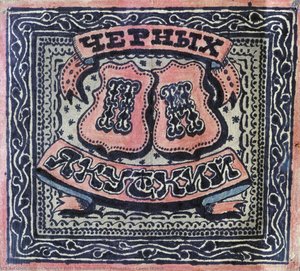
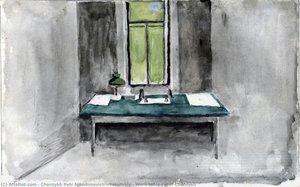
- Work table Peter Chernykh
- Cover layout
- Place Of Birth: Iinna, Russia
Related Articles

Watercolor Wonders: 10 Masterpieces That Redefined Art History | ArtsDot
Journey through 10 legendary watercolor masterpieces by Sargent, Turner & Homer! Explore iconic landscapes, portraits & floral art that redefined history. Find museum-quality reproductions and curated decor ideas at ArtsDot.com.

Ephemeral Visions: Exploring the Artistic Legacy & Contemporary Practice of Watercolor Painting
Explore the captivating world of watercolor painting! Discover its rich history, essential techniques, influential artists & collecting tips. A comprehensive guide for art enthusiasts from ArtsDot.

Ephemeral Visions: Exploring the History & Emotional Resonance of Watercolor Painting
Explore the captivating history of watercolor painting, from ancient techniques to modern masters like Kandinsky & Blake. Discover essential artists, collecting tips & the emotional power of this luminous medium. Expert insights for art enthusiasts.

Ephemeral Visions: Exploring the Artistic Legacy & Nuances of Watercolor Painting
Explore the captivating world of watercolor painting! Discover its rich history, essential techniques, influential artists & collecting tips from art experts. A comprehensive guide for enthusiasts.

John Constable's Masterpieces: Explore 25 Iconic Landscapes for Your Home
Journey through John Constable's 25 most celebrated landscapes. Explore Romanticism, Dedham Vale & his masterful use of light in iconic paintings like 'Hay Wain'. Find museum-quality art reproductions and elevate your home decor on ArtsDot.com.