 Preview
 Send
Send Share
Share
 Details

 Download
 Similars
 X-Ray
X-Ray Diaporama
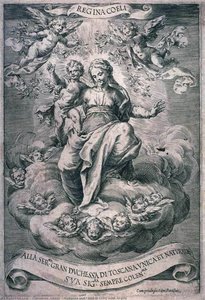
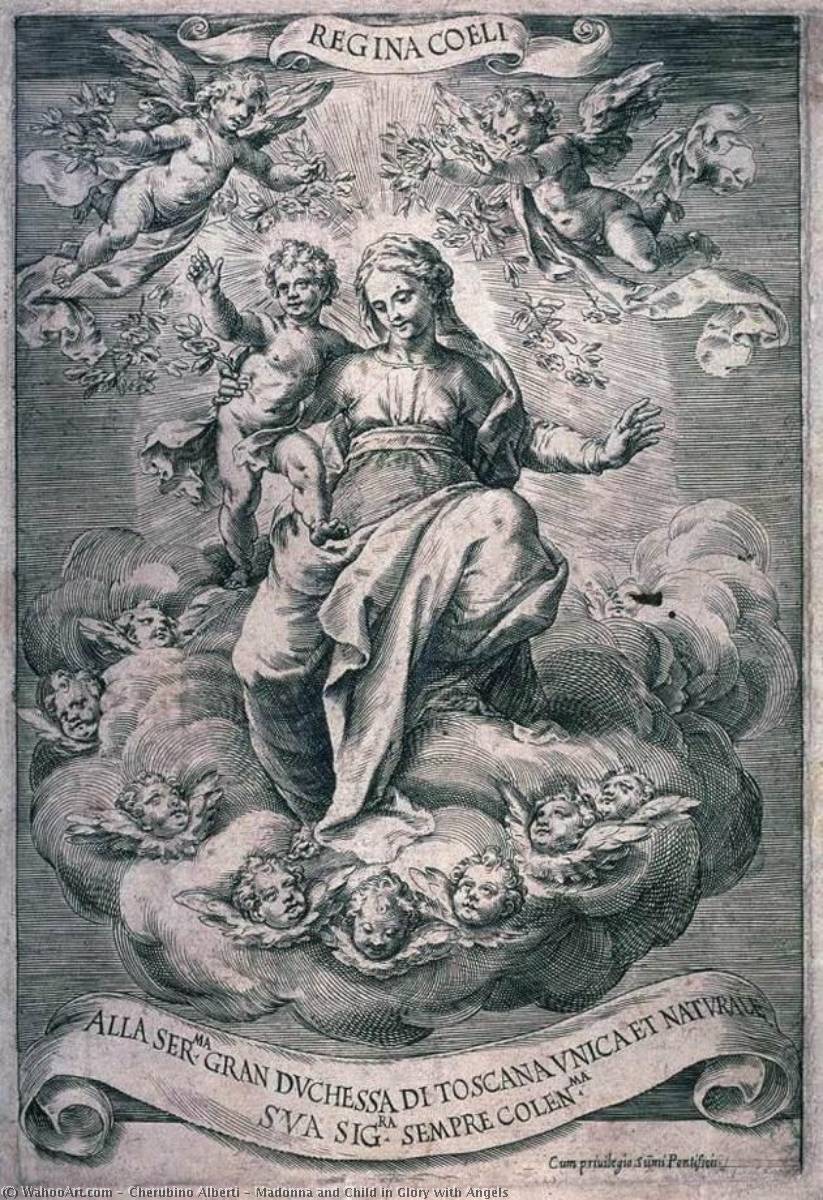
Madonna and Child in Glory with Angels


 Read More
Hand Made Oil Reproduction
Hand-painted oil on canvas in your size and frame, made to order by our artists. ( Buy Print Buy Image)




P118B $10

P118H $10

P118W $10

P438Z $10

P508JH $12

P508YH $12

P805H $10

P805Z $10

P919BZ $10

P919G $10

P919XJ $10

P959ZH $10

P968JZ $12

W106C $8

W218G $10

W218JH $8

W218Y $10

W307PJ $10

W316G $10

W316PJ $8

W316Y $10

W398PJ $8

W4111J $10

W500HY $15

W500JH $15

W692G $12

W849H $8

W940BG $15

W953PJ $8




Pick from our preset sizes that match the artwork's original proportions.

You may enter your own dimensions to fit a specific frame or space. If your selected size does not match the original image's proportions, we will either crop the artwork or extend the painting with additional hand-painted elements. A digital mockup will be sent for your approval before production begins.
Please note that the on-screen preview does not reflect the actual cropping or extension. Only the mockup will accurately show the final composition.
While custom sizes are available, we recommend selecting a dimension from the predefined list to preserve the original proportions.
After order, ArtsDot.com team will email client for instructions and provide a mockup preview
Worldwide Delivery () in 3/4 weeks instead of standard 5 weeks. (23 August). No compromise on quality.

Free Worldwide Express Shipping

High-Quality Linen Canvas

Full Shipping Insurance

Customs Tax Refund Guarantee

True Color Matching Guarantee

60-Day Return Policy (Defects Only)

100% Money-Back Guarantee

Bulk Discount Offer
 Glass option is only available in size under 110 CM

Madonna and Child in Glory with Angels
Reproduction Medium
Reproduction Size
-


Total Price
$ 363
Artwork Description
Cherubino Alberti’s Madonna and Child in Glory with Angels: A Renaissance Masterpiece of Detail and Devotion
The engraving “Madonna and Child in Glory with Angels,” attributed to Cherubino Alberti (1553–1615), represents a cornerstone of Mannerist printmaking—a testament to the Borghegiano family’s artistic prowess during Clement VIII's reign. While overshadowed by his brother Giovanni’s monumental frescoes adorning the Sala Clementina, Cherubino Alberti carved out a distinct niche as an engraver, achieving renown for his unparalleled precision and stylistic innovation. Born in Borgo San Sepulcro, Tuscany, Alberti inherited a tradition of craftsmanship from his father, Alberto Alberti—a sculptor who instilled within him a profound respect for meticulous observation and technical virtuosity.A Synthesis of Raphael’s Idealism and Mannerist Complexity
Alberti's artistic journey began under the tutelage of Cornelius Cort in Rome, where he absorbed the stylistic influences of Raphael—particularly his harmonious compositions and idealized figures—yet swiftly embraced the burgeoning complexities characteristic of Mannerism. This fusion resulted in an artwork that transcends mere imitation; it embodies a sophisticated reworking of classical ideals, reflecting the anxieties and spiritual fervor prevalent within Renaissance Italy. The engraving’s pyramidal structure mirrors Raphael's frescoes, grounding the scene in established artistic conventions while simultaneously introducing dynamic movement and unsettling asymmetry—a hallmark of Mannerist aesthetics.Technique and Craftsmanship: The Art of Copperplate Engraving
The engraving itself exemplifies the mastery of copperplate engraving—a technique that demanded extraordinary skill and patience. Alberti began by meticulously transferring a drawing onto a prepared metal plate, typically zinc or copper, using techniques honed through generations of familial tradition. Fine lines were incised into the surface with specialized tools—burins—creating an impression matrix that would subsequently be inked and pressed onto paper to produce multiple impressions. This process allowed for unparalleled detail, capturing textures and nuances unattainable by fresco painting or oil paint. The use of hatching and cross-hatching techniques skillfully rendered shading and depth, mimicking the effects of light and shadow with remarkable accuracy.Symbolism and Spiritual Resonance: Glory and Divine Protection
Beyond its technical brilliance, “Madonna and Child in Glory with Angels” resonates deeply with Christian symbolism. The Virgin Mary, depicted in serene repose, embodies maternal compassion and spiritual purity—values central to Renaissance piety. Surrounding her are four angels, positioned dynamically and radiating divine luminescence, symbolizing God’s protection and grace. The halos encircling Mary and Christ emphasize their holiness, reinforcing the artwork's overarching message of faith and devotion. The swirling clouds serve as a backdrop for this celestial tableau, conveying a sense of transcendence and elevating the scene to a realm beyond earthly concerns.Emotional Impact: A Moment of Reverence
Ultimately, Alberti’s engraving transcends mere visual representation; it evokes profound emotional responses. Its stillness juxtaposed with dynamic movement captures a fleeting moment of contemplation—a gesture of reverence directed toward the divine. The artwork's meticulous detail invites viewers to immerse themselves in its beauty and contemplate the timeless themes of motherhood, faith, and spiritual aspiration. “Madonna and Child in Glory with Angels” remains an enduring symbol of Renaissance artistic excellence and continues to inspire admiration for its masterful execution and profound emotional impact.Related Artworks
Artist Biography
Cherubino Alberti: The Borghegiano Master of Mannerist Engraving
Cherubino Alberti (1553–1615), also called Borghegiano, stands as a pivotal figure in the artistic landscape of Renaissance Italy—specifically during the fervent patronage of Clement VIII. Though overshadowed by his brother Giovanni’s more celebrated frescoes within the Vatican’s Sala Clementina, Cherubino’s singular contribution to engraving cemented his legacy as one of the era's foremost printmakers and solidified his family’s reputation for artistic excellence. Born in Borgo San Sepulcro, Tuscany, Alberti descended from a lineage deeply rooted in craftsmanship; his father, Alberto Alberti, was a sculptor and carver—a familial tradition that instilled within Cherubino himself an unwavering dedication to meticulous detail and technical mastery.- Early Influences & Training: Alberti’s artistic education commenced under Cornelius Cort in Rome, where he absorbed the stylistic precepts of Raphael and embraced the prevailing currents of Mannerist art. This formative period exposed him to the grandeur and innovation of Michelangelo's monumental sculptures and instilled a profound appreciation for expressive distortion—a hallmark of the Mannerist aesthetic.
- Engraving Virtuoso: Alberti swiftly established himself as an exceptional engraver, meticulously replicating the visions of his contemporaries. His initial commissions focused on works by Federico and Taddeo Zuccari, followed by collaborations with Raphael, Michelangelo, Polidoro da Caravaggio, Andrea del Sarto, Rosso Fiorentino, Marco Pino Sebastianio, and Cristofano Gherardi—artists whose stylistic prowess profoundly impacted Alberti’s oeuvre. Notably, he undertook projects based on ancient sculptures, demonstrating a keen interest in classical ideals and techniques.
The Sala Clementina Frescoes: A Collaborative Triumph
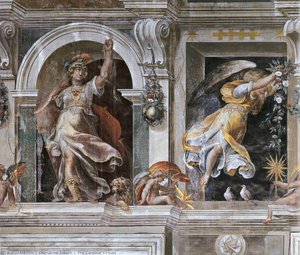
Perhaps Alberti's most enduring achievement resides in his partnership with Giovanni Alberti during the decoration of the Sala Clementina—a monumental fresco cycle commissioned by Pope Clement VIII. This ambitious undertaking demanded unparalleled artistic coordination and technical prowess, resulting in a breathtaking panorama of mythological scenes rendered with remarkable precision and emotional depth. The frescoes exemplify the collaborative spirit characteristic of Florentine art circles during this period and stand as testament to Alberti’s ability to synthesize disparate influences into a cohesive visual narrative.- Technique & Style: Alberti's engraving style was characterized by meticulous draughtsmanship, subtle tonal gradations, and an unwavering commitment to capturing the nuances of form and texture—traits that mirrored his fresco technique. He skillfully employed etching and drypoint methods, achieving astonishing levels of detail and expressive power.
- Notable Engravings: Alberti produced over 180 engravings during his lifetime, showcasing a diverse range of subjects—from biblical narratives to mythological allegories to portraits of prominent figures. Among his most celebrated prints are depictions of Raphael’s “School of Athens,” Michelangelo’s “Creation of Adam,” and scenes from Caravaggio's dramatic compositions.
Legacy & Historical Significance
Cherubino Alberti’s contribution to the artistic heritage of Italy extends far beyond his individual engravings. He served as director of the Accademia di San Luca—Rome’s premier artists’ guild—promoting artistic innovation and fostering a vibrant intellectual environment. His influence permeated Florentine art circles, shaping stylistic trends and inspiring subsequent generations of engravers and painters. Alberti's meticulous craftsmanship and unwavering dedication to classical ideals ensured that his work would endure as an exemplar of Mannerist excellence—a testament to the enduring power of artistic vision and technical skill.Further Exploration
For a deeper understanding of Cherubino Alberti’s life and artistry, consult resources such as:- Wikipedia:
- Getty Museum:
- The Art Institute of Chicago:
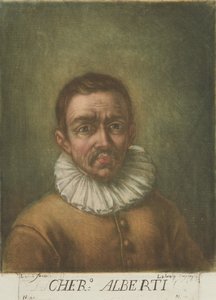
Cherubino Alberti
1553 - 1615
Quick Facts
- Artistic Movement Or Style: Mannerist
- Artists Or Movements Influenced By This Artist: ['Renaissance art']
- Artists Who Influenced This Artist:
- Raphael
- Michelangelo
- Cornelius Cort
- Date Of Birth: February 24, 1553
- Date Of Death: October 18, 1615
- Full Name: Cherubino Alberti
- Nationality: Italian
- Notable Artworks:
- Sala Clementina frescoes
- Madonna and Child in Glory with Angels
- Fame
- Place Of Birth: Borgo San Sepulcro, Tuscany
Related Articles
Engraving's Golden Age: 10 Masterpieces That Redefined Art | ArtsDot
Journey through art history with our Top 10 Legendary Engravings! Explore masterpieces by Dürer, Rembrandt & Goya. Discover the stories behind these iconic prints and find museum-quality reproductions for your home at ArtsDot.com.
Engraving: A Historical Survey of Technique, Artistic Expression & Enduring Legacy
Explore the rich history of engraving with ArtsDot. Discover techniques, iconic artists like Dürer & Callot, collecting tips, and expert guidance for preserving your art investment. Learn about intaglio printing & more!

The Intricate World of Engraving: A Historical Survey of Technique, Artistic Expression & Enduring Legacy
Explore the rich history of engraving with ArtsDot. Discover techniques, iconic artists like Dürer & Callot, collecting tips, and expert guidance for preserving your art investment. Learn about intaglio printing & more!
Raphael's Masterpieces: 25 Iconic Paintings & Renaissance Art for Your Home
Explore 25 breathtaking Raphael paintings! Journey through the Italian Renaissance with masterpieces like 'School of Athens' & iconic Madonnas. Find museum-quality art reproductions and elevate your home decor on ArtsDot.com.
Hendrick Goltzius: Master Engraver & the Flourishing of Dutch Mannerism
Explore the life & art of Hendrick Goltzius, a master engraver of Dutch Mannerism. Discover his innovative techniques, iconic engravings like 'Jahel', and lasting influence on Baroque art. Learn about collecting Goltzius today.