 Preview
 Send
Send Share
Share
 Details

 Download
 Similars
 X-Ray
X-Ray Diaporama
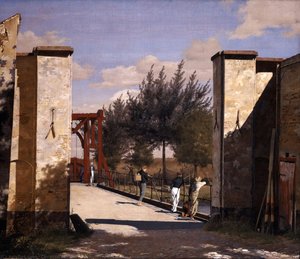
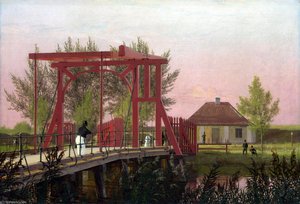
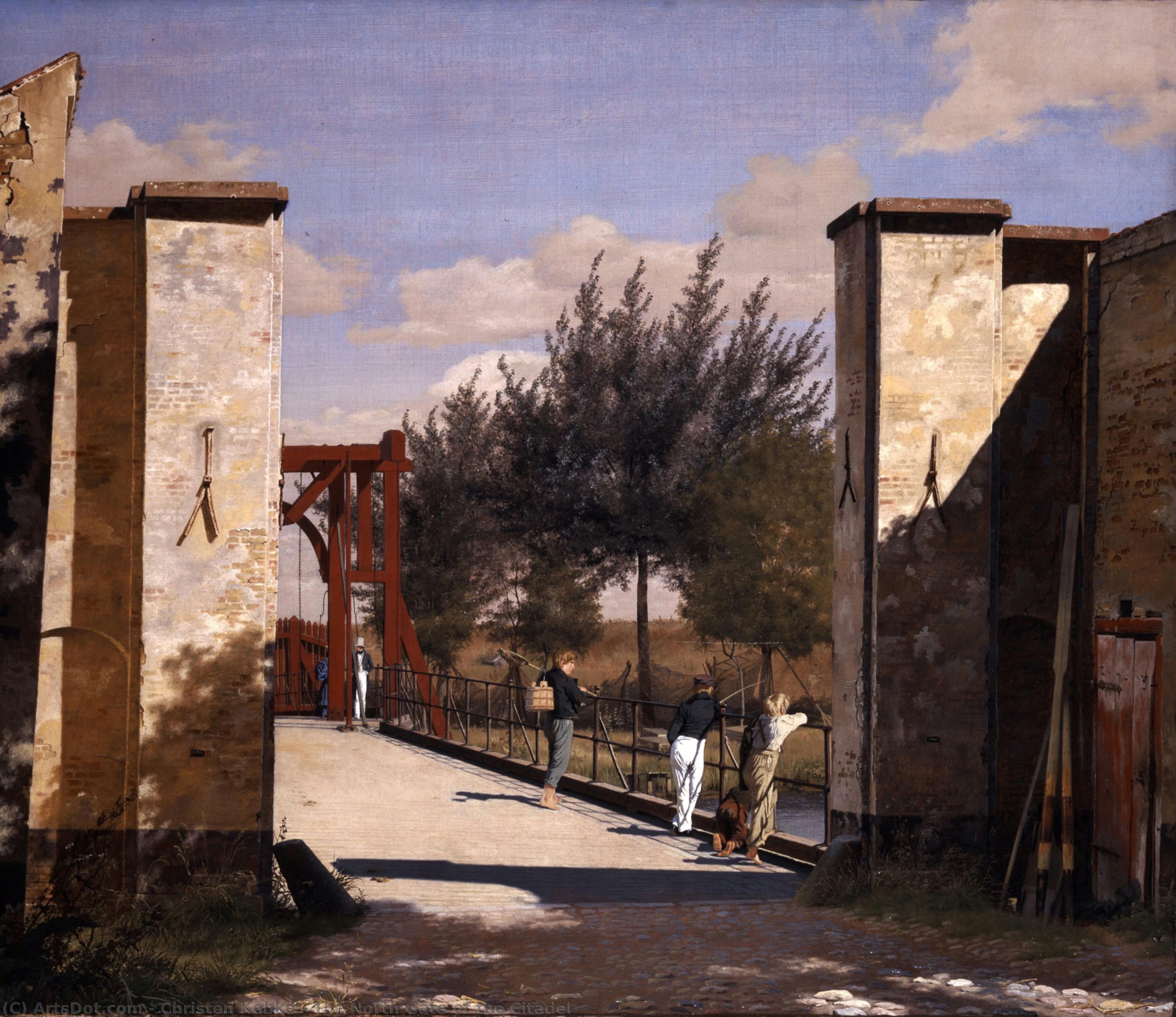
The North Gate of the Citadel
 Oil On Canvas
- WallArt
- Romanticism
 1834
1834- 19th Century
 93.0 x 79.0 cm
 Ny Carlsberg Glyptotek
 Read More
Hand Made Oil Reproduction
Hand-painted oil on canvas in your size and frame, made to order by our artists. ( Buy Print Buy Image)




P118B $10

P118H $10

P118W $10

P438Z $10

P508JH $12

P508YH $12

P805H $10

P805Z $10

P919BZ $10

P919G $10

P919XJ $10

P959ZH $10

P968JZ $12

W106C $8

W218G $10

W218JH $8

W218Y $10

W307PJ $10

W316G $10

W316PJ $8

W316Y $10

W398PJ $8

W4111J $10

W500HY $15

W500JH $15

W692G $12

W849H $8

W940BG $15

W953PJ $8




Pick from our preset sizes that match the artwork's original proportions.

You may enter your own dimensions to fit a specific frame or space. If your selected size does not match the original image's proportions, we will either crop the artwork or extend the painting with additional hand-painted elements. A digital mockup will be sent for your approval before production begins.
Please note that the on-screen preview does not reflect the actual cropping or extension. Only the mockup will accurately show the final composition.
While custom sizes are available, we recommend selecting a dimension from the predefined list to preserve the original proportions.
After order, ArtsDot.com team will email client for instructions and provide a mockup preview
Worldwide Delivery () in 3/4 weeks instead of standard 5 weeks. (26 August). No compromise on quality.

Free Worldwide Express Shipping

High-Quality Linen Canvas

Full Shipping Insurance

Customs Tax Refund Guarantee

True Color Matching Guarantee

60-Day Return Policy (Defects Only)

100% Money-Back Guarantee

Bulk Discount Offer
 Glass option is only available in size under 110 CM

The North Gate of the Citadel
Reproduction Medium
Reproduction Size
-


Total Price
$ 263
Artwork Description
A Twilight Symphony in Danish Romanticism
In the quiet, amber-hued moments of a Copenhagen dusk, Christen Købke found his most profound inspiration. His 1834 masterpiece, The North Gate of the Citadel, is far more than a mere topographical record of Denmark’s fortifications; it is an evocative window into the soul of the Danish Golden Age. As the sun retreats behind the horizon, the canvas breathes with the hazy, ethereal light of twilight, capturing that fleeting transition where the solid world begins to dissolve into memory. The scene overlooks the historic Rosenborg Slot, presenting a panoramic vista where the imposing stone walls of the citadel meet the soft, encroaching shadows of the evening. Through Købke’s eyes, we do not merely see a landscape; we experience the profound stillness of a moment suspended in time.
The brilliance of this work lies in its delicate balance between Romanticism and an early, intuitive Impressionism. While the era was defined by grand historical narratives, Købke turned his gaze toward the intimate and the atmospheric. He masterfully employs a technique characterized by subtle gradations of color and soft, blended brushstrokes that prioritize the sensation of light over rigid, anatomical precision. The palette is a sophisticated arrangement of muted browns, deep greens, and cool blues, layered with such care that they convey the damp, cooling air of a Danish evening. This deliberate blurring of edges creates a sense of depth and mystery, inviting the viewer to wander through the mist toward the bridge that spans the moat, acting as a visual anchor within the composition.
Symbolism and the Emotional Landscape
Beyond its aesthetic splendor, The North Gate of the Citadel carries a deep emotional resonance that speaks to the concept of national identity and nostalgia. For the contemporary viewer, the painting offers a sense of tranquility and contemplation, a sanctuary of peace in an increasingly frenetic world. The bridge serves as a powerful metaphor for connection—linking the foreground of our immediate perception to the distant, historical grandeur of the citadel. There is a quiet dignity in the way Købker depicts the interplay between man-made structures and the natural elements, suggesting a harmonious coexistence between the strength of the fortifications and the ephemeral beauty of the twilight sky.
For collectors and interior designers alike, this painting represents a timeless investment in atmosphere. Its muted tones and balanced composition make it an exquisite centerpiece for a curated space, capable of imparting a sense of historical depth and sophisticated calm to any room. Whether placed in a sunlit gallery or a moody, library-style study, the artwork functions as a portal to the 19th century, offering a continuous dialogue between the past and the present. To possess a reproduction of this caliber is to bring a piece of Denmark's luminous heritage into one's own environment, fostering an enduring connection to the sublime beauty of the natural world.
Related Artworks
Artist Biography
Early Life and Training
- Born: May 26, 1810, Copenhagen Harbour, Denmark
- Died: February 7, 1848
- Christen Købke was born into a family of modest means; his father worked as a baker.
- His artistic talents were encouraged from an early age.
- He began formal training at the Royal Danish Academy of Fine Arts in Copenhagen.
- Studied under Christoffer Wilhelm Eckersberg, a renowned artist, which laid the foundation for his future success.
Artistic Career and Style
- Købke's work focused on capturing everyday life and landscapes of Denmark.
- Paintings often featured landscapes, portraits, and architectural scenes.
- Notable works include "Valdemar Hjartvar Købke (1813–1893), the artist’s brother" at the Metropolitan Museum of Art.
- Known for a nationalistic approach to art, emphasizing Danish culture and landscapes. Examples: “Frederiksborg Slot ved Aften”.
- His style is characterized by precise treatment of light and atmosphere, balanced compositions, and detailed depictions of natural elements.
Influences and Development
- Strongly influenced by Christoffer Wilhelm Eckersberg's emphasis on observing nature.
- Niels Lauritz Høyen’s promotion of nationalistic art encouraged Købke to depict Danish culture and landscapes.
- Early works showed the influence of classical landscape painting, particularly from Dresden and Italy.
- His travels to Germany and Italy (1838-1840) exposed him to new artistic perspectives but his later studio works based on these sketches were not well received.
Major Achievements and Historical Significance
- Considered one of the most talented artists of the Danish Golden Age.
- His focus on everyday life and landscapes influenced a generation of Danish artists, including Wilhelm Marstrand.
- His paintings are now held in various museums and collections worldwide, including the National Gallery of Denmark, J. Paul Getty Museum, Louvre Museum, and Metropolitan Museum of Art.
- Købke’s legacy lies in his ability to capture the essence of Danish culture and identity through realistic depictions of landscapes and everyday scenes.
Later Life and Legacy
- In 1846, Købke's application for admission to the Academy was rejected.
- He died of pneumonia in 1848 at the age of 37.
- Initially overlooked after his death, Købke’s work gained recognition and appreciation towards the end of the 19th century.
- Today, he is celebrated for his beauty, simplicity, and ability to capture the essence of everyday life in 19th-century Denmark.
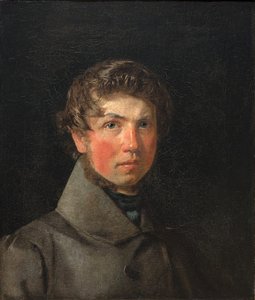
christen købke
1810 - 1848 , Denmark
Quick Facts
- Artistic Movement Or Style: Golden Age of Danish Painting
- Artists Or Movements Influenced By This Artist: ['Wilhelm Marstrand']
- Artists Who Influenced This Artist: ['Christoffer Wilhelm Eckersberg']
- Date Of Birth: May 26, 1810
- Date Of Death: February 7, 1848
- Full Name: Christen Schiellerup Købke
- Nationality: Danish
- Notable Artworks:
- Valdemar Hjartvar Købke
- Frederiksborg Slot ved aften
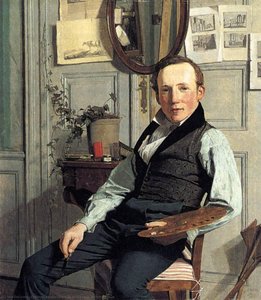
- Portrait of Frederik Sødring
- Place Of Birth: Copenhagen, Denmark
Related Articles

Giclée Prints: Archival Quality & Aesthetic Nuances for the Discerning Collector
Explore the world of giclée prints with ArtsDot. Learn about archival quality, aesthetic nuances & investment potential. Expert guidance for discerning art collectors seeking museum-quality reproductions and lasting value.

The Enduring Legacy of Fine Art Prints: Technique, History & Aesthetic Impact
Explore the rich history & techniques of fine art prints. Discover investment potential, assess authenticity, and learn how to preserve your collection with expert guidance. Trusted insights for discerning collectors.

Echoes of Time: Exploring the Enduring Appeal & Historical Context of Vintage Art Prints
Explore the captivating world of vintage art prints! Discover their history, collecting tips & enduring appeal. Expert insights on chromolithography and building a legacy collection with ArtsDot.
Impressionist Landscapes: 10 Masterpieces for Your Home | ArtsDot
Journey through 10 iconic Impressionist landscapes by Monet, Renoir & Degas. Explore the history, techniques & emotions behind these masterpieces. Find museum-quality reproductions for your home at ArtsDot.com – where art comes to life! Discover all masterpieces on ArtsDot.com
Romantic Realism's Finest: 10 Masterpieces for Your Home | ArtsDot
Explore 10 defining masterpieces of Romantic Realism! Discover Courbet, Millet & Daumier's powerful paintings—capturing emotion and social realities. Find museum-quality reproductions for your home at ArtsDot.com.