 Preview
 Send
Send Share
Share
 Details

 Download
 Similars
 X-Ray
X-Ray Diaporama
 Stats
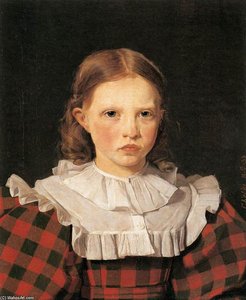
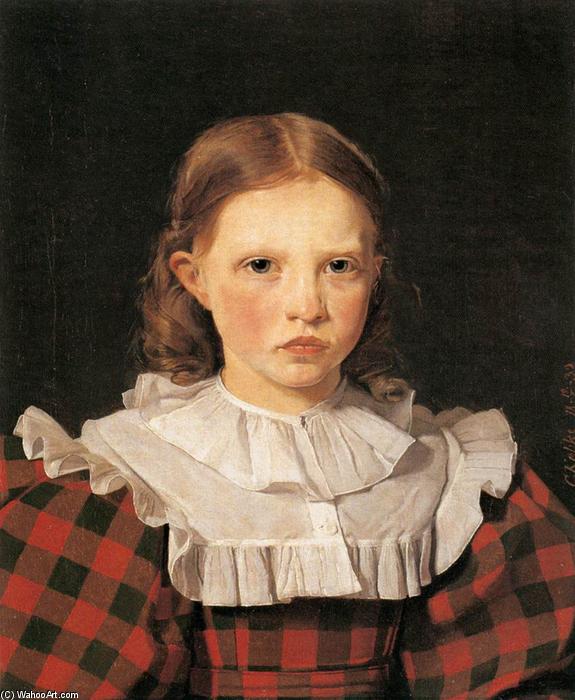
StatsPortrait of Adolphine Købke, Sister of the Artist
 Acrylic On Canvas
- WallArt
- Romanticism
 1832
1832 42.0 x 35.0 cm
 The Louvre
 Read More
Hand Made Oil Reproduction
Hand-painted oil on canvas in your size and frame, made to order by our artists. ( Switch to Print Switch to Digital Image)




P118B $10

P118H $10

P118W $10

P438Z $10

P508JH $12

P508YH $12

P805H $10

P805Z $10

P919BZ $10

P919G $10

P919XJ $10

P959ZH $10

P968JZ $12

W106C $8

W218G $10

W218JH $8

W218Y $10

W307PJ $10

W316G $10

W316PJ $8

W316Y $10

W398PJ $8

W4111J $10

W500HY $15

W500JH $15

W692G $12

W849H $8

W940BG $15

W953PJ $8




Pick from our preset sizes that match the artwork's original proportions.

You may enter your own dimensions to fit a specific frame or space. If your selected size does not match the original image's proportions, we will either crop the artwork or extend the painting with additional hand-painted elements. A digital mockup will be sent for your approval before production begins.
Please note that the on-screen preview does not reflect the actual cropping or extension. Only the mockup will accurately show the final composition.
While custom sizes are available, we recommend selecting a dimension from the predefined list to preserve the original proportions.
After order, ArtsDot.com team will email client for instructions and provide a mockup preview
Worldwide Delivery () in 3/4 weeks instead of standard 5 weeks. (10 September). No compromise on quality.

Free Worldwide Express Shipping

High-Quality Linen Canvas

Full Shipping Insurance

Customs Tax Refund Guarantee

True Color Matching Guarantee

100-Day Return Policy (Defects Only)

100% Money-Back Guarantee

Bulk Discount Offer
 Glass option is only available in size under 110 CM

Portrait of Adolphine Købke, Sister of the Artist
Reproduction Medium
Reproduction Size
-


Total Price
$ 263
A Glimpse into Domesticity: The Intimate Portrait of Christen Købke
Christen Købke’s “Portrait of Adolphine Købke, Sister of the Artist,” painted in 1832, is more than just a likeness; it's a carefully constructed window into the heart of 19th-century Danish domestic life. This remarkably intimate portrait captures a young girl, Adolphine, not amidst grand gestures or formal settings, but within the quiet confines of her family home. Købke, a pivotal figure in the Danish Golden Age movement, masterfully employs light and observation to convey a profound sense of introspection and youthful contemplation – a rare quality for portraits of that era.
The painting immediately draws the viewer’s eye to Adolphine's face. Her expression is not one of forced prettiness or studied grace, but rather a subtle melancholy, a thoughtful pause in her gaze directed directly at the observer. Her long hair, loosely braided, frames a delicate profile, hinting at both vulnerability and nascent beauty. Købke’s skill lies in his ability to capture this fleeting moment of inner life – a feeling that resonates deeply with viewers even today. The muted palette—soft browns, creams, and subtle blues—further enhances the painting's contemplative mood, creating an atmosphere of serene intimacy.
The Language of Light and Observation: Købke’s Technique
Købke was renowned for his meticulous attention to detail and his innovative use of light. He eschewed the traditional dark studio backgrounds favored by many of his contemporaries, instead opting for a naturalistic setting within the family home. This choice immediately establishes a sense of immediacy and authenticity. The light streaming in from an unseen window illuminates Adolphine’s face and dress, creating a soft, diffused glow that emphasizes her youthful features. Notice how Købke subtly renders the textures – the folds of the fabric, the sheen on her hair—with delicate brushstrokes, demonstrating his mastery of capturing the nuances of everyday materials.
Furthermore, Købke’s technique is characterized by a remarkable sense of spatial depth. He doesn't simply depict Adolphine; he creates an entire scene – a glimpse into a private moment within a family home. The partially visible figures in the background—a man and a woman—suggest a familial connection, adding another layer of narrative to the portrait. This layering of detail is a hallmark of Købke’s style, reflecting his commitment to portraying the complexities of human experience.
A Reflection of Danish Identity: Historical Context
Painted during the height of the Danish Golden Age, “Portrait of Adolphine Købke” embodies the nationalistic aspirations of the time. Artists like Købke sought to capture the essence of Danish life—its landscapes, its customs, and its people—in a way that celebrated the nation’s unique identity. Købke's focus on domestic scenes, particularly those featuring women and children, aligned with this trend, offering a counterpoint to the more heroic or historical subjects favored by many other artists.
Christen Købke himself was deeply influenced by his mentor, Christoffer Wilhelm Eckersberg, who emphasized the importance of direct observation and the depiction of everyday life. However, Købke’s work possesses a distinctively personal quality—a sensitivity to emotion and an ability to capture the subtle nuances of human interaction that set him apart from his contemporaries. The painting serves as a poignant reminder of a time when art was deeply intertwined with national identity and social values.
A Timeless Portrait: Symbolism and Emotional Resonance
Beyond its technical brilliance, “Portrait of Adolphine Købke” resonates with viewers on an emotional level. The girl’s contemplative gaze invites us to contemplate our own experiences of introspection and quiet reflection. The painting's simplicity—its restrained palette and uncluttered composition—allows the viewer to focus entirely on Adolphine’s expression, creating a powerful connection between subject and observer. It is a portrait that speaks not just of a young girl, but of the universal human experience of being present in the moment.
Related Artworks

Artist Biography
Early Life and Training
- Born: May 26, 1810, Copenhagen Harbour, Denmark
- Died: February 7, 1848
- Christen Købke was born into a family of modest means; his father worked as a baker.
- His artistic talents were encouraged from an early age.
- He began formal training at the Royal Danish Academy of Fine Arts in Copenhagen.
- Studied under Christoffer Wilhelm Eckersberg, a renowned artist, which laid the foundation for his future success.
Artistic Career and Style
- Købke's work focused on capturing everyday life and landscapes of Denmark.
- Paintings often featured landscapes, portraits, and architectural scenes.
- Notable works include "Valdemar Hjartvar Købke (1813–1893), the artist’s brother" at the Metropolitan Museum of Art.
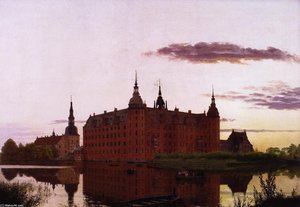
- Known for a nationalistic approach to art, emphasizing Danish culture and landscapes. Examples: “Frederiksborg Slot ved Aften”.
- His style is characterized by precise treatment of light and atmosphere, balanced compositions, and detailed depictions of natural elements.
Influences and Development
- Strongly influenced by Christoffer Wilhelm Eckersberg's emphasis on observing nature.
- Niels Lauritz Høyen’s promotion of nationalistic art encouraged Købke to depict Danish culture and landscapes.
- Early works showed the influence of classical landscape painting, particularly from Dresden and Italy.
- His travels to Germany and Italy (1838-1840) exposed him to new artistic perspectives but his later studio works based on these sketches were not well received.
Major Achievements and Historical Significance
- Considered one of the most talented artists of the Danish Golden Age.
- His focus on everyday life and landscapes influenced a generation of Danish artists, including Wilhelm Marstrand.
- His paintings are now held in various museums and collections worldwide, including the National Gallery of Denmark, J. Paul Getty Museum, Louvre Museum, and Metropolitan Museum of Art.
- Købke’s legacy lies in his ability to capture the essence of Danish culture and identity through realistic depictions of landscapes and everyday scenes.
Later Life and Legacy
- In 1846, Købke's application for admission to the Academy was rejected.
- He died of pneumonia in 1848 at the age of 37.
- Initially overlooked after his death, Købke’s work gained recognition and appreciation towards the end of the 19th century.
- Today, he is celebrated for his beauty, simplicity, and ability to capture the essence of everyday life in 19th-century Denmark.
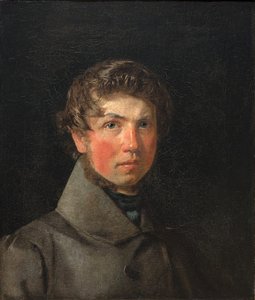
christen købke
1810 - 1848 , Denmark
Quick Facts
- Artistic Movement Or Style: Golden Age of Danish Painting
- Artists Or Movements Influenced By This Artist: ['Wilhelm Marstrand']
- Artists Who Influenced This Artist: ['Christoffer Wilhelm Eckersberg']
- Date Of Birth: May 26, 1810
- Date Of Death: February 7, 1848
- Full Name: Christen Schiellerup Købke
- Nationality: Danish
- Notable Artworks:
- Valdemar Hjartvar Købke
- Frederiksborg Slot ved aften
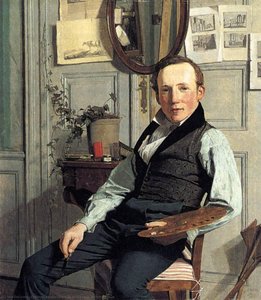
- Portrait of Frederik Sødring
- Place Of Birth: Copenhagen, Denmark
Related Articles

Golden Age Reflections: Dutch Baroque Painting & Cultural Innovation
Explore the Dutch Golden Age of painting! Discover key artists like Vermeer & ter Borch, their innovative techniques, and the rich cultural context behind these Baroque masterpieces. Learn about collecting & appreciating this iconic art period.
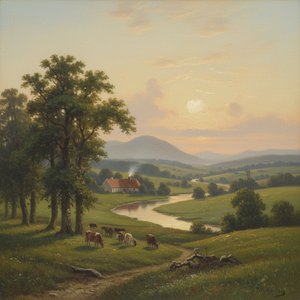
Peder Mørk Mønsted: Capturing the Danish Golden Age Landscape – A Study in Atmospheric Realism
Explore the captivating landscapes of Peder Mørk Mønsted, a master of Danish Golden Age realism. Discover his atmospheric techniques, influences, and enduring legacy in our expert analysis.
Illuminating Realism: Exploring the Dutch Golden Age of Painting (1600-1700)
Explore the Dutch Golden Age of painting (1600-1700) with ArtsDot. Discover Rembrandt, Vermeer & other masters. Learn about techniques, history & find museum-quality reproductions.

Dutch Masters: 10 Golden Age Paintings That Still Inspire |
Journey into the Dutch Golden Age! Explore 10 iconic paintings by Rembrandt, Vermeer & Hals. Discover the stories behind these Baroque masterpieces and find museum-quality art reproductions to elevate your home decor on .

Illuminating Innovation: Exploring the Dutch Golden Age of Painting
Explore the Dutch Golden Age of painting with ArtsDot. Discover Rembrandt, Vermeer & other Masters. Learn about key characteristics, iconic artworks, and lasting influence. Expert insights for collectors & enthusiasts.