Introduction: The Legacy of Danish Landscape Painting
The 19th century witnessed a remarkable flourishing of artistic talent in Denmark, a period often celebrated as the Golden Age. While figures like Christoffer Wilhelm Eckersberg laid the foundational principles of realism, it was artists such as Peder Mørk Mønsted who truly captured the soul of the Danish countryside – its subtle light, its melancholic beauty, and its profound connection to national identity. Mønsted wasn’t merely documenting landscapes; he was evoking a feeling, a sense of belonging, and a quiet reverence for the natural world that resonated deeply with a nation undergoing rapid change. His work stands as a testament to the power of observation, meticulous technique, and an artist's ability to transform ordinary scenes into enduring works of art.
Early Life and Artistic Formation: Foundations in Realism
 Wikipedia: Peder Mørk Mønsted
Peder Mørk Mønsted (10 December 1859 – 20 June 1941) was a Danish realist painter. He is best known for his landscape paintings in a realistic style. His favorite motifs include snowy winter landscapes, still water and forests. == Biography == Møns...
Born in 1859 at Balle Mølle near Grenå, Denmark, Peder Mørk Mønsted’s artistic journey began early. His father, a prosperous ship-builder, provided a stable environment that allowed young Mønsted to pursue his passion for painting. Initial lessons at the art school in Aarhus sparked an interest that quickly blossomed into dedicated study. From 1875 to 1879, he formally trained at the Royal Academy of Fine Arts in Copenhagen, under the tutelage of Niels Simonsen and Julius Exner – figures who instilled within him a commitment to realistic representation. However, Mønsted’s artistic development wasn't confined to academic instruction. A pivotal period came with his studies under Peder Severin Krøyer in 1878, absorbing the principles of plein air painting and a more direct engagement with nature. This foundation in realism would become the cornerstone of his distinctive style.
The Essence of Mønsted’s Style: Atmospheric Perspective and Detail
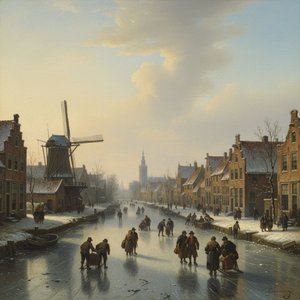
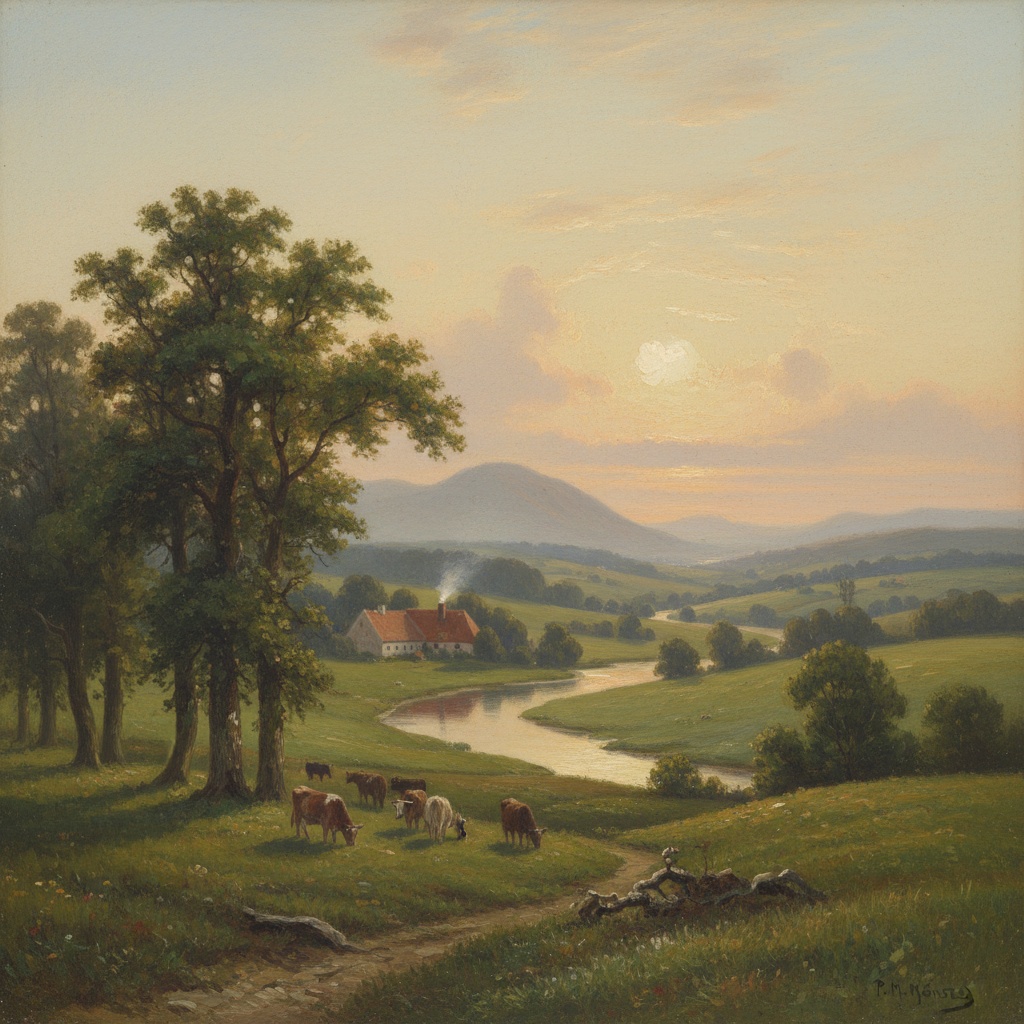
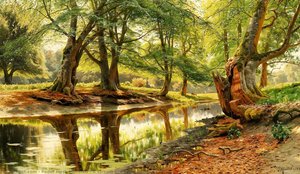
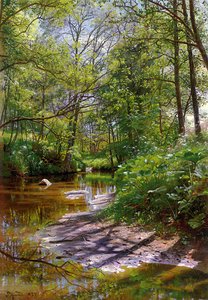
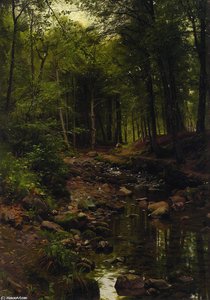
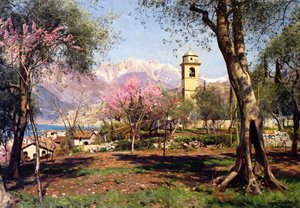
Mønsted's paintings are immediately recognizable for their breathtaking detail and masterful use of atmospheric perspective – a technique he refined throughout his career. He didn’t simply paint what he *saw*, but rather how light interacted with the landscape, softening edges, muting colors in the distance, and creating an illusion of depth that drew the viewer into the scene. This wasn't merely technical skill; it was an intuitive understanding of optics and a dedication to capturing the ephemeral qualities of light and shadow. His favorite motifs – snowy winter landscapes, still water reflecting the sky, dense forests shrouded in mist – were chosen specifically for their ability to showcase these effects. The artist’s meticulous brushwork, often described as academic naturalism, allowed him to render textures with astonishing accuracy, from the delicate branches of a snow-laden tree to the subtle ripples on a lake's surface.
Travels and Influences: Shaping a Nordic Vision
Mønsted was not content to remain confined within the borders of Denmark. He embarked on extensive travels throughout Europe and beyond, seeking inspiration and broadening his artistic horizons. A period in Rome and Capri in 1882 exposed him to classical influences, while a subsequent visit to Paris in 1883 brought him into contact with the studios of William Adolphe Bouguereau. However, it was his journeys further afield – to Algeria in 1889, Greece in 1892 (where he enjoyed patronage from King George I), Egypt, and Switzerland – that truly shaped his unique vision. These travels weren’t simply about acquiring new subject matter; they were opportunities to study different light conditions, atmospheric effects, and the nuances of various landscapes. He would meticulously sketch these observations, later transforming them into paintings presented at international exhibitions, garnering acclaim particularly in Germany.
Mønsted's Enduring Appeal: A Reflection of National Identity
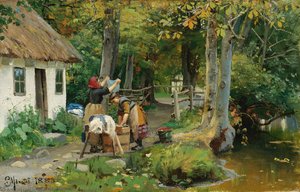
Beyond his technical prowess, Mønsted’s work resonated with a growing sense of national pride within Denmark. His landscapes weren’t idealized depictions; they were honest portrayals of the Danish countryside, imbued with a quiet dignity and a deep respect for nature. In an era of industrialization and social change, his paintings offered a comforting connection to tradition and a celebration of rural life. The popularity of his work in Germany further solidified his reputation as a leading figure in Nordic landscape painting. He captured not just the *look* of Denmark, but its atmosphere, its spirit, and its enduring beauty. This ability to evoke a sense of place – a feeling of belonging – is what continues to captivate audiences today.
Exploring Mønsted’s Works Today: Collections and Continued Appreciation
Although Peder Mørk Mønsted passed away in 1941, his legacy lives on through the numerous paintings he left behind. While many of his works reside in private collections, a major retrospective titled “Light of the North” held in Frankfurt am Main in 1995 brought renewed attention to his artistry. Today, art enthusiasts can experience Mønsted’s captivating landscapes through museum exhibitions and online platforms like ArtsDot.com, which offers high-quality reproductions allowing viewers to bring the beauty of his work into their own homes. His paintings serve as a powerful reminder of the enduring appeal of realism, the importance of observation, and the profound connection between art and national identity.