 Preview
 Send
Send Share
Share
 Details

 Download
 Similars
 X-Ray
X-Ray Diaporama
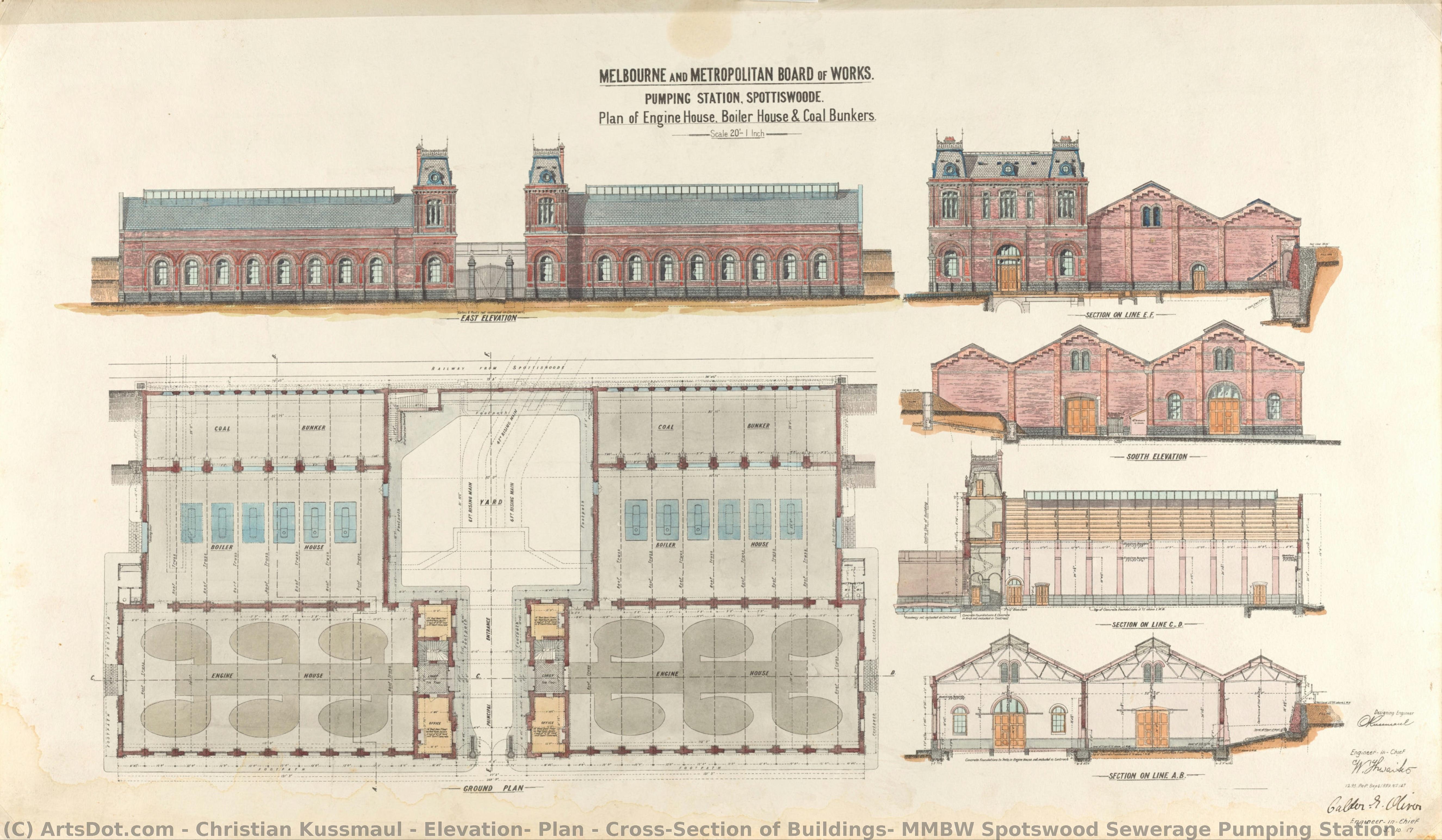
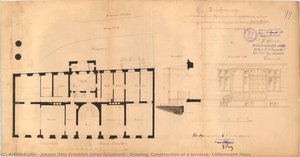
Elevation, Plan & Cross-Section of Buildings, MMBW Spotswood Sewerage Pumping Station
 Technical Illustration
 69.0 x 41.0 cm
 Museums Victoria
 Read More
Hand Made Oil Reproduction
Hand-painted oil on canvas in your size and frame, made to order by our artists. ( Buy Print Buy Image)




































Pick from our preset sizes that match the artwork's original proportions.

You may enter your own dimensions to fit a specific frame or space. If your selected size does not match the original image's proportions, we will either crop the artwork or extend the painting with additional hand-painted elements. A digital mockup will be sent for your approval before production begins.
Please note that the on-screen preview does not reflect the actual cropping or extension. Only the mockup will accurately show the final composition.
While custom sizes are available, we recommend selecting a dimension from the predefined list to preserve the original proportions.
After order, ArtsDot.com team will email client for instructions and provide a mockup preview
Worldwide Delivery () in 3/4 weeks instead of standard 5 weeks. (22 August). No compromise on quality.

Free Worldwide Express Shipping

High-Quality Linen Canvas

Full Shipping Insurance

Customs Tax Refund Guarantee

True Color Matching Guarantee

60-Day Return Policy (Defects Only)

100% Money-Back Guarantee

Bulk Discount Offer
 Glass option is only available in size under 110 CM

Elevation, Plan & Cross-Section of Buildings, MMBW Spotswood Sewerage Pumping Station
Reproduction Medium
Reproduction Size
-


Total Price
$ 263
Artwork Description
Related Artworks
Artist Biography
Joseph Mallord William Turner: A Pioneer of Light and Emotion
Born in the bustling heart of London’s Covent Garden in 1775, Joseph Mallord William Turner – a name forever synonymous with Romanticism – was an artist whose vision transcended mere representation. He wasn't simply depicting landscapes; he was channeling the very essence of light, atmosphere, and emotion onto canvas. From his humble beginnings to his posthumous elevation as a revolutionary figure, Turner’s life and work embody a relentless pursuit of capturing the sublime—that profound sense of awe and wonder evoked by nature’s power and beauty. His journey wasn't one of conventional success; it was marked by eccentricity, solitude, and a fiercely independent spirit that ultimately shaped his unique artistic legacy.
Turner’s early life offered little indication of the extraordinary artist he would become. He began drawing at an astonishingly young age, displaying a remarkable talent for capturing detail and perspective. His formal training at the Royal Academy of Arts provided him with foundational skills, but it was his independent explorations – sketching in London's streets, studying architectural drawings, and immersing himself in the burgeoning world of printmaking – that truly ignited his artistic fire. Crucially, he spent considerable time observing and copying works by masters like Claude Lorrain, absorbing their techniques for rendering light and landscape, though he quickly moved beyond mere imitation to forge his own distinctive style.
- Early Influences: Lorrain’s idealized landscapes provided a starting point, but Turner was drawn to the dramatic effects of Dutch Golden Age painters like Rembrandt and Jacob van Ruysdael.
- The Sketchbook Years (1802-1835): These years were pivotal, marked by extensive travels throughout England, Scotland, Wales, and Europe. His sketchbooks became invaluable repositories of observations – not just of visual details but also of atmospheric conditions, fleeting light effects, and the emotional resonance he sought to capture.
- Printmaking as a Foundation: Turner’s mastery of printmaking—particularly mezzotint and etching—allowed him to disseminate his ideas and generate income, while simultaneously honing his technical skills and exploring new ways of manipulating color and tone.
The Language of Light and Color
Turner's artistic philosophy revolved around the concept of “atmosphere”—the intangible quality of light, air, and moisture that shapes our perception of a landscape. He wasn’t interested in creating photographic replicas; instead, he aimed to convey the *feeling* of a place—its mood, its energy, its inherent drama. This pursuit led him to experiment relentlessly with color, often employing unconventional combinations and layering pigments to achieve luminous effects that seemed to shimmer and vibrate on the canvas.
His technique involved building up layers of paint – sometimes applying them directly from the tube, creating a sense of immediacy and spontaneity. He frequently scraped away at the surface while the paint was still wet, revealing underlying colors and textures. This process, combined with his masterful use of brushwork—often loose and expressive—created a dynamic interplay of light and shadow that captured the fleeting beauty of natural phenomena. His seascapes, in particular, are renowned for their turbulent energy and dramatic lighting, conveying the raw power of the ocean with breathtaking intensity.
- Color Theory: Turner challenged conventional color theory by prioritizing emotional impact over strict adherence to rules.
- Layering Techniques: He built up his paintings in multiple layers, allowing light to penetrate and reflect off each successive layer.
- Brushwork: His loose, expressive brushstrokes contributed significantly to the dynamic quality of his works.
Major Works and Lasting Impact
Turner’s oeuvre is vast and diverse, encompassing landscapes, seascapes, portraits, historical scenes, and even illustrations. However, certain paintings stand out as particularly significant examples of his artistic vision. *The Slave Ship* (1840), with its dramatic depiction of a ship engulfed in flames and littered with corpses, remains one of the most powerful indictments of the slave trade ever created. *Rain, Steam and Speed – The Great Western Railway* (1844) is a groundbreaking work that captures the dynamism of industrial progress while simultaneously evoking a sense of mystery and wonder. And his series of Venetian paintings—particularly *Venice, from the Porch of Madonna della Salute* (1847)—demonstrate his unparalleled ability to capture the atmospheric effects of light and water.
Despite facing criticism during his lifetime for his unconventional style and perceived lack of technical skill, Turner’s influence on subsequent generations of artists is undeniable. He paved the way for Impressionism and Abstract Art by prioritizing subjective experience and emotional expression over objective representation. His legacy continues to inspire artists today, reminding us of the power of art to capture not just what we see but also what we *feel*.
A Reclusive Genius: Life and Legacy
Turner’s personal life was as unconventional as his art. He remained a solitary figure throughout his career, shunning social conventions and fiercely guarding his privacy. He never married, preferring the company of his two daughters, Evelina and Georgiana, whom he raised largely alone. His reclusive nature contributed to his reputation as an eccentric and difficult artist, but it also fueled his artistic independence and allowed him to pursue his creative vision without compromise.
His later years were marked by increasing poverty and ill health, yet his artistic output continued to flourish. He famously rowed a boat into the Thames in 1841 to avoid being counted in the census—a testament to his desire to escape the constraints of society. Joseph Mallord William Turner died in London in 1851 at the age of 76, leaving behind a body of work that continues to captivate and inspire audiences worldwide. His paintings are now celebrated as masterpieces of Romanticism and considered foundational works in the development of modern art.
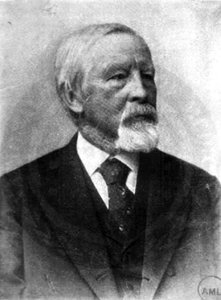
christian kussmaul
1851 - 1916 , Australia
Quick Facts
- Artistic Movement Or Style: Romanticism
- Artists Or Movements Influenced By This Artist:
- Impressionism
- Abstract Art
- Artists Who Influenced This Artist:
- Claude Lorrain
- JMW Turner
- Date Of Birth: 23 April 1775
- Date Of Death: 19 December 1851
- Full Name: Joseph Mallord William Turner
- Nationality: English
- Notable Artworks:
- Snow Storm - Steam Boat
- The Fighting Temeraire
- Rain, Steam and Speed – The Great Western Railway
- Place Of Birth: London, England
Related Articles

The Nuances of Graphite: Exploring Emotional Depth & Technical Mastery in Pencil Drawing
Explore the captivating world of graphite drawing! Discover its rich history, master essential techniques like chiaroscuro, and learn how artists evoke emotion through this timeless medium. Expert insights for art enthusiasts.

The Enduring Power of Line: Exploring Themes & Techniques in Drawing Across Art History
Explore the rich history of drawing! Discover key techniques like linear perspective & iconic artists from the Renaissance to modern times. Enhance your art appreciation with ArtsDot.
Frederick Bridgman: Anatomical Mastery & the Evolution of Figure Drawing Instruction
Explore the anatomical mastery of George B. Bridgman & his revolutionary figure drawing techniques. Discover how his methods transformed art instruction and continue to inspire artists today. Learn more at ArtsDot.
The Eloquent Line: Exploring the Artistic Significance of Sketches Across Movements and Media
Explore the profound artistic significance of sketches throughout history. From Renaissance masters to modern innovators like Van Gogh & Guston, discover how these foundational works reveal technique, emotion, and vision. Learn more at ArtsDot.
British Museum Masterpieces: Explore 25 Iconic Artworks & Decor Inspiration
Journey through 25 iconic artworks at the British Museum, London! Explore masterpieces from Egyptian sculptures to Renaissance paintings & uncover their stories. Find museum-quality art reproductions and curated decor ideas on ArtsDot.com.