 Preview
 Send
Send Share
Share
 Details

 Download
 Similars
 X-Ray
X-Ray Diaporama
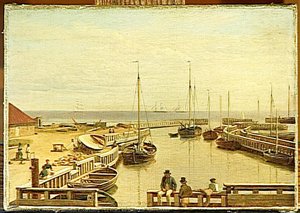
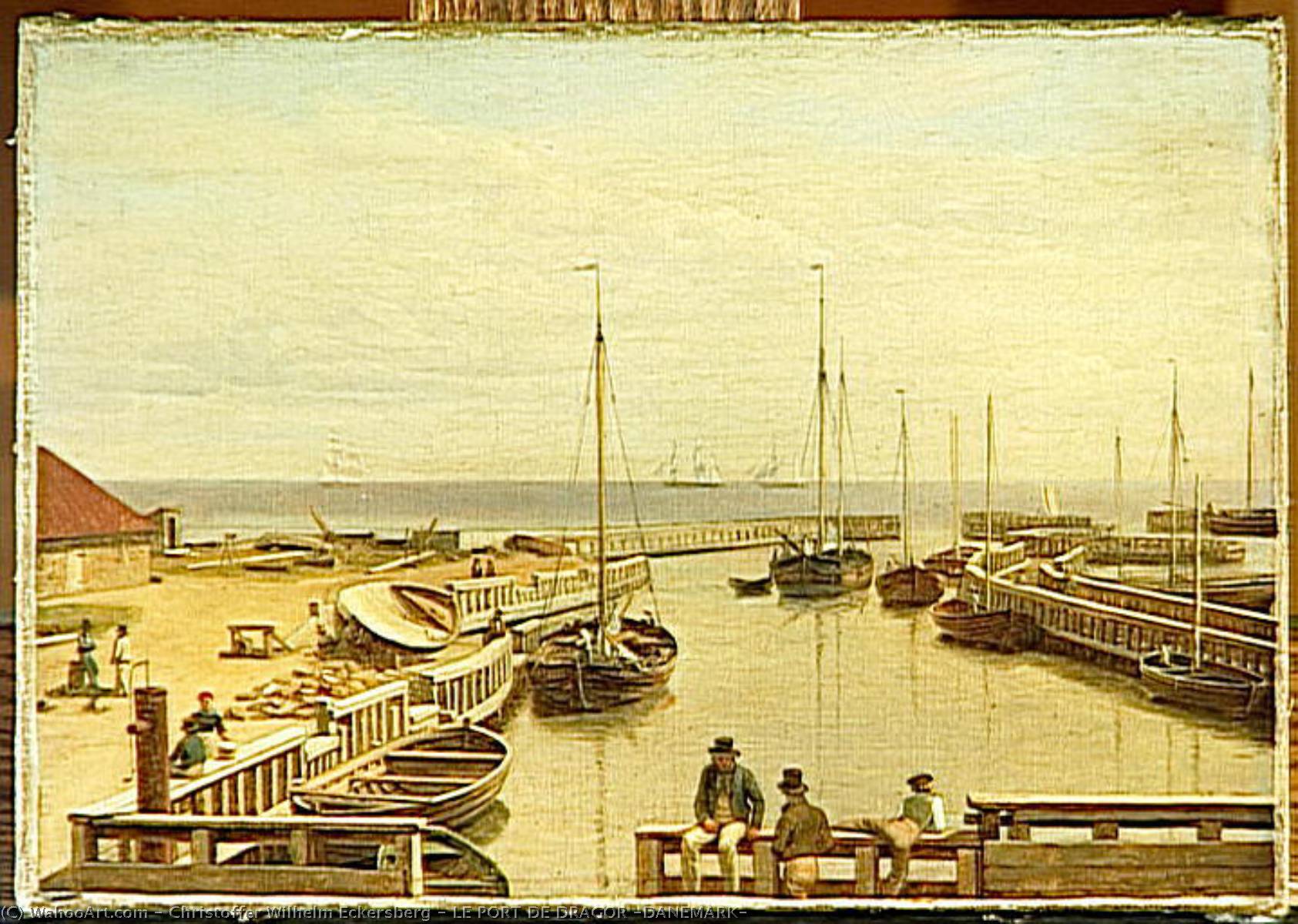
LE PORT DE DRAGOR (DANEMARK)


 Read More
Hand Made Oil Reproduction
Hand-painted oil on canvas in your size and frame, made to order by our artists. ( Buy Print Buy Image)




P118B $10

P118H $10

P118W $10

P438Z $10

P508JH $12

P508YH $12

P805H $10

P805Z $10

P919BZ $10

P919G $10

P919XJ $10

P959ZH $10

P968JZ $12

W106C $8

W218G $10

W218JH $8

W218Y $10

W307PJ $10

W316G $10

W316PJ $8

W316Y $10

W398PJ $8

W4111J $10

W500HY $15

W500JH $15

W692G $12

W849H $8

W940BG $15

W953PJ $8




Pick from our preset sizes that match the artwork's original proportions.

You may enter your own dimensions to fit a specific frame or space. If your selected size does not match the original image's proportions, we will either crop the artwork or extend the painting with additional hand-painted elements. A digital mockup will be sent for your approval before production begins.
Please note that the on-screen preview does not reflect the actual cropping or extension. Only the mockup will accurately show the final composition.
While custom sizes are available, we recommend selecting a dimension from the predefined list to preserve the original proportions.
After order, ArtsDot.com team will email client for instructions and provide a mockup preview
Worldwide Delivery () in 3/4 weeks instead of standard 5 weeks. (17 August). No compromise on quality.

Free Worldwide Express Shipping

High-Quality Linen Canvas

Full Shipping Insurance

Customs Tax Refund Guarantee

True Color Matching Guarantee

60-Day Return Policy (Defects Only)

100% Money-Back Guarantee

Bulk Discount Offer
 Glass option is only available in size under 110 CM

LE PORT DE DRAGOR (DANEMARK)
Reproduction Medium
Reproduction Size
-


Total Price
$ 363
Artwork Description
The Dawn of Danish Modernity: Christoffer Wilhelm Eckersberg’s “Le Port de Dragør”
Christoffer Wilhelm Eckersberg’s “Le Port de Dragør (Danemark)” isn't merely a depiction of a harbor scene; it’s a pivotal moment in the genesis of Danish art, a window into a rapidly changing nation grappling with its identity and embracing a new artistic sensibility. Painted in 1825, this oil on canvas captures a fleeting moment along the picturesque Dragør harbor, nestled on the southern coast of Zealand, Denmark. More than just a landscape, it embodies Eckersberg’s profound influence as a teacher and innovator, shaping the course of Danish painting for generations to come.
Eckersberg's artistic journey began amidst humble circumstances – his father a carpenter, his childhood steeped in the rhythms of the sea. This early exposure to both craftsmanship and the natural world profoundly informed his approach to art. He initially trained under Jes Jessen at Aabenraa, but it was his subsequent studies in Copenhagen, particularly with the influential Nikolaj Abraham Abildgaard, that truly ignited his artistic fire. However, a complex relationship with Abildgaard, marked by differing philosophies, ultimately led Eckersberg to forge his own distinctive path – one characterized by meticulous observation, subtle emotion, and an unwavering commitment to realism.
A Symphony of Light and Color: Deconstructing the Painting
The painting’s immediate impact lies in its masterful use of light and color. The scene is bathed in a diffused, overcast daylight, lending it a quiet, contemplative atmosphere. Eckersberg eschews dramatic contrasts, instead favoring a muted palette dominated by browns, greens, grays, and creams – colors that evoke the weathered wood of docks, the dampness of the harbor, and the soft hues of the sky. Subtle accents of red and yellow appear in the boats and buildings, providing gentle focal points without disrupting the overall harmony.
The composition is carefully balanced, drawing the eye towards a distant horizon line where the water meets the sky. A low wooden railing runs along the foreground, acting as an anchor for several figures engaged in everyday activities – mending nets, unloading cargo, or simply observing the scene. The buildings in the background are rendered with a restrained elegance, suggesting a small, thriving community connected to the sea.
Technique and Detail: A Master’s Hand
Eckersberg's technique is characterized by its painstaking attention to detail and his ability to capture the textures of the natural world. He employs thin washes of color, building up the image gradually through layers of paint – a method that lends a remarkable sense of depth and luminosity to the scene. Brushstrokes are visible but not overly expressive, contributing to the painting’s overall realism. The artist skillfully renders the roughness of wood (docks, boats), the solidity of stone (buildings), and even the subtle sheen of water.
Linear perspective is employed to create a convincing sense of depth, with objects receding into the distance appearing smaller and less distinct. Atmospheric perspective – the softening of colors in the background – further enhances this effect, conveying a feeling of vastness and distance. The meticulous rendering of individual elements, from the rigging on the boats to the folds in the clothing of the figures, speaks to Eckersberg’s dedication to his craft.
Symbolism and Emotional Resonance
While “Le Port de Dragør” doesn't overtly employ symbolic imagery, it resonates with a profound sense of tranquility and quiet observation. It captures a scene of ordinary life – the rhythms of work, community, and connection to the sea. The painting evokes a feeling of nostalgia for a simpler time, inviting viewers to contemplate the beauty of everyday moments.
The harbor itself can be interpreted as a metaphor for Denmark’s own transition during this period—a nation grappling with its identity amidst political upheaval and social change. Eckersberg's focus on the tangible details of daily life reflects a desire to ground art in the realities of the Danish experience, moving away from the grand historical narratives favored by earlier generations.
A Legacy Enduring: Reproductions and Beyond
“Le Port de Dragør” stands as a cornerstone of Danish art history. Its influence can be seen in the works of subsequent artists who followed in Eckersberg’s footsteps, embracing his commitment to realism and his ability to capture the essence of the Danish landscape. Today, reproductions of this iconic painting continue to inspire and captivate audiences worldwide. Whether displayed as a statement piece in a contemporary interior or studied for its historical significance, “Le Port de Dragør” remains a testament to Eckersberg’s artistic genius and his enduring contribution to the world of art.
Related Artworks
Artist Biography
The Dawn of Danish Modernity: Christoffer Wilhelm Eckersberg’s Artistic Vision
Christoffer Wilhelm Eckersberg, born in 1783 in the small Duchy of Schleswig – a landscape that would forever imprint itself upon his artistic sensibility – stands as a monumental figure in the history of Danish art. Often lauded as the “Father of Danish Painting,” Eckersberg wasn’t merely a skilled practitioner; he was a revolutionary, a pedagogue who fundamentally reshaped the nation's artistic identity during its Golden Age. His early life, spent between his father’s carpentry workshop and the windswept shores near Alssund, instilled in him both a meticulous attention to detail and a profound appreciation for the natural world – qualities that would define his oeuvre. These formative years weren’t confined to idyllic observation; he actively sketched and sailed, honing skills that foreshadowed his later mastery of light, form, and atmospheric perspective. Formal training began with Jes Jessen in Aabenraa and continued with Josiah Jacob Jessen in Flensburg, providing a solid foundation before Eckersberg ventured towards the artistic heart of Europe: Copenhagen.Paris, Rome, and the Forging of a Neoclassical Ideal
Eckersberg’s arrival at the Royal Danish Academy of Art in 1803 marked a pivotal moment, yet his relationship with the prevailing academic authority, Nikolaj Abraham Abildgaard, was fraught with tension. This friction, however, may have inadvertently spurred Eckersberg to seek further refinement abroad. The years 1811-1812 found him in Paris, studying under the towering figure of Jacques-Louis David. David’s Neoclassical principles – an emphasis on clarity, precise draftsmanship, and a return to classical forms – deeply resonated with Eckersberg's inherent inclinations towards order and realism. This period wasn’t simply about adopting a style; it was about internalizing a philosophy of artistic rigor. The subsequent sojourn in Rome (1813-1816) proved equally transformative. Immersed in the Italian light and landscape, Eckersberg developed an unparalleled sensitivity to atmospheric effects and tonal nuances. Crucially, he forged a lasting friendship with Bertel Thorvaldsen, the celebrated Danish sculptor whose influence extended beyond the realm of sculpture into Eckersberg’s compositional thinking and understanding of form. Personal hardship also marked this period; his divorce from Christine Rebekka Hyssing added another layer to his evolving character, perhaps deepening his introspective approach to art.A Professor's Revolution: Shaping a Generation
Returning to Denmark in 1818, Eckersberg assumed the role of professor at the Royal Danish Academy of Art – a position he would hold for decades and utilize to enact a sweeping pedagogical reform. He challenged the established curriculum, prioritizing drawing from life and, most radically, *plein air* painting. This insistence on direct observation—of capturing light and atmosphere as they truly existed—was revolutionary for its time, breaking with tradition and encouraging artists to engage directly with the world around them. Eckersberg’s influence extended far beyond his formal lectures; he fostered a spirit of meticulous study and independent thought among his students. Among those profoundly impacted were Christen Købke, Wilhelm Marstrand, and Martinus Rørbye – artists who would become leading figures in the Golden Age of Danish Painting. His artistic style itself is characterized by an unwavering commitment to realism, a painstaking attention to detail, and a masterful handling of light. He painted over 500 works throughout his career, encompassing portraits of the royal family, dramatic maritime scenes like The Russian Ship of the Line “Asow” and a Frigate at Anchor in the Elsinore Roads, and intimate depictions of everyday life in Copenhagen.Legacy: The Father’s Enduring Influence
Christoffer Wilhelm Eckersberg's historical significance lies not only in his own artistic achievements but also in his transformative impact on Danish painting as a whole. He shifted the focus away from grandiose historical narratives towards a more grounded, contemporary vision – one that celebrated the beauty of the everyday and the subtleties of the natural world. He laid the groundwork for a distinctly Danish artistic identity, characterized by its realism, clarity, and quiet introspection. His emphasis on observation and technique instilled in his students a commitment to quality and a willingness to challenge convention. Eckersberg’s legacy continues to resonate today, inspiring artists and art historians alike to appreciate the profound impact of this remarkable painter and pedagogue – the true “Father of Danish Painting.” His works remain testaments to an era where artistic skill was coupled with intellectual curiosity, and where the pursuit of beauty was inextricably linked to a deep understanding of the world.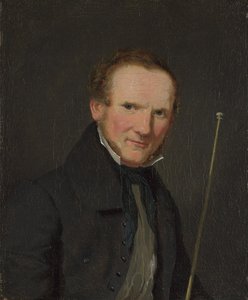
Christoffer Wilhelm Eckersberg
1783 - 1853 , Denmark
Quick Facts
- Artistic Movement Or Style: Neoclassical, Realism
- Artists Or Movements Influenced By This Artist:
- Christen Købke
- Wilhelm Marstrand
- Martinus Rørbye
- Artists Who Influenced This Artist:
- Jacques-Louis David
- Bertel Thorvaldsen
- Date Of Birth: 1783
- Date Of Death: 1853
- Full Name: Christoffer Wilhelm Eckersberg
- Nationality: Danish
- Notable Artworks:
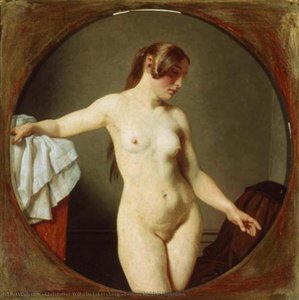
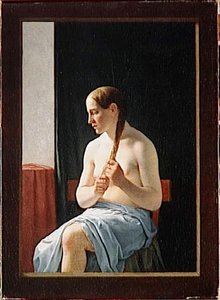
- Seated Nude Model
- View of the Garden...
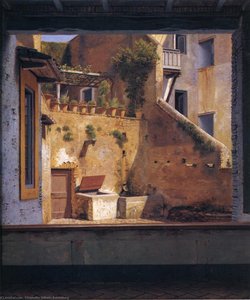
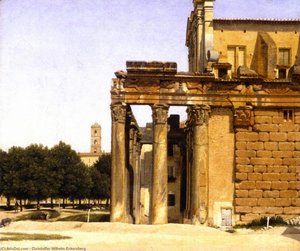
- A Courtyard in Rome
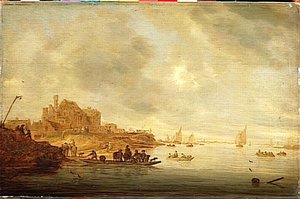
- Asow and a Frigate
- Place Of Birth: Kolding, Denmark
Related Articles

Beyond the Horizon: 10 Landscape Masterpieces for Your Home Decor
Journey through 10 breathtaking landscape paintings by Monet, Van Gogh & more! Explore iconic artworks, artistic techniques & find inspiration for your home decor. Museum-quality reproductions at ArtsDot.com. Discover all masterpieces on ArtsDot.com
Peder Mørk Mønsted: Capturing the Danish Golden Age Landscape – A Study in Atmospheric Realism
Explore the captivating landscapes of Peder Mørk Mønsted, a master of Danish Golden Age realism. Discover his atmospheric techniques, influences, and enduring legacy in our expert analysis.
Romantic Realism's Finest: 10 Masterpieces for Your Home | ArtsDot
Explore 10 defining masterpieces of Romantic Realism! Discover Courbet, Millet & Daumier's powerful paintings—capturing emotion and social realities. Find museum-quality reproductions for your home at ArtsDot.com.

Romantic Landscapes: 10 Masterpieces for Your Home | ArtsDot
Journey through 10 Romantic landscape masterpieces by Friedrich, Turner & Cole. Explore emotional art, sublime nature scenes & iconic 19th-century paintings. Find museum-quality reproductions for your home at ArtsDot.com – discover the full collection online!

Evocations of Place: A Historical Journey Through Landscape Art
Explore the rich history of landscape art with ArtsDot. Discover renowned artists, movements like Impressionism & Romanticism, and expert guidance for collecting timeless pieces. Find your perfect serene escape today!