 Preview
 Send
Send Share
Share
 Details

 Download
 Similars
 X-Ray
X-Ray Diaporama
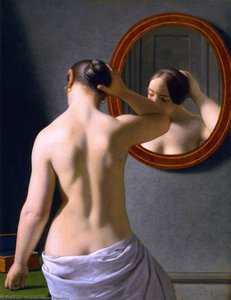
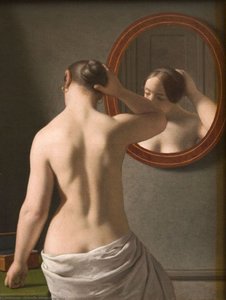
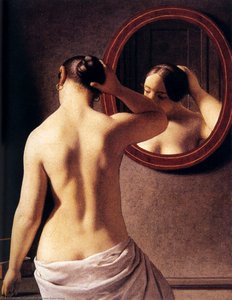
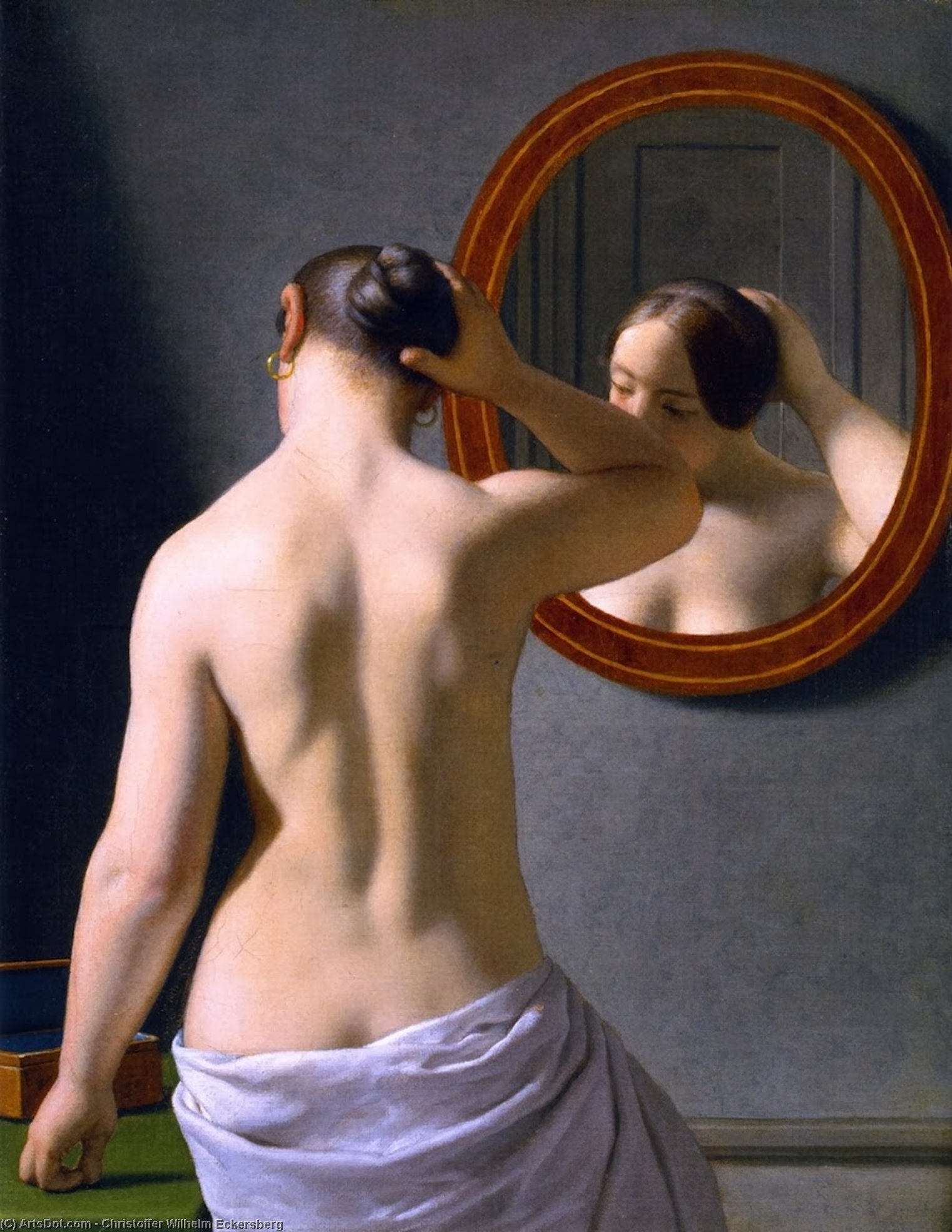
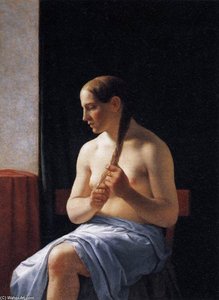
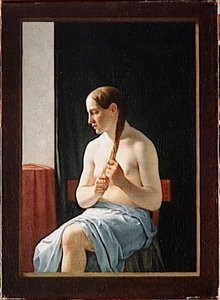
A Nude Woman doing her Hair before a Mirror


 Read More
Hand Made Oil Reproduction
Hand-painted oil on canvas in your size and frame, made to order by our artists. ( Buy Print Buy Image)




P118B $10

P118H $10

P118W $10

P438Z $10

P508JH $12

P508YH $12

P805H $10

P805Z $10

P919BZ $10

P919G $10

P919XJ $10

P959ZH $10

P968JZ $12

W106C $8

W218G $10

W218JH $8

W218Y $10

W307PJ $10

W316G $10

W316PJ $8

W316Y $10

W398PJ $8

W4111J $10

W500HY $15

W500JH $15

W692G $12

W849H $8

W940BG $15

W953PJ $8




Pick from our preset sizes that match the artwork's original proportions.

You may enter your own dimensions to fit a specific frame or space. If your selected size does not match the original image's proportions, we will either crop the artwork or extend the painting with additional hand-painted elements. A digital mockup will be sent for your approval before production begins.
Please note that the on-screen preview does not reflect the actual cropping or extension. Only the mockup will accurately show the final composition.
While custom sizes are available, we recommend selecting a dimension from the predefined list to preserve the original proportions.
After order, ArtsDot.com team will email client for instructions and provide a mockup preview
Worldwide Delivery () in 3/4 weeks instead of standard 5 weeks. (30 August). No compromise on quality.

Free Worldwide Express Shipping

High-Quality Linen Canvas

Full Shipping Insurance

Customs Tax Refund Guarantee

True Color Matching Guarantee

60-Day Return Policy (Defects Only)

100% Money-Back Guarantee

Bulk Discount Offer
 Glass option is only available in size under 110 CM

A Nude Woman doing her Hair before a Mirror
Reproduction Medium
Reproduction Size
-


Total Price
$ 263
The Intimate Ritual of Self-Reflection
To gaze upon Christoffer Wilhelm Eckersberg's A Nude Woman Doing Her Hair Before a Mirror is to step into a moment suspended in time—a breath held between thought and action. The scene unfolds with an exquisite, almost palpable stillness. Here, the act of grooming becomes elevated from mere routine to profound meditation. The woman, caught in the gentle rhythm of brushing her hair, embodies a universal human experience: the quiet communion one has with oneself. It is a portrait not just of appearance, but of interiority; the mirror serves as both a physical boundary and a psychological portal, reflecting more than just an image.
Mastery of Light and Neoclassical Grace
Technically, Eckersberg displays the hallmarks of his mastery, particularly evident in the handling of light. The play of illumination across her form and the polished surfaces surrounding her creates a breathtaking sense of depth and dimensionality. This meticulous attention to chiaroscuro is deeply rooted in the principles of Neoclassicism, an artistic movement that prized clarity, idealized form, and balanced composition. Yet, while adhering to these classical ideals—as seen in the graceful posture and measured arrangement of objects like the dining table and chair—Eckersberg imbues the scene with a distinctly modern intimacy. The oil on canvas medium allows the viewer to appreciate the rich, velvety texture that gives life to every strand of hair and every fold of drapery.
A Glimpse into the Danish Golden Age
Dating from 1841, this work anchors itself firmly within the cultural zenith known as the Danish Golden Age. Eckersberg, often heralded as the “Father of Danish Painting,” captured the spirit of his era while simultaneously transcending it. The painting speaks to a period of burgeoning self-awareness and refined domesticity in Copenhagen society. It suggests an era where art celebrated both high classical ideals and the quiet dignity found within private life. For the collector or designer, this piece offers not just decoration, but a tangible connection to the cultural heartbeat of 19th-century Denmark.
Symbolism of Selfhood and Presence
Beyond the surface beauty, the painting whispers secrets about self-perception. The mirror is perhaps the most potent symbol; it represents consciousness, memory, and the gap between how one sees oneself and how one wishes to be seen. The presence of other figures subtly framing the central action adds a layer of observed reality—we are watching someone else observe someone else. This complexity invites deep contemplation from the viewer, transforming the artwork into an engaging dialogue about identity itself.
Bringing Serenity Home
For those seeking to infuse a space with cultured elegance and profound calm, a reproduction of this masterpiece is unparalleled. It possesses an inherent serenity that acts as a visual balm. Whether placed in a dressing room, a formal drawing-room, or a private study, the artwork commands attention through its quiet perfection. Owning this piece means curating not just a wall, but an atmosphere—one steeped in the enduring beauty of human contemplation and artistic genius.
Related Artworks


Artist Biography
The Dawn of Danish Modernity: Christoffer Wilhelm Eckersberg’s Artistic Vision
Christoffer Wilhelm Eckersberg, born in 1783 in the small Duchy of Schleswig – a landscape that would forever imprint itself upon his artistic sensibility – stands as a monumental figure in the history of Danish art. Often lauded as the “Father of Danish Painting,” Eckersberg wasn’t merely a skilled practitioner; he was a revolutionary, a pedagogue who fundamentally reshaped the nation's artistic identity during its Golden Age. His early life, spent between his father’s carpentry workshop and the windswept shores near Alssund, instilled in him both a meticulous attention to detail and a profound appreciation for the natural world – qualities that would define his oeuvre. These formative years weren’t confined to idyllic observation; he actively sketched and sailed, honing skills that foreshadowed his later mastery of light, form, and atmospheric perspective. Formal training began with Jes Jessen in Aabenraa and continued with Josiah Jacob Jessen in Flensburg, providing a solid foundation before Eckersberg ventured towards the artistic heart of Europe: Copenhagen.Paris, Rome, and the Forging of a Neoclassical Ideal
Eckersberg’s arrival at the Royal Danish Academy of Art in 1803 marked a pivotal moment, yet his relationship with the prevailing academic authority, Nikolaj Abraham Abildgaard, was fraught with tension. This friction, however, may have inadvertently spurred Eckersberg to seek further refinement abroad. The years 1811-1812 found him in Paris, studying under the towering figure of Jacques-Louis David. David’s Neoclassical principles – an emphasis on clarity, precise draftsmanship, and a return to classical forms – deeply resonated with Eckersberg's inherent inclinations towards order and realism. This period wasn’t simply about adopting a style; it was about internalizing a philosophy of artistic rigor. The subsequent sojourn in Rome (1813-1816) proved equally transformative. Immersed in the Italian light and landscape, Eckersberg developed an unparalleled sensitivity to atmospheric effects and tonal nuances. Crucially, he forged a lasting friendship with Bertel Thorvaldsen, the celebrated Danish sculptor whose influence extended beyond the realm of sculpture into Eckersberg’s compositional thinking and understanding of form. Personal hardship also marked this period; his divorce from Christine Rebekka Hyssing added another layer to his evolving character, perhaps deepening his introspective approach to art.A Professor's Revolution: Shaping a Generation
Returning to Denmark in 1818, Eckersberg assumed the role of professor at the Royal Danish Academy of Art – a position he would hold for decades and utilize to enact a sweeping pedagogical reform. He challenged the established curriculum, prioritizing drawing from life and, most radically, *plein air* painting. This insistence on direct observation—of capturing light and atmosphere as they truly existed—was revolutionary for its time, breaking with tradition and encouraging artists to engage directly with the world around them. Eckersberg’s influence extended far beyond his formal lectures; he fostered a spirit of meticulous study and independent thought among his students. Among those profoundly impacted were Christen Købke, Wilhelm Marstrand, and Martinus Rørbye – artists who would become leading figures in the Golden Age of Danish Painting. His artistic style itself is characterized by an unwavering commitment to realism, a painstaking attention to detail, and a masterful handling of light. He painted over 500 works throughout his career, encompassing portraits of the royal family, dramatic maritime scenes like The Russian Ship of the Line “Asow” and a Frigate at Anchor in the Elsinore Roads, and intimate depictions of everyday life in Copenhagen.Legacy: The Father’s Enduring Influence
Christoffer Wilhelm Eckersberg's historical significance lies not only in his own artistic achievements but also in his transformative impact on Danish painting as a whole. He shifted the focus away from grandiose historical narratives towards a more grounded, contemporary vision – one that celebrated the beauty of the everyday and the subtleties of the natural world. He laid the groundwork for a distinctly Danish artistic identity, characterized by its realism, clarity, and quiet introspection. His emphasis on observation and technique instilled in his students a commitment to quality and a willingness to challenge convention. Eckersberg’s legacy continues to resonate today, inspiring artists and art historians alike to appreciate the profound impact of this remarkable painter and pedagogue – the true “Father of Danish Painting.” His works remain testaments to an era where artistic skill was coupled with intellectual curiosity, and where the pursuit of beauty was inextricably linked to a deep understanding of the world.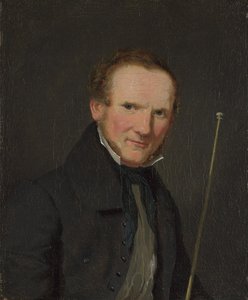
Christoffer Wilhelm Eckersberg
1783 - 1853 , Denmark
Quick Facts
- Artistic Movement Or Style: Neoclassical, Realism
- Artists Or Movements Influenced By This Artist:
- Christen Købke
- Wilhelm Marstrand
- Martinus Rørbye
- Artists Who Influenced This Artist:
- Jacques-Louis David
- Bertel Thorvaldsen
- Date Of Birth: 1783
- Date Of Death: 1853
- Full Name: Christoffer Wilhelm Eckersberg
- Nationality: Danish
- Notable Artworks:
- Seated Nude Model
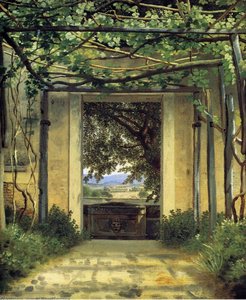
- View of the Garden...
- A Courtyard in Rome
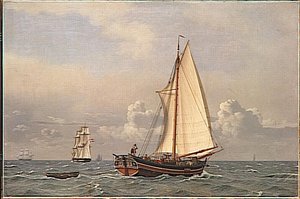
- Asow and a Frigate
- Place Of Birth: Kolding, Denmark
Related Articles

Dutch Masters: 10 Golden Age Paintings That Still Inspire |
Journey into the Dutch Golden Age! Explore 10 iconic paintings by Rembrandt, Vermeer & Hals. Discover the stories behind these Baroque masterpieces and find museum-quality art reproductions to elevate your home decor on .
Peder Mørk Mønsted: Capturing the Danish Golden Age Landscape – A Study in Atmospheric Realism
Explore the captivating landscapes of Peder Mørk Mønsted, a master of Danish Golden Age realism. Discover his atmospheric techniques, influences, and enduring legacy in our expert analysis.

Golden Age Reflections: Dutch Baroque Painting & Cultural Innovation
Explore the Dutch Golden Age of painting! Discover key artists like Vermeer & ter Borch, their innovative techniques, and the rich cultural context behind these Baroque masterpieces. Learn about collecting & appreciating this iconic art period.

Illuminating Innovation: Exploring the Dutch Golden Age of Painting
Explore the Dutch Golden Age of painting with ArtsDot. Discover Rembrandt, Vermeer & other Masters. Learn about key characteristics, iconic artworks, and lasting influence. Expert insights for collectors & enthusiasts.
The Enduring Allure of the Nude: A Historical & Artistic Exploration of the Human Form
Explore the captivating history of nude art! Discover iconic paintings & artists from classical to modern eras. Uncover symbolism, techniques & find museum-quality reproductions at ArtsDot.