 Send
Send Share
Share
 Details

 Download
 Similars
 Diaporama
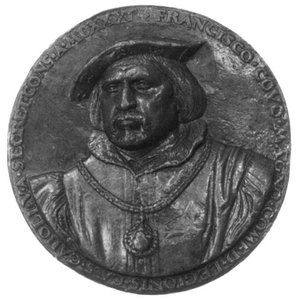
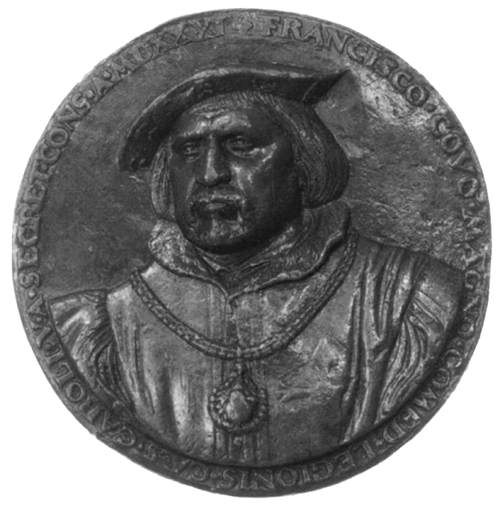
Portrait Medal of Francisco de los Cobos y Molina
 Bronze
- Sculpture
- Renaissance Portraiture
 1531
1531 60.0 x 60.0 cm
 National Gallery of Art
 Read More
Giclée / Art Print
Museum-quality giclée or canvas print with fast production and flexible finish options. ( Buy Hand Made Painting Buy Image)




































Pick from our preset sizes that match the artwork's original proportions.

You may enter your own dimensions to fit a specific frame or space. If your selected size does not match the original image's proportions, we will either crop the artwork or extend the image with a mirrored or solid-fill edge. A digital mockup will be sent for your approval before production begins.
Please note that the on-screen preview does not reflect the actual cropping or extension. Only the mockup will accurately show the final composition.
While custom sizes are available, we recommend selecting a dimension from the predefined list to preserve the original proportions.
Worldwide Delivery () in 2 weeks instead of standard 4/5 weeks. (1 September)

Free Worldwide Express Shipping

High-Quality Linen Canvas

Full Shipping Insurance

Customs Tax Refund Guarantee

True Color Matching Guarantee

60-Day Return Policy (Defects Only)

100% Money-Back Guarantee

Bulk Discount Offer
 Glass option is only available in size under 110 CM

Portrait Medal of Francisco de los Cobos y Molina
Giclée / Art Print
Reproduction Size
-


Total Price
$ 63
A Renaissance Portrait in Bronze: Christoph Weiditz’s Masterpiece
Christoph Weiditz's "Portrait Medal of Francisco de los Cobos y Molina," crafted around 1531, is more than a simple likeness; it’s a meticulously rendered window into the world of 16th-century Spanish nobility and the burgeoning art of portraiture. This bronze medallion, now housed in the National Gallery of Art in Washington D.C., exemplifies Weiditz's unique ability to imbue metal with psychological depth—a hallmark that set him apart from his contemporaries. The medal’s enduring appeal lies not just in its technical brilliance but also in the subtle narrative it conveys, a testament to the subject’s status and the artist’s profound understanding of human character.

The Man and the Moment: Historical Context
Francisco de los Cobos y Molina, depicted here, was a prominent figure in Charles V’s imperial administration – specifically, the great chancellor of the army and privy councilor. Born around 1477, he held significant positions within the Spanish court, reflecting his importance as an administrator and diplomat. The medal itself served as a powerful symbol of recognition and authority, intended to be carried by the subject or displayed prominently in his residence. Weiditz’s skill lies not just in capturing a likeness but also in conveying the weight of this official role through carefully chosen details – the elaborate ruff collar, the formal attire, and the dignified bearing all contribute to an impression of power and prestige.
Craftsmanship and Technique: A Lost-Wax Legacy
The medal’s remarkable detail is a direct result of Weiditz's mastery of the lost-wax casting technique. This intricate process involved creating a detailed wax model, encasing it in plaster to create a rigid mold, melting out the wax, and then pouring molten bronze into the resulting cavity. The resulting surface, with its subtle textures and nuanced tonal variations, is characteristic of bronze casting – rough and granular yet capable of capturing minute details like the folds of fabric, the texture of hair, and the delicate lines of the face. The precision achieved speaks to Weiditz’s technical skill and the dedication of his workshop.
Symbolism and Emotional Resonance: Beyond a Simple Portrait
Beyond mere representation, the medal is rich in symbolic meaning. The choice of materials – bronze itself representing durability and permanence – reinforces the subject's importance. The portrait’s composition—a bust viewed from the front—is a traditional convention for conveying authority and dignity. The subtle expression on Cobos’ face suggests not just composure but also intelligence and perhaps even a hint of melancholy, inviting the viewer to contemplate his life and achievements. It is this ability to evoke emotion through carefully rendered detail that elevates Weiditz's work beyond simple portraiture.
A Window into the Renaissance: Weiditz’s Artistic Legacy
Christoph Weiditz stands as a pivotal figure in the development of Renaissance portraiture, bridging the gap between the naive charm of early German art and the more complex Mannerist styles that would follow. His work, exemplified by this medal, demonstrates an exceptional sensitivity to human psychology and a remarkable ability to capture both physical likeness and inner character. Reproductions of this piece offer a tangible connection to a vibrant era, allowing us to appreciate the artistry and cultural significance of one of Europe’s most accomplished portraitists.
Related Artworks

Artist Biography
The Master of the Metal Disc: The Life and Legacy of Christoph Weiditz
In the vibrant, transformative landscape of the German Renaissance, few artists possessed the ability to condense the grandeur of human character into the small, intimate circumference of a bronze medal as masterfully as Christoph Weiditz. Born around 1500 in Freiburg im Breisgau, Weiditz emerged from a lineage deeply embedded in the artistic fabric of Europe. He was the son of the sculptor Hans Weiditz the elder and the brother of the renowned woodcut artist Hans Weiditz the Younger. This rich familial heritage provided him with a foundational understanding of form, texture, and the burgeoning humanist ideals that were sweeping through the Holy Roman Empire. As his career progressed, moving eventually to the influential artistic hub of Augsburg, Weiditz would distinguish himself as one of the four preeminent German medallists of his era, standing alongside luminaries such as Hans Schwarz, Friedrich Hagenauer, and Matthes Gebel.
The artistry of Weiditz is defined by a fascinating stylistic journey, a metamorphosis that mirrors the broader shifts in European art history. His early works are often characterized by a naïve German aesthetic, possessing a charming simplicity and a sincere, almost folk-like devotion to detail. During this period, his compositions reflected the serene and idealized beauty championed by Renaissance humanism. However, as he matured, Weidict’s hand grew more complex, embracing the sophisticated, elongated, and intellectually dense language of Mannerism. This evolution allowed him to move beyond mere physical likeness, imbuing his portraits with a psychological depth and a subtle tension that captured the very essence of his subjects' status and spirit.
A Vision in Bronze and Gold
Weiditz was far more than a simple engraver; he was a polymath of the decorative arts, working with the precision of a goldsmith and the vision of a painter. His mastery extended across various media, including sculpture and painting, yet it is in his portrait medals that his true genius resides. These small, precious objects served as much more than commemorative tokens; they were profound vehicles for symbolism and identity. Through meticulous craftsmanship, he could render the intricate textures of a velvet doublet or the noble sternness of a diplomat's gaze with breathtaking clarity.
His notable achievements include works that captured the likenesses of the era's most influential figures, such as:
- The Portrait Medal of Francisco de los Cobos y Molina: A stunning bronze masterpiece that showcases his ability to blend intricate detail with the dignified weight of Renaissance portraiture.
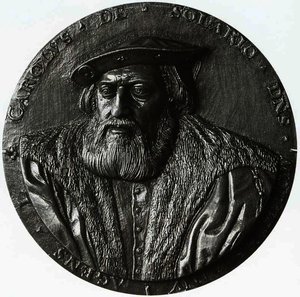
- The Portrait of Charles de Solier, Sire de Morette: An exquisite boxwood medallion that immortalizes a French diplomat through a lens of remarkable symbolic richness and delicate precision.
Beyond the formal portraits of the elite, Weiditz’s travels also left an indelible mark on his repertoire. During his time in Spain between 1528 and 1529, he engaged deeply with the local culture, producing drawings of the vibrant folk costumes of the Iberian Peninsula. This ethnographic eye added a layer of observational realism to his work, bridging the gap between high-court portraiture and the lived reality of the people.
Historical Significance and Enduring Influence
The historical importance of Christoph Weiditz lies in his role as a bridge between eras. He stood at the crossroads of the late Middle Ages and the sophisticated complexity of the Mannerist period, capturing the transition from a world of idealized types to one of individualistic, psychological exploration. His ability to infuse metal with expressive power helped elevate the medium of the medal from a craft-based tradition to a high art form capable of profound communication.
Though his name may not always command the same immediate recognition as Dürer, Weiditz’s contribution to the German Renaissance is indispensable. He provided the visual vocabulary for an age of discovery and self-reflection, leaving behind a legacy of works that continue to fascinate collectors and historians alike. Through his delicate touch and technical brilliance, he ensured that the fleeting moments of human dignity and the intricate details of cultural identity were preserved in the enduring permanence of bronze and gold.
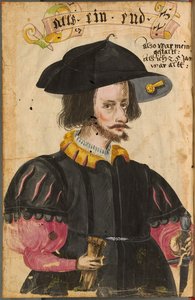
Christoph Weiditz
1498 - 1559 , Germany
Quick Facts
- Artistic Movement Or Style: Naïve-mannerist
- Artists Who Influenced This Artist:
- Hans Weiditz (Father)
- Hans Weiditz, the younger
- Date Of Birth: ca. 1500 Freiburg im Breisgau, Germany
- Date Of Death: 1559 Augsburg
- Full Name: Christoph Weiditz
- Nationality: German
- Notable Artworks:
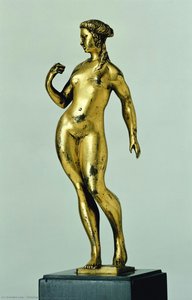
- Venus or Fortune
- Portrait Medal of Francisco de los Cobos y Molina
- Portrait of Charles de Solier, Sire de Morette
- Place Of Birth: Freiburg im Breisgau
Related Articles

Goya's Masterpieces: Explore 25 Iconic Paintings & Art Prints | ArtsDot
Delve into the world of Francisco Goya with ArtsDot. Explore 25 iconic paintings – from 'The Third of May' to his haunting Black Paintings. Discover the stories, techniques & emotions behind these Spanish masterpieces. Find museum-quality art reproductions for your home at ArtsDot.com!

About Us
Discover our story! We bring world-class art into your life through expert curation, personalized creations, and free previews. Trusted by individuals and businesses since 2000.
Anthony De Francisci: A Sculptural Synthesis of Classical Tradition & American Modernism
Explore the life & art of Anthony de Francisci, master sculptor of the Peace Dollar & exquisite medals. Discover his classical influences and enduring legacy – a must-read for collectors.
Francisco de Zurbarán: Mysticism, Realism & the Golden Age of Spanish Painting
Explore the captivating world of Francisco de Zurbarán, a master of Spanish Baroque painting. Discover his dramatic tenebrism, religious masterpieces like 'La Porciúncula,' and lasting influence on art history.
Pieter de Hooch: Illuminating Dutch Domestic Life & Golden Age Charm
Explore the captivating world of Pieter de Hooch, a master of Dutch Golden Age painting. Discover his innovative use of light, intimate domestic scenes, and lasting influence on art history. Learn more at ArtsDot.