 Send
Send Share
Share
 Details

 Download
 Similars
 Diaporama
Portrait of Charles de Solier, Sire de Morette


 Read More
Hand Made Oil Reproduction
Hand-painted oil on canvas in your size and frame, made to order by our artists. ( Buy Print Buy Image)




































Pick from our preset sizes that match the artwork's original proportions.

You may enter your own dimensions to fit a specific frame or space. If your selected size does not match the original image's proportions, we will either crop the artwork or extend the painting with additional hand-painted elements. A digital mockup will be sent for your approval before production begins.
Please note that the on-screen preview does not reflect the actual cropping or extension. Only the mockup will accurately show the final composition.
While custom sizes are available, we recommend selecting a dimension from the predefined list to preserve the original proportions.
After order, ArtsDot.com team will email client for instructions and provide a mockup preview
Worldwide Delivery () in 3/4 weeks instead of standard 5 weeks. (27 August). No compromise on quality.

Free Worldwide Express Shipping

High-Quality Linen Canvas

Full Shipping Insurance

Customs Tax Refund Guarantee

True Color Matching Guarantee

60-Day Return Policy (Defects Only)

100% Money-Back Guarantee

Bulk Discount Offer
 Glass option is only available in size under 110 CM

Portrait of Charles de Solier, Sire de Morette
Reproduction Medium
Reproduction Size
-


Total Price
$ 263
Artwork Description
Portrait of Charles de Solier, Sire de Morette: A Renaissance Ambassador’s Gaze
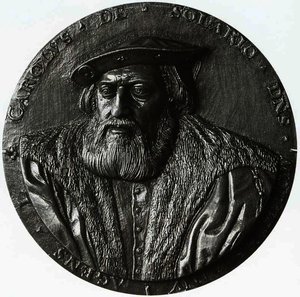
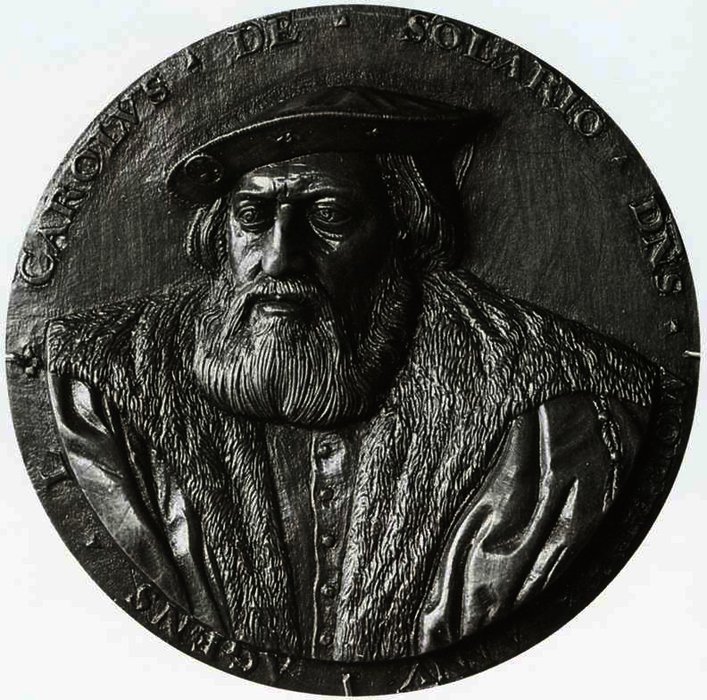
Christoph Weiditz's "Portrait of Charles de Solier, Sire de Morette" is more than just a likeness; it’s a meticulously crafted window into the world of 16th-century diplomacy and aristocratic identity. Executed around 1534-1535 in boxwood, this medallion offers a remarkably intimate glimpse into the character of Charles de Solier, a prominent French ambassador serving under Francis I. The piece transcends mere portraiture, embodying the Renaissance fascination with capturing not just appearance but also the essence and status of its subject – a testament to Weiditz’s skill as one of the era's foremost medalists.
The composition immediately draws the eye to the central figure: de Solier himself. His gaze is direct, imbued with an air of dignified authority, yet subtly softened by a hint of weariness – perhaps reflecting the burdens of international service. The artist’s masterful use of relief carving brings the boxwood surface to life; the texture of his fur-lined collar, the folds in his garments, and even the individual strands of his beard are rendered with astonishing detail. This tactile quality invites the viewer to almost reach out and touch the portrait, fostering a profound connection with the subject.
A Masterclass in Renaissance Portraiture
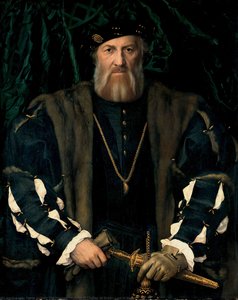
Weiditz’s technique is deeply rooted in the traditions of Italian Renaissance portraiture, particularly exemplified by artists like Hans Holbein the Younger, whose painting of de Solier served as a likely model. The artist employs a pyramidal composition, placing de Solier centrally within a carefully delineated space. Strong directional lines, created through the relief itself, sculpt light and shadow, emphasizing the contours of his face and body and creating a dramatic sense of volume. The use of contrasting textures – smooth skin against rough fabric – further enhances the three-dimensional effect, demonstrating Weiditz’s command of material and form.
Notably, the portrait is not simply a formal representation; it's imbued with subtle symbolism. The inclusion of the horse and dolphin on the reverse—a common motif in Renaissance medals—represents virtue and fortune respectively, qualities highly valued by both diplomats and rulers. The inscription around the perimeter, written in Latin, further reinforces this symbolic framework, proclaiming de Solier’s age and status as “Lord of Morette.”
Historical Context: Diplomacy and Status
Charles de Solier's appointment as ambassador to England was a significant event in the complex political landscape of 16th-century Europe. His role involved navigating delicate diplomatic relations between France and England during the reign of Henry VIII, a period marked by shifting alliances and burgeoning tensions. The portrait itself serves as a tangible record of this pivotal moment in history, capturing de Solier at the height of his career.
The fact that Weiditz created this medallion shortly after de Solier’s arrival in London underscores the importance placed on visual representation within diplomatic circles. Such portraits were not merely decorative; they served as powerful symbols of authority and legitimacy, projecting an image of strength and competence to foreign dignitaries. The piece is a remarkable artifact, offering insight into the world of Renaissance diplomacy and the role of art in shaping perceptions.
A Timeless Portrait: Reproduction and Artistic Legacy
Today, "Portrait of Charles de Solier, Sire de Morette" stands as a testament to Weiditz’s artistic genius. Reproductions of this exquisite piece offer an opportunity to appreciate its beauty and complexity in a new light. When selecting a high-quality reproduction, consider the meticulous attention to detail—the subtle nuances of expression, the intricate textures, and the evocative symbolism—that define this remarkable portrait. It's a window into a bygone era, inviting us to contemplate the enduring power of art to capture both the outward appearance and inner character of its subject.
Related Artworks

![Vida De Miguel De Cervantes Saavedra (life Of Miguel De Cervantes Saavedra). Book V Of The Edition Of Don Quixote (biblioteca Nacional De España)\n\n[7] — Martín Fernández De Navarrete Y Ximénez De Tejada, Academic Art](/media/artworks/images-thumb/8c/b6/8cb67a4dd450447373a546c8dd039e57.jpg)
Artist Biography
The Master of the Metal Disc: The Life and Legacy of Christoph Weiditz
In the vibrant, transformative landscape of the German Renaissance, few artists possessed the ability to condense the grandeur of human character into the small, intimate circumference of a bronze medal as masterfully as Christoph Weiditz. Born around 1500 in Freiburg im Breisgau, Weiditz emerged from a lineage deeply embedded in the artistic fabric of Europe. He was the son of the sculptor Hans Weiditz the elder and the brother of the renowned woodcut artist Hans Weiditz the Younger. This rich familial heritage provided him with a foundational understanding of form, texture, and the burgeoning humanist ideals that were sweeping through the Holy Roman Empire. As his career progressed, moving eventually to the influential artistic hub of Augsburg, Weiditz would distinguish himself as one of the four preeminent German medallists of his era, standing alongside luminaries such as Hans Schwarz, Friedrich Hagenauer, and Matthes Gebel.
The artistry of Weiditz is defined by a fascinating stylistic journey, a metamorphosis that mirrors the broader shifts in European art history. His early works are often characterized by a naïve German aesthetic, possessing a charming simplicity and a sincere, almost folk-like devotion to detail. During this period, his compositions reflected the serene and idealized beauty championed by Renaissance humanism. However, as he matured, Weidict’s hand grew more complex, embracing the sophisticated, elongated, and intellectually dense language of Mannerism. This evolution allowed him to move beyond mere physical likeness, imbuing his portraits with a psychological depth and a subtle tension that captured the very essence of his subjects' status and spirit.
A Vision in Bronze and Gold
Weiditz was far more than a simple engraver; he was a polymath of the decorative arts, working with the precision of a goldsmith and the vision of a painter. His mastery extended across various media, including sculpture and painting, yet it is in his portrait medals that his true genius resides. These small, precious objects served as much more than commemorative tokens; they were profound vehicles for symbolism and identity. Through meticulous craftsmanship, he could render the intricate textures of a velvet doublet or the noble sternness of a diplomat's gaze with breathtaking clarity.
His notable achievements include works that captured the likenesses of the era's most influential figures, such as:
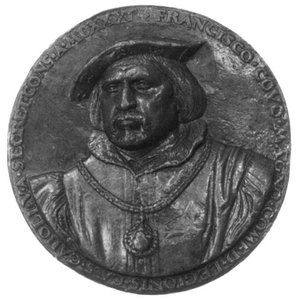
- The Portrait Medal of Francisco de los Cobos y Molina: A stunning bronze masterpiece that showcases his ability to blend intricate detail with the dignified weight of Renaissance portraiture.
- The Portrait of Charles de Solier, Sire de Morette: An exquisite boxwood medallion that immortalizes a French diplomat through a lens of remarkable symbolic richness and delicate precision.
Beyond the formal portraits of the elite, Weiditz’s travels also left an indelible mark on his repertoire. During his time in Spain between 1528 and 1529, he engaged deeply with the local culture, producing drawings of the vibrant folk costumes of the Iberian Peninsula. This ethnographic eye added a layer of observational realism to his work, bridging the gap between high-court portraiture and the lived reality of the people.
Historical Significance and Enduring Influence
The historical importance of Christoph Weiditz lies in his role as a bridge between eras. He stood at the crossroads of the late Middle Ages and the sophisticated complexity of the Mannerist period, capturing the transition from a world of idealized types to one of individualistic, psychological exploration. His ability to infuse metal with expressive power helped elevate the medium of the medal from a craft-based tradition to a high art form capable of profound communication.
Though his name may not always command the same immediate recognition as Dürer, Weiditz’s contribution to the German Renaissance is indispensable. He provided the visual vocabulary for an age of discovery and self-reflection, leaving behind a legacy of works that continue to fascinate collectors and historians alike. Through his delicate touch and technical brilliance, he ensured that the fleeting moments of human dignity and the intricate details of cultural identity were preserved in the enduring permanence of bronze and gold.
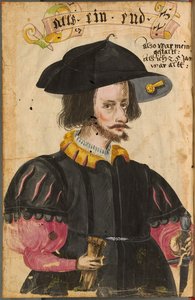
Christoph Weiditz
1498 - 1559 , Germany
Quick Facts
- Artistic Movement Or Style: Naïve-mannerist
- Artists Who Influenced This Artist:
- Hans Weiditz (Father)
- Hans Weiditz, the younger
- Date Of Birth: ca. 1500 Freiburg im Breisgau, Germany
- Date Of Death: 1559 Augsburg
- Full Name: Christoph Weiditz
- Nationality: German
- Notable Artworks:
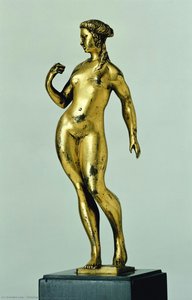
- Venus or Fortune
- Portrait Medal of Francisco de los Cobos y Molina
- Portrait of Charles de Solier, Sire de Morette
- Place Of Birth: Freiburg im Breisgau
Related Articles

Goya's Masterpieces: Explore 25 Iconic Paintings & Art Prints | ArtsDot
Delve into the world of Francisco Goya with ArtsDot. Explore 25 iconic paintings – from 'The Third of May' to his haunting Black Paintings. Discover the stories, techniques & emotions behind these Spanish masterpieces. Find museum-quality art reproductions for your home at ArtsDot.com!

About Us
Discover our story! We bring world-class art into your life through expert curation, personalized creations, and free previews. Trusted by individuals and businesses since 2000.
Anthony De Francisci: A Sculptural Synthesis of Classical Tradition & American Modernism
Explore the life & art of Anthony de Francisci, master sculptor of the Peace Dollar & exquisite medals. Discover his classical influences and enduring legacy – a must-read for collectors.
Charles Haslewood Shannon: A Study in Aestheticism, Symbolism & Fin-de-Siècle Portraiture
Explore the captivating portraits of Charles Haslewood Shannon, a leading figure of Aestheticism & Symbolism. Discover his classic style, influences, and lasting legacy in British art. View artworks & learn more.
Pieter de Hooch: Illuminating Dutch Domestic Life & Golden Age Charm
Explore the captivating world of Pieter de Hooch, a master of Dutch Golden Age painting. Discover his innovative use of light, intimate domestic scenes, and lasting influence on art history. Learn more at ArtsDot.