 Preview
 Send
Send Share
Share
 Details

 Download
 Similars
 X-Ray
X-Ray Diaporama
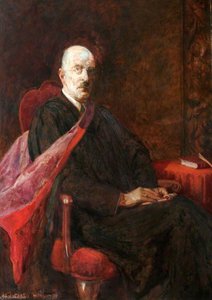
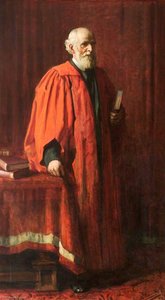
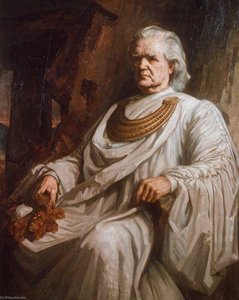
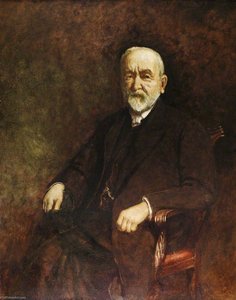
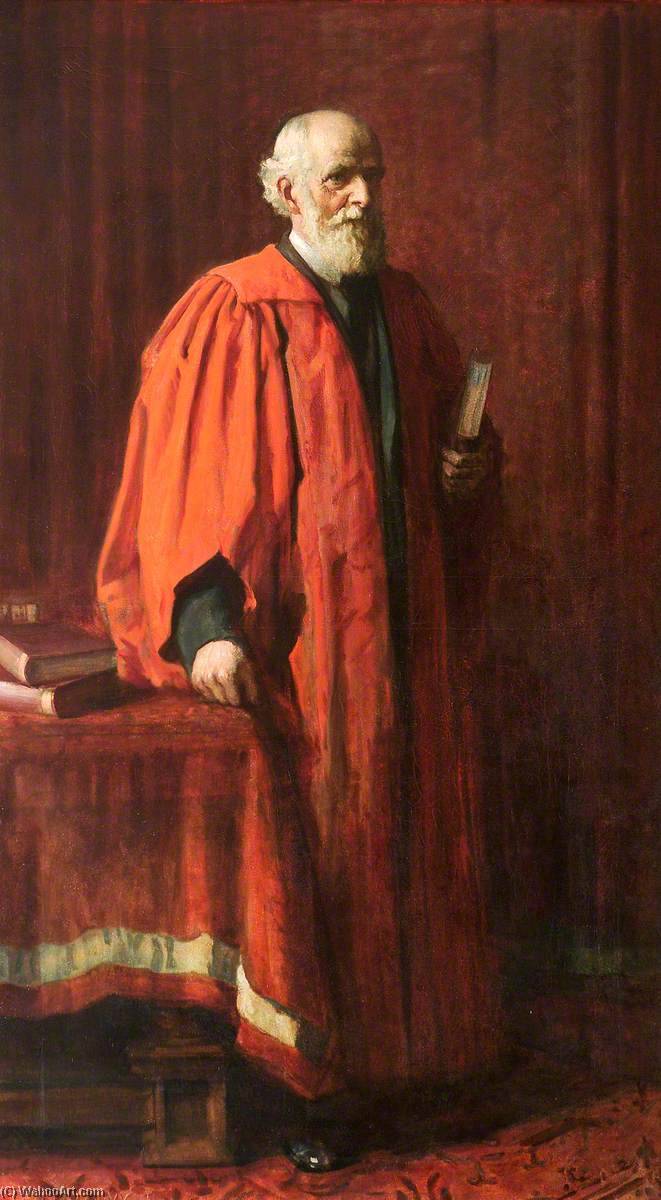
Sir Henry Jones (1852–1922), MA, LLD, Professor of Philosophy (1884–1891)
 Oil On Canvas
- WallArt
- Victorian Academic
 1920
1920- 19th Century
 191.0 x 105.0 cm
 Bangor University
 Read More
Hand Made Oil Reproduction
Hand-painted oil on canvas in your size and frame, made to order by our artists. ( Buy Print Buy Image)




P118B $10

P118H $10

P118W $10

P438Z $10

P508JH $12

P508YH $12

P805H $10

P805Z $10

P919BZ $10

P919G $10

P919XJ $10

P959ZH $10

P968JZ $12

W106C $8

W218G $10

W218JH $8

W218Y $10

W307PJ $10

W316G $10

W316PJ $8

W316Y $10

W398PJ $8

W4111J $10

W500HY $15

W500JH $15

W692G $12

W849H $8

W940BG $15

W953PJ $8




Pick from our preset sizes that match the artwork's original proportions.

You may enter your own dimensions to fit a specific frame or space. If your selected size does not match the original image's proportions, we will either crop the artwork or extend the painting with additional hand-painted elements. A digital mockup will be sent for your approval before production begins.
Please note that the on-screen preview does not reflect the actual cropping or extension. Only the mockup will accurately show the final composition.
While custom sizes are available, we recommend selecting a dimension from the predefined list to preserve the original proportions.
After order, ArtsDot.com team will email client for instructions and provide a mockup preview
Worldwide Delivery () in 3/4 weeks instead of standard 5 weeks. (17 August). No compromise on quality.

Free Worldwide Express Shipping

High-Quality Linen Canvas

Full Shipping Insurance

Customs Tax Refund Guarantee

True Color Matching Guarantee

60-Day Return Policy (Defects Only)

100% Money-Back Guarantee

Bulk Discount Offer
 Glass option is only available in size under 110 CM

Sir Henry Jones (1852–1922), MA, LLD, Professor of Philosophy (1884–1891)
Reproduction Medium
Reproduction Size
-


Total Price
$ 263
Artwork Description
A Portrait of Intellectual Authority
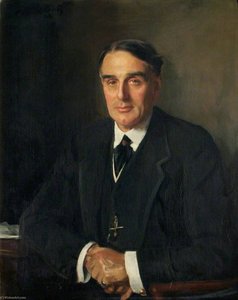
This compelling painting captures a moment steeped in academic gravity and intellectual pursuit. At its heart stands Sir Henry Jones, depicted in formal attire, notably draped in a rich red robe that immediately commands attention. His bearing is one of profound scholarship; the beard frames a face that seems to contemplate deep philosophical currents. He holds what appears to be a book or sheaf of papers, his gaze directed outward, engaging the viewer with an air of thoughtful authority. The composition is richly layered, not merely focusing on the central figure but incorporating the surrounding environment—a desk cluttered with papers suggesting tireless work and profound thought.
The Atmosphere of Academia
The setting itself contributes significantly to the painting's narrative weight. The desk, a veritable landscape of scattered documents, speaks volumes about the life lived within these walls—a life dedicated to study and discourse. Beyond Sir Henry Jones, the presence of other figures subtly populates the background, suggesting that his intellectual world is not solitary but communal, woven into the fabric of an academic institution. Christopher Williams, the artist, masterfully balances the focus on this singular, authoritative portrait while allowing the surrounding activity to breathe life into the scene. The overall effect is one of vibrant, yet controlled, scholarly energy.
Technique and Historical Resonance
Painted around 1920, this work sits at a fascinating intersection of late Victorian formality and early 20th-century portraiture. Williams employs a technique that lends both polish and palpable texture to the scene; one can almost feel the weight of the velvet robe or the crisp edge of the scattered papers. The use of deep, saturated colors, particularly in the red academic vestments, contrasts beautifully with the muted tones of the background and skin, drawing the eye inexorably back to the central subject. It is a testament to Williams's skill in capturing both the permanence of historical figures and the fleeting intensity of intellectual life.
Symbolism and Emotional Impact for the Modern Collector
For the discerning collector or designer seeking art with narrative depth, this piece offers more than mere decoration; it offers an ambiance. It evokes respect, curiosity, and the enduring power of knowledge. The symbolism inherent in the robes, the books, and the cluttered desk speaks to a veneration of learning itself. Reproducing this work allows one to infuse a space—be it a library, study, or grand hall—with an immediate sense of cultured gravitas. It is a visual anchor for contemplation, suggesting that within these walls, important ideas are always at hand.
Related Artworks

Artist Biography
Christopher Williams: A Life in Art
Christopher David Williams (1873-1934) was a celebrated Welsh artist whose career spanned the late Victorian and early 20th centuries. He is particularly remembered for his evocative portraits, allegorical scenes, and landscapes that often reflected a strong sense of Welsh identity and the spirit of the Celtic Revival.
Early Life and Education
Born in Maesygwrath, Wales, Williams initially faced opposition from his father, Evan Williams, who envisioned a medical career for him. However, a transformative visit to the Walker Art Gallery in Liverpool in 1892, where he was deeply moved by Frederick Leighton’s *Perseus and Andromeda*, ignited his passion for art. This experience solidified his determination to pursue a life as an artist.
Artistic Development and Influences
- Early Training: Williams began his formal artistic training at the Neath Technical Institute under Mr. Kerr in 1892-1893.
- Royal College of Art & Royal Academy Schools: He continued his studies at the Royal College of Art for three years, followed by further education at the Royal Academy Schools from 1896 to 1901.
- Key Influences: Frederick Leighton was a significant early influence, inspiring Williams’s academic approach and attention to detail. He also drew inspiration from Pre-Raphaelite aesthetics and the broader artistic currents of the Celtic Revival.
Major Achievements and Recognition
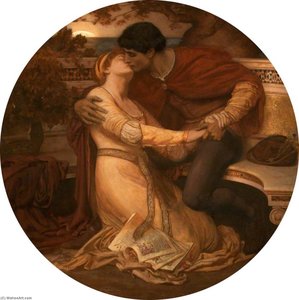
- Royal Academy Exhibitions: Williams first exhibited at the Royal Academy in 1902 with *Paolo and Francesca*, followed by a portrait of his father in 1903. He went on to exhibit eighteen paintings there throughout his career.
- Royal Society of British Artists: In 1910, he was invited to join the Royal Society of British Artists, exhibiting thirty-seven paintings with them over the next decade.
- Royal Commission: A pivotal moment came in 1911 when King George V commissioned Williams to create a commemorative painting of the investiture of Edward, Prince of Wales at Caernarfon Castle. He completed two versions of this important work.
- Portraiture: Williams became highly sought after as a portraitist, creating likenesses of prominent figures such as David Lloyd George, Sir John Williams, and Sir Henry Jones.
Themes and Style
Williams’s work is characterized by:
- Portraiture: His portraits are known for their psychological depth and realistic rendering of his subjects.
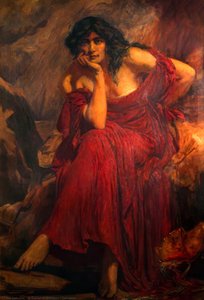
- Celtic Revival: He frequently explored themes from Welsh mythology and folklore, particularly in paintings like *Ceridwen* and *Branwen*, inspired by the Mabinogion.
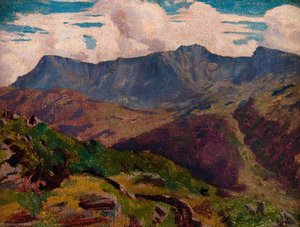
- Landscape Painting: Williams painted landscapes extensively throughout Wales, as well as during travels to Switzerland, Italy, France, Spain, Morocco, and Holland.
- Allegorical Scenes: He often incorporated allegorical elements into his work, imbuing it with symbolic meaning.
Historical Significance and Legacy
Christopher Williams played a significant role in promoting Welsh art and culture during his lifetime. He actively participated in the National Eisteddfod as an adjudicator and served on committees for the National Museum of Wales and the Honourable Society of Cymmrodorion. His work reflects a strong sense of national identity and contributed to the artistic flourishing of Wales in the early 20th century.
His paintings are held in numerous public collections, including the National Museum of Wales, the Royal Collection, and the Glynn Vivian Art Gallery, ensuring his legacy continues to inspire and captivate audiences today. He was a brother-in-law to fellow artist Fred Appleyard, and father to astronomer Evan Gwyn Williams and artist Ivor Williams.

christopher williams
1873 - 1934 , United States of America
Quick Facts
- Birth Date: 1873
- Birth Place: Maesygwrath, Wales
- Death Date: 1934
- Influenced By: Frederick Leighton
- Movement: Celtic Revival, Victorian painting
- Name: Christopher Williams
- Nationality: Welsh
- Notable Works: The Awakening of Wales, Paolo and Francesca, portraits of David Lloyd George
Related Articles

Crimson Threads of Narrative: Exploring Symbolism & Representation in Artworks Featuring the Red Dress
Explore the rich symbolism of the red dress in art history! From ancient power displays to iconic portraits like Cézanne’s 'Madame Cezanne', discover the cultural and artistic significance behind this captivating color. Expert analysis & insights.

The Enduring Legacy of Oil on Canvas: Technique, History & Aesthetic Impact
Explore the rich history & techniques of oil painting – from Renaissance masters to Impressionism. Discover pigments, layering methods, and why this timeless medium endures. Expert insights for artists & art enthusiasts.

Oil on Canvas: A Historical & Technical Exploration of a Timeless Artistic Medium
Explore the rich history & enduring techniques of oil painting on canvas. Discover the science behind its longevity, conservation practices, and contemporary relevance. Expert insights for art enthusiasts.

The Enduring Power of Painting: A Historical & Contemporary Exploration of Form and Emotion
Explore the rich history & enduring techniques of oil painting with ArtsDot. Discover masterpieces, learn about art collecting, and find authentic handmade reproductions crafted by skilled artists.

The Enduring Legacy of Oil on Canvas: Technique, History & Contemporary Practice
Explore the rich history & enduring techniques of oil painting on canvas. Discover the science behind its longevity, conservation practices, and contemporary relevance. Expert insights for art enthusiasts.