 Preview
 Send
Send Share
Share
 Details

 Download
 Similars
 X-Ray
X-Ray Diaporama
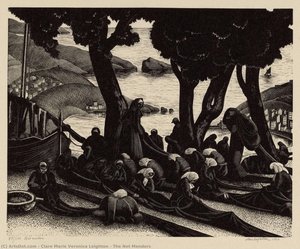
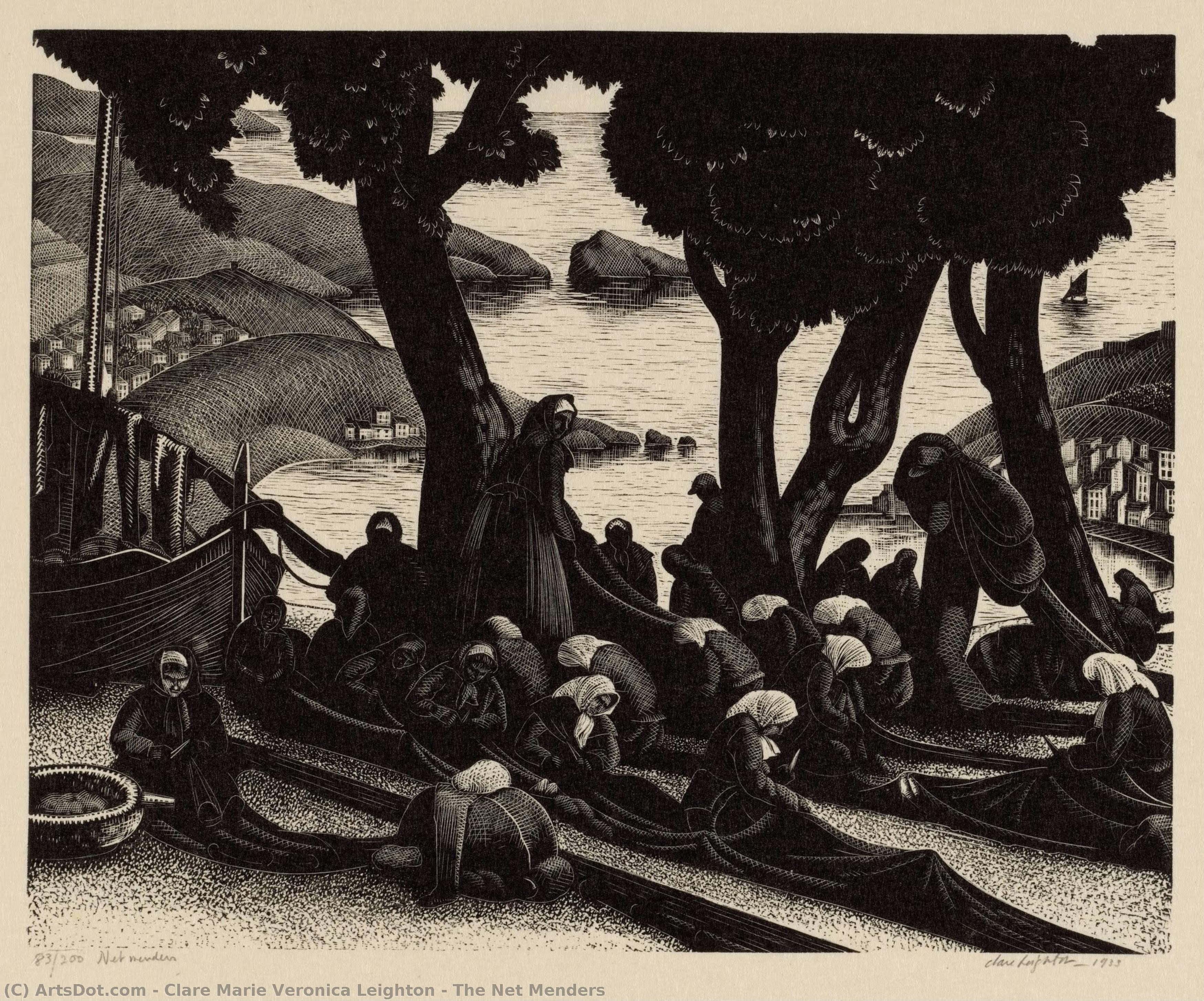
The Net Menders
 Woodblock Print
- Modernist Social Realism
 1933
1933 15.0 x 19.0 cm
 Nelson-Atkins Museum of Art
 Read More
Hand Made Oil Reproduction
Hand-painted oil on canvas in your size and frame, made to order by our artists. ( Buy Print Buy Image)




P118B $10

P118H $10

P118W $10

P438Z $10

P508JH $12

P508YH $12

P805H $10

P805Z $10

P919BZ $10

P919G $10

P919XJ $10

P959ZH $10

P968JZ $12

W106C $8

W218G $10

W218JH $8

W218Y $10

W307PJ $10

W316G $10

W316PJ $8

W316Y $10

W398PJ $8

W4111J $10

W500HY $15

W500JH $15

W692G $12

W849H $8

W940BG $15

W953PJ $8




Pick from our preset sizes that match the artwork's original proportions.

You may enter your own dimensions to fit a specific frame or space. If your selected size does not match the original image's proportions, we will either crop the artwork or extend the painting with additional hand-painted elements. A digital mockup will be sent for your approval before production begins.
Please note that the on-screen preview does not reflect the actual cropping or extension. Only the mockup will accurately show the final composition.
While custom sizes are available, we recommend selecting a dimension from the predefined list to preserve the original proportions.
After order, ArtsDot.com team will email client for instructions and provide a mockup preview
Worldwide Delivery () in 3/4 weeks instead of standard 5 weeks. (17 August). No compromise on quality.

Free Worldwide Express Shipping

High-Quality Linen Canvas

Full Shipping Insurance

Customs Tax Refund Guarantee

True Color Matching Guarantee

60-Day Return Policy (Defects Only)

100% Money-Back Guarantee

Bulk Discount Offer
 Glass option is only available in size under 110 CM

The Net Menders
Reproduction Medium
Reproduction Size
-


Total Price
$ 563
Artwork Description
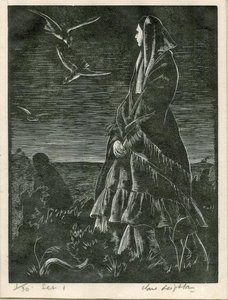
A Moment Frozen in Time: Clare Leighton’s “The Net Menders”
Clare Leighton's "The Net Menders," created in 1933, isn’t merely a depiction of fishermen at work; it’s a poignant meditation on labor, community, and the quiet dignity inherent in everyday life. This woodcut print, rendered in the stark beauty of monochrome, transports us to a windswept coastal scene where figures diligently mend their nets against the backdrop of a vast, brooding sea. Leighton, a pivotal figure in British illustration during her time, possessed an extraordinary ability to capture the essence of rural existence with remarkable sensitivity and technical skill.
The image immediately draws the eye into a densely packed composition. A large group of men, their faces etched with concentration and resilience, are engaged in the painstaking task of repairing fishing nets – a vital activity for these coastal communities. Behind them, the ocean stretches out to meet a distant horizon punctuated by the silhouettes of buildings, hinting at a small village nestled amongst the landscape. The arrangement isn’t one of dramatic perspective; instead, Leighton employs a flattened approach, prioritizing the emotional impact and the interconnectedness of the subjects within the frame. The deliberate lack of depth encourages the viewer to linger on the details – the rough texture of the nets, the weathered hands of the workers, and the subtle shifts in expression that reveal both determination and perhaps a touch of melancholy.
Craftsmanship and Technique: The Language of Woodcut
Leighton’s mastery lies not only in her subject matter but also in her skillful execution. “The Net Menders” is a testament to the power of woodcut printing, a technique she embraced with profound understanding. The process begins with meticulously carving an image into a block of wood – a laborious undertaking that demands precision and patience. The resulting surface is then inked, and finally pressed onto paper, creating a distinctive pattern of lines and textures. In this print, Hatching and cross-hatching are employed extensively to build up tonal values and simulate the rough texture of fabric, weathered skin, and the grain of wood. The bold, angular lines contribute to a sense of structure and order, while simultaneously conveying the physicality of the work being performed.
Notice how the artist uses varying line weights to define forms – thicker lines delineate the outlines of figures and nets, while finer lines create subtle gradations of shadow. This careful control over linework is what gives the print its remarkable depth and visual richness despite its monochromatic palette. The woodcut technique inherently lends a slightly grainy quality to the image, adding an element of tactile realism that further enhances the viewer’s engagement.
Symbolism and Emotional Resonance
Beyond its technical merits, “The Net Menders” is rich in symbolic meaning. The act of mending nets represents more than just a practical necessity; it embodies themes of repair, restoration, and perseverance. These men are not simply working; they are actively maintaining their livelihood and preserving their traditions. The monochrome palette – shades of black, white, and grey – contributes to the print’s somber mood, evoking a sense of quiet determination and perhaps even a touch of melancholy. The faces of the workers, though largely obscured by shadow, suggest a shared experience of hardship and resilience.
Leighton's work often explored themes of rural life and social realism, reflecting a deep empathy for those who toiled in the fields and seas. “The Net Menders” is a powerful reminder of the dignity of manual labor and the importance of community in sustaining individuals and preserving cultural heritage. It’s a timeless image that speaks to our shared humanity and the enduring spirit of those who work tirelessly to provide for themselves and their families.
A Legacy of Quiet Strength
Clare Leighton (1898-1989) was a singular artist, deeply committed to capturing the essence of rural life through her distinctive wood engravings. Her work offers a poignant glimpse into a bygone era, celebrating the quiet dignity and resilience of ordinary people. “The Net Menders” stands as one of her most compelling achievements – a testament to her artistic skill, her social awareness, and her profound understanding of the human spirit. Reproductions of this evocative print offer a beautiful way to bring this powerful image into your home or office, serving as a constant reminder of the strength found in community and the enduring value of honest work.
Related Artworks

Artist Biography
The Soul of the Earth: The Life and Legacy of Clare Leighton
Clare Leighton (1898–1989) was a singular figure in twentieth-century art, recognized primarily for her masterful wood engravings that captured the essence of rural life and the quiet dignity of manual labor. Born in London on April 12, 1898, she possessed an uncommon blend of artistic talent and intellectual curiosity—qualities that propelled her across continents and cemented her legacy as a pivotal voice in British illustration and social realism. Her journey began with the gentle encouragement of her father and uncle, both artists themselves, which fostered early inclinations toward visual expression and a deep-seated respect for the craft of printmaking.
Her formal artistic education commenced at Brighton College of Art, where she honed foundational skills in drawing and painting before progressing to the prestigious Slade School of Fine Art. It was here that she encountered the transformative influence of Noel Rooke, a celebrated wood engraver who profoundly shaped her artistic vision. Under his tutelage, Leighton learned to master the nuances of the medium, gaining an appreciation for precision, tonal subtlety, and the ability to convey profound emotion through the interplay of texture and line. This technical foundation would become the bedrock of her career, allowing her to translate the rugged textures of the natural world into striking black-and-white compositions.
A Vision of Labor and Landscape
As Leighton’s style matured during the 1920s and 1930s, wood engraving emerged as her favored medium. This technique offered unparalleled control over tonal range, making it perfectly suited to her desire to depict the grit and grace of agricultural existence. Her work transcended mere illustration; she utilized the stark contrasts of the woodcut to create a visual language of social commentary. Through her eyes, the rhythmic motions of farming became epic narratives of human endurance. She skillfully captured the faces of farmers, laborers, and their families with remarkable sensitivity, imbuing each figure with a sense of monumental importance.
Her thematic reach was vast, spanning from the intimate details of English pastoral life to the expansive, rugged landscapes of North America. Some of her most enduring contributions include:
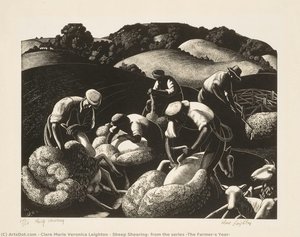
- The Farmer’s Year: A celebrated series that documents the seasonal cycles of agricultural life, showcasing her ability to blend botanical accuracy with emotional depth in works such as Sheep Shearing.
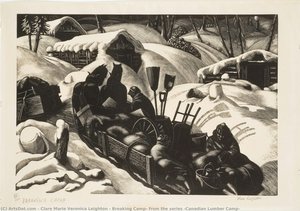
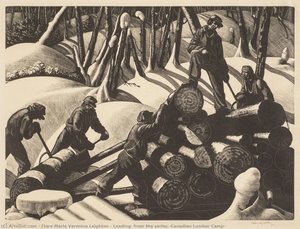
- Canadian Lumber Camp: A powerful exploration of frontier life, seen in pieces like Breaking Camp, where she captures the raw energy and physical toll of the timber industry.
- The Net Menders: A poignant depiction of coastal community resilience, illustrating the interconnectedness of human labor and the sea.
Historical Significance and Artistic Endurance
Leighton’s artistry was enriched by her extensive travels throughout Europe—including Italy, France, and the Balkans—which exposed her to diverse cultural landscapes and deepened her fascination with portraying everyday life. This global perspective allowed her to weave a tapestry of human experience that felt both deeply local and universally resonant. Her work stands as a testament to the beauty found in the mundane and the strength found in communal struggle.
In an era of rapid industrialization, Leighton’s focus on the traditional rhythms of the land provided a vital counter-narrative. She did not merely document a disappearing way of life; she elevated it to the realm of high art. Today, her wood engravings remain highly regarded for their technical brilliance and their ability to evoke a sense of nostalgia and reverence for the earth. Her legacy continues to inspire artists who seek to find the extraordinary within the ordinary, ensuring that the dignity of labor she so lovingly depicted remains etched in the annals of art history.
clare marie veronica leighton
1898 - 1989 , United Kingdom
Quick Facts
- Artistic Movement Or Style: Wood engraving
- Artists Or Movements Influenced By This Artist: ['Social Realism']
- Artists Who Influenced This Artist: ['Noel Rooke']
- Date Of Birth: April 12, 1898
- Date Of Death: November 4, 1989
- Full Name: Clare Marie Veronica Leighton
- Nationality: British-American
- Notable Artworks:
- Loading
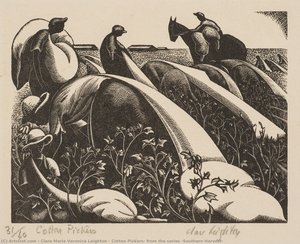
- Cotton Pickers
- Sheep Shearing
- Place Of Birth: London, United Kingdom
Related Articles
Echoes of Rural Life: Nostalgia, Labor & Identity in Art History
Explore the rich history of rural life in art! Discover how Realism captured labor & identity through masterpieces by Van Gogh, Millet & more. Expert analysis for collectors and enthusiasts.
Cultivating Visions: Rural Life & Social Commentary in Art History
Explore the rich history of rural life in art! Discover masterpieces from Dutch Masters to Van Gogh & Courbet. Uncover artistic movements, social significance & expert collecting insights at ArtsDot.

Sir Frederic Leighton: Aestheticism, Academic Mastery & Victorian Masculinity
Explore the life & art of Sir Frederic Leighton, a master of Victorian Aestheticism. Discover his academic training, sculptural innovations, and captivating depictions of beauty. Expert insights for collectors.
Jean-François Millet: Realism, Rural Life & the Poetic Depiction of Labor
Explore the life & work of Jean-François Millet, a founder of Realism. Discover his poignant depictions of rural France, iconic paintings like 'The Angelus,' and lasting influence on art history. Learn more at ArtsDot.

Echoes of Rural Life: Art's Enduring Representations of the Countryside
Explore the rich history of rural life in art! Discover masterpieces from Millet to Mauve & beyond. Learn about Realism, Barbizon School & find inspiration for your home with ArtsDot.