 Preview
 Send
Send Share
Share
 Details

 Download
 Similars
 X-Ray
X-Ray Diaporama
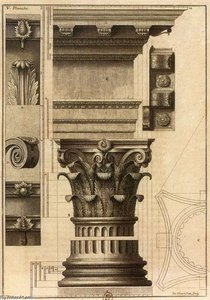
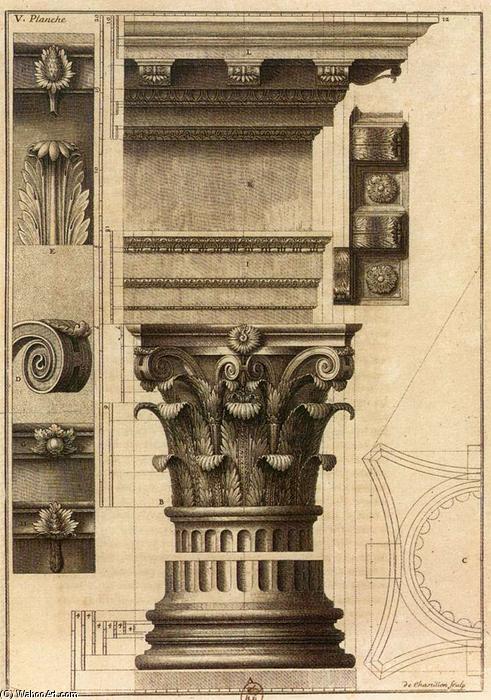
Classification of the Five Orders of Columns


 Read More
Hand Made Oil Reproduction
Hand-painted oil on canvas in your size and frame, made to order by our artists. ( Buy Print Buy Image)




P118B $10

P118H $10

P118W $10

P438Z $10

P508JH $12

P508YH $12

P805H $10

P805Z $10

P919BZ $10

P919G $10

P919XJ $10

P959ZH $10

P968JZ $12

W106C $8

W218G $10

W218JH $8

W218Y $10

W307PJ $10

W316G $10

W316PJ $8

W316Y $10

W398PJ $8

W4111J $10

W500HY $15

W500JH $15

W692G $12

W849H $8

W940BG $15

W953PJ $8




Pick from our preset sizes that match the artwork's original proportions.

You may enter your own dimensions to fit a specific frame or space. If your selected size does not match the original image's proportions, we will either crop the artwork or extend the painting with additional hand-painted elements. A digital mockup will be sent for your approval before production begins.
Please note that the on-screen preview does not reflect the actual cropping or extension. Only the mockup will accurately show the final composition.
While custom sizes are available, we recommend selecting a dimension from the predefined list to preserve the original proportions.
After order, ArtsDot.com team will email client for instructions and provide a mockup preview
Worldwide Delivery () in 3/4 weeks instead of standard 5 weeks. (27 August). No compromise on quality.

Free Worldwide Express Shipping

High-Quality Linen Canvas

Full Shipping Insurance

Customs Tax Refund Guarantee

True Color Matching Guarantee

60-Day Return Policy (Defects Only)

100% Money-Back Guarantee

Bulk Discount Offer
 Glass option is only available in size under 110 CM

Classification of the Five Orders of Columns
Reproduction Medium
Reproduction Size
-


Total Price
$ 263
Related Artworks


Artist Biography
Claude Perrault: Architect of Classical Harmony
Claude Perrault (1613-1688) stands as a pivotal figure in the artistic landscape of 17th-century France, an architect whose vision profoundly shaped the aesthetic sensibilities of his era and cemented his legacy as one of the fathers of classical architecture. Born into a wealthy Parisian family—his father, Pierre Perrault, was a lawyer at the Parlement—Claude’s upbringing instilled in him a meticulous attention to detail and a deep appreciation for intellectual pursuits, qualities that would define his remarkable career. His formal education encompassed medicine and philosophy, equipping him with both scientific rigor and humanist sensibilities – an unusual combination for artists of his time.- Early Influences: Perrault’s formative years coincided with the burgeoning Renaissance revival in France, fueled by humanist scholarship and a renewed interest in Greco-Roman ideals. This intellectual climate profoundly impacted his artistic worldview, fostering a conviction that beauty stemmed from proportion and order.
- Architectural Breakthrough: The cornerstone of Perraault's fame rests upon his involvement in the monumental redesign of the Louvre Palace under Louis XIV. Alongside Louis Le Vau and Charles Le Brun, he spearheaded the ambitious project to transform the royal residence into a symbol of grandeur and magnificence—a task that demanded innovative engineering solutions and an unwavering commitment to classical principles.
- The Five Orders: Perrault’s most enduring contribution to architectural theory was his groundbreaking “Classification of the Five Orders of Columns,” published in 1683. This treatise meticulously analyzed Corinthian, Doric, Ionic, Tuscan, and Composite columns—categorizing them based on their ornamentation and proportions—establishing a framework for aesthetic judgment that continues to resonate today. It wasn’t merely an academic exercise; it was a deliberate effort to elevate French architecture to the highest standards of elegance and rationality.
- Beyond the Louvre: Perrault's influence extended beyond royal palaces, shaping the design of numerous churches and public buildings throughout Paris. His meticulous attention to detail—evident in his work on Sainte-Geneviève Cathedral and the Tuileries Palace—demonstrated a mastery of craftsmanship that cemented his reputation as one of France’s foremost architects.
- Literary Legacy: Perrault's artistic pursuits were complemented by a prolific literary output, including translations of Vitruvius and his celebrated collection of fairy tales, “Les Contes de la Belle Époque.” These works showcased his versatility as an intellectual and cemented his place in French cultural history.
The Louvre Facade: A Triumph of Classical Design
The east façade of the Louvre stands as a testament to Perrault’s architectural genius—a masterpiece that embodies the ideals of classical harmony and proportion. Constructed between 1667 and 1674, it represents a radical departure from the prevailing Baroque style, prioritizing clarity and restraint over elaborate ornamentation. Le Vau's initial design envisioned a monumental structure dominated by massive Corinthian columns, reflecting Louis XIV’s desire for grandeur. However, Perrault skillfully intervened, advocating for a more refined aesthetic—a decision that ultimately resulted in a façade of unparalleled beauty and sophistication. His insistence on using iron tie rods behind the entablature ensured structural stability while subtly enhancing the visual impact of the design. The resulting edifice became an emblem of French artistic excellence and continues to inspire awe centuries later.Influence and Legacy
Perrault’s “Classification of the Five Orders” irrevocably transformed architectural thought, establishing a canon of proportions that would dominate European architecture for decades to come. It served as a crucial catalyst for the Baroque revival in France, influencing artists like Jules Hardouin-Mansart and Nicolas Colbert—Louis XIV's chief architect and advisor respectively. Furthermore, Perrault’s literary contributions—particularly his retelling of Cinderella—established him as a cornerstone of French folklore and profoundly impacted subsequent generations of writers and storytellers. Claude Perrault’s enduring legacy resides not only in his architectural achievements but also in his unwavering commitment to intellectual rigor and humanist values—qualities that continue to inspire admiration and scholarly inquiry today.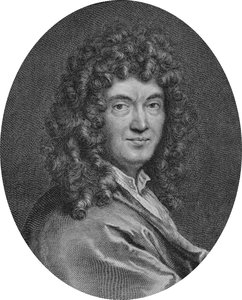
Claude Perrault
1613 - 1688 , France
Quick Facts
- Artistic Movement Or Style: Baroque Architecture
- Artists Or Movements Influenced By This Artist: ['Italian Renaissance']
- Artists Who Influenced This Artist: ['Vitruvius']
- Date Of Birth: September 25, 1613
- Date Of Death: October 9, 1688
- Full Name: Claude Perrault
- Nationality: French
- Notable Artworks:
- Louvre Facade
- Paris Observatory
- Place Of Birth: Paris, France