 Preview
 Send
Send Share
Share
 Details

 Download
 Similars
 X-Ray
X-Ray Diaporama
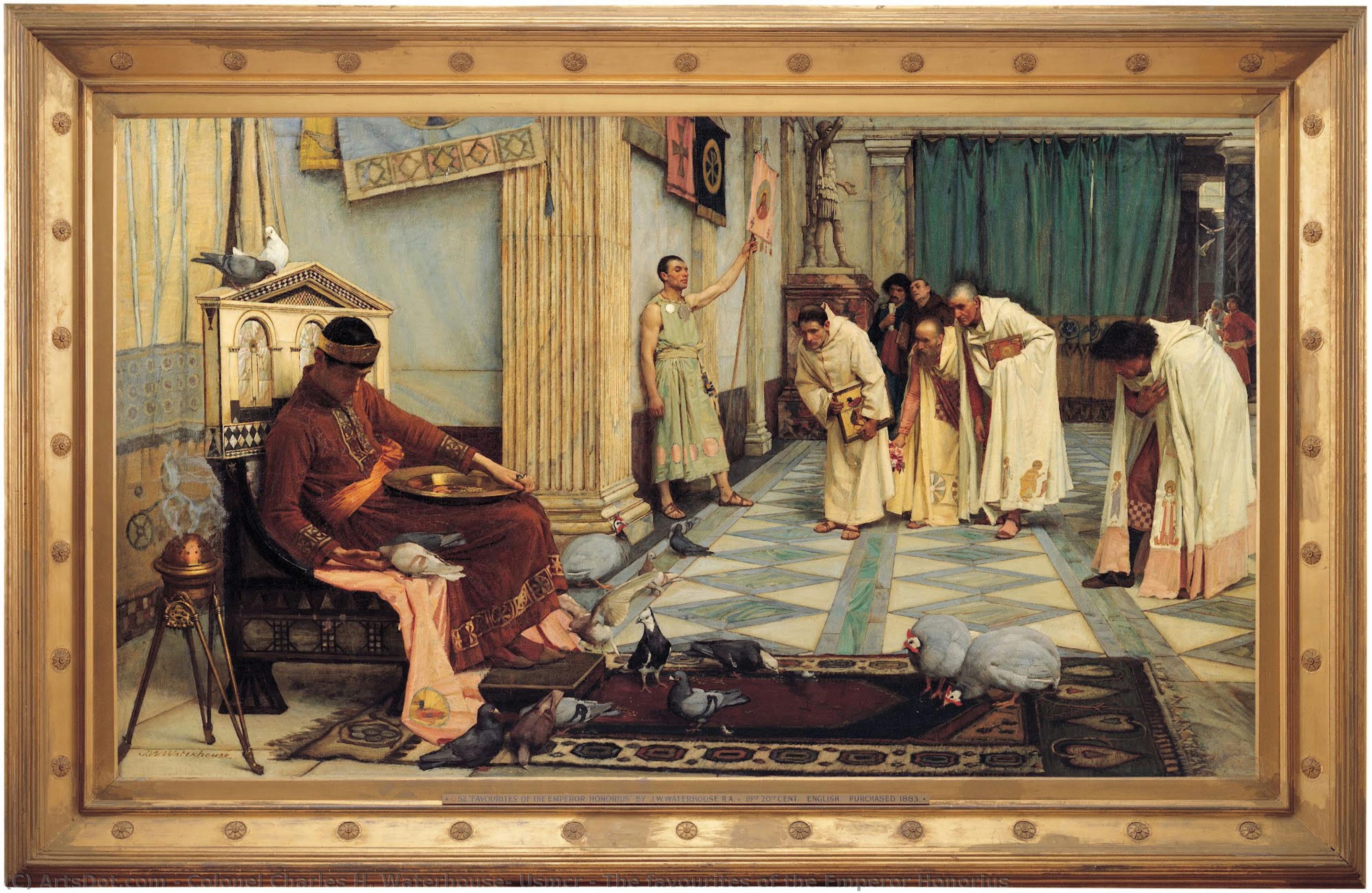
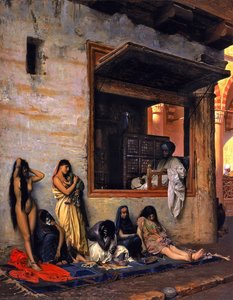
The favourites of the Emperor Honorius
 Oil On Canvas
- WallArt
- Romantic Realism
 1883
1883- 19th Century
 205.0 x 119.0 cm
 Art Gallery of South Australia
 Read More
Hand Made Oil Reproduction
Hand-painted oil on canvas in your size and frame, made to order by our artists. ( Buy Print Buy Image)




P118B $10

P118H $10

P118W $10

P438Z $10

P508JH $12

P508YH $12

P805H $10

P805Z $10

P919BZ $10

P919G $10

P919XJ $10

P959ZH $10

P968JZ $12

W106C $8

W218G $10

W218JH $8

W218Y $10

W307PJ $10

W316G $10

W316PJ $8

W316Y $10

W398PJ $8

W4111J $10

W500HY $15

W500JH $15

W692G $12

W849H $8

W940BG $15

W953PJ $8




Pick from our preset sizes that match the artwork's original proportions.

You may enter your own dimensions to fit a specific frame or space. If your selected size does not match the original image's proportions, we will either crop the artwork or extend the painting with additional hand-painted elements. A digital mockup will be sent for your approval before production begins.
Please note that the on-screen preview does not reflect the actual cropping or extension. Only the mockup will accurately show the final composition.
While custom sizes are available, we recommend selecting a dimension from the predefined list to preserve the original proportions.
After order, ArtsDot.com team will email client for instructions and provide a mockup preview
Worldwide Delivery () in 3/4 weeks instead of standard 5 weeks. (4 September). No compromise on quality.

Free Worldwide Express Shipping

High-Quality Linen Canvas

Full Shipping Insurance

Customs Tax Refund Guarantee

True Color Matching Guarantee

60-Day Return Policy (Defects Only)

100% Money-Back Guarantee

Bulk Discount Offer
 Glass option is only available in size under 110 CM

The favourites of the Emperor Honorius
Reproduction Medium
Reproduction Size
-


Total Price
$ 263
A Glimpse into Imperial Splendor
In the grand, sweeping canvas of The favourites of the Emperor Honorius, we are transported far from the modern era and thrust into the opulent, bustling heart of an ancient Roman palace. Painted in 1883 by the skilled hand of Colonel Charles H. Waterhouse, this magnificent oil on canvas serves as a window into a lost world of political intrigue and imperial luxury. The composition is masterfully orchestrated, drawing the eye toward the central figure of Emperor Honorius, who sits ensconced in his palace, surrounded by a vibrant assembly of courtiers and favorites. The sheer scale of the work, measuring an impressive 205 x 119 cm, allows the viewer to become a silent participant in this historical tableau, feeling the weight of the Roman atmosphere as figures engage in whispered conversations and quiet observations.
The artist employs a style rooted in romantic realism, a technique that breathes life into historical subjects through meticulous detail and emotional depth. Waterhouse does not merely document a scene; he captures a moment of lived experience. Every element, from the delicate way light falls upon the emperor's robes to the subtle presence of a bird perched near the center of the frame, contributes to a sense of profound realism. The brushwork is deliberate yet fluid, creating textures that invite the eye to linger on the fine fabrics, the polished surfaces of the furniture, and the varied expressions of the twelve individuals populating the scene. This level of detail ensures that the painting remains dynamic, with some figures lost in private dialogue while others gaze toward an unseen event outside the frame, creating a sense of narrative continuity that extends beyond the edges of the canvas.
Symbolism and the Essence of Roman Life
Beyond its visual grandeur, the painting is rich with subtle symbolism that speaks to the complexities of power and domesticity within the imperial court. The arrangement of the figures—some close to the emperor, others relegated to the periphery—serves as a silent commentary on the hierarchy and social stratification of ancient Rome. The presence of everyday objects, such as a simple bowl placed thoughtfully to the left or the sturdy chairs scattered throughout the room, grounds the high-stakes political environment in a tangible, human reality. These elements suggest that even amidst the grandeur of an empire, the rhythms of daily life—eating, conversing, and observing—persist.
For the discerning collector or interior designer, this piece offers more than just historical interest; it provides a profound emotional resonance. The lively atmosphere captured by Waterhouse evokes a sense of nostalgia for the classical era, making it an ideal centerpiece for a room designed to inspire thought and conversation. Whether placed in a formal study, a grand hallway, or a sophisticated living space, a high-quality reproduction of this masterpiece brings with it a sense of timelessness and prestige. It is a work that does not merely decorate a wall but enriches the very soul of a home, offering an enduring connection to the artistry and history of the human experience.
Related Artworks





Artist Biography
**a life of service and art**
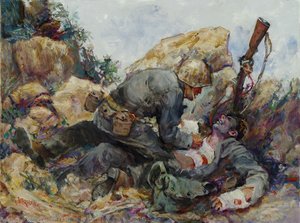
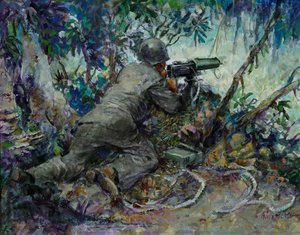
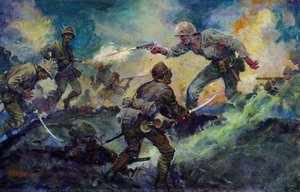
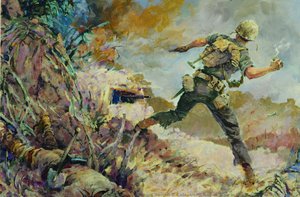
colonel charles h. waterhouse, usmcr, a renowned american painter, illustrator, and sculptor, left an indelible mark on the world of art, particularly in his depiction of united states marine corps historical themes. born in 1922, waterhouse's life was a testament to service, sacrifice, and artistic expression.**early life and military service**
waterhouse enlisted in the marine corps in 1943, serving with the 5th marine division during world war ii. he participated in the pacific campaign, including the battle of iwo jima, where he was severely wounded, earning a purple heart medal. this experience would later influence his artistic themes.**artistic career**
after the war, waterhouse pursued formal art studies at the newark school of fine and industrial arts. under the tutelage of steven r. kidd and w. t. aylward, he developed a style rooted in romantic realism. his work appeared in numerous publications, solidifying his reputation as a sought-after illustrator.- frederic remington's influence on western american art is notable, but waterhouse's own contributions to marine corps historical themes are unparalleled.
- his service during the vietnam war as a civilian combat artist further deepened his understanding of the complexities of war and its subjects.
- in 1971, he received a commission from the marine corps history division to create paintings depicting marines in the revolution, marking a significant turning point in his career.
**legacy and notable works**
waterhouse's most famous work, "in the highest tradition–wwii medal of honor art: paintings by col charles h. waterhouse, usmcr, ret", is a poignant tribute to marine legend sgt john basilone. this piece, along with others, can be found in the national museum of the marine corps, a testament to his dedication.- the stampede by frederic remington, though not directly related to waterhouse, showcases the influence of american painters on historical themes.
- waterhouse's own profile on ArtsDot.com highlights his extensive collection and the impact of his work on marine corps history.
- wikipedia's entry on charles waterhouse (artist) provides a detailed account of his life, service, and artistic achievements.
**conclusion**
colonel charles h. waterhouse, usmcr's legacy is a blend of service, art, and the indomitable spirit of the united states marine corps. his work continues to inspire, educate, and honor the sacrifices of those who serve.- visit waterhouse's profile on ArtsDot.com for more information and to explore his collection.
- delve into the wikipedia entry on charles waterhouse (artist) for a comprehensive overview of his life and work.

colonel charles h. waterhouse, usmcr
1922 - 2013 , United States of America
Related Articles

Romantic Realism's Finest: 10 Masterpieces for Your Home | ArtsDot
Explore 10 defining masterpieces of Romantic Realism! Discover Courbet, Millet & Daumier's powerful paintings—capturing emotion and social realities. Find museum-quality reproductions for your home at ArtsDot.com.
The Evocative Embrace of Reality: Exploring Romantic Realism in 19th-Century Painting
Explore the captivating world of Romantic Realism! Discover key artists like Courbet & Millet, masterpieces, and the social context behind this influential art movement. Expert insights for collectors at ArtsDot.

Academic Realism's Finest: 10 Masterpieces for Art Lovers & Home Decor
Explore 10 defining Academic Realism masterpieces by Bouguereau, Gérôme & Cabanel. Discover the stories behind these iconic paintings and bring timeless art into your home with museum-quality reproductions from ArtsDot.com. Explore the full collection online!

Echoes of Society: Exploring Social Realism's Enduring Legacy in Art
Explore the powerful world of Social Realism art! Discover key artists, masterpieces & its profound social commentary. Expert insights into this influential movement's history and enduring legacy.

The Poetic Truth of Observation: Exploring 19th-Century Realism in Painting
Explore the captivating world of 19th-century Realism! Discover key artists like Courbet & Millet, masterpieces, and the powerful social commentary behind this influential art movement. Expert insights at ArtsDot.