 Preview
 Send
Send Share
Share
 Details

 Download
 Similars
 X-Ray
X-Ray Diaporama
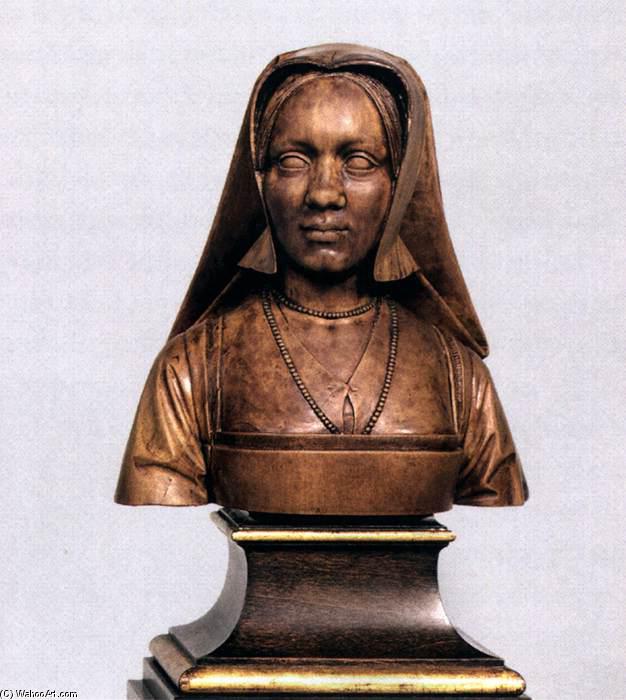
Margaret of Austria


 Read More
Hand Made Oil Reproduction
Hand-painted oil on canvas in your size and frame, made to order by our artists. ( Buy Print Buy Image)




P118B $10

P118H $10

P118W $10

P438Z $10

P508JH $12

P508YH $12

P805H $10

P805Z $10

P919BZ $10

P919G $10

P919XJ $10

P959ZH $10

P968JZ $12

W106C $8

W218G $10

W218JH $8

W218Y $10

W307PJ $10

W316G $10

W316PJ $8

W316Y $10

W398PJ $8

W4111J $10

W500HY $15

W500JH $15

W692G $12

W849H $8

W940BG $15

W953PJ $8




Pick from our preset sizes that match the artwork's original proportions.

You may enter your own dimensions to fit a specific frame or space. If your selected size does not match the original image's proportions, we will either crop the artwork or extend the painting with additional hand-painted elements. A digital mockup will be sent for your approval before production begins.
Please note that the on-screen preview does not reflect the actual cropping or extension. Only the mockup will accurately show the final composition.
While custom sizes are available, we recommend selecting a dimension from the predefined list to preserve the original proportions.
After order, ArtsDot.com team will email client for instructions and provide a mockup preview
Worldwide Delivery () in 3/4 weeks instead of standard 5 weeks. (17 August). No compromise on quality.

Free Worldwide Express Shipping

High-Quality Linen Canvas

Full Shipping Insurance

Customs Tax Refund Guarantee

True Color Matching Guarantee

60-Day Return Policy (Defects Only)

100% Money-Back Guarantee

Bulk Discount Offer
 Glass option is only available in size under 110 CM

Margaret of Austria
Reproduction Medium
Reproduction Size
-


Total Price
$ 263
Artwork Description
The Silent Strength: Conrad Meit’s Bust of Margaret of Austria
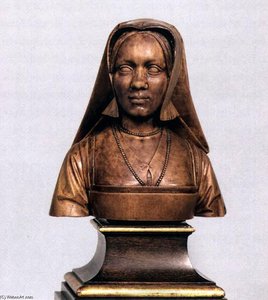
Conrad Meit's bronze bust of Margaret of Austria, created around 1515, is more than a mere likeness; it’s a carefully constructed embodiment of power, piety, and the weighty responsibilities borne by one of Europe’s most influential women. The image, recently reproduced with remarkable fidelity, immediately draws the eye to the subject's serene expression – a quiet dignity that belies the turbulent political landscape she navigated for decades. The subtle lines etched around her eyes and mouth speak not of age, but of contemplation, suggesting a mind constantly engaged in strategic thought and diplomatic maneuvering. The meticulous detail in the rendering of her hair, styled with an elegant updo characteristic of the period, and the careful sculpting of her garments hint at both wealth and authority – a visual declaration of her position as Regent of the Netherlands.
- Material & Technique: The bust is crafted from what appears to be bronze or a similar metal, exhibiting a rich, dark patina that speaks to its age and the passage of time. Meit’s mastery lies in his ability to capture texture – the subtle creases of her clothing, the delicate folds of her hair, and the weathered quality of her face—all achieved through painstaking hand-modeling and polishing.
- Historical Context: Margaret's life was one of extraordinary circumstance. Born into the powerful Habsburg dynasty, she inherited a vast empire at a young age, thrusting her into the role of regent for both her father, Emperor Maximilian I, and later her nephew, Charles V. This period saw the Netherlands embroiled in conflict with France and Spain, demanding shrewd leadership and unwavering resolve.
A Royal Portrait: Symbolism and Habsburg Identity
Beyond its technical brilliance, the bust is laden with symbolic meaning deeply rooted in the iconography of the era. The head covering, reminiscent of a veil or cap, alludes to her role as a pious ruler, emphasizing her commitment to religious authority – a crucial element in maintaining stability during a time of political upheaval. The posture itself—a slight forward lean, suggesting attentiveness and engagement—conveys a sense of command and responsibility. The Habsburgs, known for their meticulous attention to detail and their embrace of classical ideals, sought to project an image of strength, wisdom, and divine right through portraiture. Meit’s bust perfectly embodies this ambition, presenting Margaret not merely as a queen, but as the embodiment of her dynasty's legacy.
The subtle inclusion of elements referencing both Byzantine and Italian Renaissance art reflects the complex cultural influences shaping Habsburg courtly culture at the time.The Workshop of Meit: A Legacy in Flanders
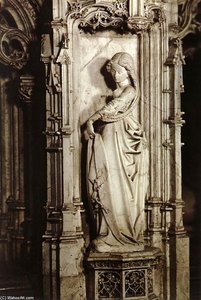
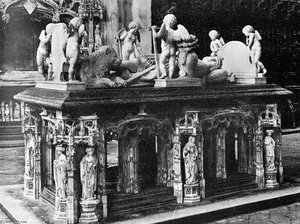
Conrad Meit’s career flourished during a period of immense artistic innovation in the Low Countries, particularly in the workshops of Brussels and Antwerp. He was employed by Margaret of Austria from 1514 until her death in 1530, producing numerous works that served to decorate her court and showcase her power. His style is characterized by a remarkable blend of late Gothic and early Renaissance techniques—a testament to his versatility and his ability to adapt to the evolving artistic trends of the time. The royal tombs at Brou Monastery, where he created monumental figures alongside other sculptors, stand as enduring evidence of his skill and influence. Research reveals that Meit’s work was unfortunately largely destroyed during the Reformation and French Revolution, leaving only a handful of surviving examples—a poignant reminder of the fragility of artistic heritage.
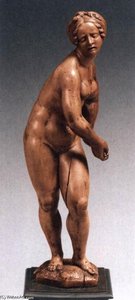
Further research into Meit's life reveals he was also a prolific woodcarver, creating numerous small statuettes for Margaret's court.A Timeless Image: Recreating Majesty
Reproductions of this remarkable bust offer an unparalleled opportunity to bring the spirit of Margaret of Austria into any setting. The meticulous detail and evocative expression capture the essence of a woman who navigated treacherous political waters with grace, intelligence, and unwavering determination. Whether displayed in a private collection or incorporated into a grand interior design scheme, Meit’s portrait serves as a powerful reminder of the enduring legacy of one of Europe's most remarkable female rulers—a silent testament to her strength, wisdom, and lasting influence.
Related Artworks
Artist Biography
Sandro Botticelli: The Poet of Florence
Alessandro di Mariano Filipepi, better known as Sandro Botticelli, remains one of the most beloved and instantly recognizable figures in the history of Western art. Born in Florence in 1445, he emerged from a family deeply rooted in the Florentine artisan world – his father was a tanner, a craft intimately connected to the city’s identity. While initially apprenticed to a goldsmith, Botticelli's true passion lay in painting, a path guided by the influential master Filippo Lippi, whose dynamic style and mastery of technique profoundly shaped the young artist’s development. This early exposure to Lippi’s approach—characterized by a vibrant palette, expressive figures, and a keen awareness of linear perspective—laid the foundation for Botticelli's distinctive artistic voice. Botticelli’s formative years were marked by a deliberate study of classical antiquity, a trend increasingly prevalent in Renaissance Florence. He meticulously examined sculptures from the Roman era, absorbing their idealized forms and graceful compositions. This fascination with the past would become a defining characteristic of his work, informing his choice of subjects and influencing his artistic style. His early works demonstrate a clear debt to the Gothic tradition, yet they quickly evolved into something uniquely his own—a synthesis of classical ideals and Renaissance innovation. The name Botticelli itself is derived from “Botticello,” a diminutive form of Giovanni Botticeli, his elder brother who operated as a pawnbroker.The Birth of Venus and Primavera: Defining the Florentine Renaissance
Botticelli’s artistic reputation soared with the creation of two monumental works that have become synonymous with the spirit of the Florentine Renaissance: *The Birth of Venus* (1486) and *Primavera* (c. 1477-1482). *The Birth of Venus*, depicting the goddess Venus emerging from a giant scallop shell, captivated audiences with its ethereal beauty and allegorical complexity. The painting’s delicate colors, flowing drapery, and graceful figures embody the Renaissance fascination with classical mythology and humanism. Similarly, *Primavera* is a complex tapestry of mythological figures—Venus, Flora, Zephyrus, Mercury, and Cupid—arranged within a lush, idealized landscape. The painting's intricate details, vibrant hues, and symbolic references to Neoplatonic philosophy reflect Botticelli’s engagement with contemporary intellectual currents. These works weren’t merely decorative; they were carefully constructed narratives designed to evoke profound emotions and convey complex ideas.A Painter of Patrons and Portraits
Botticelli's career was inextricably linked to the patronage system that flourished in Renaissance Florence. He served several prominent families, including the Medici, the de’ Medici, and the Pitti, providing them with a continuous stream of commissions for religious paintings, allegorical scenes, and portraits. His portraiture, particularly his depictions of members of the Medici family, is notable for its psychological depth and subtle elegance. He captured not just physical likenesses but also conveyed a sense of character and personality—a remarkable achievement for the time. Botticelli’s ability to adapt his style to suit the tastes of his patrons demonstrates his versatility as an artist and his understanding of the social dynamics of Renaissance Florence.Later Years and Legacy
As Botticelli aged, his artistic style underwent a subtle transformation. His later works, such as *Adoration of the Magi* (1482), exhibit a greater emphasis on linear clarity and a more restrained palette compared to his earlier, more exuberant paintings. Some scholars believe that this shift reflects a growing disillusionment with the political turmoil and religious conflicts that plagued Florence during his later years. Despite these changes, Botticelli’s artistic legacy remains undiminished. His paintings continue to inspire awe and admiration for their beauty, grace, and profound symbolic meaning. He is remembered not only as one of the greatest painters of the Florentine Renaissance but also as a poet—a master of visual storytelling who captured the spirit of his age with unparalleled skill and sensitivity. Botticelli died in Florence in 1510 at the age of 65, leaving behind a body of work that continues to resonate with audiences centuries later. His influence on subsequent generations of artists is undeniable, cementing his place as a pivotal figure in the history of Western art.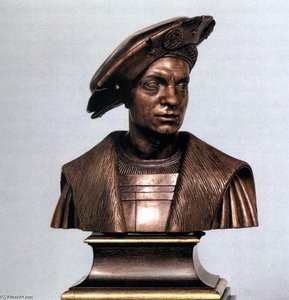
conrad meit
1485 - 1551 , Germany
Quick Facts
- Artistic Movement Or Style: Early Renaissance, Renaissance
- Artists Or Movements Influenced By This Artist: ['Giorgio Vasari']
- Artists Who Influenced This Artist: ['Filippo Lippi']
- Date Of Birth: 1445, Florence Italy
- Date Of Death: May 17, 1510, Florence (aged 65)
- Full Name: Alessandro di Mariano Filipepi
- Nationality: Italian
- Notable Artworks:
- Birth of Venus
- Primavera
- Place Of Birth: Florence Italy
Related Articles

Bronze Sculptures That Defined Art History | ArtsDot
Journey through art history with our Top 10 bronze sculptures! Explore masterpieces by Rodin, Michelangelo & more. Discover stories behind iconic statues and find museum-quality reproductions for your home decor at ArtsDot.com.

The Enduring Form: Exploring Themes & Techniques in Sculpture Across Historical Periods
Explore the rich history of sculpture from ancient masterpieces to contemporary innovations. Discover key techniques, influential artists & investment potential for discerning art collectors.
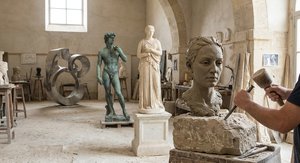
The Enduring Form: Sculpture Across History, Technique & Emotional Resonance
Explore the rich history of sculpture with ArtsDot. Discover key techniques, influential artists & investment potential for discerning collectors. Expert insights into valuing and collecting timeless masterpieces.

Bronze Age to Modern Masters: 10 Sculptures That Redefined Art | ArtsDot
Journey through art history with 10 legendary bronze sculptures – from Michelangelo's David to Rodin’s Thinker. Explore the stories, techniques & timeless beauty of these masterpieces. Find museum-quality reproductions & elevate your home decor on ArtsDot.com.
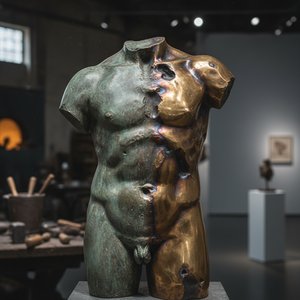
The Enduring Legacy of Bronze Sculpture: History, Techniques & Contemporary Interpretations
Explore the rich history & enduring appeal of bronze sculpture. Learn about casting techniques, iconic artists, collecting tips, & contemporary interpretations. Expert insights for discerning art collectors.