 Preview
 Send
Send Share
Share
 Details

 Download
 Similars
 X-Ray
X-Ray Diaporama
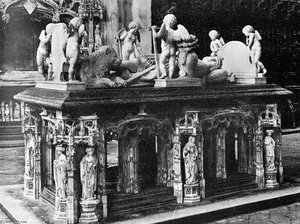
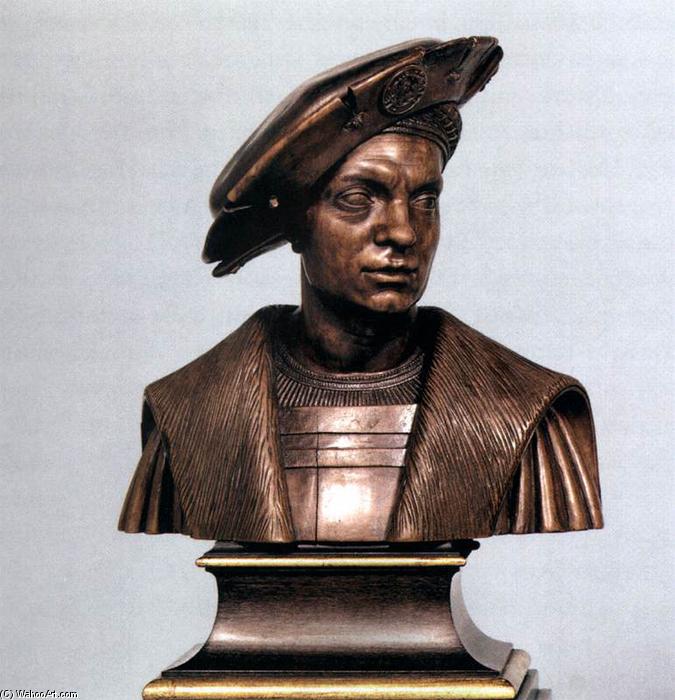
Philibert of Savoy


 Read More
Hand Made Oil Reproduction
Hand-painted oil on canvas in your size and frame, made to order by our artists. ( Buy Print Buy Image)




P118B $10

P118H $10

P118W $10

P438Z $10

P508JH $12

P508YH $12

P805H $10

P805Z $10

P919BZ $10

P919G $10

P919XJ $10

P959ZH $10

P968JZ $12

W106C $8

W218G $10

W218JH $8

W218Y $10

W307PJ $10

W316G $10

W316PJ $8

W316Y $10

W398PJ $8

W4111J $10

W500HY $15

W500JH $15

W692G $12

W849H $8

W940BG $15

W953PJ $8




Pick from our preset sizes that match the artwork's original proportions.

You may enter your own dimensions to fit a specific frame or space. If your selected size does not match the original image's proportions, we will either crop the artwork or extend the painting with additional hand-painted elements. A digital mockup will be sent for your approval before production begins.
Please note that the on-screen preview does not reflect the actual cropping or extension. Only the mockup will accurately show the final composition.
While custom sizes are available, we recommend selecting a dimension from the predefined list to preserve the original proportions.
After order, ArtsDot.com team will email client for instructions and provide a mockup preview
Worldwide Delivery () in 3/4 weeks instead of standard 5 weeks. (20 August). No compromise on quality.

Free Worldwide Express Shipping

High-Quality Linen Canvas

Full Shipping Insurance

Customs Tax Refund Guarantee

True Color Matching Guarantee

60-Day Return Policy (Defects Only)

100% Money-Back Guarantee

Bulk Discount Offer
 Glass option is only available in size under 110 CM

Philibert of Savoy
Reproduction Medium
Reproduction Size
-


Total Price
$ 263
Artwork Description
The Silent Majesty of Philibert of Savoy
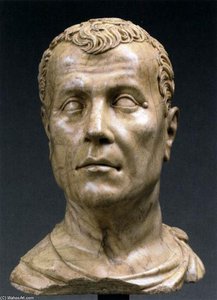
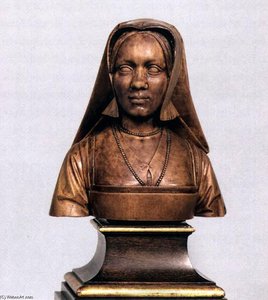
Conrad Meit’s bronze bust of Philibert of Savoy, crafted in 1515, transcends mere portraiture; it embodies the calculated power and restrained dignity of a Renaissance noble. More than just a likeness, this sculpture offers a glimpse into the political landscape of early sixteenth-century Italy – a world of intricate alliances, dynastic ambitions, and the subtle art of projecting authority. The piece resides within the British Museum’s collection, a testament to its enduring quality and historical significance.
Meit's masterful handling of bronze immediately establishes a sense of gravitas. The dark patina, achieved through careful oxidation over centuries, speaks of age and experience, lending an air of solemnity to the figure. The artist’s attention to detail is remarkable; every line of the face – the furrowed brow, the subtly pursed lips, the piercing gaze – conveys a profound seriousness. Note particularly the meticulously rendered texture of the hair, suggesting both wealth and a certain aloofness. The high-collared garment, adorned with what appears to be lace, speaks to his status and adherence to courtly fashion, while the feathered hat adds an element of regal bearing, subtly hinting at military prowess – Philibert was, after all, a skilled soldier and diplomat.
A Portrait of Power and Legacy
The bust’s historical context is crucial to understanding its impact. Philibert of Savoy (1473-1504) was a pivotal figure in the complex web of Italian politics. As Duke of Savoy, he skillfully navigated rivalries between France, Spain, and the Holy Roman Empire, forging strategic alliances and expanding his territories through shrewd diplomacy and military campaigns. The sculpture wasn’t simply a commemoration; it served as a visual assertion of his authority – a tangible representation of his power intended to be displayed in palaces and public spaces throughout his domains.
Interestingly, the bust was created shortly after Philibert's untimely death at the young age of 31. This timing imbues the piece with an added layer of melancholy. It’s not merely a portrait of a living man but also a memorial to a life cut short, a poignant reminder of the fragility of power and the fleeting nature of earthly glory. The choice of bronze itself – a durable and enduring material – further reinforces this sense of permanence and legacy.
The Language of Renaissance Sculpture
Meit’s work exemplifies the key characteristics of late Gothic and early Renaissance sculpture. While retaining some elements of the stylized elegance of the late Middle Ages, he incorporates the humanist ideals that were gaining prominence during the Renaissance – a renewed interest in classical antiquity, an emphasis on human anatomy, and a desire to capture psychological depth. The pose itself is deliberately formal and static, reflecting the conventions of portrait sculpture at the time. The contrapposto stance—a subtle shift in weight that creates a sense of balance and dynamism—is expertly executed, lending the figure a naturalism rarely seen in earlier sculptural traditions.
Furthermore, Meit’s use of materials – specifically boxwood – was common for portrait busts during this period. The material's ability to capture fine detail and its relative affordability made it an ideal choice for commissioning such works. The pedestal, a simple yet elegant design, serves to elevate the figure and further emphasize its importance.
A Timeless Reflection
Beyond its historical significance, Philibert of Savoy’s bust possesses a remarkable emotional resonance. The stoic expression on his face invites contemplation – prompting us to consider the burdens of leadership, the complexities of human ambition, and the enduring power of memory. It's a work that speaks not only to the past but also to the present, offering a timeless reflection on the nature of power, legacy, and the human condition. Reproductions of this piece offer an opportunity to bring this silent majesty into any setting, adding a touch of historical gravitas and artistic sophistication.
Related Artworks




Artist Biography
Sandro Botticelli: The Poet of Florence
Alessandro di Mariano Filipepi, better known as Sandro Botticelli, remains one of the most beloved and instantly recognizable figures in the history of Western art. Born in Florence in 1445, he emerged from a family deeply rooted in the Florentine artisan world – his father was a tanner, a craft intimately connected to the city’s identity. While initially apprenticed to a goldsmith, Botticelli's true passion lay in painting, a path guided by the influential master Filippo Lippi, whose dynamic style and mastery of technique profoundly shaped the young artist’s development. This early exposure to Lippi’s approach—characterized by a vibrant palette, expressive figures, and a keen awareness of linear perspective—laid the foundation for Botticelli's distinctive artistic voice. Botticelli’s formative years were marked by a deliberate study of classical antiquity, a trend increasingly prevalent in Renaissance Florence. He meticulously examined sculptures from the Roman era, absorbing their idealized forms and graceful compositions. This fascination with the past would become a defining characteristic of his work, informing his choice of subjects and influencing his artistic style. His early works demonstrate a clear debt to the Gothic tradition, yet they quickly evolved into something uniquely his own—a synthesis of classical ideals and Renaissance innovation. The name Botticelli itself is derived from “Botticello,” a diminutive form of Giovanni Botticeli, his elder brother who operated as a pawnbroker.The Birth of Venus and Primavera: Defining the Florentine Renaissance
Botticelli’s artistic reputation soared with the creation of two monumental works that have become synonymous with the spirit of the Florentine Renaissance: *The Birth of Venus* (1486) and *Primavera* (c. 1477-1482). *The Birth of Venus*, depicting the goddess Venus emerging from a giant scallop shell, captivated audiences with its ethereal beauty and allegorical complexity. The painting’s delicate colors, flowing drapery, and graceful figures embody the Renaissance fascination with classical mythology and humanism. Similarly, *Primavera* is a complex tapestry of mythological figures—Venus, Flora, Zephyrus, Mercury, and Cupid—arranged within a lush, idealized landscape. The painting's intricate details, vibrant hues, and symbolic references to Neoplatonic philosophy reflect Botticelli’s engagement with contemporary intellectual currents. These works weren’t merely decorative; they were carefully constructed narratives designed to evoke profound emotions and convey complex ideas.A Painter of Patrons and Portraits
Botticelli's career was inextricably linked to the patronage system that flourished in Renaissance Florence. He served several prominent families, including the Medici, the de’ Medici, and the Pitti, providing them with a continuous stream of commissions for religious paintings, allegorical scenes, and portraits. His portraiture, particularly his depictions of members of the Medici family, is notable for its psychological depth and subtle elegance. He captured not just physical likenesses but also conveyed a sense of character and personality—a remarkable achievement for the time. Botticelli’s ability to adapt his style to suit the tastes of his patrons demonstrates his versatility as an artist and his understanding of the social dynamics of Renaissance Florence.Later Years and Legacy
As Botticelli aged, his artistic style underwent a subtle transformation. His later works, such as *Adoration of the Magi* (1482), exhibit a greater emphasis on linear clarity and a more restrained palette compared to his earlier, more exuberant paintings. Some scholars believe that this shift reflects a growing disillusionment with the political turmoil and religious conflicts that plagued Florence during his later years. Despite these changes, Botticelli’s artistic legacy remains undiminished. His paintings continue to inspire awe and admiration for their beauty, grace, and profound symbolic meaning. He is remembered not only as one of the greatest painters of the Florentine Renaissance but also as a poet—a master of visual storytelling who captured the spirit of his age with unparalleled skill and sensitivity. Botticelli died in Florence in 1510 at the age of 65, leaving behind a body of work that continues to resonate with audiences centuries later. His influence on subsequent generations of artists is undeniable, cementing his place as a pivotal figure in the history of Western art.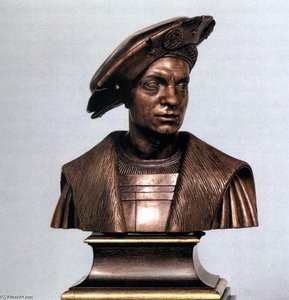
conrad meit
1485 - 1551 , Germany
Quick Facts
- Artistic Movement Or Style: Early Renaissance, Renaissance
- Artists Or Movements Influenced By This Artist: ['Giorgio Vasari']
- Artists Who Influenced This Artist: ['Filippo Lippi']
- Date Of Birth: 1445, Florence Italy
- Date Of Death: May 17, 1510, Florence (aged 65)
- Full Name: Alessandro di Mariano Filipepi
- Nationality: Italian
- Notable Artworks:
- Birth of Venus
- Primavera
- Place Of Birth: Florence Italy
Related Articles

Bronze Age to Modern Masters: 10 Sculptures That Redefined Art | ArtsDot
Journey through art history with 10 legendary bronze sculptures – from Michelangelo's David to Rodin’s Thinker. Explore the stories, techniques & timeless beauty of these masterpieces. Find museum-quality reproductions & elevate your home decor on ArtsDot.com.

Bronze Sculptures That Defined Art History | ArtsDot
Journey through art history with our Top 10 bronze sculptures! Explore masterpieces by Rodin, Michelangelo & more. Discover stories behind iconic statues and find museum-quality reproductions for your home decor at ArtsDot.com.

The Enduring Legacy of Bronze: A Historical & Artistic Exploration for the Collector
Explore the rich history & enduring appeal of bronze sculpture with expert insights for collectors at ArtsDot. Learn about casting techniques, iconic artists, collecting tips & contemporary interpretations.
The Enduring Legacy of Bronze: History, Technique & Artistic Expression for the Collector
Explore the rich history & enduring appeal of bronze sculpture with expert insights for collectors at ArtsDot. Learn about casting techniques, iconic artists, and collecting tips.
The Enduring Legacy of Bronze Sculpture: A Collector's Guide to Form & Cultural Significance
Explore the rich history & enduring appeal of bronze sculpture with expert insights for collectors at ArtsDot. Learn about casting techniques, iconic artists, and collecting tips to build a discerning art collection.