 Preview
 Send
Send Share
Share
 Details

 Download
 Similars
 X-Ray
X-Ray Diaporama
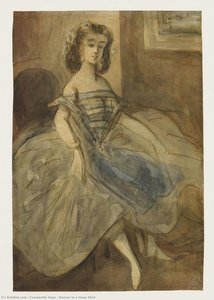
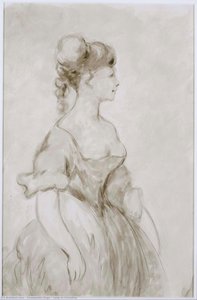
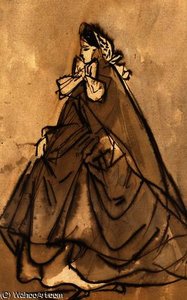
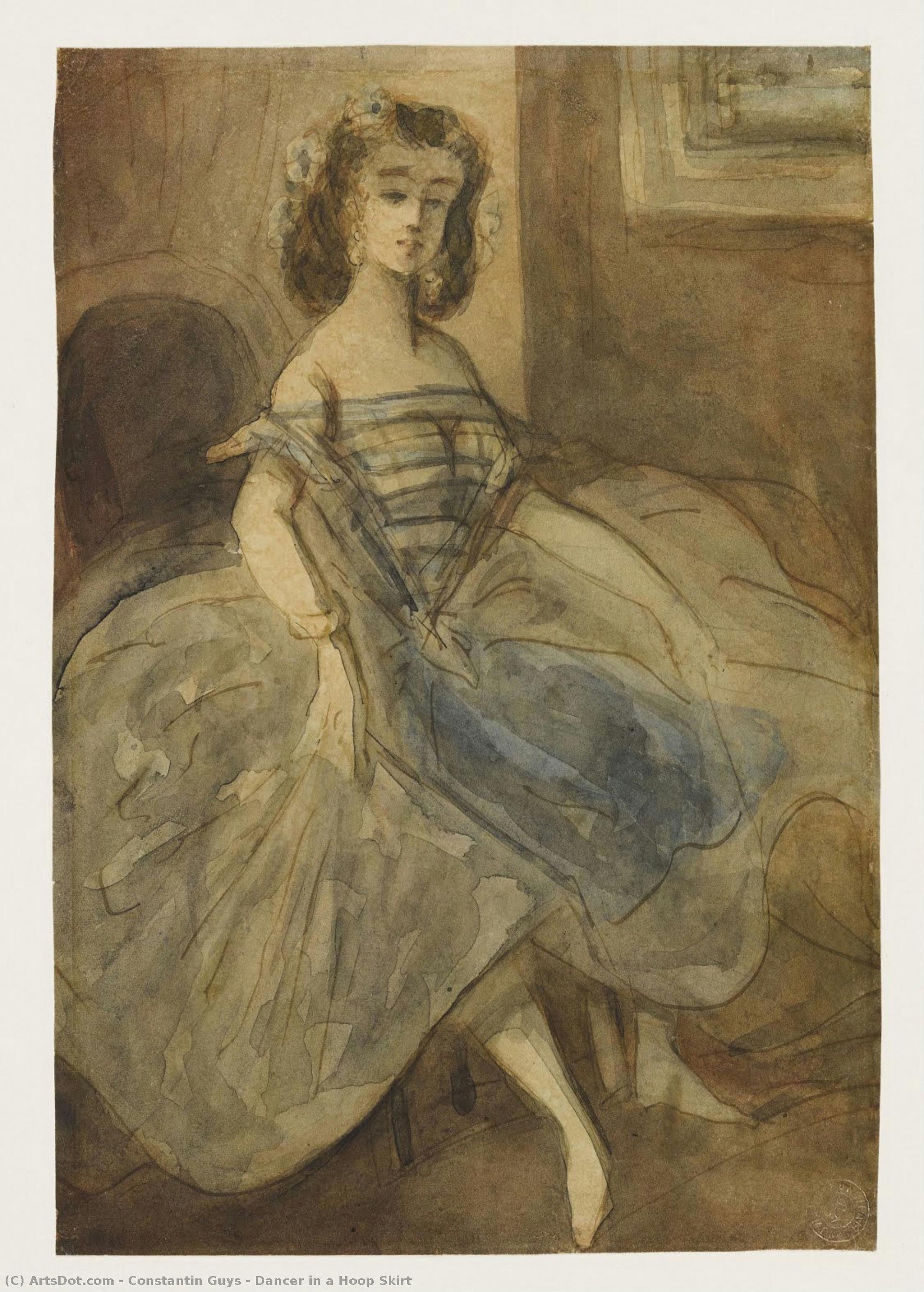
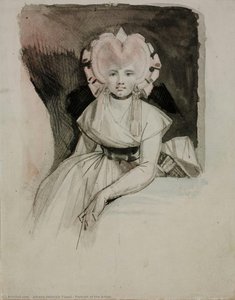
Dancer in a Hoop Skirt
 Watercolor
- WallArt
- Realism
 1860
1860- 19th Century
 26.0 x 17.0 cm
 Kunsthalle Bremen
 Read More
Hand Made Oil Reproduction
Hand-painted oil on canvas in your size and frame, made to order by our artists. ( Buy Print Buy Image)




P118B $10

P118H $10

P118W $10

P438Z $10

P508JH $12

P508YH $12

P805H $10

P805Z $10

P919BZ $10

P919G $10

P919XJ $10

P959ZH $10

P968JZ $12

W106C $8

W218G $10

W218JH $8

W218Y $10

W307PJ $10

W316G $10

W316PJ $8

W316Y $10

W398PJ $8

W4111J $10

W500HY $15

W500JH $15

W692G $12

W849H $8

W940BG $15

W953PJ $8




Pick from our preset sizes that match the artwork's original proportions.

You may enter your own dimensions to fit a specific frame or space. If your selected size does not match the original image's proportions, we will either crop the artwork or extend the painting with additional hand-painted elements. A digital mockup will be sent for your approval before production begins.
Please note that the on-screen preview does not reflect the actual cropping or extension. Only the mockup will accurately show the final composition.
While custom sizes are available, we recommend selecting a dimension from the predefined list to preserve the original proportions.
After order, ArtsDot.com team will email client for instructions and provide a mockup preview
Worldwide Delivery () in 3/4 weeks instead of standard 5 weeks. (16 August). No compromise on quality.

Free Worldwide Express Shipping

High-Quality Linen Canvas

Full Shipping Insurance

Customs Tax Refund Guarantee

True Color Matching Guarantee

60-Day Return Policy (Defects Only)

100% Money-Back Guarantee

Bulk Discount Offer
 Glass option is only available in size under 110 CM

Dancer in a Hoop Skirt
Reproduction Medium
Reproduction Size
-


Total Price
$ 263
Artwork Description
A Glimpse into Parisian Bohemia
In the delicate, translucent strokes of Constantin Guys’ Dancer in a Hoop Skirt, we are transported back to the vibrant, pulsing heart of mid-19th-century Paris. This exquisite watercolor, dating from 1860, serves as more than just a portrait; it is a window into the "modernité" that the poet Charles Baudelaire so famously celebrated. The subject, a charming and slightly cheeky figure from the Parisian bohemian circles, sits poised in her voluminous hoop skirt, embodying the fleeting elegance of an era defined by rapid social change. Through Guys’ eyes, we do not merely see a woman posing; we witness a captured moment of urban life, where the boundaries between the private individual and the public spectacle begin to blur.
The composition is masterfully intimate, centering on the subject's graceful posture as she rests upon a wooden chair. The interplay of light and shadow, filtered perhaps through a nearby window, illuminates the intricate textures of her attire. There is a profound sense of presence in her gaze, a quiet confidence that suggests she is well aware of the artist's observant eye. For the collector or interior designer, this piece offers a sophisticated focal point, bringing a touch of historical romance and French elegance to any curated space.
Mastery of Light and Fluidity
Technically, Dancer in a Hoop Skirt is a triumph of watercolor realism. Constantin Guys employs a light, transparent brush technique that allows the paper to breathe, creating an ethereal quality in the tulle and fabric of the dancer's dress. This luminosity is essential to the work's emotional impact; it lends the clothing a weightless, almost shimmering appearance that mimics the movement of dance itself. The artist’s ability to render the structural complexity of the hoop skirt while maintaining a sense of airy lightness demonstrates his unparalleled skill in capturing the ephemeral nature of fashion and life.
The color palette is subtle yet evocative, utilizing soft tones that emphasize the delicate blue ribbon at the woman's neck and the warm, organic hues of the wooden furniture. This restraint ensures that the viewer's attention remains fixed on the interplay of texture and light. Such a masterful use of medium makes this reproduction an ideal choice for those seeking to introduce a sense of airy sophistication and classical beauty into a modern interior, providing a soft, luminous contrast to more structured or contemporary decor.
The Legacy of the Modern Flâneur
To understand this artwork is to understand the concept of the flâneur—the detached observer of the city. As a chronicler of the Crimean War and the social strata of Paris, Guys possessed a unique ability to deindividualize his subjects just enough to turn them into archetypes of modern life. In this painting, the dancer becomes a symbol of the transient beauty found in the everyday. She represents the "minor cocottes" and the spirited characters that populated the cafes and salons of the era, making the work deeply rooted in the sociological fabric of 1860s France.
For the discerning art lover, owning a reproduction of such a piece is an invitation to engage with history. It is an opportunity to possess a fragment of the Belle Époque, a period of unparalleled artistic and cultural flourishing. Whether placed in a sunlit reading nook or as part of a larger gallery wall, Dancer in a Hoop Skirt radiates a timeless charm that continues to captivate the imagination, offering a nostalgic yet vital connection to the birth of modern visual culture.
Related Artworks
Artist Biography
The Chronicler of a Vanishing Era
In the grand tapestry of nineteenth-century art, few threads are as vibrant or as fleeting as those woven by Constantin Guys. Born in Vlissingen, Netherlands, in 1802, his life was a journey through the heart of European transformation. While history often remembers the monumental oil paintings of the era, Guys captured something far more ephemeral: the pulse of the streets, the grit of the battlefield, and the shimmering elegance of Parisian high society. Often referred to as the "painter of modern life," a title bestowed upon him by the visionary poet Charles Baudelaire, Guys possessed a rare, journalistic eye that could distill the chaotic energy of an age into singular, evocative moments.
His early years provided a foundation of classical discipline blended with a wanderer's spirit. The son of a portrait painter, he was immersed in the nuances of visual representation from childhood. His studies at Leiden University, focusing on anatomy and drawing, instilled in him a precision that would later define his work as a correspondent. Before finding his true calling in the arts, Guys lived a life of adventure, serving in the cavalry and even touring Greece alongside the legendary Lord Byron. These formative experiences—the movement of horses, the tension of military life, and the exposure to diverse cultures—would later infuse his sketches with an authentic, lived-in vitality that no studio-bound artist could replicate.
The Eye of the Correspondent
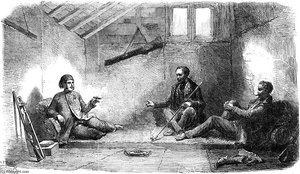
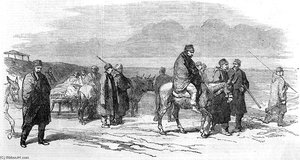
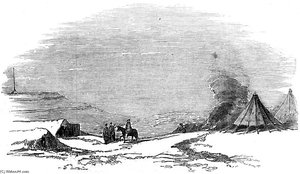
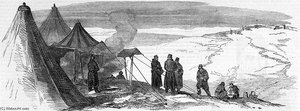
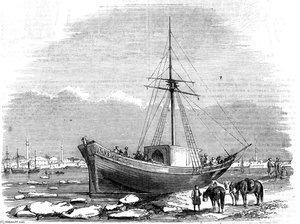
The true zenith of Guys’ career arrived amidst the smoke and thunder of the Crimean War. Serving as a war correspondent for prestigious publications such as Le Petit Parisien and the Illustrated London News, he did not merely report on the conflict; he breathed life into it. Through his masterful use of watercolor and detailed illustrations, the hardships of the trenches and the bustling encampments were brought to the forefront of the public consciousness. His works, such as Kalafat, Within The Intrenchment, serve as hauntingly beautiful windows into a period of profound human struggle, blending historical accuracy with a deeply personal, emotive touch.
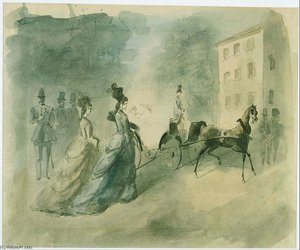
Beyond the battlefield, Guys turned his gaze toward the burgeoning urbanity of Paris. He became an unparalleled observer of the flâneur culture, capturing the fleeting fashions, the enigmatic figures of the night, and the social hierarchies of the Second Empire. His ability to navigate both the gritty realism of a bordello and the refined grace of a ballroom allowed him to document the full spectrum of human existence. This duality is perhaps his greatest achievement: he was able to find beauty in the mundane and profound truth in the transient.
A Legacy of Watercolor Realism
Technically, Guys was a master of watercolor realism. Eschewing the heavy, labored textures of traditional academic painting, he utilized tonal gradation and meticulous observation to create works that felt immediate and alive. His technique allowed for a sense of movement and light that mirrored the very "modernity" he sought to depict. His influence can be felt in the way later artists approached the concept of the sketch as a finished, profound work of art, bridging the gap between journalism and fine art.
The historical significance of Constantin Guys lies in his role as a visual historian of the modern soul. His contributions include:
- The Documentation of Conflict: Providing an intimate, human-centric perspective on the Crimean War that moved beyond mere propaganda.
- The Definition of Modernity: Collaborating through spirit with Baudelaire to establish the aesthetic values of contemporary urban life.
- Mastery of Medium: Elevating watercolor and charcoal from preparatory tools to powerful instruments of social commentary and realism.
Though his name may not always command the same immediate recognition as his contemporaries like Whistler, the impact of Constantin Guys remains indelible. He remains a pivotal figure whose work continues to resonate, reminding us that the most profound art often lies in the careful observation of the world as it unfolds, one fleeting moment at a time.
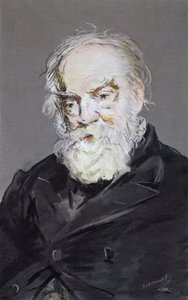
Constantin Guys
1802 - 1892 , Netherlands
Quick Facts
- Artistic Movement Or Style: Realism
- Artists Or Movements Influenced By This Artist: ['Impressionism']
- Artists Who Influenced This Artist:
- Gustave Courbet
- Jean-François Millet
- Date Of Birth: 1802
- Full Name: Constantin Guys
- Nationality: Dutch
- Notable Artworks:
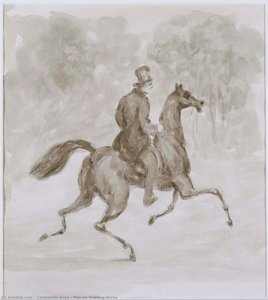
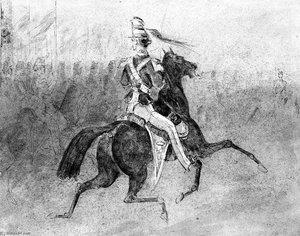
- Man on Horseback
- Man on Trotting Horse
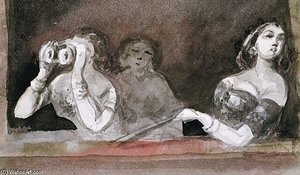
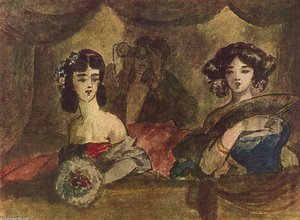
- At The Theater
- Place Of Birth: Vlissingen, Netherlands
Related Articles

Slate Blue Masterpieces: 10 Iconic Paintings & Timeless Home Decor Ideas
Immerse yourself in the captivating world of slate blue! Explore 10 iconic paintings by Monet, Van Gogh & Renoir. Discover their stories, techniques & find museum-quality art reproductions for your home at .
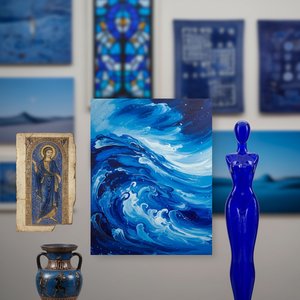
The Allure of Azure: Exploring the Symbolic & Aesthetic Depths of Blue in Art History
Explore the rich history of blue in art! Discover its symbolism, from ancient pigments to modern masterpieces by Kandinsky & Seurat. Uncover the psychological impact and cultural meanings behind this captivating hue.
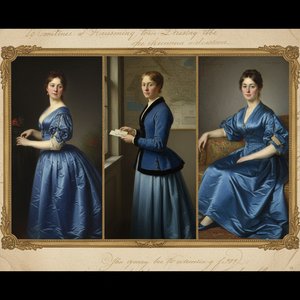
Azure Visions: Exploring Representations of the Blue Dress in Western Art History
Explore the rich history of the blue dress in Western art! Discover its symbolism, from Renaissance masterpieces to modern interpretations by artists like Martin & Schiele. Uncover cultural meanings and artistic techniques.

Monet's Masterpieces: 25 Iconic Artworks to Transform Your Home
Journey through 25 iconic Claude Monet masterpieces! Explore Impressionism’s beauty, from Water Lilies to Rouen Cathedral. Discover stunning art reproductions & curated decor ideas – explore the full collection online at ArtsDot.com.
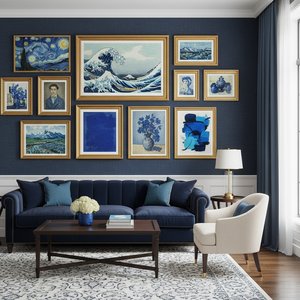
Navy Hues & Masterpieces: 10 Iconic Paintings for Elegant Home Decor
Dive into a world of captivating navy hues! Explore 10 iconic paintings – from Van Gogh's 'Starry Night' to Monet’s seascapes. Discover the stories behind these masterpieces & find museum-quality art reproductions for your home at .