 Preview
 Send
Send Share
Share
 Details

 Download
 Similars
 X-Ray
X-Ray Diaporama
Família na Taberna (inacabada)
 Engraving
- Dutch Golden Age painting
 1660
1660 1.0 x 32.0 cm
 Itaú Cultural Institute
 Read More
Giclée / Art Print
Museum-quality giclée or canvas print with fast production and flexible finish options. ( Buy Hand Made Painting Buy Image)




P118B $10

P118H $10

P118W $10

P438Z $10

P508JH $12

P508YH $12

P805H $10

P805Z $10

P919BZ $10

P919G $10

P919XJ $10

P959ZH $10

P968JZ $12

W106C $8

W218G $10

W218JH $8

W218Y $10

W307PJ $10

W316G $10

W316PJ $8

W316Y $10

W398PJ $8

W4111J $10

W500HY $15

W500JH $15

W692G $12

W849H $8

W940BG $15

W953PJ $8




Pick from our preset sizes that match the artwork's original proportions.

You may enter your own dimensions to fit a specific frame or space. If your selected size does not match the original image's proportions, we will either crop the artwork or extend the image with a mirrored or solid-fill edge. A digital mockup will be sent for your approval before production begins.
Please note that the on-screen preview does not reflect the actual cropping or extension. Only the mockup will accurately show the final composition.
While custom sizes are available, we recommend selecting a dimension from the predefined list to preserve the original proportions.
Worldwide Delivery () in 2 weeks instead of standard 4/5 weeks. (23 August)

Free Worldwide Express Shipping

High-Quality Linen Canvas

Full Shipping Insurance

Customs Tax Refund Guarantee

True Color Matching Guarantee

60-Day Return Policy (Defects Only)

100% Money-Back Guarantee

Bulk Discount Offer
 Glass option is only available in size under 110 CM

Família na Taberna (inacabada)
Giclée / Art Print
Reproduction Size
-


Total Price
$ 63
Collectible Description
A Glimpse of Domesticity: Cornelis Bega’s “Família na Taberna”
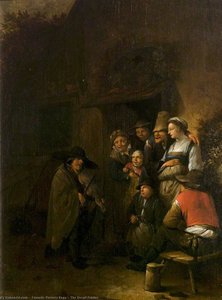
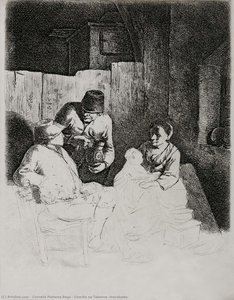
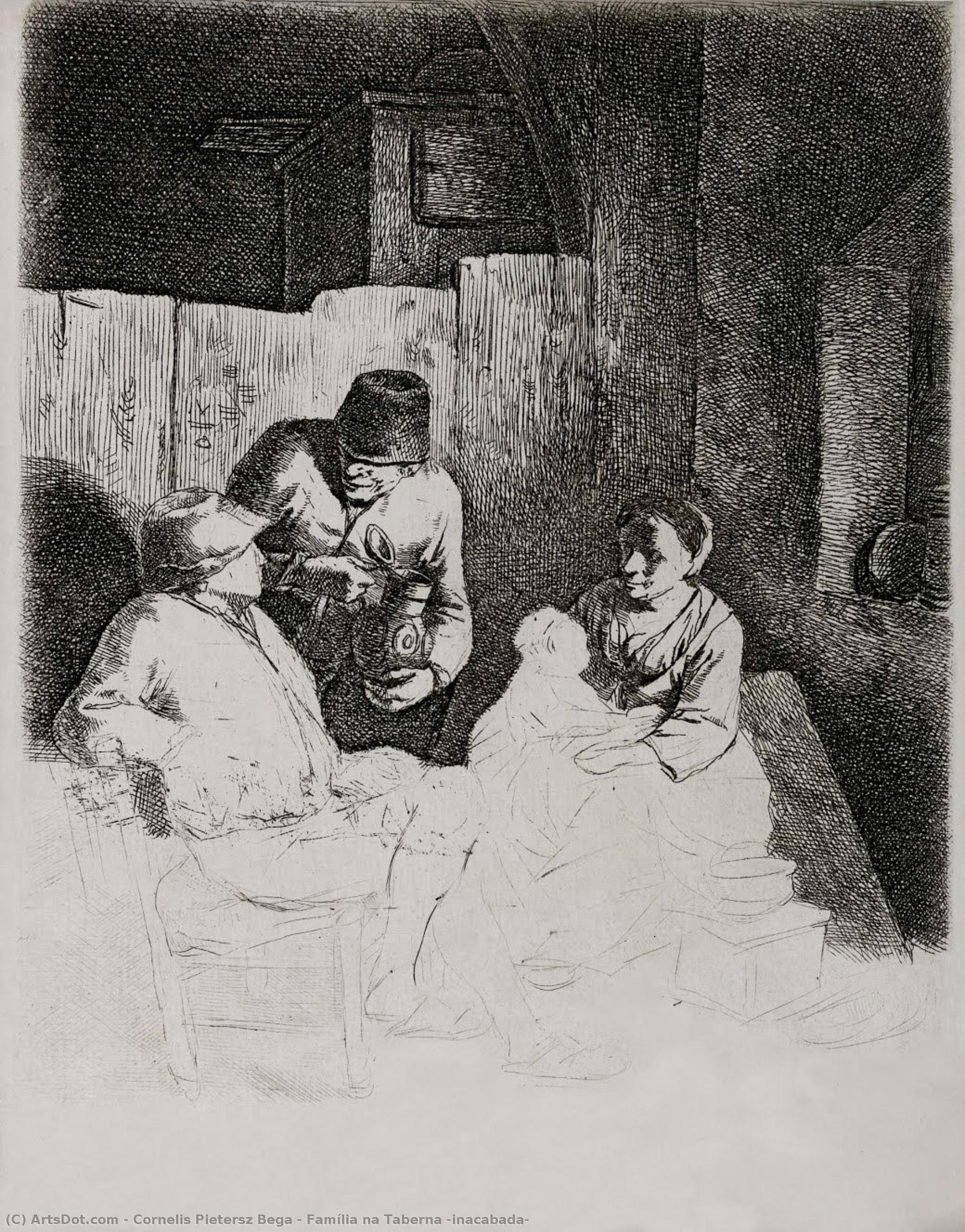
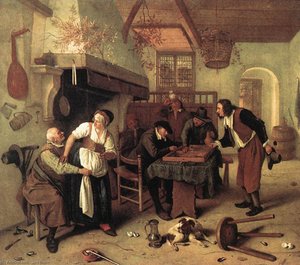
Cornelis Pietersz Bega's "Família na Taberna" (Incomplete Family in the Tavern), painted around 1660, offers a remarkably intimate window into the everyday life of 17th-century Holland. More than just a depiction of a tavern scene, it’s a carefully constructed tableau brimming with quiet observation and subtle emotional resonance – a testament to Bega's skill as a genre painter capturing the nuances of domesticity. The artwork, rendered in meticulous etching or engraving, immediately draws the viewer into a dimly lit interior where a family gathers around a sturdy wooden table, their faces illuminated by an unseen light source. The scene unfolds with a remarkable sense of realism, yet it’s imbued with a gentle melancholy that speaks to the complexities of familial bonds and the transient nature of social gatherings.Composition and Technique: Lines as Language
Bega's mastery lies in his masterful use of line – a defining characteristic of Dutch Golden Age art. The image is built entirely upon hatching, cross-hatching, and fine lines that meticulously define the forms of the figures, furniture, and architectural elements. There’s no reliance on color; instead, variations in line density create an astonishing range of tonal values, simulating light and shadow with remarkable precision. Notice how the deep shadows cast by the table and walls contribute to a sense of enclosure and intimacy, while the lighter areas suggest warmth and illumination. The flattened perspective, deliberately eschewing dramatic spatial recession, focuses attention on the immediate scene – inviting us to become silent observers within this domestic tableau. The meticulous detail in rendering fabrics—the folds of clothing, the texture of the table’s surface—demonstrates Bega's dedication to capturing the tangible realities of everyday life.Symbolism and Emotional Resonance: A Portrait of Family
Beyond its technical brilliance, “Família na Taberna” is rich in symbolic meaning. The scene depicts an older man, likely the patriarch, seated at the head of the table, his gaze directed outwards – perhaps contemplating the past or considering the future. A younger man stands beside him, possibly a son, suggesting a transition of roles and responsibilities. A woman, holding a baby, occupies a central position, embodying domesticity and continuity. The presence of the infant is particularly poignant, symbolizing hope for the family’s future and reinforcing the importance of lineage. While the tavern setting suggests a public space, the intimate arrangement of the figures hints at a private moment – a shared meal, a quiet conversation, or simply a comfortable companionship. The overall mood isn't boisterous or celebratory; rather, it evokes a sense of understated contentment—a quiet appreciation for the simple pleasures of family life.Historical Context and Artistic Influences
Bega’s work is firmly rooted in the traditions of 17th-century Dutch genre painting, a movement that flourished during the Golden Age. He was deeply influenced by artists like Adriaen van Ostade, known for his depictions of peasant life and scenes of everyday hardship. Like Van Ostade, Bega captured the realities of working-class society with honesty and empathy. However, Bega’s work possesses a greater degree of refinement and psychological depth than many of his contemporaries. His meticulous attention to detail and his subtle exploration of human emotion distinguish him as a significant figure in Dutch art history. Born into a family connected to the artistic world – his mother was the illegitimate daughter of the renowned Haarlem painter Cornelis van Haarlem – Bega’s work reflects both a deep understanding of artistic techniques and a keen observation of human nature.A Timeless Reflection: Reproduction and Beyond
“Família na Taberna” remains a captivating artwork, offering a poignant glimpse into the lives of ordinary people in 17th-century Holland. Today, high-quality reproductions allow us to appreciate Bega’s artistry and immerse ourselves in this intimate scene. ArtsDot offers meticulously crafted prints that faithfully capture the nuances of the original etching or engraving, ensuring that this timeless reflection of domesticity continues to resonate with viewers for generations to come. Consider adding this evocative artwork to your home – a subtle reminder of the enduring power of family, community, and the beauty found in everyday moments.Related Artworks

Artist Biography
A Life Immersed in Dutch Genre
Cornelis Pietersz Bega, a name resonating softly within the vibrant tapestry of the Dutch Golden Age, was an artist who dedicated his short life to capturing the intimate moments of 17th-century Holland. Born in Haarlem around 1630 – some records suggest either 1631 or 1632 – Bega emerged from a family deeply entwined with artistic pursuits. His father, Pieter Jansz. Begijn, was a skilled sculptor and goldsmith, providing a foundation of craftsmanship within the household. However, it was his mother’s lineage that added a particularly intriguing layer to young Cornelis's heritage: Maria was the illegitimate daughter of the prominent Haarlem painter, Cornelis van Haarlem. This familial connection undoubtedly fostered an early appreciation for the visual arts and perhaps even influenced his eventual adoption of the name “Bega” as he embarked on his professional career. The world into which he was born was one brimming with artistic innovation, a period where Dutch painters were redefining genre painting and achieving unprecedented levels of realism and emotional depth.Apprenticeship and Artistic Development
Bega’s formal training began under the tutelage of Adriaen van Ostade, a master renowned for his depictions of peasant life and everyday scenes. Van Ostade's influence is immediately apparent in Bega’s early works; both artists shared a fascination with portraying the lives of common folk – their labors, their leisure, and their interactions within humble settings. However, while deeply indebted to his mentor, Bega was not merely an imitator. He gradually developed a distinctive style characterized by a refined sense of composition and a nuanced understanding of characterization. Where Van Ostade often imbued his scenes with a certain moralizing undertone, Bega tended towards a more observational approach, presenting life as it unfolded without overt judgment. This subtle shift in perspective allowed him to create works that felt remarkably intimate and relatable. Beyond the direct influence of Van Ostade, Bega’s artistic development was undoubtedly shaped by the broader artistic climate of Haarlem, a city teeming with creative energy and home to numerous talented painters.Beyond Taverns: Expanding Artistic Horizons
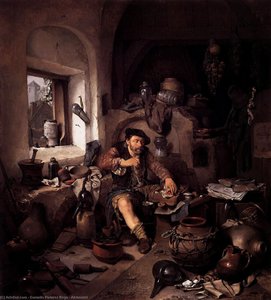
Bega specialized in genre paintings – depictions of everyday life that were immensely popular during the Dutch Golden Age. His canvases frequently showcased lively tavern scenes, bustling interiors filled with figures engaged in conversation, games, or simply enjoying a moment of respite. These works offer invaluable glimpses into the social fabric of 17th-century Holland, revealing details about clothing, customs, and pastimes. However, Bega’s artistic curiosity extended beyond these conventional subjects. He also explored more unusual themes, such as alchemists at work – exemplified by his captivating painting “The Alchemist” – and astrologers peering into the mysteries of the cosmos. These less common motifs demonstrate a willingness to experiment and a fascination with the intellectual currents of his time. His palette typically favored warm earth tones—rich browns, grays, and ochres—creating an atmosphere of intimacy and realism that drew viewers into the heart of his scenes. The skillful use of light and shadow further enhanced the sense of depth and immediacy, bringing his subjects to life with remarkable clarity.A Journey Through Europe and a Tragic End
From 1653 to 1654, Bega embarked on an ambitious “Grand Tour” through Germany, Switzerland, and France alongside fellow painters Dirk Helmbreker, Vincent van der Vinne, and Guillam Dubois. This journey was meticulously documented in Van der Vinne’s diaries, providing a fascinating record of the artistic landscape they encountered during their travels. The exposure to different art styles and cultural influences undoubtedly broadened Bega's horizons and contributed to his evolving artistic vision. Upon his return to Haarlem, he was accepted into the Guild of St. Luke in 1654, a significant milestone that affirmed his status as a professional artist. Sadly, Bega’s promising career was tragically cut short. He died in 1664 at the young age of approximately thirty-two or thirty-three, likely succumbing to the plague which ravaged Europe during this period. He was buried in the family grave alongside his grandfather, Cornelis van Haarlem, a poignant testament to the enduring artistic legacy that bound their generations together.Legacy and Lasting Impression
Though not as widely celebrated as some of his contemporaries, Cornelis Pietersz Bega occupies an important place in the history of Dutch Golden Age painting. His works are appreciated for their lively compositions, realistic depictions of peasant life, and intimate atmosphere. He possessed a remarkable ability to capture the essence of everyday moments, transforming ordinary scenes into captivating narratives. Bega’s paintings offer valuable insights into 17th-century Dutch society, providing a window into the lives of those who rarely appeared in grand historical or religious canvases. His legacy continues to resonate today through the enduring appeal of his art and its ability to transport viewers back to a bygone era, allowing them to experience the sights, sounds, and spirit of Holland’s Golden Age. His contribution lies not in groundbreaking innovation but in the skillful execution of a beloved genre, enriching our understanding of Dutch life and artistic expression during this pivotal period.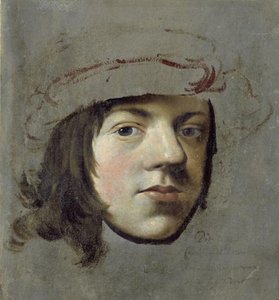
Cornelis Pietersz Bega
1630 - 1664 , Netherlands
Quick Facts
- Artistic Movement Or Style: Dutch Golden Age painting
- Artists Who Influenced This Artist: ['Adriaen van Ostade']
- Date Of Birth: 1630
- Date Of Death: 1664
- Full Name: Cornelis Pietersz Bega
- Nationality: Dutch
- Notable Artworks:
- The Alchemist
- Tavern Scene
- Place Of Birth: Haarlem, Netherlands
Related Articles

Dutch Masters: 10 Golden Age Paintings That Still Inspire |
Journey into the Dutch Golden Age! Explore 10 iconic paintings by Rembrandt, Vermeer & Hals. Discover the stories behind these Baroque masterpieces and find museum-quality art reproductions to elevate your home decor on .

Golden Age Reflections: Dutch Baroque Painting & Cultural Innovation
Explore the Dutch Golden Age of painting! Discover key artists like Vermeer & ter Borch, their innovative techniques, and the rich cultural context behind these Baroque masterpieces. Learn about collecting & appreciating this iconic art period.
Genre Painting: A Window into Daily Life & Societal Values of the Dutch Golden Age
Explore the captivating world of Dutch Golden Age genre painting! Discover realistic depictions of daily life, masterful artists like Ostade & Metsu, and hidden symbolism. Learn about this influential art movement with ArtsDot.

Illuminating Innovation: Exploring the Dutch Golden Age of Painting
Explore the Dutch Golden Age of painting with ArtsDot. Discover Rembrandt, Vermeer & other Masters. Learn about key characteristics, iconic artworks, and lasting influence. Expert insights for collectors & enthusiasts.
Illuminating Realism: Exploring the Dutch Golden Age of Painting (1600-1700)
Explore the Dutch Golden Age of painting (1600-1700) with ArtsDot. Discover Rembrandt, Vermeer & other masters. Learn about techniques, history & find museum-quality reproductions.