 Preview
 Send
Send Share
Share
 Details

 Download
 Similars
 X-Ray
X-Ray Diaporama
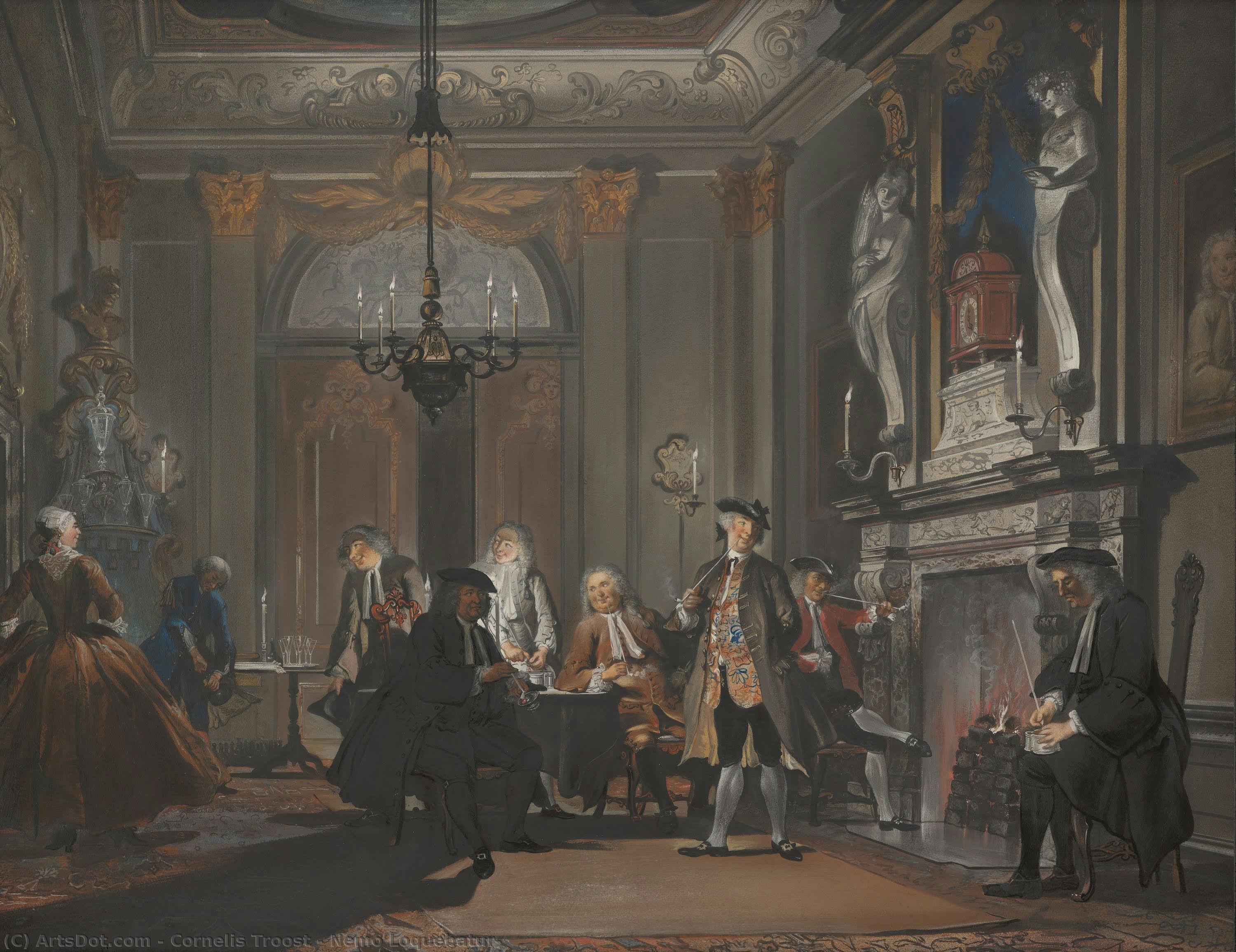
Nemo Loquebatur


 Read More
Hand Made Oil Reproduction
Hand-painted oil on canvas in your size and frame, made to order by our artists. ( Buy Print Buy Image)




P118B $10

P118H $10

P118W $10

P438Z $10

P508JH $12

P508YH $12

P805H $10

P805Z $10

P919BZ $10

P919G $10

P919XJ $10

P959ZH $10

P968JZ $12

W106C $8

W218G $10

W218JH $8

W218Y $10

W307PJ $10

W316G $10

W316PJ $8

W316Y $10

W398PJ $8

W4111J $10

W500HY $15

W500JH $15

W692G $12

W849H $8

W940BG $15

W953PJ $8




Pick from our preset sizes that match the artwork's original proportions.

You may enter your own dimensions to fit a specific frame or space. If your selected size does not match the original image's proportions, we will either crop the artwork or extend the painting with additional hand-painted elements. A digital mockup will be sent for your approval before production begins.
Please note that the on-screen preview does not reflect the actual cropping or extension. Only the mockup will accurately show the final composition.
While custom sizes are available, we recommend selecting a dimension from the predefined list to preserve the original proportions.
After order, ArtsDot.com team will email client for instructions and provide a mockup preview
Worldwide Delivery () in 3/4 weeks instead of standard 5 weeks. (16 August). No compromise on quality.

Free Worldwide Express Shipping

High-Quality Linen Canvas

Full Shipping Insurance

Customs Tax Refund Guarantee

True Color Matching Guarantee

60-Day Return Policy (Defects Only)

100% Money-Back Guarantee

Bulk Discount Offer
 Glass option is only available in size under 110 CM

Nemo Loquebatur
Reproduction Medium
Reproduction Size
-


Total Price
$ 263
Artwork Description
A Glimpse into Rococo Merriment: The Social Scene of Nemo Loquebatur
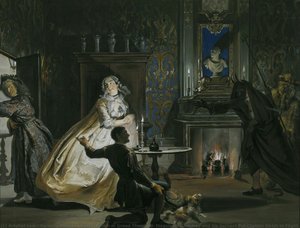
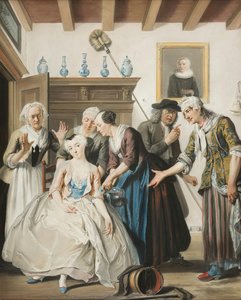
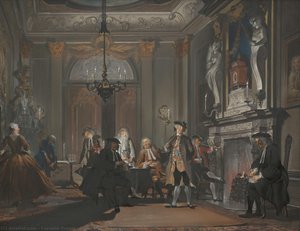
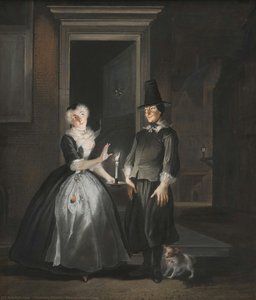
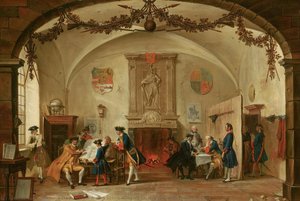
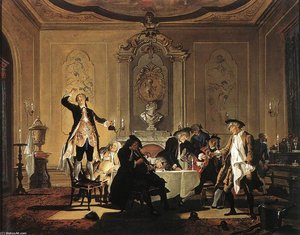
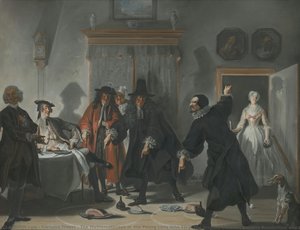
Imagine an evening bathed in the soft, flickering glow of crystal chandeliers, where the air hums with witty conversation and the clinking of fine glassware. This exquisite pastel scene, Nemo Loquebatur, transports us directly into the sophisticated salons of 18th-century Amsterdam. It captures a moment of convivial gathering among distinguished gentlemen, an atmosphere thick with intellectual exchange and burgeoning revelry. The composition itself is a masterclass in genre painting, depicting not just figures, but the very texture of high society life—a world where wit was as carefully curated as one's waistcoat.
The Artistry of Pastel: Technique and Touch
What makes this piece so captivating is its remarkable medium. Cornelis Troost eschewed the permanence of oil paint for the delicate, ethereal touch of gouache and pastel. This choice of materials speaks volumes about the period's artistic tastes; it allowed Troost to achieve a luminosity and softness that mimic the fleeting quality of memory itself. The opaque watercolour mixed with soft chalk lends the skin tones a remarkable delicacy while allowing the rich textures of the gentlemen’s elaborate clothing—the silks, the lace, the polished wood of the mantlepiece—to remain vividly present. To own a reproduction of this work is to possess an echo of that eighteenth-century luminosity.
Historical Context and Narrative Depth
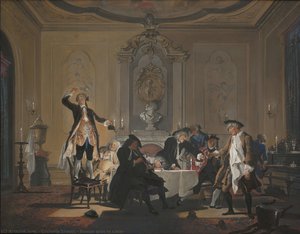
This painting is part of a larger narrative cycle, suggesting a structured, unfolding story across several panels. The title itself, Nemo Loquebatur, hints at the playful structure underlying the apparent spontaneity. While the initial moments depicted might suggest polite discourse—men holding books, engaging in measured conversation near an elegant fireplace mantle—the overall trajectory of such scenes often suggests a delightful descent into spirited abandon fueled by good company and perhaps too much wine. Troost, deeply embedded in the vibrant cultural life of Amsterdam during this time, possessed an unparalleled ability to observe human nature at its most charmingly flawed.
Emotional Resonance for the Modern Collector
For the contemporary admirer, Nemo Loquebatur offers more than mere decoration; it offers an emotional anchor. It speaks to the universal yearning for connection—for that perfect gathering where laughter rings freely and conversation flows without end. Whether placed in a formal drawing-room or a richly paneled study, this artwork introduces an immediate sense of cultured warmth and sophisticated history. It invites the viewer not just to look, but to participate; one can almost hear the murmur of voices and smell the faint scent of expensive tobacco mingling with wine.
Related Artworks
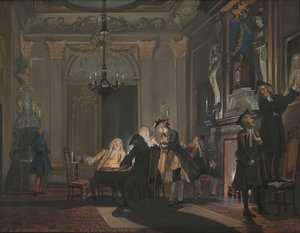
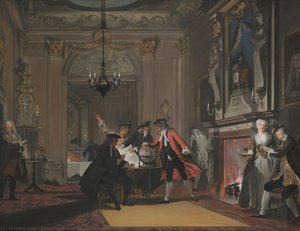
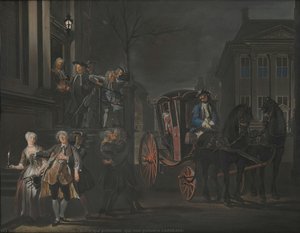
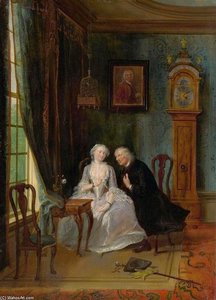
Artist Biography
A Window into Amsterdam’s Golden Age
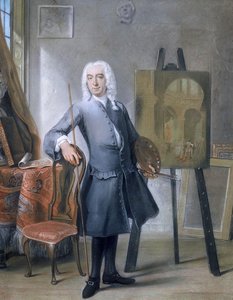
Cornelis Troost, a name inextricably linked to the vibrant tapestry of 18th-century Amsterdam, was more than just an artist; he was a keen observer and masterful recorder of his era. Born in the heart of the Dutch Republic on October 8, 1696, in Amsterdam, Troost’s journey from aspiring actor to celebrated painter reveals a fascinating confluence of artistic passions and personal transformation. Initially trained as a performer on the stage, he found his true calling not amidst applause and drama, but within the meticulous detail and subtle nuances of painting. His life's trajectory is marked by a deliberate shift – a conscious rejection of the spotlight for the quiet contemplation of brushstrokes, ultimately leading him to become one of the most significant figures in Dutch Rococo genre art.
Troost’s artistic education began under the tutelage of Arnold Boonen, a respected portraitist who recognized his student's innate talent. This apprenticeship provided a crucial foundation, but it was Troost’s early drawings that truly showcased his distinctive style – particularly one dated 1708 depicting Prince Eugene of Savoy and the notorious bookseller and spy, Louis Renard, engaging in clandestine activities within a luxurious Amsterdam brothel. This piece, brimming with wit and intrigue, hinted at the themes he would later explore with such captivating skill: the complexities of social life, the allure of pleasure, and the hidden currents beneath the veneer of respectability.
The Elegance of Rococo and Social Narrative
As his career matured, Troost became a master of capturing the delicate balance between frivolity and sophistication. His work was undoubtedly influenced by the prevailing artistic trends of his time, including the dramatic compositions of William Hogarth, known for his satirical depictions of London society, and the elegant grace of French masters like Watteau, Boucher, and Lancret. This synthesis of Dutch realism and French Rococo elegance allowed him to create works that were both deeply grounded in local reality and exquisitely refined.
His repertoire was remarkably diverse, ranging from intimate portraits to monumental group compositions. Some of his most enduring contributions to the art world include:
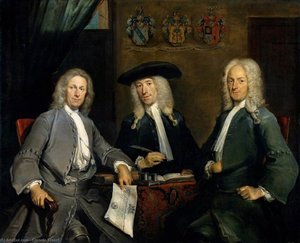
- Portrait of the Inspectors of the Collegium Medicum (1724): A stunning Rococo oil painting that showcases the height of 18th-century Dutch artistry and institutional elegance.
- Portrait of Maria Magdalena Stavenisse (c. 1726): A Baroque masterpiece that utilizes refined detail to showcase aristocratic wealth and status.
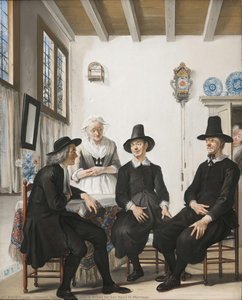
- Regents of the Aalmoezeniersweeshuis Orphanage (1729): A monumental group portrait that serves as a window into the social structures of Amsterdam, utilizing dramatic lighting and an opulent setting to convey a sense of civic importance.
Legacy of a Master Observer
The significance of Cornelis Troost lies in his ability to act as a visual historian for a period of transition. While the era of the great Dutch Golden Age masters had passed, Troost breathed new life into the Dutch tradition by infusing it with the lightheartedness and decorative charm of the Rococo movement. His paintings do not merely depict faces; they capture the spirit of an age—the rustle of silk, the flicker of candlelight, and the subtle social hierarchies of Amsterdam's upper class.
Through his witty portraits and captivating genre scenes, Troost left behind a legacy that continues to enchant viewers. He remains a pivotal figure who bridged the gap between the heavy, dramatic traditions of the 17th century and the airy, graceful aesthetics of the 18th century, ensuring that the social nuances of his beloved Amsterdam would be preserved in pigment for generations to come.
Cornelis Troost
1696 - 1750 , Netherlands
Quick Facts
- Artistic Movement Or Style: Rococo genre scenes
- Artists Or Movements Influenced By This Artist: ['Sara Troost']
- Artists Who Influenced This Artist:
- William Hogarth
- Watteau
- Boucher
- Lancret
- Date Of Birth: October 8, 1696
- Date Of Death: March 7, 1750
- Full Name: Cornelis Troost
- Nationality: Dutch
- Notable Artworks:
- NELRI series
- Jeronimus Tonneman
- Inspectors of Collegium
- Place Of Birth: Amsterdam, Netherlands
Related Articles

Rococo's Radiant Legacy: 10 Masterpieces for Your Home |
Indulge in the elegance of Rococo! Explore 10 masterpieces by Fragonard, Boucher & Watteau. Discover the stories behind these iconic paintings and bring timeless art to your home with museum-quality reproductions from .

The Rococo Aesthetic: Opulence, Rebellion & the Pursuit of Pleasure in 18th-Century Art
Explore the opulent world of Rococo art! Discover its origins, key artists like Watteau & Boucher, and lasting influence on design. Expert insights for collectors & enthusiasts.
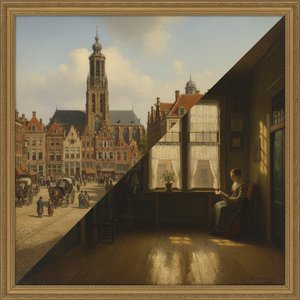
Cornelis Springer: A Dutch Master of Cityscapes & Intimate Reflections
Explore the captivating world of Cornelis Springer (1817-1891), a Dutch master renowned for his detailed cityscapes and atmospheric paintings. Discover his life, style & available artworks at ArtsDot.
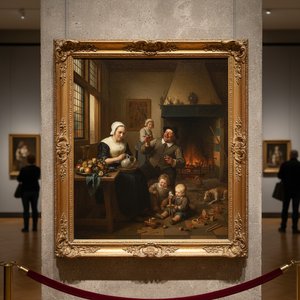
Genre Painting: A Window into Daily Life & Societal Values of the Dutch Golden Age
Explore the captivating world of Dutch Golden Age genre painting! Discover realistic depictions of daily life, masterful artists like Ostade & Metsu, and hidden symbolism. Learn about this influential art movement with ArtsDot.
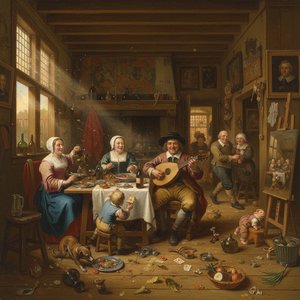
Jan Steen: A Master of Dutch Genre Painting & the Golden Age
Explore the life & art of Jan Steen, a leading Dutch Golden Age painter renowned for his humorous genre scenes & insightful social commentary. Discover his techniques, legacy, and collecting tips.