 Preview
 Send
Send Share
Share
 Details

 Download
 Similars
 X-Ray
X-Ray Diaporama
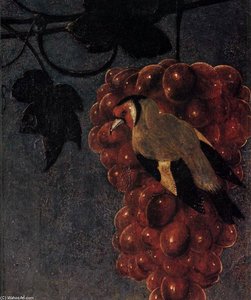
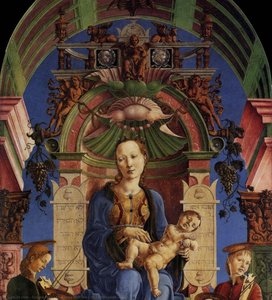
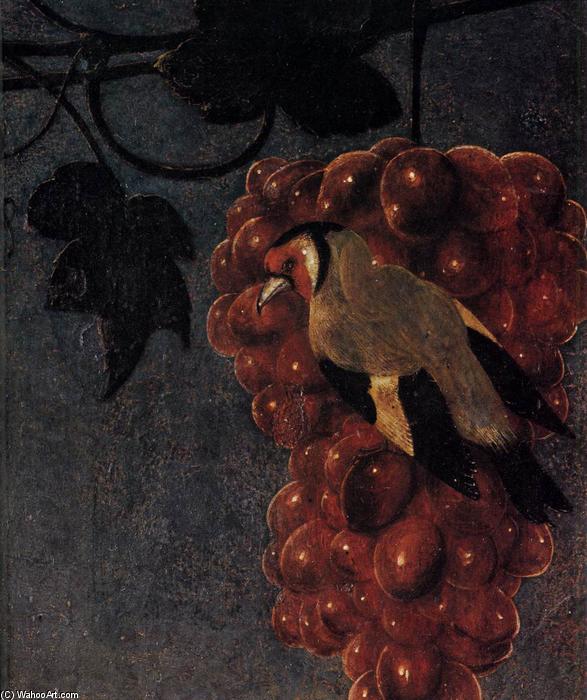
The Madonna of the Zodiac (detail)


 Read More
Hand Made Oil Reproduction
Hand-painted oil on canvas in your size and frame, made to order by our artists. ( Buy Print Buy Image)




P118B $10

P118H $10

P118W $10

P438Z $10

P508JH $12

P508YH $12

P805H $10

P805Z $10

P919BZ $10

P919G $10

P919XJ $10

P959ZH $10

P968JZ $12

W106C $8

W218G $10

W218JH $8

W218Y $10

W307PJ $10

W316G $10

W316PJ $8

W316Y $10

W398PJ $8

W4111J $10

W500HY $15

W500JH $15

W692G $12

W849H $8

W940BG $15

W953PJ $8




Pick from our preset sizes that match the artwork's original proportions.

You may enter your own dimensions to fit a specific frame or space. If your selected size does not match the original image's proportions, we will either crop the artwork or extend the painting with additional hand-painted elements. A digital mockup will be sent for your approval before production begins.
Please note that the on-screen preview does not reflect the actual cropping or extension. Only the mockup will accurately show the final composition.
While custom sizes are available, we recommend selecting a dimension from the predefined list to preserve the original proportions.
After order, ArtsDot.com team will email client for instructions and provide a mockup preview
Worldwide Delivery () in 3/4 weeks instead of standard 5 weeks. (17 August). No compromise on quality.

Free Worldwide Express Shipping

High-Quality Linen Canvas

Full Shipping Insurance

Customs Tax Refund Guarantee

True Color Matching Guarantee

60-Day Return Policy (Defects Only)

100% Money-Back Guarantee

Bulk Discount Offer
 Glass option is only available in size under 110 CM

The Madonna of the Zodiac (detail)
Reproduction Medium
Reproduction Size
-


Total Price
$ 263
Artwork Description
A Glimpse into Celestial Mystery: The Detail of the Zodiac
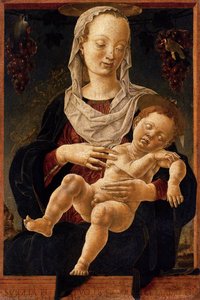
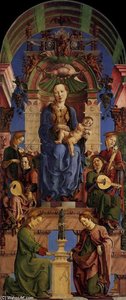
To gaze upon this exquisite detail from Cosmè Tura’s The Madonna of the Zodiac is to be transported directly into the luminous, intellectual atmosphere of the Early Renaissance. This fragment, focusing intimately on a bird poised amidst ripe grapes, transcends mere depiction; it captures a moment suspended between earthly bounty and celestial mystery. The artist’s mastery is immediately apparent in the meticulous rendering of nature—the delicate sweep of the bird's gray plumage contrasted sharply against the deep, velvety tones of the fruit. It speaks to an era when art served not only as decoration but as a profound vehicle for philosophical inquiry.
Technique and Material Brilliance
The enduring quality of this work is deeply rooted in its technique. Executed using tempera on panel, Cosmè Tura employed a medium that allowed for unparalleled luminosity and fine detail. Notice how the artist has captured the glossy sheen upon the dark red grapes; it suggests a near-tangible juiciness, contrasting beautifully with the matte depth of the surrounding background—that profound blue-gray void. The precision required to render the bird in mid-action, its wings slightly spread as if catching an unseen current, speaks volumes about Tura’s technical virtuosity. It is a testament to the painstaking labor and refined skill characteristic of the Ferrarese school.
Symbolism Woven into Nature's Tapestry
In the context of The Madonna of the Zodiac, every element carries symbolic weight. The grapes themselves are ancient symbols of abundance, fertility, and the divine harvest. The bird, often interpreted in Renaissance iconography, can represent the soul or a specific astrological influence interacting with the sacred figures nearby. This small corner is thus not just flora and fauna; it is a carefully constructed visual allegory. It invites the viewer to pause, to contemplate the interconnectedness of natural cycles and cosmic order—a hallmark of Quattrocento thought.
Echoes for the Modern Collector
For those who appreciate art that whispers rather than shouts, this detail offers profound depth. Owning a reproduction inspired by such an artifact allows one to bring home not just a painting, but a piece of intellectual history. The rich color palette—the deep blues, the vibrant reds, and the subtle grays—provides an immediate focal point for any sophisticated interior space. It serves as a conversation starter, drawing admiration for its historical resonance while offering the visual pleasure of impeccable naturalism. It is art that rewards close looking, promising endless moments of quiet contemplation.
Related Artworks
Artist Biography
A Ferrarese Visionary: The Life and Art of Cosmè Tura
Born around 1430 in the vibrant ducal city of Ferrara, Italy, Cosmè Tura emerged from humble beginnings – his father was a shoemaker named Domenico – to become one of the most distinctive and influential painters of the Early Renaissance. While details surrounding his initial training remain somewhat elusive, art historians suggest a possible apprenticeship with Galasso Galassi, a shadowy figure connected to the renowned Piero della Francesca. This early exposure likely laid the groundwork for Tura’s developing artistic sensibilities, though it was a period of travel, potentially encompassing Venice and Padua between 1452 and 1456, that truly ignited his creative spark. In Padua, he would have encountered the workshop of Francesco Squarcione, a pivotal center for artistic innovation where the study of classical antiquity flourished alongside emerging Renaissance techniques like linear perspective and robust form. These influences were not merely absorbed but synthesized into something uniquely Tura’s own – a style characterized by its sharp lines, decorative exuberance, and an almost obsessive attention to detail.The Court Painter and His Innovative Style
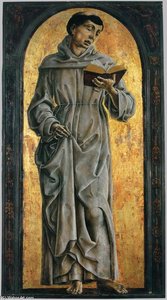
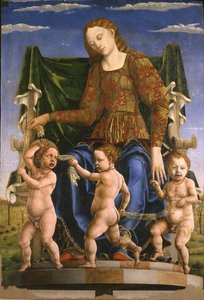
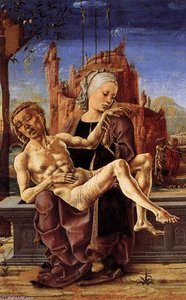
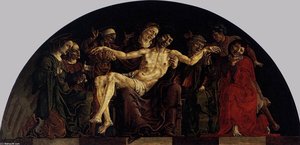
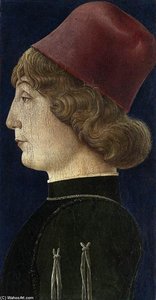
Tura's career blossomed within the Este court, first under Duke Borso d'Este and later Ercole I d’Este. He wasn’t simply a painter; he was a versatile artisan employed in creating not only frescoes and panel paintings but also designs for tournaments, decorated furniture, and even clothing. This multifaceted role speaks to the breadth of artistic skill valued within the Este household and allowed Tura ample opportunity to experiment with materials and techniques. His innovative use of oil paint stands out particularly – he masterfully manipulated its properties to render a remarkable range of textures, from the shimmering sheen of metal armor to the delicate folds of luxurious fabrics. This technical prowess was coupled with an artistic vision deeply informed by a diverse array of influences: the serene spirituality of Fra Angelico, Piero della Francesca’s geometric precision, Andrea Mantegna's dramatic foreshortening and classical references, and the meticulous realism of Flemish painters. However, Tura didn’t simply imitate these masters; he forged them into a distinctly Ferrarese aesthetic – one defined by expressive lines, intricate ornamentation, and a captivating sense of dynamism. Notable works from this period include A Muse (Detail) from 1460, showcasing his delicate rendering of form and symbolism, the early Portrait of a Young Man from around 1450, and the later St Anthony of Padua Reading, completed in 1475. His Pietà (1474) is another testament to his skill with tempera paint.A Legacy Forged in Ferrara
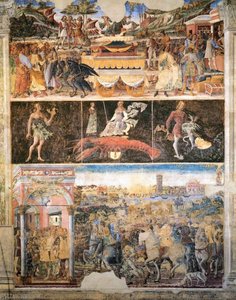
Cosmè Tura’s impact extended far beyond the confines of the Este court. He is rightfully considered a founder of the School of Ferrara, an artistic movement that flourished in the late 15th century and exerted considerable influence on subsequent generations of Italian painters. His style – often described as idiosyncratic and even somewhat unsettling – captivated his contemporaries and continues to intrigue art historians today. The expressive energy of his lines, the almost fantastical quality of his decorative elements, and his willingness to push the boundaries of artistic convention set him apart from many of his peers. He influenced artists such as Giovanni Andrea Ghirardoni, who continued to develop the Ferrarese style after Tura’s death in 1495. Today, examples of his work can be found in museums and collections around the world, but a significant concentration remains in Ferrara itself, particularly at the Museo del Duomo and Palazzo Schifanoia – the latter boasting magnificent frescoes where Tura's hand is prominently visible.Influences and Enduring Significance
To understand Cosmè Tura’s artistic achievements, it’s crucial to recognize the complex web of influences that shaped his vision. His debt to Fra Angelico is evident in the devotional intensity of his religious works, while Piero della Francesca's mastery of perspective and geometric form provided a structural foundation for his compositions. The dramatic power and classical allusions found in the art of Andrea Mantegna also resonated deeply with Tura, inspiring him to explore innovative approaches to depicting space and anatomy. Furthermore, exposure to Flemish artists likely encouraged his adoption of oil paint as a medium, allowing for greater detail and textural nuance. The possible mentorship of Galasso Galassi, though shrouded in mystery, may have provided an initial grounding in artistic principles. Cosmè Tura’s legacy lies not only in the beauty and originality of his paintings but also in his contribution to the development of Italian Renaissance art. He demonstrated a remarkable ability to synthesize diverse influences into a cohesive and compelling style, establishing Ferrara as a significant center for artistic innovation and leaving an indelible mark on the history of painting.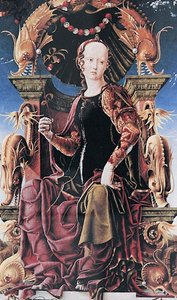
Cosmè Tura
1430 - 1495 , Italy
Quick Facts
- Artistic Movement Or Style: Early Renaissance
- Artists Or Movements Influenced By This Artist: ['Giovanni Andrea Ghirardoni']
- Artists Who Influenced This Artist:
- Fra Angelico
- Piero della Francesca
- Andrea Mantegna
- Flemish Artists
- Date Of Birth: c. 1430
- Date Of Death: 1495
- Full Name: Cosmè Tura
- Nationality: Italian
- Notable Artworks:
- A Muse (Detail)
- Portrait of a Young Man
- St Anthony of Padua Reading
- Saint Peter
- Pietà
- Place Of Birth: Ferrara, Italy
Related Articles

Giclée Prints: Archival Quality & Aesthetic Nuances for the Discerning Collector
Explore the world of giclée prints with ArtsDot. Learn about archival quality, aesthetic nuances & investment potential. Expert guidance for discerning art collectors seeking museum-quality reproductions and lasting value.
Cosmè Tura: Rediscovering the Ferrarese Master & His Distinctive Style
Discover Cosmè Tura (1430-1495), founder of the Ferrara School. Explore his unique style, key artworks & lasting influence. Expert insights for collectors.

The Enduring Legacy of Fine Art Prints: Technique, History & Aesthetic Impact
Explore the rich history & techniques of fine art prints. Discover investment potential, assess authenticity, and learn how to preserve your collection with expert guidance. Trusted insights for discerning collectors.

Echoes of Time: Exploring the Enduring Appeal & Historical Context of Vintage Art Prints
Explore the captivating world of vintage art prints! Discover their history, collecting tips & enduring appeal. Expert insights on chromolithography and building a legacy collection with ArtsDot.

The Enduring Legacy of Printmaking: Techniques, Themes & Artistic Innovation Across Centuries
Explore the rich history of printmaking with ArtsDot. Discover techniques from intaglio to lithography, learn about collecting valuable prints & find museum-quality reproductions. Expert insights for art enthusiasts and collectors.