 Preview
 Send
Send Share
Share
 Details

 Download
 Similars
 X-Ray
X-Ray Diaporama
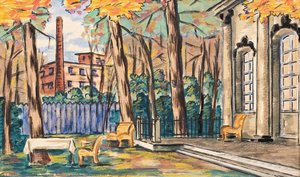
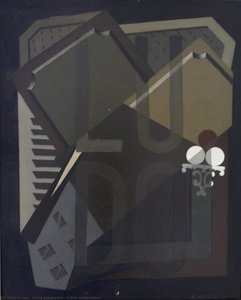
Sketch for the play
 Oil On Canvas
- WallArt
- Expressionism
 1947
1947 29.0 x 29.0 cm
 Art Palace of Georgia - Museum of Cultural History
 Read More
Hand Made Oil Reproduction
Hand-painted oil on canvas in your size and frame, made to order by our artists. ( Buy Print Buy Image)




P118B $10

P118H $10

P118W $10

P438Z $10

P508JH $12

P508YH $12

P805H $10

P805Z $10

P919BZ $10

P919G $10

P919XJ $10

P959ZH $10

P968JZ $12

W106C $8

W218G $10

W218JH $8

W218Y $10

W307PJ $10

W316G $10

W316PJ $8

W316Y $10

W398PJ $8

W4111J $10

W500HY $15

W500JH $15

W692G $12

W849H $8

W940BG $15

W953PJ $8




Pick from our preset sizes that match the artwork's original proportions.

You may enter your own dimensions to fit a specific frame or space. If your selected size does not match the original image's proportions, we will either crop the artwork or extend the painting with additional hand-painted elements. A digital mockup will be sent for your approval before production begins.
Please note that the on-screen preview does not reflect the actual cropping or extension. Only the mockup will accurately show the final composition.
While custom sizes are available, we recommend selecting a dimension from the predefined list to preserve the original proportions.
After order, ArtsDot.com team will email client for instructions and provide a mockup preview
Worldwide Delivery () in 3/4 weeks instead of standard 5 weeks. (17 August). No compromise on quality.

Free Worldwide Express Shipping

High-Quality Linen Canvas

Full Shipping Insurance

Customs Tax Refund Guarantee

True Color Matching Guarantee

60-Day Return Policy (Defects Only)

100% Money-Back Guarantee

Bulk Discount Offer
 Glass option is only available in size under 110 CM

Sketch for the play
Reproduction Medium
Reproduction Size
-


Total Price
$ 263
Artwork Description
A Storm Within: David Kakabadze’s ‘Sketch for the Play’
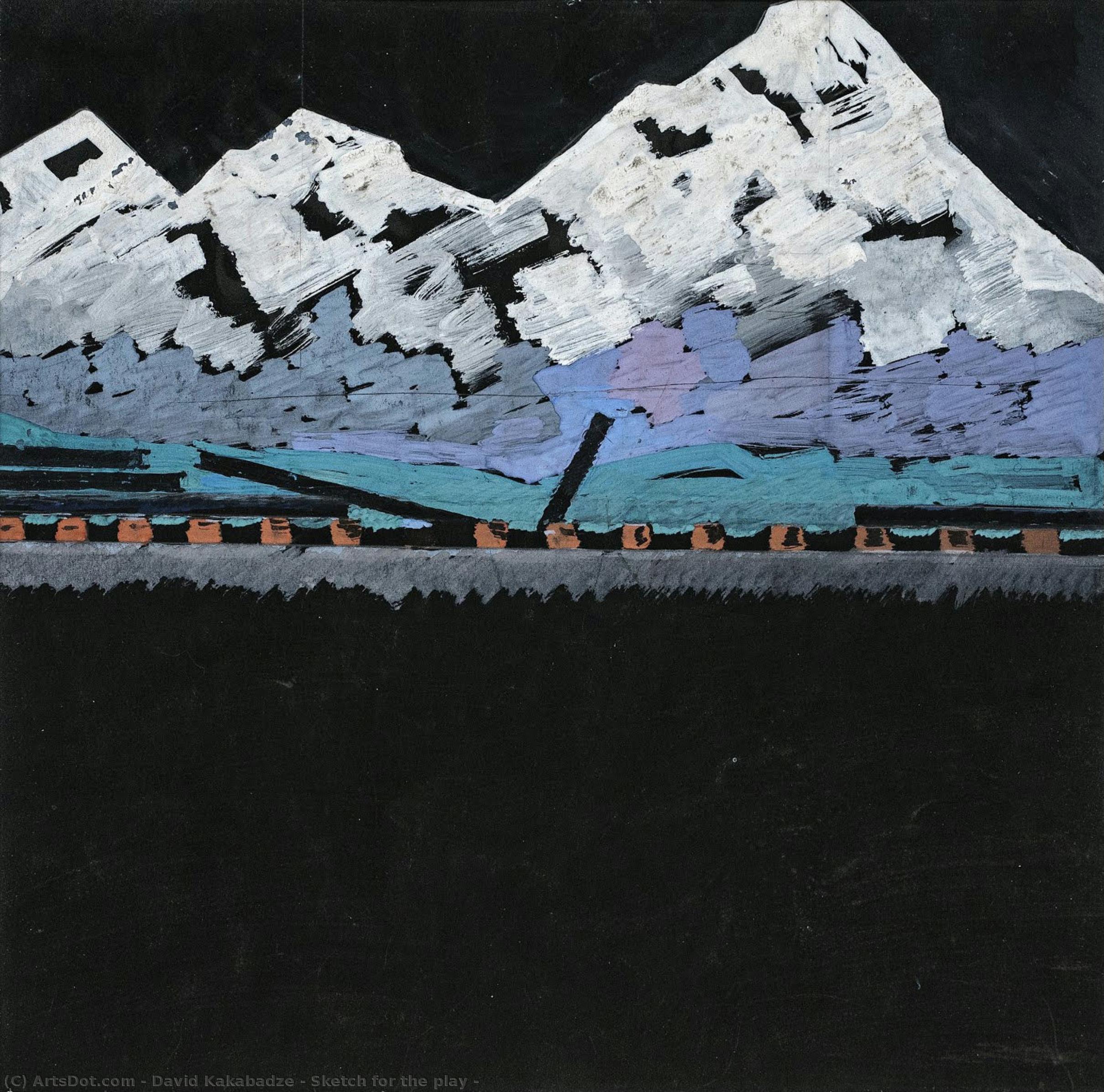
David Kakabadze's “Sketch for the Play,” painted in 1947, isn’t merely a landscape; it’s a visceral embodiment of turmoil and nascent creation. This oil on canvas immediately commands attention with its dramatic intensity – a brooding sky dominated by towering, almost menacing mountains that seem to press down upon a fragmented world below. The composition is deliberately fractured, divided into distinct horizontal bands: a dark, foreboding foreground punctuated by the skeletal remains of what appears to be an industrial structure, a mid-ground featuring a stark railway line slicing through a muted expanse of vegetation, and finally, an upper register ablaze with the turbulent energy of the heavens. It’s a scene pregnant with unspoken narrative, inviting the viewer to decipher its hidden meanings.
Kakabadze, a pivotal figure in Georgian modernism, wasn't simply replicating nature; he was translating it through a lens of intense emotion and experimentation. Born in 1889 in the remote village of Kukhi near Khoni, his artistic journey began with rigorous scientific study at St. Petersburg University, a foundation that would later inform his meticulous approach to composition and form. However, it was his embrace of European avant-garde movements – particularly Cubism and Expressionism – coupled with a deep reverence for Georgian traditions, that truly defined his unique style. “Sketch for the Play” exemplifies this synthesis; the geometric simplification of shapes, reminiscent of Cubist principles, is overlaid with the raw emotionality characteristic of Expressionism.
The Language of Impasto: Technique and Texture
What immediately strikes the eye is Kakabadze’s masterful use of impasto – a technique involving thick application of paint. The canvas itself becomes a landscape of ridges and valleys, each stroke deliberately visible, lending the artwork a palpable sense of texture and movement. This isn't a smooth, polished surface; it’s a dynamic, almost sculptural representation of the scene. The dark foreground is rendered with particularly dense impasto, creating an immediate feeling of weight and confinement, while the sky explodes with looser, more fluid brushstrokes, conveying the chaotic energy of the storm. The railway line, a stark vertical element, further emphasizes this tension between order and disorder.
Kakabadze’s choice of color palette – predominantly cool blues, grays, and greens – reinforces the artwork's somber mood. Yet, strategically placed accents of warm ochre and yellow within the clouds and vegetation hint at a glimmer of hope or perhaps simply the potential for renewal amidst the darkness. The deliberate flattening of perspective contributes to the overall sense of unease, suggesting that this is not a realistic depiction of space but rather an emotional landscape projected onto the canvas.
Symbolism in the Fragmented Landscape
The imagery within “Sketch for the Play” is rich with symbolic potential. The imposing mountains can be interpreted as representing both strength and isolation, while the railway line – a recurring motif in Kakabadze’s work – often signifies progress, connection, or even the relentless march of time. The decaying industrial structure in the foreground could symbolize the decline of traditional ways of life, juxtaposed against the enduring power of nature. The storm itself is a potent symbol of inner turmoil and transformation—a period of upheaval that inevitably precedes growth.
Interestingly, Kakabadze’s artistic output often explored themes of Georgian identity and folklore, subtly interwoven with his engagement with European modernism. While “Sketch for the Play” doesn't explicitly depict traditional Georgian subjects, its emotional intensity and fragmented composition resonate with a distinctly Georgian sensibility. It’s a work that invites contemplation, prompting viewers to consider not only the beauty of the landscape but also the complexities of human experience.
Bringing Kakabadze Home: Reproduction Options
David Kakabadze's “Sketch for the Play” is a powerful and evocative artwork that continues to captivate audiences today. A high-quality reproduction offers a remarkable opportunity to bring this masterpiece into your home or office, allowing you to appreciate its intricate details and emotional depth. ArtsDot.com offers meticulously crafted reproductions of this iconic painting, utilizing archival-grade materials and employing the same techniques as the original – including careful attention to impasto texture. Whether you choose a standard size or opt for a custom reproduction tailored to your specific needs, you can be assured of an authentic representation that faithfully captures the spirit and artistry of David Kakabadze’s masterpiece.
Related Artworks
Artist Biography
A Pioneer of Georgian Modernism: The Life and Art of David Kakabadze
David Kakabadze, born in the village of Kukhi near Khoni, Georgia, in 1889, stands as a pivotal figure in the development of twentieth-century Georgian art. His career was one of remarkable innovation, seamlessly blending the burgeoning currents of European avant-garde movements with a deep reverence for his native Georgian traditions. Kakabadze wasn’t merely an artist; he was a polymath – a painter, graphic artist, scenic designer, art scholar, cinematic innovator, and even an amateur photographer. This multifaceted approach to creativity defined his artistic journey and cemented his legacy as one of Georgia's most important modernist masters. His early life, though rooted in the simplicity of a peasant family, was marked by intellectual curiosity fostered through sponsorship that allowed him to pursue studies at St. Petersburg University, graduating with a degree in natural sciences in 1916. Simultaneously, he honed his artistic skills under Dmitroyev-Kavkazsky and immersed himself in the study of Georgia’s rich artistic heritage. This dual education – scientific rigor combined with artistic sensitivity – would become a hallmark of his work.Parisian Encounters and Artistic Transformation
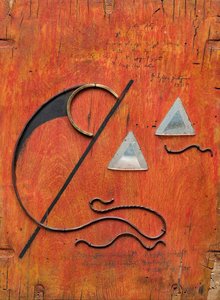
Following a brief period teaching and painting in Tbilisi, Kakabadze embarked on a transformative chapter of his life in Paris from 1919 to 1927. This sojourn placed him at the epicenter of the European avant-garde, exposing him to Cubism, Futurism, and other radical artistic experiments. He actively participated in exhibitions with the Société des Artistes Indépendants, forging connections with fellow Georgian artists Lado Gudiashvili and Shalva Kikodze. It was during this period that Kakabadze’s style underwent a dramatic evolution. Initially captivated by the landscapes of his native Imereti province, he began to explore “subjectless painting,” experimenting with unconventional materials like metal, mirror glass, and stained glass in place of traditional paints. This exploration wasn't merely about technical innovation; it was a quest to redefine the very essence of pictorial representation. He delved deeply into Cubism, absorbing its fragmented forms and analytical approach, yet always maintaining a distinct artistic voice that prevented his work from becoming mere imitation. His theoretical writings during this time, published in Parisian art journals, demonstrate a profound engagement with the intellectual underpinnings of modern art, establishing him as a thought leader within the modernist community.Innovation Beyond the Canvas: Cinema and Stage Design
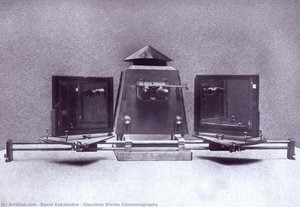
Kakabadze’s inventive spirit extended far beyond painting. Recognizing the potential of new technologies, he began experimenting with cinema in the early 1920s, driven by a desire to overcome what he perceived as film's inherent limitations. He designed and patented a stereoscopic film projector that created the illusion of three-dimensionality without the need for glasses – a remarkable feat of engineering and artistic vision that positioned him as a pioneer of 3D cinema decades before it became mainstream. This inventive streak also manifested in his stage designs, particularly during his collaboration with the renowned Georgian theatre director Kote Marjanishvili after returning to Georgia in 1927. His sets were not merely backdrops but immersive environments incorporating innovative techniques like projections, light effects, and collage-like constructions, transforming the theatrical experience into a dynamic interplay of space and illusion. He created impressive set designs for films by Noutsa Gogoberidze and Michail Kalatosov.Return to Georgia and Enduring Legacy
Kakabadze’s return to Georgia in 1927 coincided with the rise of Soviet power and the imposition of Socialist Realism as the dominant artistic style. This presented a significant challenge for an artist whose work was deeply rooted in abstraction and experimentation. While he continued to contribute to Georgian art through stage design, documentary filmmaking focused on preserving cultural heritage, and teaching at the Tbilisi State Academy of Arts, his modernist inclinations increasingly clashed with the prevailing ideological demands. Despite facing pressure and eventual marginalization, Kakabadze remained committed to his artistic principles. His later landscapes, while reflecting a shift in style, still retained a unique sensibility informed by his earlier explorations. David Kakabadze passed away in 1952, leaving behind a body of work that was largely overlooked for decades. However, in recent years, there has been a growing recognition of his importance as a key figure in Georgian modernism and a significant contributor to the broader European avant-garde movement. His innovative spirit, intellectual depth, and unwavering commitment to artistic exploration continue to inspire artists today, ensuring his enduring legacy as a true visionary.Key Works and Collections
Some of Kakabadze’s most notable works include Sailboats, Bretagne, and Sketch for Getting Various Grades of Light in a Single Electric Bulb. These pieces exemplify his ability to synthesize European artistic trends with Georgian cultural identity. His work can be found in prominent collections around the world, including the Art Palace of Georgia – Museum of Cultural History in Tbilisi, the Berardo Collection Museum in Lisbon, and the Thyssen-Bornemisza Museum in Madrid. Furthermore, a significant collection of his early works resides at Yale University, testament to his international recognition during his lifetime. His contributions extend beyond individual paintings; it’s the breadth of his artistic inquiry – encompassing painting, cinema, stage design, and theoretical writing – that truly defines his remarkable legacy.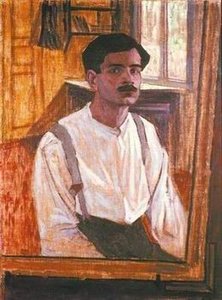
David Kakabadze
1889 - 1952 , Georgia
Quick Facts
- Artistic Movement Or Style: Avant-garde, Cubism
- Artists Or Movements Influenced By This Artist: ['Numerous artists']
- Date Of Birth: August 20, 1889
- Date Of Death: 1952
- Full Name: David Kakabadze
- Nationality: Georgian
- Notable Artworks:
- Sailboats
- Bretagne
- Sketch for getting…
- Place Of Birth: Kutaisi, Georgia
Related Articles

Beyond the Horizon: 10 Landscape Masterpieces for Your Home Decor
Journey through 10 breathtaking landscape paintings by Monet, Van Gogh & more! Explore iconic artworks, artistic techniques & find inspiration for your home decor. Museum-quality reproductions at ArtsDot.com. Discover all masterpieces on ArtsDot.com

John Constable's Masterpieces: Explore 25 Iconic Landscapes for Your Home
Journey through John Constable's 25 most celebrated landscapes. Explore Romanticism, Dedham Vale & his masterful use of light in iconic paintings like 'Hay Wain'. Find museum-quality art reproductions and elevate your home decor on ArtsDot.com.

Evocations of Place: A Historical Journey Through Landscape Art
Explore the rich history of landscape art with ArtsDot. Discover renowned artists, movements like Impressionism & Romanticism, and expert guidance for collecting timeless pieces. Find your perfect serene escape today!

Romantic Landscapes: 10 Masterpieces for Your Home | ArtsDot
Journey through 10 Romantic landscape masterpieces by Friedrich, Turner & Cole. Explore emotional art, sublime nature scenes & iconic 19th-century paintings. Find museum-quality reproductions for your home at ArtsDot.com – discover the full collection online!

The Enduring Legacy of Oil on Canvas: Technique, History & Aesthetic Impact
Explore the rich history & techniques of oil painting – from Renaissance masters to Impressionism. Discover pigments, layering methods, and why this timeless medium endures. Expert insights for artists & art enthusiasts.