 Preview
 Send
Send Share
Share
 Details

 Download
 Similars
 X-Ray
X-Ray Diaporama
Samson Et Dalila


 Read More
Hand Made Oil Reproduction
Hand-painted oil on canvas in your size and frame, made to order by our artists. ( Buy Print Buy Image)




P118B $10

P118H $10

P118W $10

P438Z $10

P508JH $12

P508YH $12

P805H $10

P805Z $10

P919BZ $10

P919G $10

P919XJ $10

P959ZH $10

P968JZ $12

W106C $8

W218G $10

W218JH $8

W218Y $10

W307PJ $10

W316G $10

W316PJ $8

W316Y $10

W398PJ $8

W4111J $10

W500HY $15

W500JH $15

W692G $12

W849H $8

W940BG $15

W953PJ $8




Pick from our preset sizes that match the artwork's original proportions.

You may enter your own dimensions to fit a specific frame or space. If your selected size does not match the original image's proportions, we will either crop the artwork or extend the painting with additional hand-painted elements. A digital mockup will be sent for your approval before production begins.
Please note that the on-screen preview does not reflect the actual cropping or extension. Only the mockup will accurately show the final composition.
While custom sizes are available, we recommend selecting a dimension from the predefined list to preserve the original proportions.
After order, ArtsDot.com team will email client for instructions and provide a mockup preview
Worldwide Delivery () in 3/4 weeks instead of standard 5 weeks. (17 August). No compromise on quality.

Free Worldwide Express Shipping

High-Quality Linen Canvas

Full Shipping Insurance

Customs Tax Refund Guarantee

True Color Matching Guarantee

60-Day Return Policy (Defects Only)

100% Money-Back Guarantee

Bulk Discount Offer
 Glass option is only available in size under 110 CM

Samson Et Dalila
Reproduction Medium
Reproduction Size
-


Total Price
$ 313
Artwork Description
The Drama of Betrayal: An Encounter with Samson Et Dalila
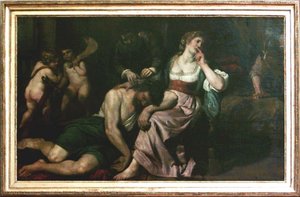
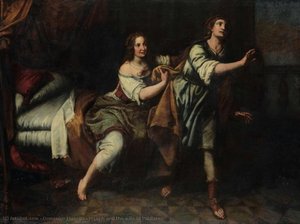
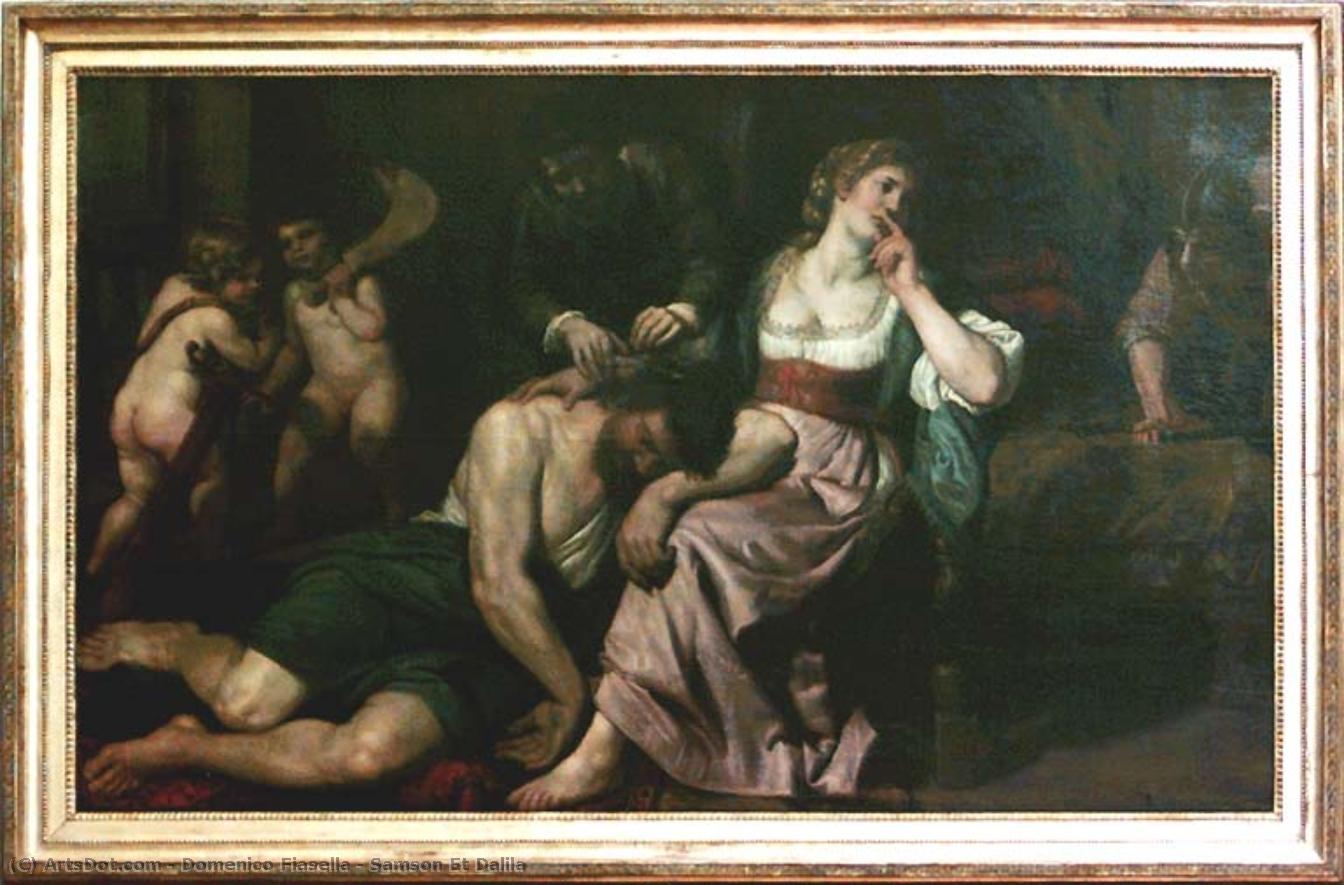
To stand before Domenico Fiasella’s Samson Et Dalila is to be enveloped in the very breath of Baroque drama. This masterpiece, painted in 1635, is not merely a depiction of a biblical narrative; it is a visceral exploration of temptation, vulnerability, and the devastating cost of misplaced trust. The scene unfolds with an almost unbearable tension, capturing that precise moment when divine strength falters under the weight of human deceit. Fiasella masterfully orchestrates his figures within what appears to be a richly appointed, luxurious chamber—a setting that speaks both of opulence and impending ruin.
Baroque Grandeur in Technique and Form
Fiasella’s technical prowess is immediately apparent upon viewing the canvas. The painting pulses with the characteristic energy of the Baroque period, favoring movement, intense emotion, and theatrical lighting. Observe the handling of light; it does not merely illuminate, it sculpts. Through a masterful application of chiaroscuro, deep shadows cling to the corners of the architectural setting, while brilliant shafts of light catch the taut musculature of Samson and the delicate folds of Dalila’s garments. This dramatic contrast heightens every gesture, turning fabric into liquid shadow and skin into luminous planes. The artist’s background in craftsmanship lends a meticulous realism to the rendering of texture—the sheen on rich fabrics contrasting sharply with the soft vulnerability portrayed on the figures' flesh.
Symbolism Woven into Flesh and Hair
The narrative itself is steeped in potent symbolism. Samson, once a figure of immense, divinely granted power, lies defeated, his physical state serving as a profound metaphor for compromised virtue or lost spiritual fortitude. Dalila, conversely, embodies the alluring danger—the seductive whisper that leads to downfall. Her contemplative gaze suggests an understanding of the power she wields, making her presence both mesmerizing and deeply unsettling. The very act depicted—the severing of Samson’s hair—is a potent symbol in art history, representing not just physical weakness, but the severance of divine connection or masculine identity itself. These symbolic undercurrents elevate the piece far beyond simple storytelling.
A Study in Emotional Intensity for the Modern Collector
For those who appreciate art that speaks directly to the human condition—the peaks of passion and the valleys of despair—this work offers profound resonance. The emotional impact is immediate; one feels the weight of the secret whispered, the gravity of the betrayal. When considering a reproduction for your home or collection, know that you are acquiring more than just an image; you are acquiring a moment of high drama, rendered with academic precision and passionate flair. Fiasella’s ability to balance such intense psychological complexity within a framework of classical grandeur makes Samson Et Dalila a timeless centerpiece, capable of lending both historical weight and dramatic vitality to any interior space.
Related Artworks
Artist Biography
Domenico Fiasella: A Genoese Baroque Visionary
Domenico Fiasella (1589 – 1669), affectionately nicknamed “Il Sarzana,” stands as a pivotal figure in the Genoese Baroque artistic landscape. Born in C, he descended from a silversmith family and received an early education in craftsmanship under Aurelio Lomi and Giovanni Battista Paggi—a formative experience that instilled a meticulous attention to detail – a characteristic that would permeate his prolific output. His journey began with studies at Rome’s Accademia del Nudo, where he honed his artistic skills under the tutelage of Guido Reni and ciriaco mattei, securing commissions from influential patrons like Vincenzo giustiniani and propelling him into collaborations with celebrated artists such as Cavalier d'arpino.- Early Career & Patronage: Fiasella’s initial success stemmed from recognition by prominent academicians – Reni and Mattei – who championed his talent, securing commissions from wealthy patrons like Vincenzo giustiniani and fostering connections with fellow artists of distinction.
- Roman Influences: His time in Rome profoundly impacted his artistic sensibilities, exposing him to the stylistic innovations of Mannerism and paving the way for a more dynamic Baroque approach.
- Notable Commissions: Among his most significant undertakings were depictions of Christ Healing the Blind and Christ Raising the Son of Nain – masterpieces bequeathed to the John and Mable Ringling Museum of Art upon Fiasella’s passing—and Queen Artemisia, commissioned by Cardinal Ludovico Carafa di Montepulciano.
- Genoese Studio & Apprenticeship: Fiasella’s studio in Genoa served as a crucible for artistic innovation, nurturing talent and fostering collaborative endeavors with fellow artists like Giacomo Legi.
- Mentorship Legacy: He imparted his knowledge to numerous pupils—among them Angelica Veronica Airola, Valerio Castelli, Francesco Gentileschi—leaving an indelible mark on the Genoese Baroque tradition.
- Collaborations & Artistic Dialogue: His partnerships with Giacomo Legi exemplify the artistic exchange characteristic of the period, reflecting broader trends in European art history.
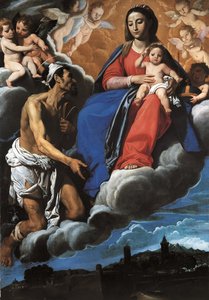
Domenico Fiasella
1589 - 1669
Quick Facts
- Artistic Movement Or Style: Baroque
- Artists Or Movements Influenced By This Artist: ['Roman Baroque']
- Artists Who Influenced This Artist: ['Guido Reni']
- Date Of Death: 1669
- Full Name: Domenico Fiasella
- Nationality: Italian
- Notable Artworks:
- Christ Healing Blind
- Flight into Egypt
- Queen Artemisia
- The Mocking of Christ
- Samson and the Lion
- Place Of Birth: C
Related Articles

The Dramatic Flourish: Exploring the Baroque Movement's Enduring Legacy in Art History
Explore the dramatic world of Baroque art! Discover iconic artists like Caravaggio & Rubens, defining techniques, and its lasting impact on art history. Expert insights for collectors & enthusiasts at ArtsDot.

The Visceral Stage: Exploring Dramatic Narratives & Emotional Intensity in Baroque Art
Explore the dramatic world of Baroque art! Discover iconic masters like Caravaggio & Rembrandt, their techniques, and the movement's lasting impact. Expert insights for collectors & enthusiasts at ArtsDot.

Baroque Drama: Bringing Opulence & Emotion into Contemporary Interiors
Explore the opulent world of Baroque interior design! Discover key elements, modern applications & how to bring dramatic elegance into your home with 's authentic reproductions.

Baroque Masterpieces: 10 Paintings That Defined an Era |
Journey through the drama & grandeur of Baroque art! Explore 10 masterpieces by Caravaggio, Rembrandt, Rubens & more. Discover stunning oil paintings, rich colors & timeless stories. Find museum-quality reproductions at .
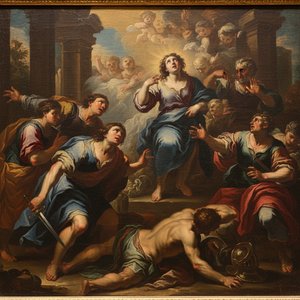
The Dramatic Flourish: Exploring Baroque Painting's Emotional Intensity & Artistic Innovations
Explore the dramatic world of Baroque painting! Discover its history, defining characteristics, iconic artists like Caravaggio & Rubens, and lasting influence on Western art. Expert insights for collectors.