 Preview
 Send
Send Share
Share
 Details

 Download
 Similars
 X-Ray
X-Ray Diaporama
Matyrdom of St Rufina and St Seconda
 Acrylic On Canvas
- WallArt
- Baroque
 1625
1625 192.0 x 192.0 cm
 Pinacoteca di Brera
 Read More
Hand Made Oil Reproduction
Hand-painted oil on canvas in your size and frame, made to order by our artists. ( Buy Print Buy Image)




P118B $10

P118H $10

P118W $10

P438Z $10

P508JH $12

P508YH $12

P805H $10

P805Z $10

P919BZ $10

P919G $10

P919XJ $10

P959ZH $10

P968JZ $12

W106C $8

W218G $10

W218JH $8

W218Y $10

W307PJ $10

W316G $10

W316PJ $8

W316Y $10

W398PJ $8

W4111J $10

W500HY $15

W500JH $15

W692G $12

W849H $8

W940BG $15

W953PJ $8




Pick from our preset sizes that match the artwork's original proportions.

You may enter your own dimensions to fit a specific frame or space. If your selected size does not match the original image's proportions, we will either crop the artwork or extend the painting with additional hand-painted elements. A digital mockup will be sent for your approval before production begins.
Please note that the on-screen preview does not reflect the actual cropping or extension. Only the mockup will accurately show the final composition.
While custom sizes are available, we recommend selecting a dimension from the predefined list to preserve the original proportions.
After order, ArtsDot.com team will email client for instructions and provide a mockup preview
Worldwide Delivery () in 3/4 weeks instead of standard 5 weeks. (16 August). No compromise on quality.

Free Worldwide Express Shipping

High-Quality Linen Canvas

Full Shipping Insurance

Customs Tax Refund Guarantee

True Color Matching Guarantee

60-Day Return Policy (Defects Only)

100% Money-Back Guarantee

Bulk Discount Offer
 Glass option is only available in size under 110 CM

Matyrdom of St Rufina and St Seconda
Reproduction Medium
Reproduction Size
-


Total Price
$ 263
Artwork Description
The Martyrdom’s Echo: Procaccini's Dramatic Depiction of St. Rufina and St. Seconda
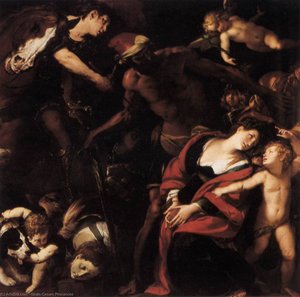
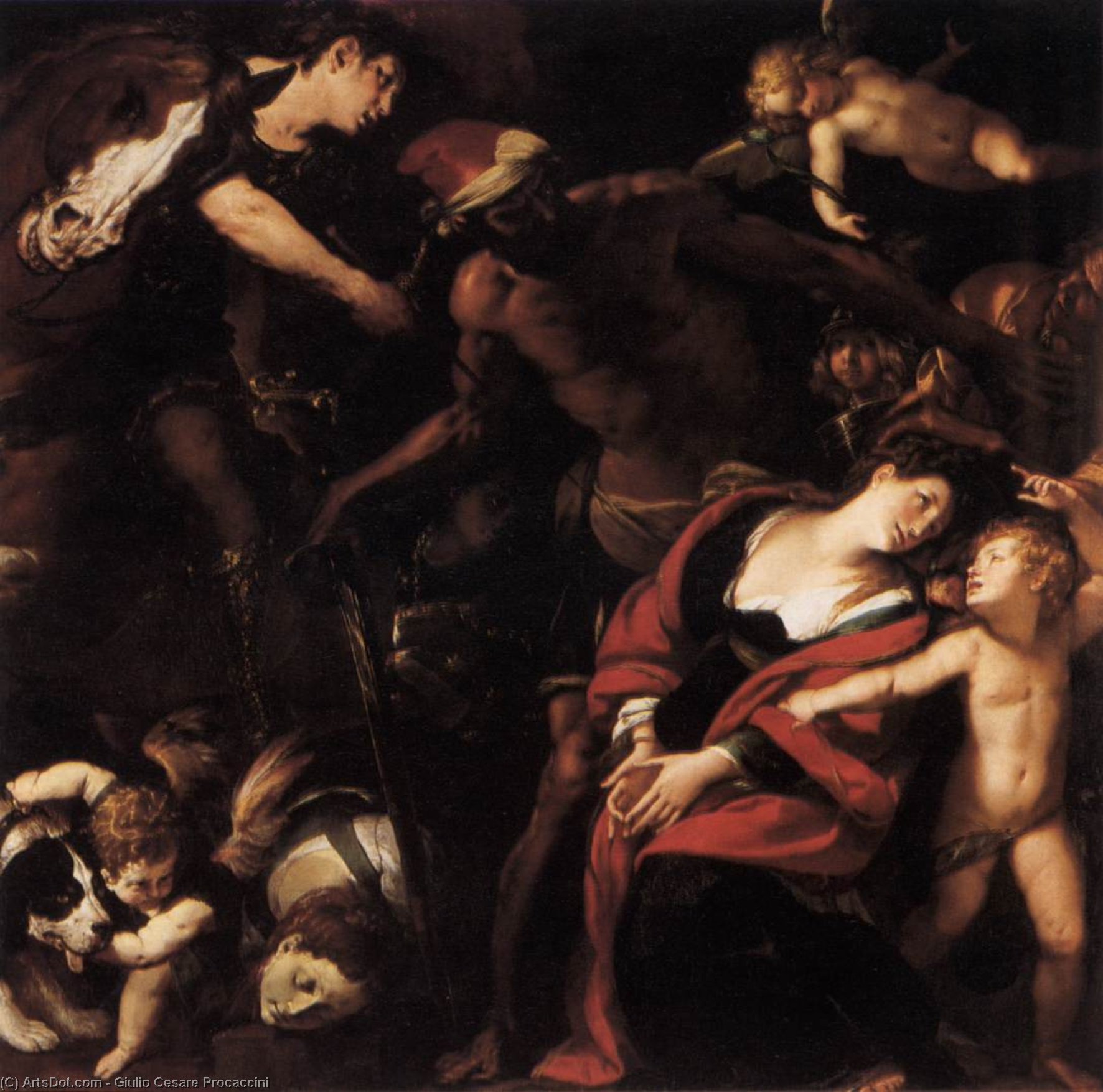
Giulio Cesare Procaccini’s “Matyrdom of St. Rufina and St. Seconda,” painted in 1625, is not merely a historical depiction; it’s a visceral plunge into the heart of faith tested by brutal suffering. This arresting canvas, measuring a substantial 192 x 192 cm, transcends simple narrative to become a profound meditation on sacrifice, hope, and divine grace. Procaccini, a pivotal figure in the burgeoning artistic landscape of early Baroque Milan, masterfully captures a moment suspended between agony and salvation, drawing upon both Mannerist elegance and the dynamic energy that would define the era. The painting’s power resides not just in its dramatic subject matter – the beheading of two Christian saints – but in Procaccini's skillful orchestration of light, shadow, and gesture, creating an intensely emotional experience for the viewer.A Baroque Drama Unfolds: Composition and Technique
Procaccini’s approach to this scene is remarkably innovative for its time. He eschews the rigid, often didactic style favored by the Counter-Reformation, instead embracing a theatricality that anticipates the full flowering of Baroque drama. The composition itself is carefully constructed, guiding the eye through a complex interplay of figures and spatial relationships. The central focus is undeniably the two saints – St. Rufina, still alive but poised on the precipice of death, and St. Seconda already fallen victim to the sword. The executioner, rendered in stark silhouette, appears almost as an afterthought, his action swift and brutal, yet subtly distanced from the primary drama. Noticeably, Procaccini employs a technique reminiscent of Parmigianino – a deliberate flattening of perspective, a prioritization of gesture over realistic detail, and a heightened sense of theatricality. The use of chiaroscuro—the dramatic contrast between light and dark—is particularly effective, intensifying the emotional impact of the scene and emphasizing the vulnerability of the saints. The painting’s palette is rich and deep, dominated by reds, browns, and blacks, reflecting the solemnity of the event while simultaneously hinting at the impending glory awaiting the martyrs.Symbolism and Spiritual Resonance
Beyond its immediate depiction of violence, “Matyrdom of St. Rufina and St. Seconda” is laden with symbolic meaning. The angel hovering above St. Rufina isn’t simply a comforting presence; he represents divine intervention and the promise of eternal reward. His outstretched hand, pointing upwards, signifies not just salvation but also an invitation to transcend earthly suffering. The dog present in the lower left corner adds another layer of symbolism – often associated with fidelity and loyalty, it serves as a poignant reminder of the saints’ unwavering devotion. The inclusion of the horse's head, a detail frequently noted by art historians, is particularly intriguing. Some interpret it as representing the Roman Empire—the source of their persecution—while others see it as a symbol of earthly power being overthrown by divine justice. The overall effect is one of profound spiritual resonance, inviting contemplation on themes of faith, sacrifice, and the enduring nature of hope in the face of adversity.A Legacy of Baroque Innovation
Giulio Cesare Procaccini’s “Matyrdom of St. Rufina and St. Seconda” stands as a crucial work in his artistic development and a testament to the evolving aesthetic sensibilities of early Baroque Milan. His collaboration with Giovanni Battista Crespi, Pier Francesco Mazzucchelli, and Cardinal Federico Borromeo within the framework of the Quadroni project—a series of monumental paintings commissioned to celebrate Charles Borromeo’s canonization—allowed him to hone his skills and experiment with new approaches to composition and color. The painting's influence can be seen in subsequent works by Procaccini, as well as in the broader artistic landscape of the period. It represents a pivotal moment in the transition from Mannerism to Baroque, demonstrating a willingness to embrace dramatic intensity and emotional expression while retaining a sophisticated sense of form and technique. Reproductions of this powerful artwork offer a glimpse into a world where faith, art, and drama converged to create an enduring legacy of spiritual significance.Related Artworks
Artist Biography
The Master of Milanese Drama: The Life and Legacy of Giulio Cesare Procaccini
Giulio Cesare Procaccini stands as a pivotal figure in the burgeoning artistic landscape of early Baroque Milan, marking a decisive transition from Mannerist formalism to the expressive dynamism that would define an era. Born in Bologna in 1574, he descended from a lineage steeped in profound artistic tradition; his father, Ercole Procaccini the Elder, was himself a notable Mannerist painter. This heritage profoundly shaped his formative years, instilling within him an appreciation for nuanced stylistic complexities and a technical rigor that would later allow him to masterfully blend grace with grandeur. Around 1585, spurred by the influential patronage of Pierro Visconti, the family relocated to Milan, establishing a crucial connection with one of Italy’s wealthiest art collectors and fostering an environment ripe for the artistic experimentation that would become Procaccini's hallmark.
The artist's creative journey began not with the brush, but with the chisel. His early training was rooted in sculptural endeavors, primarily focused on the sacred spaces of the Milanese Duomo and Santa Maria presso San Celso. This tactile foundation in sculpture left an indelible mark on his later paintings, manifesting in a unique sense of volume, weight, and anatomical presence. However, he eventually transitioned to painting, recognizing its unparalleled capacity for conveying intense emotion and celestial light. During this period of development, Procaccini moved within the highest intellectual circles of Milan, associating with luminaries such as Giovanni Battista Crespi, known as Il Cerano, and Pier Francesco Mazzucchelli, or Il Morazzone. Under the spiritual and material guidance of Cardinal Federico Borromeo, Procaccini's creative output was propelled toward greatness, allowing him to capture the very spirit of the Counter-Reformation.
A Symphony of Light and Devotion
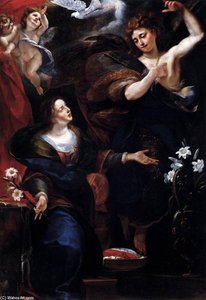
Procaccini’s mature style is a breathtaking synthesis of various European influences, most notably the vibrant colorism of the Venetian school and the sweeping, energetic compositions of Peter Paul Rubens. His works are characterized by a dramatic use of chiaroscuro, where deep shadows dance against luminous highlights to create a sense of theatrical movement. In masterpieces such as The Annunciation, one can witness this Baroque drama firsthand, as vibrant colors and swirling drapery evoke a profound sense of divine intervention. His ability to manipulate light allowed him to breathe life into religious narratives, transforming static icons into living, breathing moments of spiritual ecstasy.
His technical prowess is perhaps most evident in his large-scale religious commissions, which served both as artistic triumphs and instruments of faith. Notable examples include:
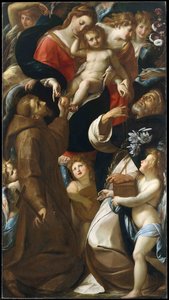
- Madonna and Child with Sts Francis and Dominic and Angels: A monumental oil on canvas commissioned for the church of Madonna dei Miracoli in Corbetta, where he masterfully blends Mannerist elegance with a new, surging Baroque energy.
- The Six Quadroni: Perhaps his most celebrated achievement, these large canvases depicting Saint Charles Borromeo were commissioned for the Basilica della Santissima Annunziata del Vastato in Genoa, showcasing his ability to handle epic, monumental scale.
- St Sebastian Tended by Angels: A work that highlights his delicate touch and his ability to weave together themes of suffering and divine tenderness through fluid, rhythmic compositions.
Historical Significance and Artistic Triumph
The historical significance of Giulio Cesare Procaccini lies in his role as a bridge between two worlds. He took the sophisticated, often artificial elegance of the Mannerist period and infused it with a new, visceral humanity that resonated with the religious fervor of 17th-century Italy. His work does not merely depict a scene; it invites the viewer into a sensory experience of the divine. Through his mastery of color, light, and movement, he helped establish Milan as a major center of Baroque excellence, leaving behind a legacy of altarpieces and frescoes that continue to captivate the modern imagination with their profound emotional depth and technical brilliance.
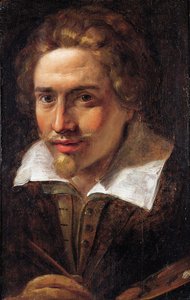
Giulio Cesare Procaccini
1574 - 1625 , Italy
Quick Facts
- Artistic Movement Or Style: Baroque
- Artists Or Movements Influenced By This Artist: ['Rubens']
- Artists Who Influenced This Artist: ['Ercole Procaccini']
- Date Of Birth: 1574 Bologna, Italy
- Date Of Death: 1625 Milan, Italy
- Full Name: Giulio Cesare Procaccini
- Nationality: Italian
- Notable Artworks:
- St Sebastian Tended by Angels
- Holy Family with John the Baptist and an Angel
- Circumcision
- Last Supper
- Scourging of Christ
- Ecce Homo
- Place Of Birth: Bologna
Related Articles

Baroque Drama: Bringing Opulence & Emotion into Contemporary Interiors
Explore the opulent world of Baroque interior design! Discover key elements, modern applications & how to bring dramatic elegance into your home with 's authentic reproductions.

Simon Vouet: A Baroque Master's Journey from Italian Influence to French Classicism
Explore the life & art of Simon Vouet, a pivotal French Baroque painter who introduced Italian styles to France. Discover his masterpieces and lasting influence on 17th-century art.

Baroque Masterpieces: 10 Paintings That Defined an Era |
Journey through the drama & grandeur of Baroque art! Explore 10 masterpieces by Caravaggio, Rembrandt, Rubens & more. Discover stunning oil paintings, rich colors & timeless stories. Find museum-quality reproductions at .

The Visceral Stage: Exploring Dramatic Narratives & Emotional Intensity in Baroque Art
Explore the dramatic world of Baroque art! Discover iconic masters like Caravaggio & Rembrandt, their techniques, and the movement's lasting impact. Expert insights for collectors & enthusiasts at ArtsDot.

The Dramatic Flourish: Exploring the Baroque Movement's Enduring Legacy in Art History
Explore the dramatic world of Baroque art! Discover iconic artists like Caravaggio & Rubens, defining techniques, and its lasting impact on art history. Expert insights for collectors & enthusiasts at ArtsDot.