 Preview
 Send
Send Share
Share
 Details

 Download
 Similars
 X-Ray
X-Ray Diaporama
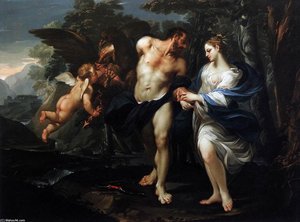
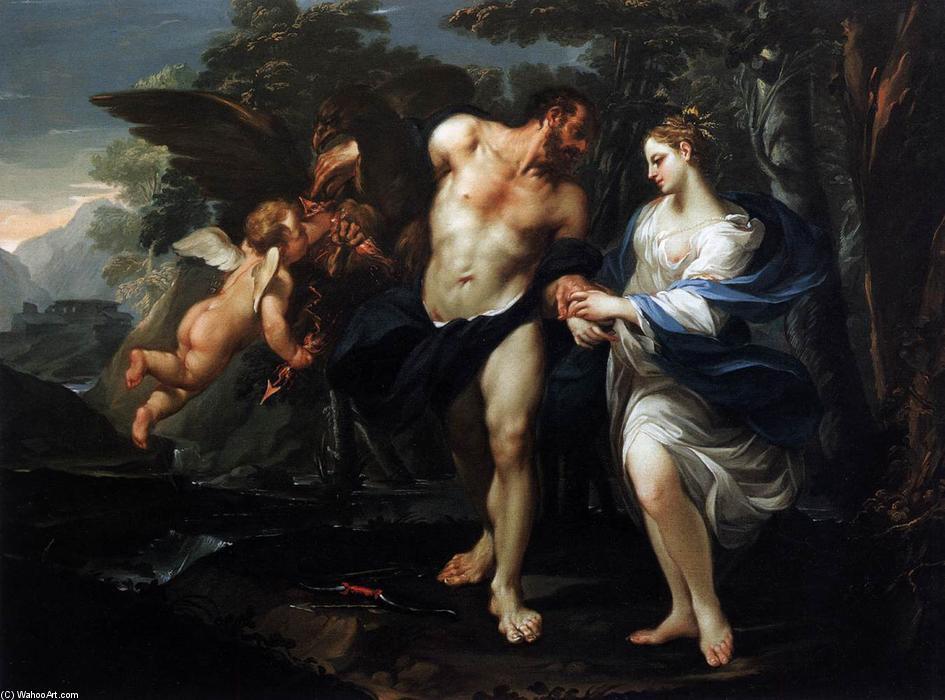
Jupiter Bids Ceres Farewell
 Baroque
 1701
1701 61.0 x 75.0 cm
 Academy of Fine Arts Vienna
 Read More
Hand Made Oil Reproduction
Hand-painted oil on canvas in your size and frame, made to order by our artists. ( Buy Print Buy Image)




































Pick from our preset sizes that match the artwork's original proportions.

You may enter your own dimensions to fit a specific frame or space. If your selected size does not match the original image's proportions, we will either crop the artwork or extend the painting with additional hand-painted elements. A digital mockup will be sent for your approval before production begins.
Please note that the on-screen preview does not reflect the actual cropping or extension. Only the mockup will accurately show the final composition.
While custom sizes are available, we recommend selecting a dimension from the predefined list to preserve the original proportions.
After order, ArtsDot.com team will email client for instructions and provide a mockup preview
Worldwide Delivery () in 3/4 weeks instead of standard 5 weeks. (21 August). No compromise on quality.

Free Worldwide Express Shipping

High-Quality Linen Canvas

Full Shipping Insurance

Customs Tax Refund Guarantee

True Color Matching Guarantee

60-Day Return Policy (Defects Only)

100% Money-Back Guarantee

Bulk Discount Offer
 Glass option is only available in size under 110 CM

Jupiter Bids Ceres Farewell
Reproduction Medium
Reproduction Size
-


Total Price
$ 263
Related Artworks
Artist Biography
Early Life and Formation in the Bolognese Tradition
Domenico Maria Viani, born in Bologna in 1636, emerged from a lineage steeped in artistic practice. His father, Giovanni Maria Viani, was an established painter who maintained a rival academy to that of the more renowned Carlo Cignani—a dynamic tension that would shape young Domenico’s early development. This familial and competitive environment instilled within him not only technical skill but also a keen awareness of the evolving stylistic currents within the Bolognese art world. Bologna at this time was a vibrant center for painting, carrying forward the legacy of the Carracci brothers and their emphasis on classical ideals blended with dramatic realism. Domenico’s initial training under his father provided a solid foundation in meticulous observation and skillful execution, mirroring the humanist principles prevalent during the Baroque period.
A Style Forged Between Classicism and Venetian Color
While firmly rooted in the Bolognese tradition, Viani's artistic journey wasn’t confined to its established boundaries. He embarked on a study trip to Venice in the 1690s, immersing himself in the works of the old Venetian masters. This exposure proved transformative, infusing his paintings with a richer palette and a more atmospheric quality. The influence of artists like Titian and Veronese is subtly discernible in Viani’s later work—a blending of Bolognese classicism with the luminous colorism characteristic of Venice. His distinctive style embraced precise anatomical detail combined with expressive gestures and a heightened sense of emotionality, creating compositions that were both intellectually rigorous and visually captivating.
Notable Commissions and Religious Devotion
Viani quickly gained recognition for his talent, securing prestigious commissions from influential ecclesiastical patrons. Among his most celebrated achievements are the frescoes adorning the Church of La Natività in Bologna—a series depicting Prophets and Evangelists with meticulous detail and imbued with palpable emotion. These works demonstrate his mastery of narrative storytelling and his ability to convey spiritual depth through visual means. Another significant commission came from the church of Santo Spirito in Bergamo, where he painted a *Miracle of St Antony of Padua*. This altarpiece is considered one of the most poignant expressions of Baroque piety—a work that continues to inspire admiration for its emotional resonance and artistic virtuosity.
The Disappearance at Pistoia and Enduring Legacy
Despite his growing reputation, Viani’s career took an enigmatic turn. He disappeared in Pistoia around 1700, where he is believed to have died. The circumstances surrounding his final years remain shrouded in mystery, adding a layer of intrigue to his biography. Nevertheless, Domenico Maria Viani left behind a substantial body of work that contributed significantly to the late Baroque tradition in Emilia-Romagna. His paintings—characterized by their devout subject matter, precise execution, and emotional depth—continue to be admired for their artistic merit and historical significance. He stands as a testament to the enduring power of religious art and the vibrant creative spirit of 17th-century Italy.
Viani’s Place in Art History
- Influences: Carlo Cignani, Titian, Veronese, Bolognese School of painting
- Key Characteristics: Baroque style, religious themes, precise anatomical detail, expressive gestures, luminous colorism.
- Major Works: Frescoes in the Church of La Natività (Bologna), *Miracle of St Antony of Padua* (Santo Spirito, Bergamo).
- Historical Significance: Contributed to the late Baroque tradition in Emilia-Romagna; blended Bolognese classicism with Venetian colorism.
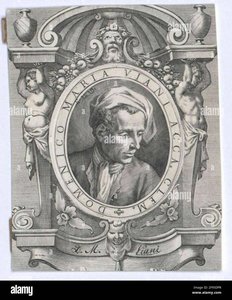
Domenico Maria Viani
1636 - 1700 , Italy
Quick Facts
- Artistic Movement Or Style: Baroque
- Artists Or Movements Influenced By This Artist: ['Italian Renaissance Art']
- Artists Who Influenced This Artist: ['carlo cignani']
- Date Of Birth: 1636
- Full Name: domenico maria viani
- Nationality: Italian
- Notable Artworks:
- Jupiter Bids Ceres Farewell
- Campo Dei Gesuiti
- Santa Maria Maddalena dei Pazzi
- Santa Maria della Carità
- Place Of Birth: Bologna, Italy
Related Articles

Baroque Drama: Bringing Opulence & Emotion into Contemporary Interiors
Explore the opulent world of Baroque interior design! Discover key elements, modern applications & how to bring dramatic elegance into your home with 's authentic reproductions.

The Dramatic Flourish: Exploring the Baroque Movement's Enduring Legacy in Art History
Explore the dramatic world of Baroque art! Discover iconic artists like Caravaggio & Rubens, defining techniques, and its lasting impact on art history. Expert insights for collectors & enthusiasts at ArtsDot.

Baroque Masterpieces: 10 Paintings That Defined an Era |
Journey through the drama & grandeur of Baroque art! Explore 10 masterpieces by Caravaggio, Rembrandt, Rubens & more. Discover stunning oil paintings, rich colors & timeless stories. Find museum-quality reproductions at .

The Visceral Stage: Exploring Dramatic Narratives & Emotional Intensity in Baroque Art
Explore the dramatic world of Baroque art! Discover iconic masters like Caravaggio & Rembrandt, their techniques, and the movement's lasting impact. Expert insights for collectors & enthusiasts at ArtsDot.
Echoes of Olympus: Mythological Narratives in Western Art Through the Ages
Explore the captivating history of mythological narratives in Western art! From ancient Greece to modern masterpieces, discover iconic artworks & symbolism. Expert analysis and high-quality reproductions at ArtsDot.