 Preview
 Send
Send Share
Share
 Details

 Download
 Similars
 X-Ray
X-Ray Diaporama
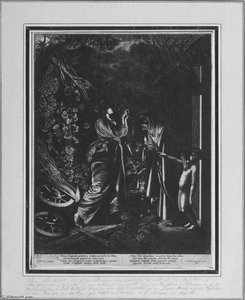
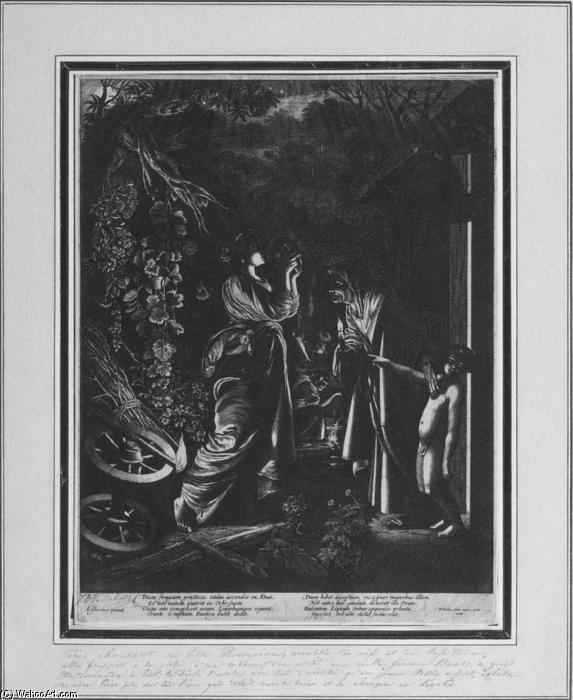
Stellion Insulting Ceres
 Etching
- WallArt
- Baroque
 1646
1646 303.0 x 234.0 cm
 Hermitage Museum
 Read More
Hand Made Oil Reproduction
Hand-painted oil on canvas in your size and frame, made to order by our artists. ( Buy Print Buy Image)




P118B $10

P118H $10

P118W $10

P438Z $10

P508JH $12

P508YH $12

P805H $10

P805Z $10

P919BZ $10

P919G $10

P919XJ $10

P959ZH $10

P968JZ $12

W106C $8

W218G $10

W218JH $8

W218Y $10

W307PJ $10

W316G $10

W316PJ $8

W316Y $10

W398PJ $8

W4111J $10

W500HY $15

W500JH $15

W692G $12

W849H $8

W940BG $15

W953PJ $8




Pick from our preset sizes that match the artwork's original proportions.

You may enter your own dimensions to fit a specific frame or space. If your selected size does not match the original image's proportions, we will either crop the artwork or extend the painting with additional hand-painted elements. A digital mockup will be sent for your approval before production begins.
Please note that the on-screen preview does not reflect the actual cropping or extension. Only the mockup will accurately show the final composition.
While custom sizes are available, we recommend selecting a dimension from the predefined list to preserve the original proportions.
After order, ArtsDot.com team will email client for instructions and provide a mockup preview
Worldwide Delivery () in 3/4 weeks instead of standard 5 weeks. (20 August). No compromise on quality.

Free Worldwide Express Shipping

High-Quality Linen Canvas

Full Shipping Insurance

Customs Tax Refund Guarantee

True Color Matching Guarantee

60-Day Return Policy (Defects Only)

100% Money-Back Guarantee

Bulk Discount Offer
 Glass option is only available in size under 110 CM

Stellion Insulting Ceres
Reproduction Medium
Reproduction Size
-


Total Price
$ 288
Artwork Description
The Mocking of Ceres: A Baroque Dance of Power and Discontent
Wenceslaus Hollar’s “Stellion Insulting Ceres,” etched in 1646, is not merely a depiction of a classical myth; it's a meticulously crafted tableau brimming with psychological tension and subtle commentary on the precarious balance of power. Within the confines of the Hermitage Museum’s collection, this work transcends its subject matter to become a potent meditation on ambition, defiance, and the inherent vulnerability of authority. Hollar, a master of the Baroque era, elevates the narrative beyond simple illustration, transforming it into a complex visual argument rendered with astonishing detail and a masterful command of etching technique.
The scene itself is immediately arresting: Ceres, the Roman goddess of agriculture and harvest, sits regally upon a mound of grain – a symbol of her dominion over abundance. Yet, she’s not basking in triumph; instead, she appears besieged by Stellion, a youthful figure who aggressively confronts her with a pointed gesture. The composition isn't one of straightforward combat, but rather a carefully orchestrated dance of challenge and resistance. Hollar employs dramatic lighting – pools of shadow contrasting sharply with illuminated areas – to heighten the sense of drama and emphasize the figures’ postures. Notice how Ceres maintains an air of dignified composure despite the directness of Stellion’s attack; her gaze is fixed, resolute, while Stellion embodies youthful impudence and a blatant disregard for established order.
A Masterclass in Baroque Etching
Hollar's skill as an engraver is immediately apparent. The etching showcases his extraordinary ability to render texture and form with remarkable precision. The intricate details of the grain pile, the folds of Ceres’ robes, and even the individual strands of Stellion’s hair are rendered with painstaking accuracy. This level of detail wasn’t simply for aesthetic effect; it served to amplify the sense of realism and immediacy within the scene. The use of *cross-hatching*, a technique fundamental to etching, creates a rich tapestry of tones and shadows, adding depth and volume to the figures and background elements. Furthermore, Hollar expertly manipulated the line quality – varying the thickness and pressure applied to the metal plate to create subtle shifts in value and texture, contributing significantly to the overall atmospheric effect.
The choice of medium itself is significant. Etching, a subtractive process involving acid biting into a metal plate, allowed Hollar to achieve an unparalleled level of detail and tonal control. It was particularly well-suited for depicting complex scenes with intricate patterns and textures – qualities that are abundantly present in “Stellion Insulting Ceres.” The result is a work that feels both meticulously crafted and remarkably alive.
Myth, Power, and the Seeds of Rebellion
The myth underpinning this etching—the story of Stellion’s audacious insult to Ceres – provides a framework for interpreting the artwork's deeper meanings. Stellion, often identified as a young satyr or mischievous god, represents youthful rebellion and a challenge to established authority. His act of defiance is not presented as heroic; rather, it’s depicted with a certain impudence, suggesting a disregard for tradition and social norms. Ceres, on the other hand, embodies the established order – the stability and prosperity that are threatened by such challenges.
However, Hollar doesn't offer a simplistic moral judgment. The scene is imbued with ambiguity; it’s not clear whether Stellion’s actions are entirely justified or simply foolish. The etching subtly suggests that even established power can be vulnerable to disruption and that youthful defiance, while potentially disruptive, may also hold the seeds of progress. It's a nuanced portrayal of power dynamics, reflecting the turbulent political and social climate of 17th-century Europe.
A Timeless Resonance: Symbolism and Emotional Impact
Beyond its historical context, “Stellion Insulting Ceres” resonates with timeless themes of conflict, ambition, and the struggle for dominance. The image’s enduring appeal lies in its ability to evoke a range of emotions – from admiration for Hollar's technical mastery to contemplation on the complexities of human interaction. The scene’s inherent tension—the clash between established authority and youthful rebellion—continues to captivate viewers centuries after it was created.
Reproductions of this artwork offer an exceptional opportunity to bring its intricate details and evocative atmosphere into any interior space. The rich tonal range and dramatic lighting create a focal point that commands attention, while the subtle symbolism invites ongoing interpretation. Whether displayed in a grand salon or a more intimate setting, “Stellion Insulting Ceres” remains a powerful testament to Hollar’s artistic genius and a captivating window into the complexities of human nature.
Related Artworks
Artist Biography
Jean-Antoine Watteau: The Poet of Light and Illusion
Jean-Antoine Watteau, a name synonymous with the Rococo era in French art, remains one of the most enigmatic and profoundly influential figures of the 18th century. Born in Valenciennes in 1684 into a modest family – his father a roofer – Watteau’s life was tragically short, ending prematurely at just 36 years old. Yet, within those fifteen brief years, he managed to revolutionize painting, shifting its focus from the weighty formality of the Baroque towards a lighter, more sensual, and ultimately dreamlike aesthetic. His legacy lies not in grand historical narratives or religious commissions, but in his invention of *fêtes galantes*, scenes that captured the fleeting pleasures and romantic ideals of Parisian society – a world of masked balls, leisurely picnics, and imagined encounters bathed in an ethereal glow.
Watteau’s early life was marked by instability and hardship. His father's volatile nature and his own sensitive disposition created a challenging environment. Despite this, he displayed an early passion for art, likely beginning his training as a young boy under the guidance of local painters in Valenciennes. Moving to Paris around 1702, he initially found himself working in a workshop producing copies of devotional images – a far cry from the artistic aspirations that burned within him. This period of relative obscurity, however, proved invaluable, providing him with a foundation in technique and allowing him to meticulously study the nuances of observation and composition. Crucially, it was during this time he encountered Claude Gillot, a master of theatrical fantasy who profoundly shaped Watteau’s artistic vision, introducing him to the world of *commedia dell'arte* and inspiring his fascination with stagecraft and illusion.
The Rise of the Fête Galante
Watteau’s breakthrough came through his association with Pierre Crozat, a wealthy art collector and influential figure in Parisian society. Crozat recognized Watteau’s unique talent and provided him with patronage, allowing him to develop his distinctive style. It was under Crozat's protection that Watteau began to explore the *fêtes galantes*, a genre he essentially invented. These paintings depict idyllic scenes of aristocratic gatherings – masked balls, leisurely picnics in lush landscapes, and romantic encounters – often imbued with an air of wistful melancholy. Unlike traditional history painting or portraiture, *fêtes galantes* avoided explicit narrative; instead, they focused on capturing the atmosphere, mood, and fleeting emotions of the moment. The figures are typically dressed in elaborate costumes, suggestive of the opéra ballet, and their poses are graceful and languid, reflecting the elegance and sophistication of Parisian high society.
Watteau’s approach to composition was equally innovative. He frequently employed a technique known as *sfumato*, blurring outlines and softening edges to create an atmospheric haze that enveloped his scenes. His use of color was particularly remarkable – he eschewed the harsh contrasts of the Baroque in favor of delicate pastel shades, creating a luminous and ethereal effect. The backgrounds are often fantastical landscapes, painted with meticulous detail but rendered in a dreamlike manner, further enhancing the sense of illusion and escape.
Influences and Artistic Development
Watteau’s artistic development was profoundly influenced by several key figures. His early exposure to Jacques Callot's prints sparked his interest in theatricality and the depiction of human emotion. The works of Correggio and Rubens, particularly their mastery of color and movement, served as models for his own compositions. He deeply admired the Venetian painters, whose use of light and atmosphere he sought to emulate. Crucially, Watteau’s artistic vision was shaped by the prevailing trends in interior design – the rise of *chinoiserie* and the popularity of arabesque patterns inspired him to create paintings that were both decorative and emotionally evocative.
Despite his growing fame, Watteau faced significant challenges. He never received the opportunity to study in Italy, a traditional pathway for aspiring artists, and he was initially rejected by the Royal Academy of Painting and Sculpture. However, his talent eventually earned him acceptance into the academy in 1712, where he presented his reception piece, *Pilgrimage to Cythera*, which solidified his reputation as a leading figure in French art.
Legacy and Historical Significance
Watteau’s impact on the development of Rococo art is undeniable. He shifted the focus of painting away from grand historical narratives towards a more intimate and sensual style, capturing the fleeting pleasures and romantic ideals of Parisian society. His invention of *fêtes galantes* established a new genre that was eagerly embraced by artists throughout Europe. Watteau’s influence extended beyond his own paintings; he inspired generations of artists to explore themes of beauty, illusion, and the ephemeral nature of human experience.
Despite his tragically short life, Watteau left behind a remarkable body of work – approximately 300 paintings, drawings, and prints. His art continues to captivate audiences today with its delicate beauty, ethereal atmosphere, and profound sense of melancholy. Watteau’s legacy is not simply as a painter; he was a poet of light and illusion, a master of capturing the fleeting moments of beauty and romance that define the human experience.
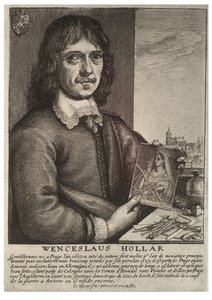
wenceslaus hollar
1684 - 1756 , Czech Republic
Quick Facts
- Artistic Movement Or Style: Rococo, Singerie
- Artists Or Movements Influenced By This Artist:
- Lancret
- Pater
- Régence style
- Artists Who Influenced This Artist:
- Claude Gillot
- Rubens
- Correggio
- Date Of Birth: Oct 10, 1684
- Date Of Death: July 18, 1721
- Full Name: Jean-Antoine Watteau
- Nationality: French
- Notable Artworks:
- Pilgrimage to Cythera
- Italian Comedians
- Gersaint’s Shopsign
- Place Of Birth: Valenciennes, France
Related Articles
Etching Masters: 10 Legendary Prints That Revolutionized Art | ArtsDot
Journey through 10 legendary etching masterpieces by Rembrandt, Dürer & Goya. Explore the history of printmaking and discover timeless art for your home. Find museum-quality reproductions at ArtsDot.com.

Etching: A Historical Survey of Technique, Aesthetic Qualities & Enduring Artistic Significance
Explore the rich history of etching, from its origins to Rembrandt's masterful innovations. Discover the technique, aesthetic qualities & enduring legacy of this captivating art form. Expert insights for collectors and enthusiasts.
The Intricate World of Etching: A Historical Survey of Technique, Aesthetic Evolution, and Enduring Artistic Impact
Explore the rich history of etching, from its origins to modern practice. Discover techniques, key artists like Rembrandt, and insights for collectors. A comprehensive guide by ArtsDot.

Baroque Drama: Bringing Opulence & Emotion into Contemporary Interiors
Explore the opulent world of Baroque interior design! Discover key elements, modern applications & how to bring dramatic elegance into your home with 's authentic reproductions.

The Dramatic Flourish: Exploring the Baroque Movement's Enduring Legacy in Art History
Explore the dramatic world of Baroque art! Discover iconic artists like Caravaggio & Rubens, defining techniques, and its lasting impact on art history. Expert insights for collectors & enthusiasts at ArtsDot.