 Preview
 Send
Send Share
Share
 Details

 Download
 Similars
 X-Ray
X-Ray Diaporama
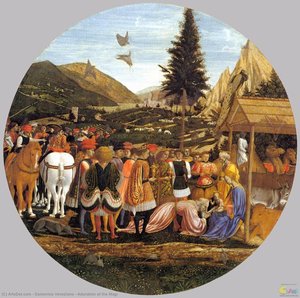
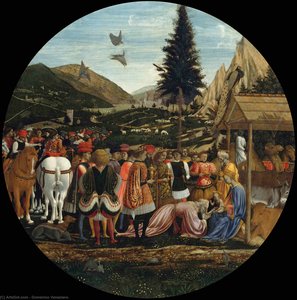
Adoration of the Magi
 Acrylic On Canvas
- WallArt
- Early Renaissance
 1440
1440 84.0 x 84.0 cm
 Staatliche Museen
 Read More
Hand Made Oil Reproduction
Hand-painted oil on canvas in your size and frame, made to order by our artists. ( Buy Print Buy Image)




P118B $10

P118H $10

P118W $10

P438Z $10

P508JH $12

P508YH $12

P805H $10

P805Z $10

P919BZ $10

P919G $10

P919XJ $10

P959ZH $10

P968JZ $12

W106C $8

W218G $10

W218JH $8

W218Y $10

W307PJ $10

W316G $10

W316PJ $8

W316Y $10

W398PJ $8

W4111J $10

W500HY $15

W500JH $15

W692G $12

W849H $8

W940BG $15

W953PJ $8




Pick from our preset sizes that match the artwork's original proportions.

You may enter your own dimensions to fit a specific frame or space. If your selected size does not match the original image's proportions, we will either crop the artwork or extend the painting with additional hand-painted elements. A digital mockup will be sent for your approval before production begins.
Please note that the on-screen preview does not reflect the actual cropping or extension. Only the mockup will accurately show the final composition.
While custom sizes are available, we recommend selecting a dimension from the predefined list to preserve the original proportions.
After order, ArtsDot.com team will email client for instructions and provide a mockup preview
Worldwide Delivery () in 3/4 weeks instead of standard 5 weeks. (28 August). No compromise on quality.

Free Worldwide Express Shipping

High-Quality Linen Canvas

Full Shipping Insurance

Customs Tax Refund Guarantee

True Color Matching Guarantee

60-Day Return Policy (Defects Only)

100% Money-Back Guarantee

Bulk Discount Offer
 Glass option is only available in size under 110 CM

Adoration of the Magi
Reproduction Medium
Reproduction Size
-


Total Price
$ 263
The Adoration of the Magi by Domenico Veneziano: A Renaissance Revelation
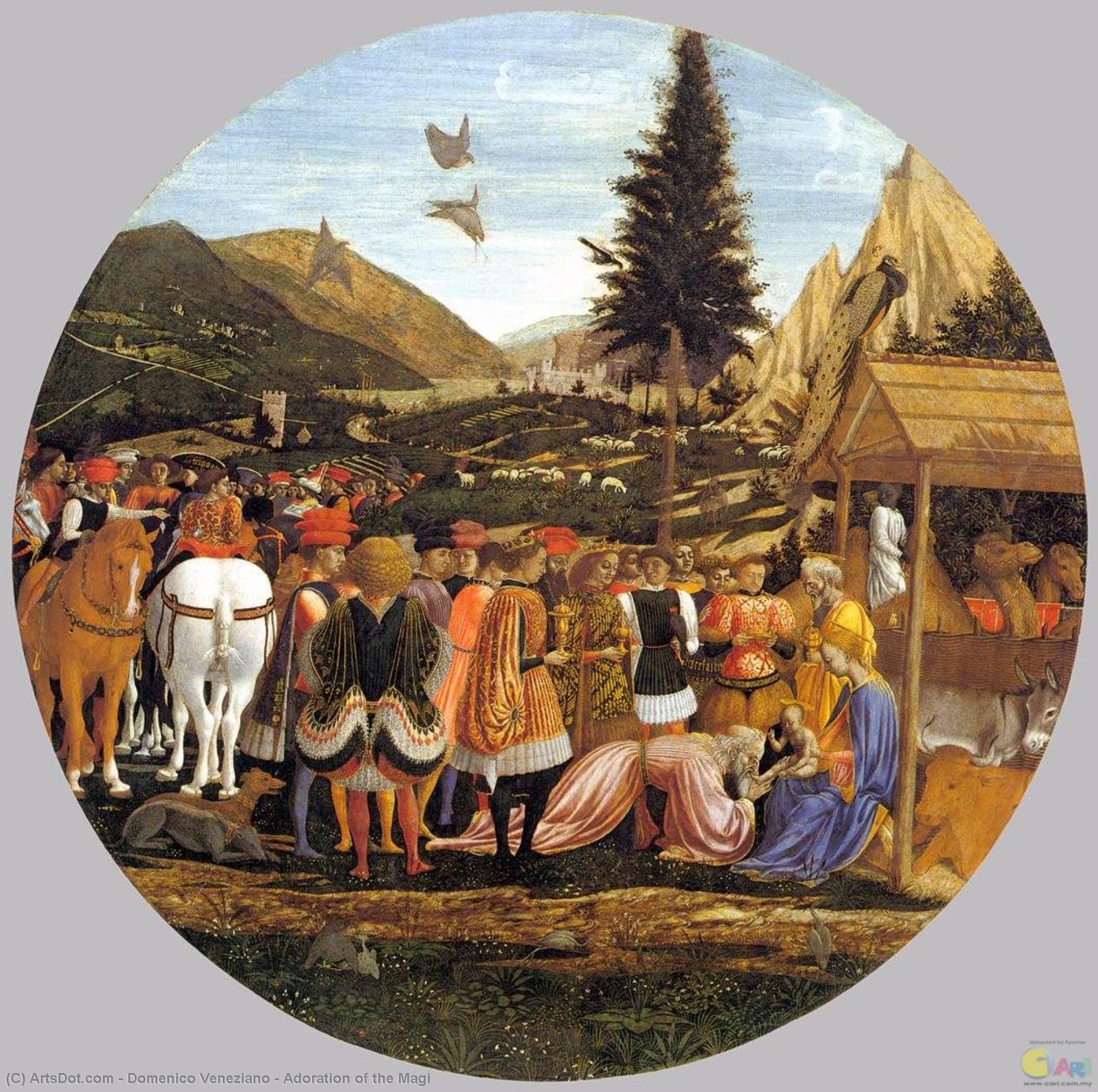
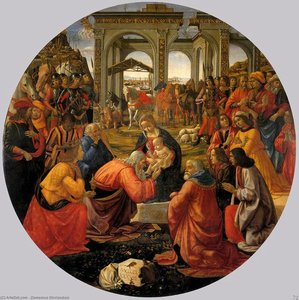
Domenico Veneziano’s “Adoration of the Magi,” painted around 1440 in Florence, isn't merely a depiction of a biblical scene; it’s a vibrant manifesto of artistic innovation and a testament to the burgeoning spirit of the early Renaissance. This circular panel, measuring just over 84 centimeters in diameter, pulsates with an almost otherworldly luminosity—a hallmark of Veneziano’s revolutionary approach to fresco and tempera painting. It immediately captivates with its audacious color palette, a departure from the somber hues favored by many of his contemporaries, and a bold embrace of light as a defining element.
The scene itself is a dynamic tableau of reverence and wonder. The Magi—Gaspar, Melchior, and Balthasar—are not presented as austere figures of distant lands, but rather as individuals brimming with life and character. Veneziano masterfully renders their opulent garments in shimmering golds, deep blues, and rich reds, each fabric seemingly imbued with its own texture and sheen. Their faces are expressive, conveying a sense of awe and profound respect for the infant Jesus nestled in Mary’s arms. The figures surrounding the central scene—shepherds, attendants, and even animals—are equally detailed, contributing to the painting's overwhelming sense of abundance and vitality.
A Pioneer of Light and Color
Veneziano’s genius lay not just in his meticulous rendering of detail but also in his groundbreaking manipulation of light. He was a student of Gentile da Fabriano and Piero della Francesca, absorbing their lessons on perspective and composition, yet he swiftly forged his own distinctive style. Unlike the muted, atmospheric effects common in Florentine painting at the time, Veneziano employed a technique that prioritized direct illumination—a strategy borrowed from the East—creating an almost palpable sense of radiance emanating from the figures and objects within the scene. This innovative use of light not only enhanced the painting’s visual impact but also imbued it with a profound spiritual quality.
The choice of circular format is itself significant. Circles, representing wholeness and eternity, were favored by Renaissance artists as a means of conveying divine perfection. Veneziano's decision to frame the scene within this shape elevates the Adoration beyond a simple narrative illustration, transforming it into a symbolic meditation on faith, humility, and the arrival of salvation. The composition is carefully balanced, drawing the viewer’s eye from the central figure of Christ towards the Magi and then outwards to the surrounding figures, creating a harmonious and engaging visual experience.
Symbolism and Historical Context
The “Adoration of the Magi” resonates deeply with the theological concerns of its time. The visit of the Wise Men represents the fulfillment of prophecy and the recognition of Jesus as King of Kings. Each gift—gold, frankincense, and myrrh—holds symbolic significance: gold representing royalty, frankincense signifying purity, and myrrh symbolizing sacrifice. Beyond its religious meaning, the painting reflects the growing interest in classical antiquity during the Renaissance. The figures’ gestures and poses are reminiscent of ancient depictions of divine encounters, demonstrating Veneziano's awareness of artistic traditions both Eastern and Western.
Domenico Veneziano himself remains a somewhat enigmatic figure in art history. Born around 1410 in Venice and active primarily in Florence and Perugia, his life was marked by periods of intense creativity interspersed with less productive intervals. His brief sojourn in Rome exposed him to the artistic currents of Fra Angelico and Pisanello, shaping his style and influencing his approach to fresco painting. The “Adoration of the Magi” stands as a testament to his remarkable talent—a luminous masterpiece that continues to captivate viewers centuries after its creation.
A Timeless Masterpiece
Today, the “Adoration of the Magi” resides in the Staatliches Lindenau Museum in Weimar, Germany. Reproductions of this extraordinary work offer a glimpse into the brilliance of Domenico Veneziano’s vision—a vision that seamlessly blends technical mastery with profound spiritual insight. Its vibrant colors, dynamic composition, and innovative use of light continue to inspire artists and art lovers alike, solidifying its place as one of the most important paintings of the early Renaissance.
Related Artworks

Artist Biography
The Luminous Vision of Domenico Veneziano
Domenico Veneziano, a name that resonates with the soft glow of the Early Renaissance, remains one of the most captivating enigmas of the fifteenth century. Born around 1410 in the vibrant maritime atmosphere of Venice, his life’s journey would eventually lead him to become a pivotal figure in the Florentine school. While much of his early biography remains shrouded in the mists of history, the brilliance of his canvases provides a clear window into a soul dedicated to the mastery of light. His artistic evolution was not merely a personal progression but a transformative movement that bridged the gap between the decorative elegance of the International Gothic style and the profound, structural clarity of the Renaissance.
The foundations of Veneziano’s genius were laid through a series of prestigious encounters with the masters of his era. His apprenticeship under the renowned Gentile da Fabriano in Florence during the early 1420s allowed him to absorb the intricate detail and rhythmic grace characteristic of the late Gothic tradition. However, it was his exposure to the burgeoning scientific approach to perspective and form—championed by figures such as Piero della Francesca—that truly ignited his creative spirit. This synthesis of Venetian coloristic sensitivity and Florentine structural rigor allowed him to develop a unique visual language, one where light does not merely illuminate a scene but becomes an active participant in the narrative itself.
A Mastery of Light and Color
What distinguishes the work of Domenico Veneziano from his contemporaries is his audacious and revolutionary approach to the medium. He was a pioneer in the use of luminous, delicate palettes that seemed to breathe with an internal radiance. In masterpieces such as The Madonna and Child with Saints, one can witness his experimental spirit; his decision to utilize oil paint at a time when tempera was the standard was a bold departure from convention. This technique allowed for subtle tonal gradations and atmospheric effects that captured the ephemeral quality of light hitting a surface, creating a sense of depth and air that was unprecedented.
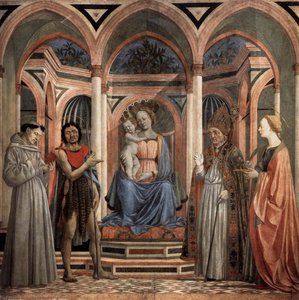
His ability to weave spiritual emotion into the very fabric of his compositions is perhaps most evident in works like the St. Lucy Altarpiece. Here, the figures are not merely painted; they are bathed in a celestial glow that softens their edges and integrates them into a harmonious, unified space. This mastery of atmospheric perspective—the way light and color shift to suggest distance—became a hallmark of his style. Whether depicting the solemnity of a religious icon or the vibrant energy of the Adoration of the Magi, Veneziano possessed the rare ability to use color as a tool for both physical realism and profound spiritual transcendence.
Legacy and the Renaissance Horizon
The influence of Domenico Veneziano extended far beyond his own lifetime, leaving an indelible mark on the trajectory of Italian art. His innovations in light and color provided a vital blueprint for the next generation of masters. The structural clarity he helped establish, combined with his emotive use of luminosity, can be seen echoed in the works of later giants like Andrea Mantegna, who drew inspiration from the sophisticated spatial arrangements Veneziano perfected.
Though his biographical details remain sparse, his artistic legacy is written in the enduring brilliance of his surviving works. He stands as a bridge between eras—a painter who took the decorative richness of the past and infused it with the scientific and humanistic light of the future. To study Veneziano is to witness the moment when the Renaissance truly began to glow, transforming the canvas from a flat surface into a window of infinite, luminous possibility.
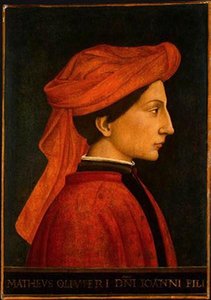
Domenico Veneziano
1410 - 1461 , Italy
Quick Facts
- Artistic Movement Or Style: Early Renaissance
- Artists Or Movements Influenced By This Artist: ['Andrea Mantegna']
- Artists Who Influenced This Artist:
- Gentile da Fabriano
- Benozzo Gozzoli
- Date Of Birth: Venice, Italy (1410)
- Date Of Death: 1461
- Full Name: domenico veneziano
- Nationality: Italian
- Notable Artworks:
- Madonna and Child with Saints
- St. Lucy Altarpiece
- The Madonna and Child
- Place Of Birth: Venice
Related Articles

The Fresco as Family Legacy: Preserving Heritage Through Wall Art
Explore the rich history & enduring legacy of fresco painting. Discover how to preserve family heritage through stunning wall art. Expert insights & restoration guidance.

The Enduring Legacy of Fresco: Technique, History & Artistic Expression Across Cultures
Explore the rich history & enduring legacy of fresco painting! Discover ancient techniques, Giotto's masterpieces, and modern applications. Expert insights for art lovers & professionals.

The Enduring Legacy of Fresco Painting: Techniques, History & Contemporary Relevance
Explore the rich history & enduring artistry of fresco painting – from Giotto to Michelangelo! Discover techniques, conservation efforts, & modern applications. Learn how ArtsDot brings this timeless art form to your home.
The Enduring Legacy of Fresco: Technique, History & Artistic Expression
Explore the rich history & enduring artistry of fresco painting. Discover techniques from Giotto to Michelangelo, conservation efforts, & modern applications. Learn how ArtsDot brings this timeless art form to your home.

Art That Lives With You: The Emotional Power of a Custom Interior Fresco
Discover the emotional power & timeless beauty of custom interior frescoes. Explore history, design tips & expert guidance from – creating lasting legacies.