 Preview
 Send
Send Share
Share
 Details

 Download
 Similars
 X-Ray
X-Ray Diaporama
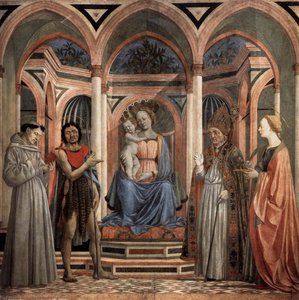
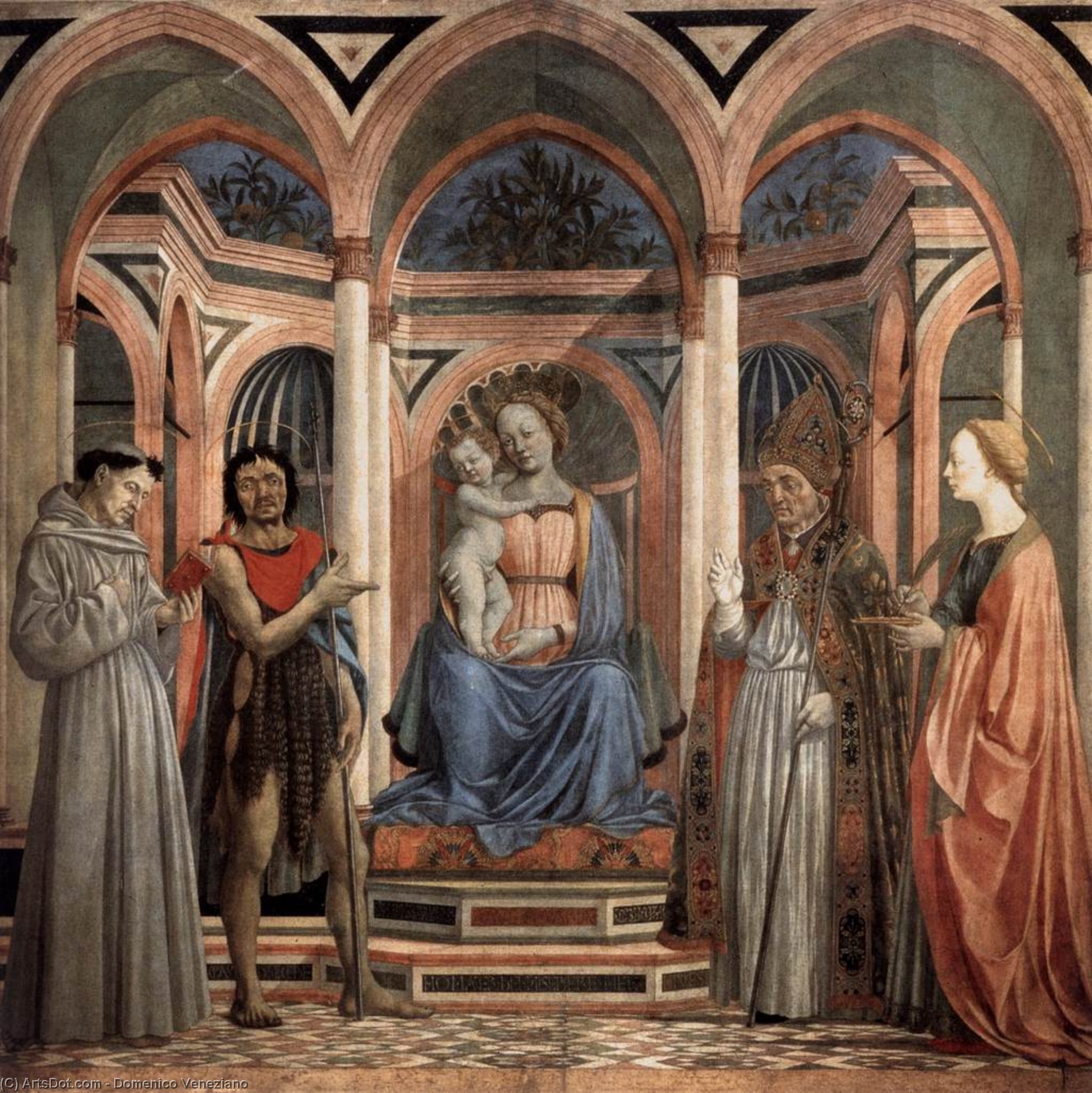
The Madonna and Child with Saints
 Oil On Canvas
- WallArt
- Early Renaissance
 1445
1445 209.0 x 216.0 cm
 Galleria degli Uffizi
 Read More
Hand Made Oil Reproduction
Hand-painted oil on canvas in your size and frame, made to order by our artists. ( Buy Print Buy Image)




P118B $10

P118H $10

P118W $10

P438Z $10

P508JH $12

P508YH $12

P805H $10

P805Z $10

P919BZ $10

P919G $10

P919XJ $10

P959ZH $10

P968JZ $12

W106C $8

W218G $10

W218JH $8

W218Y $10

W307PJ $10

W316G $10

W316PJ $8

W316Y $10

W398PJ $8

W4111J $10

W500HY $15

W500JH $15

W692G $12

W849H $8

W940BG $15

W953PJ $8




Pick from our preset sizes that match the artwork's original proportions.

You may enter your own dimensions to fit a specific frame or space. If your selected size does not match the original image's proportions, we will either crop the artwork or extend the painting with additional hand-painted elements. A digital mockup will be sent for your approval before production begins.
Please note that the on-screen preview does not reflect the actual cropping or extension. Only the mockup will accurately show the final composition.
While custom sizes are available, we recommend selecting a dimension from the predefined list to preserve the original proportions.
After order, ArtsDot.com team will email client for instructions and provide a mockup preview
Worldwide Delivery () in 3/4 weeks instead of standard 5 weeks. (26 August). No compromise on quality.

Free Worldwide Express Shipping

High-Quality Linen Canvas

Full Shipping Insurance

Customs Tax Refund Guarantee

True Color Matching Guarantee

60-Day Return Policy (Defects Only)

100% Money-Back Guarantee

Bulk Discount Offer
 Glass option is only available in size under 110 CM

The Madonna and Child with Saints
Reproduction Medium
Reproduction Size
-


Total Price
$ 263
Artwork Description
Domenico Veneziano: Illuminating Faith Through Light and Color
Domenico Veneziano (c. 1410 – May 15, 1461) remains an enigma—a figure whose life’s story is pieced together from fragments of evidence, primarily due to the scarcity of biographical details prevalent during the Renaissance. Despite this lack of comprehensive documentation, his indelible mark on Early Renaissance art is undeniable, largely attributed to his pioneering approach to fresco painting and his masterful manipulation of luminous color palettes that defied convention. Veneziano’s legacy isn't merely about artistic skill; it embodies a profound shift in aesthetic sensibilities—a conscious embrace of naturalistic representation infused with spiritual contemplation.Early Life & Training: Shadows of Venice
Little is known definitively about Veneziano’s formative years beyond his Venetian origins. Records indicate he apprenticed under Gentile da Fabriano in Florence around 1422–23, absorbing the stylistic innovations championed by Fabriano and Piero della Francesca—a foundational experience that instilled within him a deep appreciation for geometric precision and idealized beauty. This Florentine influence would permeate his subsequent works, establishing a distinctive visual vocabulary characterized by clarity of form and harmonious proportions. The meticulous attention to detail evident in his early paintings speaks volumes about the rigorous artistic training demanded during this period.Roman Influences & Collaborations: Echoes of Fra Angelico
Veneziano’s brief foray into Rome between 1423–1430 exposed him to the vibrant artistic milieu fostered by Fra Angelico and Pisanello, catalyzing collaborations that honed his technique and broadened his stylistic horizons. These encounters with fellow masters undoubtedly fueled his experimentation with new pigments and glazing methods—practices that would become hallmarks of his oeuvre. The Roman environment encouraged a dialogue between tradition and innovation, shaping Veneziano’s artistic vision in ways that continue to fascinate scholars today. His association with Pisanello specifically contributed to the development of a refined decorative style, prioritizing elegance and subtlety alongside technical virtuosity.The Madonna and Child with Saints: A Symphony of Light
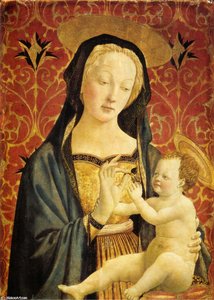
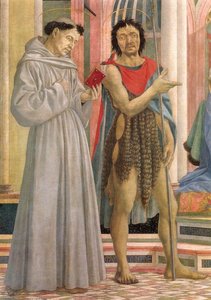
Veneziano's magnum opus, “Madonna and Child with Saints” (c. 1445), exemplifies his mastery of fresco technique—a medium notoriously challenging to execute with consistent brilliance. Painted on a monumental panel in tempera on wood, the altarpiece showcases an unprecedented luminosity achieved through careful layering of glazes—a revolutionary departure from the darker hues favored by many of his contemporaries. The composition itself is remarkably balanced, featuring Mary seated gracefully upon a throne and flanked by two saints – Saint Dominic and Saint Thomas Aquinas – who gaze serenely upon the Virgin and Child. The architectural setting—a portico adorned with marble columns bearing boughs of orange trees—further enhances the painting’s grandeur and reinforces its symbolic significance. Veneziano skillfully employs linear perspective, drawing inspiration from Filippo Brunelleschi's groundbreaking innovations, to create a convincing illusion of depth and space. The muted palette—dominated by earthy tones punctuated by flashes of gold—contributes to an atmosphere of solemn contemplation, reflecting the spiritual fervor characteristic of Florentine art during this era. The saints’ drapery is rendered with meticulous realism, capturing subtle folds and textures that convey movement and volume. Veneziano's masterful depiction of light—particularly its diffusion through the translucent glaze—transforms the painting into a veritable embodiment of divine radiance. This luminous quality transcends mere visual representation; it communicates an emotional resonance that speaks to the viewer’s deepest sensibilities—a testament to Veneziano’s profound understanding of artistic psychology and his unwavering commitment to conveying spiritual truth. The altarpiece stands as a beacon of Early Renaissance idealism, demonstrating the transformative power of art to illuminate faith and inspire awe.Legacy: A Pioneer of Luminosity
Domenico Veneziano's influence extended beyond his own lifetime, inspiring subsequent artists—including Andrea Mantegna—to embrace similar techniques and stylistic approaches. His unwavering dedication to perfecting fresco painting solidified his reputation as one of the foremost innovators of his time, securing a place among the artistic titans of the Renaissance. The enduring beauty and spiritual depth of “Madonna and Child with Saints” continue to captivate audiences worldwide, ensuring Veneziano’s legacy persists as an emblem of artistic brilliance and humanist vision.Related Artworks
Artist Biography
The Luminous Vision of Domenico Veneziano
Domenico Veneziano, a name that resonates with the soft glow of the Early Renaissance, remains one of the most captivating enigmas of the fifteenth century. Born around 1410 in the vibrant maritime atmosphere of Venice, his life’s journey would eventually lead him to become a pivotal figure in the Florentine school. While much of his early biography remains shrouded in the mists of history, the brilliance of his canvases provides a clear window into a soul dedicated to the mastery of light. His artistic evolution was not merely a personal progression but a transformative movement that bridged the gap between the decorative elegance of the International Gothic style and the profound, structural clarity of the Renaissance.
The foundations of Veneziano’s genius were laid through a series of prestigious encounters with the masters of his era. His apprenticeship under the renowned Gentile da Fabriano in Florence during the early 1420s allowed him to absorb the intricate detail and rhythmic grace characteristic of the late Gothic tradition. However, it was his exposure to the burgeoning scientific approach to perspective and form—championed by figures such as Piero della Francesca—that truly ignited his creative spirit. This synthesis of Venetian coloristic sensitivity and Florentine structural rigor allowed him to develop a unique visual language, one where light does not merely illuminate a scene but becomes an active participant in the narrative itself.
A Mastery of Light and Color
What distinguishes the work of Domenico Veneziano from his contemporaries is his audacious and revolutionary approach to the medium. He was a pioneer in the use of luminous, delicate palettes that seemed to breathe with an internal radiance. In masterpieces such as The Madonna and Child with Saints, one can witness his experimental spirit; his decision to utilize oil paint at a time when tempera was the standard was a bold departure from convention. This technique allowed for subtle tonal gradations and atmospheric effects that captured the ephemeral quality of light hitting a surface, creating a sense of depth and air that was unprecedented.
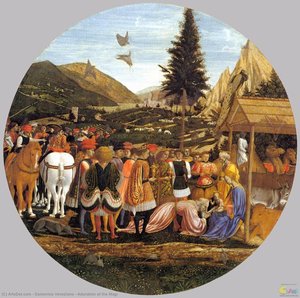
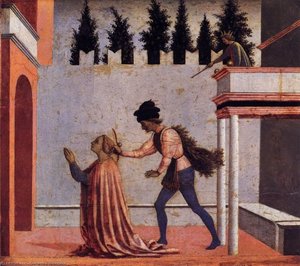
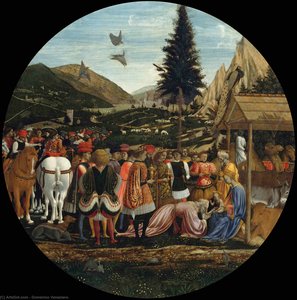
His ability to weave spiritual emotion into the very fabric of his compositions is perhaps most evident in works like the St. Lucy Altarpiece. Here, the figures are not merely painted; they are bathed in a celestial glow that softens their edges and integrates them into a harmonious, unified space. This mastery of atmospheric perspective—the way light and color shift to suggest distance—became a hallmark of his style. Whether depicting the solemnity of a religious icon or the vibrant energy of the Adoration of the Magi, Veneziano possessed the rare ability to use color as a tool for both physical realism and profound spiritual transcendence.
Legacy and the Renaissance Horizon
The influence of Domenico Veneziano extended far beyond his own lifetime, leaving an indelible mark on the trajectory of Italian art. His innovations in light and color provided a vital blueprint for the next generation of masters. The structural clarity he helped establish, combined with his emotive use of luminosity, can be seen echoed in the works of later giants like Andrea Mantegna, who drew inspiration from the sophisticated spatial arrangements Veneziano perfected.
Though his biographical details remain sparse, his artistic legacy is written in the enduring brilliance of his surviving works. He stands as a bridge between eras—a painter who took the decorative richness of the past and infused it with the scientific and humanistic light of the future. To study Veneziano is to witness the moment when the Renaissance truly began to glow, transforming the canvas from a flat surface into a window of infinite, luminous possibility.
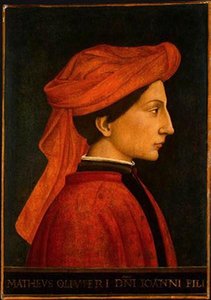
Domenico Veneziano
1410 - 1461 , Italy
Quick Facts
- Artistic Movement Or Style: Early Renaissance
- Artists Or Movements Influenced By This Artist: ['Andrea Mantegna']
- Artists Who Influenced This Artist:
- Gentile da Fabriano
- Benozzo Gozzoli
- Date Of Birth: Venice, Italy (1410)
- Date Of Death: 1461
- Full Name: domenico veneziano
- Nationality: Italian
- Notable Artworks:
- Madonna and Child with Saints
- St. Lucy Altarpiece
- The Madonna and Child
- Place Of Birth: Venice
Related Articles

The Fresco as Family Legacy: Preserving Heritage Through Wall Art
Explore the rich history & enduring legacy of fresco painting. Discover how to preserve family heritage through stunning wall art. Expert insights & restoration guidance.

The Enduring Legacy of Fresco: Technique, History & Artistic Expression Across Cultures
Explore the rich history & enduring legacy of fresco painting! Discover ancient techniques, Giotto's masterpieces, and modern applications. Expert insights for art lovers & professionals.

The Enduring Legacy of Fresco Painting: Techniques, History & Contemporary Relevance
Explore the rich history & enduring artistry of fresco painting – from Giotto to Michelangelo! Discover techniques, conservation efforts, & modern applications. Learn how ArtsDot brings this timeless art form to your home.
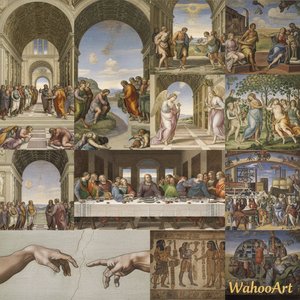
Fresco's Finest: 10 Masterpieces That Define Art History | ArtsDot
Journey through art history with our Top 10 Fresco Masterpieces! Explore Michelangelo, Raphael & Giotto's iconic works. Find museum-quality reproductions and elevate your home decor at ArtsDot.com.

Raphael's Masterpieces: 25 Iconic Paintings & Renaissance Art for Your Home
Explore 25 breathtaking Raphael paintings! Journey through the Italian Renaissance with masterpieces like 'School of Athens' & iconic Madonnas. Find museum-quality art reproductions and elevate your home decor on ArtsDot.com.