 Preview
 Send
Send Share
Share
 Details

 Download
 Similars
 X-Ray
X-Ray Diaporama
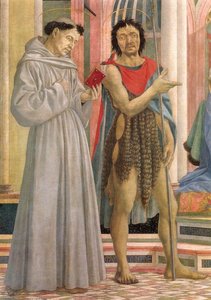
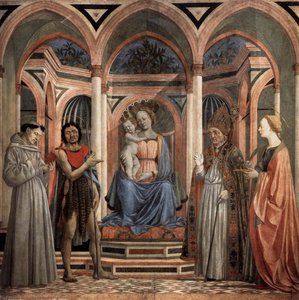
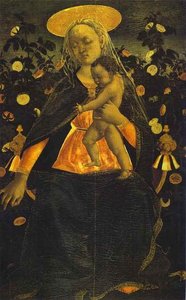
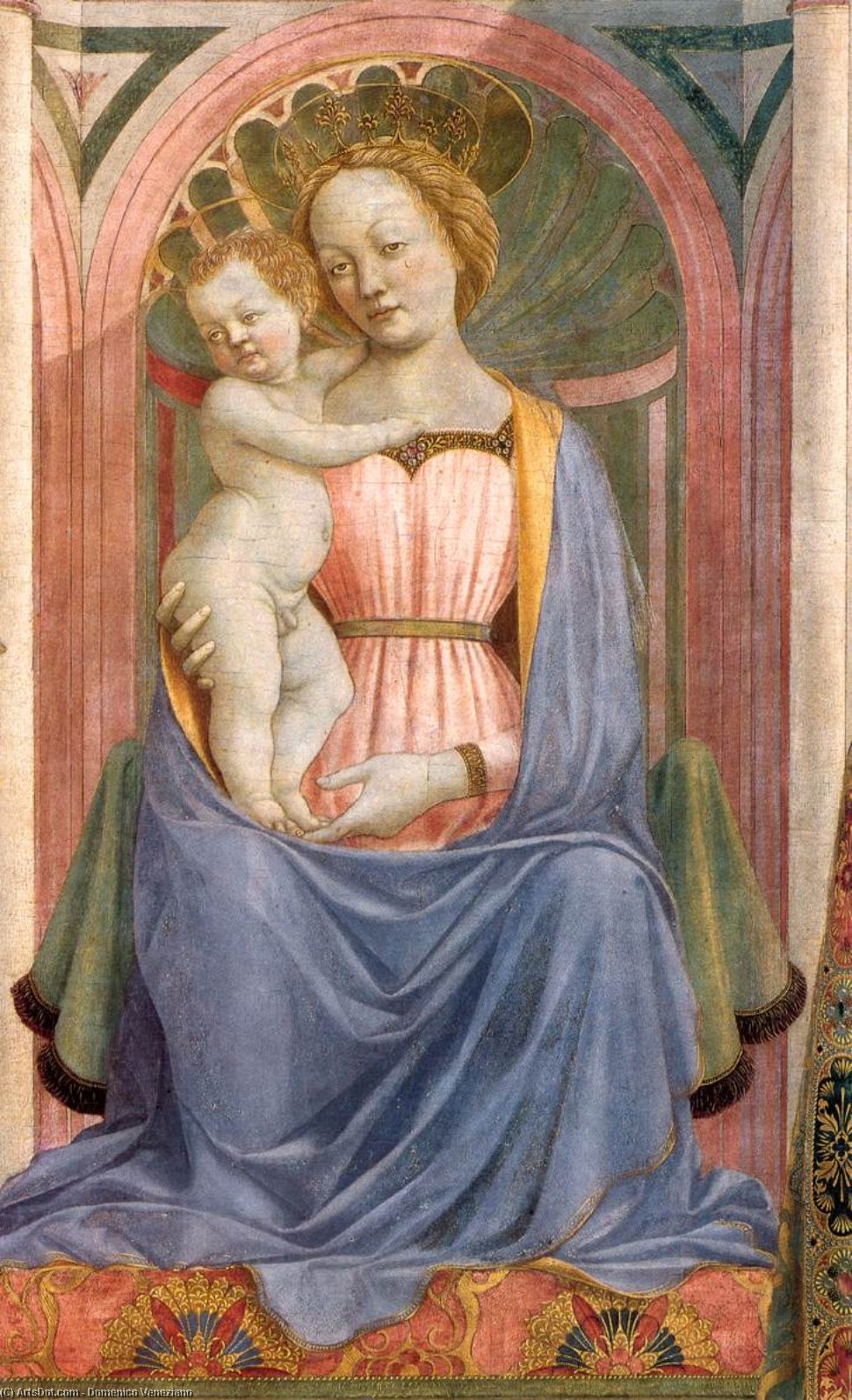
The Madonna and Child with Saints (detail)


 Read More
Hand Made Oil Reproduction
Hand-painted oil on canvas in your size and frame, made to order by our artists. ( Buy Print Buy Image)




P118B $10

P118H $10

P118W $10

P438Z $10

P508JH $12

P508YH $12

P805H $10

P805Z $10

P919BZ $10

P919G $10

P919XJ $10

P959ZH $10

P968JZ $12

W106C $8

W218G $10

W218JH $8

W218Y $10

W307PJ $10

W316G $10

W316PJ $8

W316Y $10

W398PJ $8

W4111J $10

W500HY $15

W500JH $15

W692G $12

W849H $8

W940BG $15

W953PJ $8




Pick from our preset sizes that match the artwork's original proportions.

You may enter your own dimensions to fit a specific frame or space. If your selected size does not match the original image's proportions, we will either crop the artwork or extend the painting with additional hand-painted elements. A digital mockup will be sent for your approval before production begins.
Please note that the on-screen preview does not reflect the actual cropping or extension. Only the mockup will accurately show the final composition.
While custom sizes are available, we recommend selecting a dimension from the predefined list to preserve the original proportions.
After order, ArtsDot.com team will email client for instructions and provide a mockup preview
Worldwide Delivery () in 3/4 weeks instead of standard 5 weeks. (3 September). No compromise on quality.

Free Worldwide Express Shipping

High-Quality Linen Canvas

Full Shipping Insurance

Customs Tax Refund Guarantee

True Color Matching Guarantee

60-Day Return Policy (Defects Only)

100% Money-Back Guarantee

Bulk Discount Offer
 Glass option is only available in size under 110 CM

The Madonna and Child with Saints (detail)
Reproduction Medium
Reproduction Size
-


Total Price
$ 263
A Renaissance Reverie: Domenico Veneziano’s ‘The Madonna and Child with Saints’ (Detail)
Domenico Veneziano's “The Madonna and Child with Saints” – often viewed as a detailed panel from a larger altarpiece – offers a profound glimpse into the burgeoning artistic landscape of 15th-century Italy. Painted around 1445, this work transcends mere religious iconography; it’s a carefully constructed meditation on faith, devotion, and the luminous beauty inherent in the divine. Examining its intricate details reveals not just a masterful depiction of Mary, Christ, and their attendant figures, but also a window into the innovative techniques and symbolic language that defined the early Renaissance.
The scene unfolds within a richly imagined architectural setting – an interior space suggestive of a grand church or palace, rendered with meticulous perspective. This backdrop isn’t merely decorative; it establishes a sense of solemnity and importance, elevating the central figures to a realm beyond the earthly. Veneziano's genius lies in his ability to imbue this architectural framework with a palpable sense of depth and atmosphere through subtle gradations of light and shadow. The diffused golden glow bathing the Madonna and Child is particularly striking, reminiscent of the sfumato technique later perfected by Leonardo da Vinci – a deliberate softening of edges that creates an ethereal quality.
The Figures: A Symphony of Symbolism
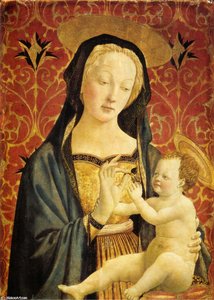
At the heart of the composition stands Mary, depicted with serene grace and an almost otherworldly beauty. Dressed in a flowing blue robe—a color traditionally associated with purity and divinity—she cradles the infant Jesus, his face radiating innocence and peace. The figures are rendered with remarkable realism for their time, yet imbued with a spiritual intensity that transcends mere physical representation. The two saints flanking Mary – St. John the Baptist and St. Jerome – are instantly recognizable through their traditional attributes: St. John’s lamb symbolizing sacrifice and purity, and St. Jerome’s open book representing wisdom and knowledge. These symbols aren't simply decorative; they actively participate in the painting’s narrative, enriching its layers of meaning.
St. John the Baptist, identifiable by his flowing hair and youthful appearance, points upwards towards Christ, a gesture signifying salvation and divine grace. St. Jerome, often depicted with a furrowed brow and spectacles, embodies the intellectual pursuit of faith – a testament to the Renaissance’s renewed interest in classical learning and philosophy. The careful arrangement of these figures creates a harmonious balance, reflecting the theological principles underpinning the work.
Technique and Innovation: A Light-Filled Vision
Veneziano's approach to fresco painting—and subsequently tempera on panel—was remarkably innovative for his time. He moved away from the heavy, dark palettes favored by many of his contemporaries, embracing a brighter, more luminous color scheme. This is particularly evident in the use of gold leaf, which adds a radiant quality to the figures and architectural details. The artist’s mastery of light is truly remarkable; he skillfully manipulates shadows and highlights to create a sense of volume and depth, drawing the viewer's eye into the scene.
Furthermore, Veneziano demonstrated an early understanding of perspective—a crucial element in creating the illusion of three-dimensionality. The receding arches and columns of the background are rendered with careful attention to detail, contributing to the painting’s overall realism and spatial coherence. This pioneering use of perspective foreshadowed developments in Renaissance art that would profoundly influence generations of artists.
A Legacy of Light: Domenico Veneziano's Enduring Influence
Domenico Veneziano, born around 1410 in Venice and tragically dying in 1461, remains a pivotal figure in the transition from Gothic to Renaissance art. His work embodies the spirit of innovation and artistic experimentation that characterized this transformative period. While his life was relatively short, his impact on the development of Italian painting is undeniable. His emphasis on light, color, and realistic representation laid the groundwork for some of the greatest artists of the High Renaissance – including Mantegna, who Veneziano greatly influenced. Reproductions of “The Madonna and Child with Saints” offer a tangible connection to this remarkable artist and his enduring legacy.
Related Artworks

Artist Biography
The Luminous Vision of Domenico Veneziano
Domenico Veneziano, a name that resonates with the soft glow of the Early Renaissance, remains one of the most captivating enigmas of the fifteenth century. Born around 1410 in the vibrant maritime atmosphere of Venice, his life’s journey would eventually lead him to become a pivotal figure in the Florentine school. While much of his early biography remains shrouded in the mists of history, the brilliance of his canvases provides a clear window into a soul dedicated to the mastery of light. His artistic evolution was not merely a personal progression but a transformative movement that bridged the gap between the decorative elegance of the International Gothic style and the profound, structural clarity of the Renaissance.
The foundations of Veneziano’s genius were laid through a series of prestigious encounters with the masters of his era. His apprenticeship under the renowned Gentile da Fabriano in Florence during the early 1420s allowed him to absorb the intricate detail and rhythmic grace characteristic of the late Gothic tradition. However, it was his exposure to the burgeoning scientific approach to perspective and form—championed by figures such as Piero della Francesca—that truly ignited his creative spirit. This synthesis of Venetian coloristic sensitivity and Florentine structural rigor allowed him to develop a unique visual language, one where light does not merely illuminate a scene but becomes an active participant in the narrative itself.
A Mastery of Light and Color
What distinguishes the work of Domenico Veneziano from his contemporaries is his audacious and revolutionary approach to the medium. He was a pioneer in the use of luminous, delicate palettes that seemed to breathe with an internal radiance. In masterpieces such as The Madonna and Child with Saints, one can witness his experimental spirit; his decision to utilize oil paint at a time when tempera was the standard was a bold departure from convention. This technique allowed for subtle tonal gradations and atmospheric effects that captured the ephemeral quality of light hitting a surface, creating a sense of depth and air that was unprecedented.
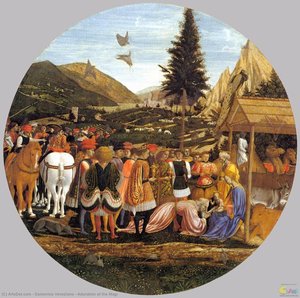
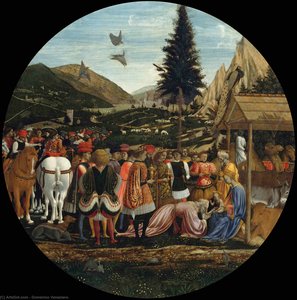
His ability to weave spiritual emotion into the very fabric of his compositions is perhaps most evident in works like the St. Lucy Altarpiece. Here, the figures are not merely painted; they are bathed in a celestial glow that softens their edges and integrates them into a harmonious, unified space. This mastery of atmospheric perspective—the way light and color shift to suggest distance—became a hallmark of his style. Whether depicting the solemnity of a religious icon or the vibrant energy of the Adoration of the Magi, Veneziano possessed the rare ability to use color as a tool for both physical realism and profound spiritual transcendence.
Legacy and the Renaissance Horizon
The influence of Domenico Veneziano extended far beyond his own lifetime, leaving an indelible mark on the trajectory of Italian art. His innovations in light and color provided a vital blueprint for the next generation of masters. The structural clarity he helped establish, combined with his emotive use of luminosity, can be seen echoed in the works of later giants like Andrea Mantegna, who drew inspiration from the sophisticated spatial arrangements Veneziano perfected.
Though his biographical details remain sparse, his artistic legacy is written in the enduring brilliance of his surviving works. He stands as a bridge between eras—a painter who took the decorative richness of the past and infused it with the scientific and humanistic light of the future. To study Veneziano is to witness the moment when the Renaissance truly began to glow, transforming the canvas from a flat surface into a window of infinite, luminous possibility.
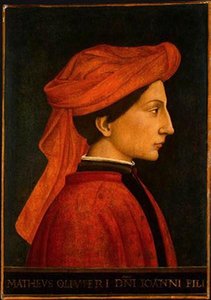
Domenico Veneziano
1410 - 1461 , Italy
Quick Facts
- Artistic Movement Or Style: Early Renaissance
- Artists Or Movements Influenced By This Artist: ['Andrea Mantegna']
- Artists Who Influenced This Artist:
- Gentile da Fabriano
- Benozzo Gozzoli
- Date Of Birth: Venice, Italy (1410)
- Date Of Death: 1461
- Full Name: domenico veneziano
- Nationality: Italian
- Notable Artworks:
- Madonna and Child with Saints
- St. Lucy Altarpiece
- The Madonna and Child
- Place Of Birth: Venice
Related Articles

The Fresco as Family Legacy: Preserving Heritage Through Wall Art
Explore the rich history & enduring legacy of fresco painting. Discover how to preserve family heritage through stunning wall art. Expert insights & restoration guidance.

The Enduring Legacy of Fresco Painting: Techniques, History & Contemporary Relevance
Explore the rich history & enduring artistry of fresco painting – from Giotto to Michelangelo! Discover techniques, conservation efforts, & modern applications. Learn how ArtsDot brings this timeless art form to your home.

The Enduring Legacy of Fresco: Technique, History & Artistic Expression Across Cultures
Explore the rich history & enduring legacy of fresco painting! Discover ancient techniques, Giotto's masterpieces, and modern applications. Expert insights for art lovers & professionals.

Art That Lives With You: The Emotional Power of a Custom Interior Fresco
Discover the emotional power & timeless beauty of custom interior frescoes. Explore history, design tips & expert guidance from – creating lasting legacies.
The Enduring Legacy of Fresco: Technique, History & Artistic Expression
Explore the rich history & enduring artistry of fresco painting. Discover techniques from Giotto to Michelangelo, conservation efforts, & modern applications. Learn how ArtsDot brings this timeless art form to your home.