 Preview
 Send
Send Share
Share
 Details

 Download
 Similars
 X-Ray
X-Ray Diaporama
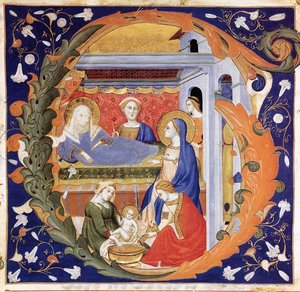
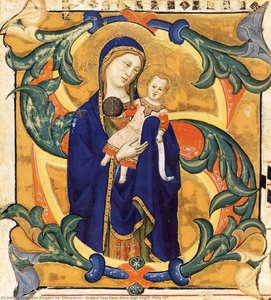
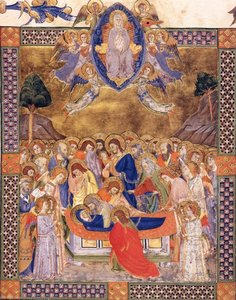
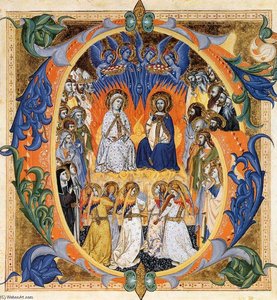
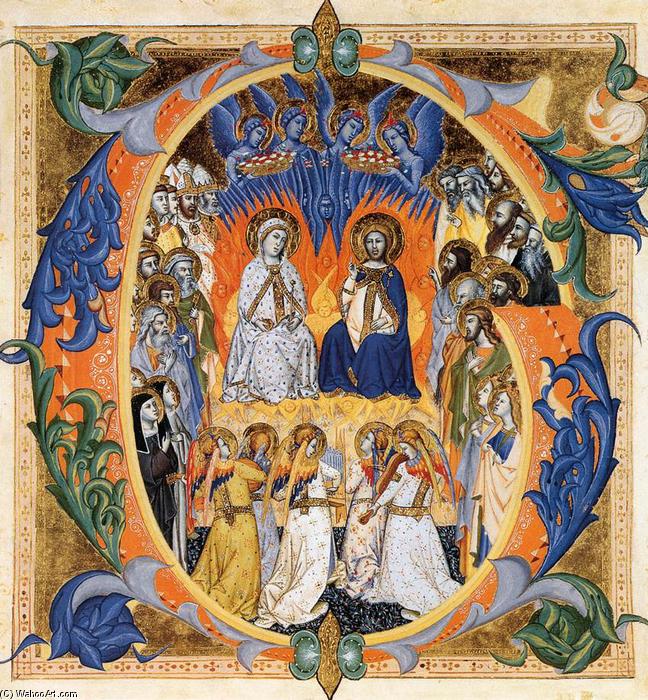
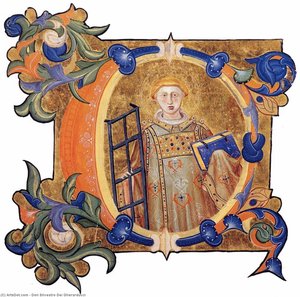
Gradual from Santa Maria degli Angeli (Folio 155v)
 Manuscript
- International Gothic
 1370
1370- Late Medieval
 348.0 x 387.0 cm
 Cleveland Museum of Art
 Read More
Hand Made Oil Reproduction
Hand-painted oil on canvas in your size and frame, made to order by our artists. ( Buy Print Buy Image)




P118B $10

P118H $10

P118W $10

P438Z $10

P508JH $12

P508YH $12

P805H $10

P805Z $10

P919BZ $10

P919G $10

P919XJ $10

P959ZH $10

P968JZ $12

W106C $8

W218G $10

W218JH $8

W218Y $10

W307PJ $10

W316G $10

W316PJ $8

W316Y $10

W398PJ $8

W4111J $10

W500HY $15

W500JH $15

W692G $12

W849H $8

W940BG $15

W953PJ $8




Pick from our preset sizes that match the artwork's original proportions.

You may enter your own dimensions to fit a specific frame or space. If your selected size does not match the original image's proportions, we will either crop the artwork or extend the painting with additional hand-painted elements. A digital mockup will be sent for your approval before production begins.
Please note that the on-screen preview does not reflect the actual cropping or extension. Only the mockup will accurately show the final composition.
While custom sizes are available, we recommend selecting a dimension from the predefined list to preserve the original proportions.
After order, ArtsDot.com team will email client for instructions and provide a mockup preview
Worldwide Delivery () in 3/4 weeks instead of standard 5 weeks. (31 August). No compromise on quality.

Free Worldwide Express Shipping

High-Quality Linen Canvas

Full Shipping Insurance

Customs Tax Refund Guarantee

True Color Matching Guarantee

60-Day Return Policy (Defects Only)

100% Money-Back Guarantee

Bulk Discount Offer
 Glass option is only available in size under 110 CM

Gradual from Santa Maria degli Angeli (Folio 155v)
Reproduction Medium
Reproduction Size
-


Total Price
$ 263
A Celestial Gathering in Ink and Gold
In the quiet, hallowed corridors of late 14th-century Florentine monastic life, there existed a form of artistry that sought to bridge the gap between the earthly and the divine. The Gradual from Santa Maria degli Angeli (Folio 155v), a masterpiece by the Florentine master Don Silvestro dei Gherarducci, stands as a breathtaking testament to this spiritual devotion. At first glance, the eye is immediately drawn to the striking circular composition that dominates the folio, a celestial mandala of human interaction. Within this sacred ring, at least fourteen figures are meticulously rendered, caught in a moment of profound communal engagement. Some lean inward, their gestures suggesting whispered secrets or shared theological truths, while others occupy the periphery, grounding the ethereal scene in a sense of tangible presence. It is not merely a painting; it is a choreographed dance of souls, captured with an intimacy that feels both ancient and remarkably alive.
The technique employed by Silvestro reflects the pinnacle of illuminated manuscript artistry from the transition between the Medieval and Renaissance eras. Each figure is imbued with a delicate vitality, achieved through fine linework and a sophisticated use of color that guides the viewer's gaze around the circular assembly. The artist utilizes the constraints of the miniature format to create an expansive sense of depth, where the positioning of individuals—some nestled near the center and others drifting toward the edges—creates a rhythmic movement across the page. For the discerning collector or interior designer, this piece offers a masterclass in balance and focal point creation. The way the light seems to emanant from the very heart of the circle provides a natural luminosity that can transform a space, offering a sense of contemplative peace and historical weight.
Symbolism and the Florentine Legacy
To understand this work is to understand the intellectual landscape of 1370s Florence. Don Silvestro dei Gherarducci was a master of the scriptorium, a world where every stroke of pigment carried theological significance. The circular motif in this Gradual serves as more than just a decorative frame; it symbolizes unity, eternity, and the unbroken cycle of faith. The gathering of figures within this boundary represents the communion of saints or the collective wisdom of the monastic community, suggesting that true enlightenment is found through shared devotion and dialogue. There is an emotional resonance in the way the characters interact—a palpable sense of warmth and intellectual curiosity that defies the often-austere reputation of medieval religious art.
For those seeking to incorporate a piece of history into a contemporary setting, this reproduction offers an unparalleled opportunity to possess a fragment of the Florentine Golden Age. The artwork’s ability to evoke nostalgia for a lost era of craftsmanship makes it an ideal centerpiece for a library, a study, or a sophisticated gallery wall. It invites the viewer to slow down, to peer closely at the intricate details of each face, and to lose themselves in the silent conversation of the past. Owning such a work is not just about decoration; it is about preserving the spirit of an era where art was the ultimate vessel for the human soul's highest aspirations.
Related Artworks
Artist Biography
Don Silvestro dei Gherarducci: A Florentine Master of Illuminated Manuscripts
The world of 14th-century art is often dominated by the grand narratives of Giotto and Brunelleschi, yet within the quieter confines of monastic scriptoria flourished a remarkable artist – Don Silvestro dei Gherarducci. Born in Florence around 1339 and passing away circa 1399, Silvestro wasn’t a name etched into the public consciousness during his lifetime, but his legacy endures through the breathtaking beauty and intricate symbolism of his illuminated manuscripts, particularly the celebrated “Graduals.” These weren't mere book decorations; they were vibrant theological treatises, meticulously crafted to educate and inspire devotion within the walls of Italian monasteries. His work offers a unique window into the artistic and intellectual landscape of Florence during a period of profound transition – the waning years of the medieval era and the nascent stirrings of the Renaissance.
Silvestro’s early life remains somewhat shrouded in mystery, though evidence suggests he received his training within the workshop of Jacopo di Mino del Pellicciaio, a prominent Florentine painter. This formative experience undoubtedly instilled in him a deep understanding of tempera painting techniques and a keen eye for detail. He joined the Camaldolese order at the monastery of Santa Maria degli Angeli around 1348, dedicating himself to a life of prayer and artistic creation. It was within this serene setting that he truly blossomed as an illuminator, quickly establishing himself as a master of his craft. His appointment as Prior in 1398 further solidified his position as a leading figure within the monastic community, allowing him to continue producing works of exceptional quality for decades.
The Art of the Gradual
Silvestro’s most celebrated achievement is undoubtedly the “Graduals,” a series of illuminated manuscripts that served as instructional texts for the clergy. These weren't simple liturgical books; they were complex theological commentaries, often accompanied by intricate illustrations and decorative elements. The term "Gradual" refers to the musical chant used during Mass, and the manuscript was designed to guide the reader through the text with visual aids. Silvestro’s Graduals are particularly noteworthy for their exceptional detail, vibrant colors, and masterful use of gold leaf – a technique that would become increasingly important in later Renaissance art.
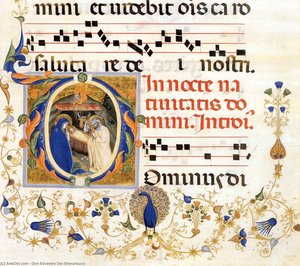
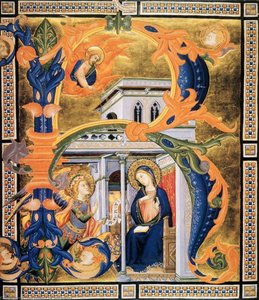
The manuscripts themselves were often composed of numerous individual pages, meticulously crafted and then assembled into a cohesive whole. Silvestro’s approach was remarkably innovative; he didn't simply copy existing illuminated manuscripts but created entirely new compositions, imbuing them with his own unique artistic vision. The Gradual from Santa Maria degli Angeli, for example, is considered his crowning achievement, comprising twenty individual pages now scattered across various collections worldwide. Each page is a miniature masterpiece, showcasing Silvestro’s skill in depicting figures, landscapes, and architectural elements. The intricate details – the folds of drapery, the expressions on faces, the delicate floral motifs – reveal a profound understanding of human anatomy and perspective.
Technique and Symbolism
Silvestro's artistic style is firmly rooted in the Gothic tradition, yet it also exhibits elements that foreshadow the emerging Renaissance aesthetic. His use of tempera on panel allowed for rich colors and fine detail, while his mastery of gold leaf created a dazzling visual effect. The meticulous rendering of figures, often rendered with a serene and contemplative quality, reflects the spiritual focus of his work. Furthermore, Silvestro’s compositions are replete with symbolic imagery – references to biblical stories, saints' lives, and theological concepts.
The Graduals are particularly rich in symbolism. The depictions of the Evangelists, for instance, are not merely illustrations but allegorical representations of their respective roles in spreading Christianity. The use of specific colors—azure blue for heaven, red for martyrdom—further enhances the symbolic meaning of the images. Silvestro’s work is a testament to his deep understanding of both artistic technique and theological doctrine.
Legacy and Historical Significance
Despite his relatively obscure status during his lifetime, Don Silvestro dei Gherarducci's contribution to Italian art is now widely recognized. His illuminated manuscripts are prized possessions in museums and libraries around the world, offering a rare glimpse into the artistic practices of 14th-century Florence. His work represents a crucial link between the Gothic tradition and the Renaissance, demonstrating the continuity of artistic ideas and techniques during this period of transition.
The Graduals, in particular, are considered to be among the finest examples of medieval manuscript illumination ever produced. They stand as a testament to Silvestro’s skill, creativity, and devotion – a reminder that even within the quiet confines of monastic scriptoria, extraordinary artistic achievements could flourish.
don silvestro dei gherarducci
1339 - 1399 , Italy
Quick Facts
- Artistic Movement Or Style: Gradual illumination
- Date Of Birth: 1339 Florence, Italy
- Date Of Death: 1399 Florence, Italy
- Full Name: Don Silvestro dei Gherarducci
- Nationality: Italian
- Notable Artworks:
- Madonna & Child
- Gradual from Murano
- Place Of Birth: Florence, Italy
Related Articles
High Medieval Art: 10 Masterpieces That Shaped an Era | ArtsDot
Journey through High Medieval Art! Explore 10 iconic masterpieces – from Giotto's frescoes to stunning Gothic cathedrals. Discover the stories behind these timeless paintings, sculptures & illuminated manuscripts. Find museum-quality art reproductions at ArtsDot.com.
Illuminating Faith & Power: A Journey Through Medieval Art (c. 500 – c. 1500)
Explore the rich history of Medieval Art (c. 500 – c. 1500) with ArtsDot. Discover Byzantine mosaics, Gothic cathedrals & Renaissance masterpieces. Expert insights & museum-quality reproductions.
Early Medieval Art: 10 Masterpieces That Shaped a New World | ArtsDot
Journey through 10 stunning Early Medieval masterpieces – from the Book of Kells to Carolingian mosaics. Explore art history, symbolism & find museum-quality reproductions for your home at ArtsDot.com. Discover all masterpieces online!
Late Medieval Masterpieces: 10 Artworks That Defined an Era | ArtsDot
Journey through 10 defining Late Medieval masterpieces – from Giotto's frescoes to Jan van Eyck’s realism. Explore the stories, techniques & vibrant colors of Gothic art. Find museum-quality reproductions and elevate your home decor with ArtsDot.com! Discover all masterpieces on ArtsDot.com
Illuminating the Fourteenth Century: Art, Innovation & Enduring Legacies (1300-1400)
Explore the transformative art of the 14th century! Discover Gothic masterpieces, International Style innovations, and the precursors to the Renaissance. Expert insights & historical context at ArtsDot.