

 Preview
 Send
Send Share
Share
 Details

 Download
 Similars
 X-Ray
X-Ray Diaporama
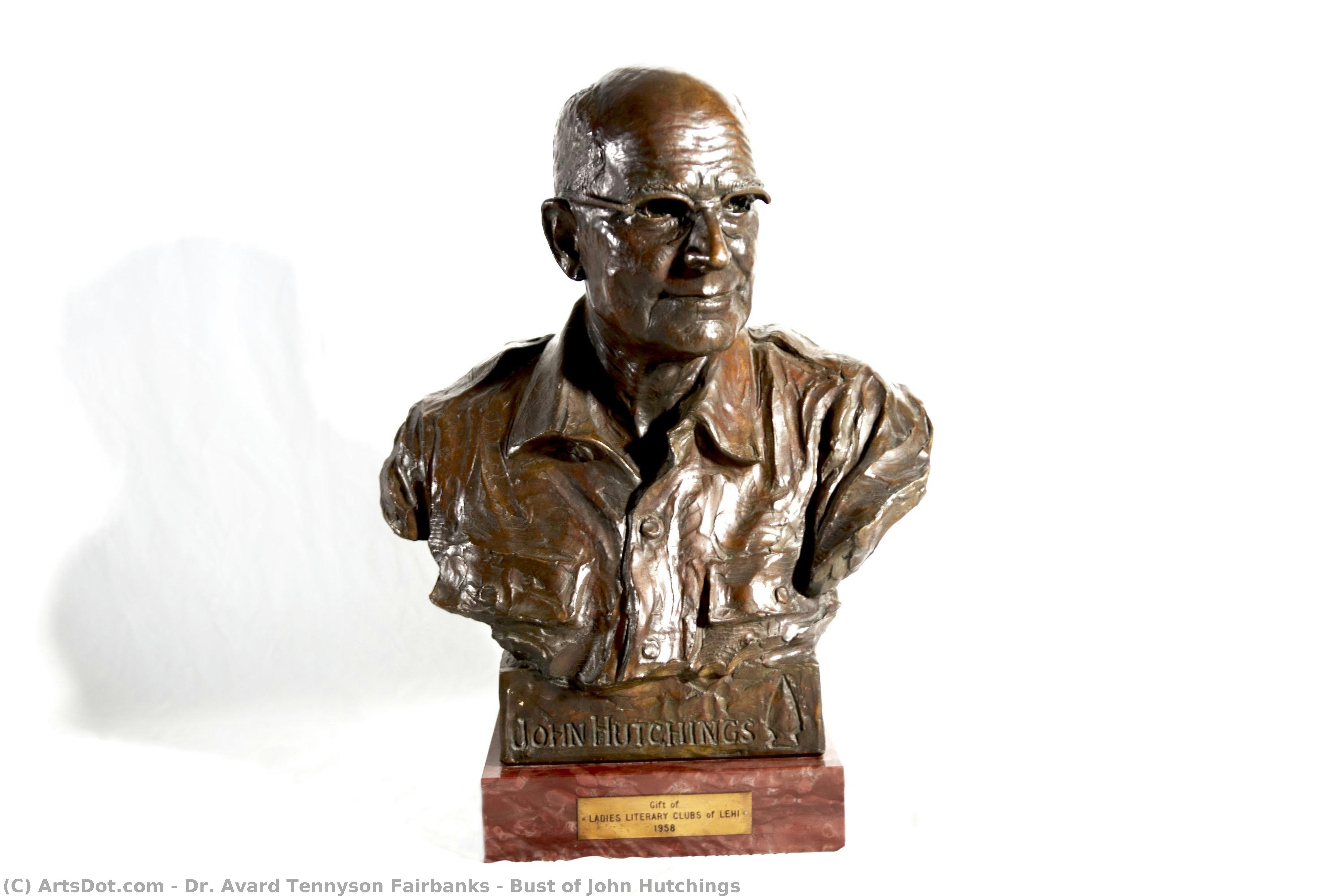
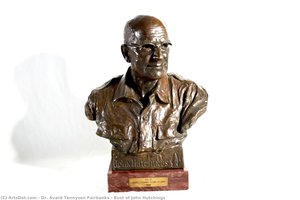
Bust of John Hutchings


 Read More
Giclée / Art Print
Museum-quality giclée or canvas print with fast production and flexible finish options. ( Buy Hand Made Painting Buy Image)




































Pick from our preset sizes that match the artwork's original proportions.

You may enter your own dimensions to fit a specific frame or space. If your selected size does not match the original image's proportions, we will either crop the artwork or extend the image with a mirrored or solid-fill edge. A digital mockup will be sent for your approval before production begins.
Please note that the on-screen preview does not reflect the actual cropping or extension. Only the mockup will accurately show the final composition.
While custom sizes are available, we recommend selecting a dimension from the predefined list to preserve the original proportions.
Worldwide Delivery () in 2 weeks instead of standard 4/5 weeks. (27 August)

Free Worldwide Express Shipping

High-Quality Linen Canvas

Full Shipping Insurance

Customs Tax Refund Guarantee

True Color Matching Guarantee

60-Day Return Policy (Defects Only)

100% Money-Back Guarantee

Bulk Discount Offer
 Glass option is only available in size under 110 CM

Bust of John Hutchings
Giclée / Art Print
Reproduction Size
-


Total Price
$ 63
Related Artworks
Artist Biography
The Sculptor of the American West: The Life and Legacy of Avard T. Fairbanks
In the grand tapestry of American art, few figures have captured the rugged spirit and spiritual depth of the Western frontier as profoundly as Avard Tennyson Fairbanks. Born on March 2nd, 1897, in Provo, Utah, Fairbanks was a man whose very essence was intertwined with the landscapes and histories he sought to immortalize in bronze and clay. As the tenth son of John B. Fairbanks—an artist whose own studies in Paris infused the family with a cosmopolitan artistic sensibility—Avard was raised in an environment where creativity was not merely a hobby, but a profound way of life. His early years were marked by a burgeoning fascination with form, a passion that first manifested at the age of twelve when he sculpted a clay rabbit that, while denied a medal due to his youth, ignited a lifelong fire of determination within him.
The development of Fairbanks’ artistry was characterized by a rare marriage of technical precision and deep intellectual inquiry. He did not merely seek to replicate the surface of things; rather, he sought to understand the very mechanics of life itself. This pursuit led him to an extraordinary academic journey, earning degrees from Yale University and the University of Michigan, where he attained both a Master of Fine Arts and a PhD. His studies were uniquely dual-natured, encompassing both the delicate nuances of artistic technique and the rigorous complexities of anatomical science. This scientific foundation allowed him to approach the human form with an unparalleled mastery, ensuring that every muscle, tendon, and expression in his sculptures possessed a lifelike vitality that could move even the most cynical observer.
A Mastery of Monument and Spirit
Fairbanks’ body of work serves as a monumental chronicle of both the historical and the divine. He possessed a singular ability to translate the sweeping narratives of Western expansion and religious devotion into tangible, enduring forms. His sculptures often acted as silent storytellers, commemorating pivotal moments in American history with a dignity that commanded respect. Whether capturing the stoic presence of Abraham Lincoln or the dramatic tension of historical pioneers like Marcus Whitman, his work breathed life into the legends of the past.
Beyond the historical, Fairbanks held a profound reverence for religious iconography, particularly within the context of the LDS Church. His ability to imbue bronze with spiritual weight allowed him to create works that functioned as much as objects of devotion as they did masterpieces of fine art. This duality—the ability to navigate between the grit of the frontier and the ethereal nature of the sacred—is what defines his historical significance. His legacy is not found merely in museums, but in the public squares and sacred spaces where his over 100 works continue to stand as sentinels of memory.
The enduring impact of his career can be summarized through several key pillars of his contribution to art:
- Historical Preservation: Through his monumental sculptures, he provided a visual language for the triumphs and struggles of the American West.
- Anatomical Excellence: His scientific approach to sculpture brought a level of realism and structural integrity that elevated the standard of 20th-century bronze work.
- Cultural Iconography: He played a vital role in shaping the visual identity of religious and regional history through his deeply emotive religious works.
- Mentorship and Lineage: Carrying forward the artistic traditions of his father and brother, he bridged the gap between 19th-century classical influences and modern American expression.
As we look back upon the life of Avard T. Fairbanks, we see more than just a sculptor; we see an architect of memory. His hands, trained in the rigors of science and inspired by the beauty of the West, left behind a permanent record of the human spirit's capacity for both endurance and grace.
dr. avard tennyson fairbanks
1897 - 1987 , United States of America
Quick Facts
- Artistic Movement Or Style: Realistic Sculpture
- Artists Or Movements Influenced By This Artist: ['Classical Art']
- Artists Who Influenced This Artist:
- James Earl Fraser
- Herman A. McNeil
- Date Of Birth: March 2, 1897
- Date Of Death: January 1, 1987
- Full Name: Avard Tennyson Fairbanks
- Nationality: American
- Notable Artworks:
- Marcus Whitman
- Restoration of the Aaronic Priesthood
- Place Of Birth: Provo, United States of America
Related Articles

Bronze Age to Modern Masters: 10 Sculptures That Redefined Art | ArtsDot
Journey through art history with 10 legendary bronze sculptures – from Michelangelo's David to Rodin’s Thinker. Explore the stories, techniques & timeless beauty of these masterpieces. Find museum-quality reproductions & elevate your home decor on ArtsDot.com.

Bronze Sculptures That Defined Art History | ArtsDot
Journey through art history with our Top 10 bronze sculptures! Explore masterpieces by Rodin, Michelangelo & more. Discover stories behind iconic statues and find museum-quality reproductions for your home decor at ArtsDot.com.

The Enduring Legacy of Bronze: A Historical & Artistic Exploration for the Collector
Explore the rich history & enduring appeal of bronze sculpture with expert insights for collectors at ArtsDot. Learn about casting techniques, iconic artists, collecting tips & contemporary interpretations.
The Enduring Legacy of Bronze: History, Technique & Artistic Expression for the Collector
Explore the rich history & enduring appeal of bronze sculpture with expert insights for collectors at ArtsDot. Learn about casting techniques, iconic artists, and collecting tips.
The Enduring Legacy of Bronze Sculpture: A Collector's Guide to Form & Cultural Significance
Explore the rich history & enduring appeal of bronze sculpture with expert insights for collectors at ArtsDot. Learn about casting techniques, iconic artists, and collecting tips to build a discerning art collection.

