 Preview
 Send
Send Share
Share
 Details

 Download
 Similars
 X-Ray
X-Ray Diaporama
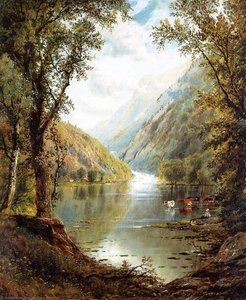
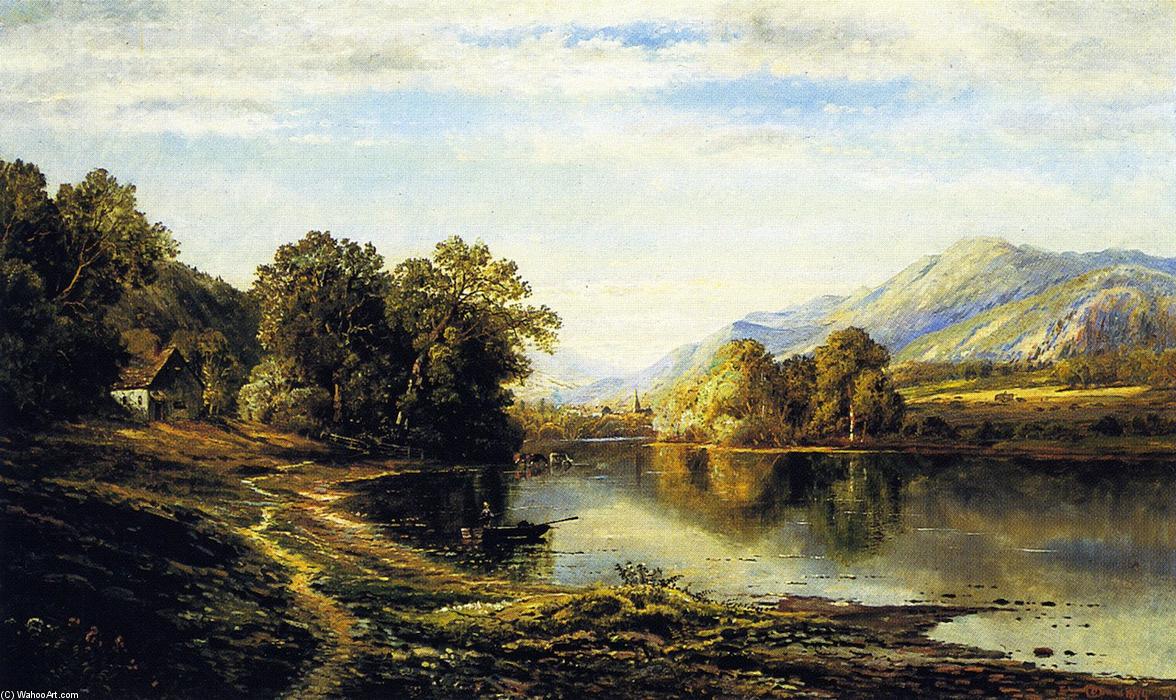
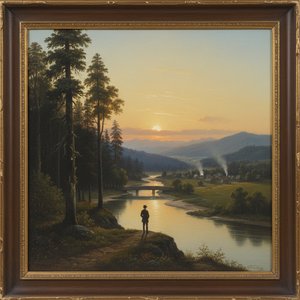
Lazy Sunday


 Read More
Hand Made Oil Reproduction
Hand-painted oil on canvas in your size and frame, made to order by our artists. ( Buy Print Buy Image)




P118B $10

P118H $10

P118W $10

P438Z $10

P508JH $12

P508YH $12

P805H $10

P805Z $10

P919BZ $10

P919G $10

P919XJ $10

P959ZH $10

P968JZ $12

W106C $8

W218G $10

W218JH $8

W218Y $10

W307PJ $10

W316G $10

W316PJ $8

W316Y $10

W398PJ $8

W4111J $10

W500HY $15

W500JH $15

W692G $12

W849H $8

W940BG $15

W953PJ $8




Pick from our preset sizes that match the artwork's original proportions.

You may enter your own dimensions to fit a specific frame or space. If your selected size does not match the original image's proportions, we will either crop the artwork or extend the painting with additional hand-painted elements. A digital mockup will be sent for your approval before production begins.
Please note that the on-screen preview does not reflect the actual cropping or extension. Only the mockup will accurately show the final composition.
While custom sizes are available, we recommend selecting a dimension from the predefined list to preserve the original proportions.
After order, ArtsDot.com team will email client for instructions and provide a mockup preview
Worldwide Delivery () in 3/4 weeks instead of standard 5 weeks. (17 August). No compromise on quality.

Free Worldwide Express Shipping

High-Quality Linen Canvas

Full Shipping Insurance

Customs Tax Refund Guarantee

True Color Matching Guarantee

60-Day Return Policy (Defects Only)

100% Money-Back Guarantee

Bulk Discount Offer
 Glass option is only available in size under 110 CM

Lazy Sunday
Reproduction Medium
Reproduction Size
-


Total Price
$ 263
Related Artworks
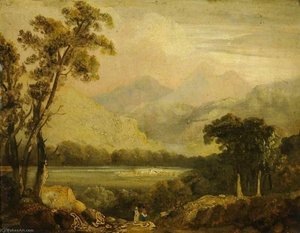
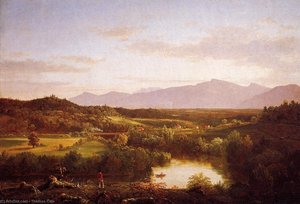
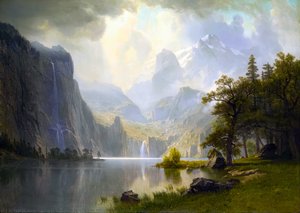
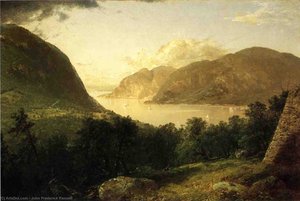
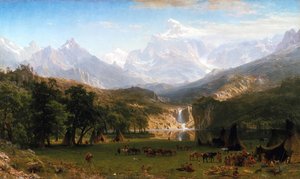
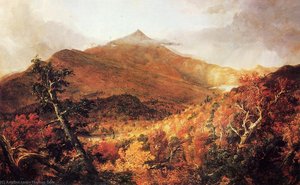
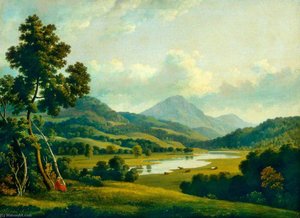
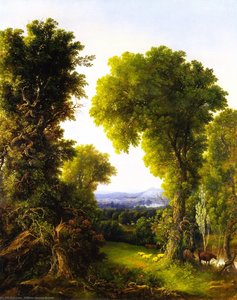
Artist Biography
William McTaggart: Bridging Impressionism and the Scottish Landscape
Born in 1835 in the remote village of Aros, on the windswept Kintyre peninsula of Scotland, William McTaggart’s artistic journey was profoundly shaped by his upbringing amidst the rugged beauty of the Atlantic coast. This early immersion in a dramatic and ever-changing environment would become the cornerstone of his lifelong dedication to capturing the essence of the Scottish landscape – a pursuit that ultimately defined his unique contribution to 19th-century art. His life, though marked by periods of travel and study, remained inextricably linked to the visual memory of his native land, influencing every brushstroke he laid down.
McTaggart’s formal artistic training began at the Trustees' Academy in Edinburgh, where he honed his skills under Robert Scott Lauder. Early works demonstrated a strong inclination towards figure painting, often depicting children with a sensitivity that hinted at a deeper understanding of human emotion. However, it was his subsequent travels to Italy and Florence – experiences meticulously documented in his diaries – that proved transformative. These journeys exposed him to the burgeoning currents of Impressionism, particularly the techniques employed by artists like Monet and Renoir, who were capturing fleeting moments of light and atmosphere with unprecedented immediacy. He embraced this new approach, abandoning the more rigid conventions of academic painting and prioritizing the direct observation of nature.
Returning to Scotland, McTaggart’s style underwent a significant evolution. He began to translate his Italian influences into a distinctly Scottish idiom, focusing on the dramatic interplay of light and water along the west coast. His paintings are characterized by bold brushwork, vibrant color palettes – often dominated by blues, greens, and greys – and an emphasis on capturing the transient effects of weather and time. He wasn’t simply depicting landscapes; he was conveying a sense of mood, atmosphere, and the raw power of nature. The influence of Turner is readily apparent in his dramatic compositions and masterful use of light, yet McTaggart's work retains a uniquely Scottish sensibility, rooted in the specific geological and atmospheric conditions of his homeland.
The Influence of Impressionism and Marine Art
McTaggart’s artistic development was inextricably linked to the broader European art scene. The arrival of Impressionism in Britain represented a radical departure from established academic traditions, encouraging artists to prioritize personal observation and subjective experience over meticulous detail and historical narrative. McTaggart embraced this shift wholeheartedly, adopting techniques such as *plein air* painting – working directly outdoors – and employing broken color to create the illusion of light and atmosphere. His marine paintings, in particular, demonstrate a deep understanding of the complexities of water, capturing its shimmering surface, turbulent depths, and ever-changing reflections with remarkable skill.
Furthermore, McTaggart’s fascination with the sea extended beyond mere representation; he seemed to be exploring the psychological impact of the ocean on the human spirit. His paintings often evoke a sense of solitude, contemplation, and awe in the face of nature's immensity. This connection between art and emotion was a hallmark of Impressionism, and McTaggart’s work exemplifies this approach perfectly.
A Life Dedicated to Landscape and Marine Painting
Following his initial success at the Royal Scottish Academy, McTaggart continued to exhibit his work throughout his career. He established a studio in Lasswade, near Edinburgh, where he produced a prolific body of paintings depicting the surrounding countryside – particularly the Moorfoot Hills, which became a recurring subject matter. His later years were spent primarily in Pau, France, and then back in Scotland, continuing to paint landscapes and seascapes with unwavering dedication.
Beyond his artistic pursuits, McTaggart was also a respected figure within the Scottish art community, serving as Librarian at the Royal Academy and Curator of the Painted Hall at Greenwich. He mentored several young artists, including James Campbell Noble, ensuring that his techniques and insights would continue to influence future generations of Scottish painters. His legacy extends beyond individual works; he helped shape the direction of landscape painting in Scotland during a period of significant artistic innovation.
Historical Significance and Artistic Legacy
William McTaggart’s contribution to art history is often recognized as a pivotal link between Impressionism and the Scottish tradition. He successfully synthesized these diverse influences, creating a uniquely personal style that captured the essence of his homeland with remarkable sensitivity and skill. His paintings are not merely depictions of landscapes; they are profound meditations on nature, light, and the human experience.
McTaggart’s work is now held in several prominent collections, including the National Galleries of Scotland and the Glasgow Museums & Art Gallery. His paintings continue to be admired for their technical brilliance, emotional depth, and evocative power – solidifying his place as one of Scotland's most important landscape artists of the 19th century. He remains a testament to the enduring appeal of capturing the beauty and drama of the natural world through the lens of artistic vision.
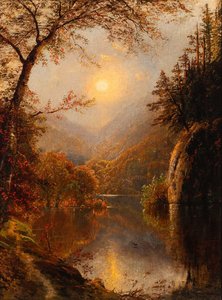
edmund darch lewis
1835 - 1910 , United States of America
Quick Facts
- Artistic Movement Or Style: Landscape/Marine Impressionism
- Artists Or Movements Influenced By This Artist: ['Scottish Impressionism']
- Artists Who Influenced This Artist:
- Constable
- Turner
- Date Of Birth: 25 Oct 1835
- Date Of Death: 2 Apr 1910
- Full Name: William McTaggart
- Nationality: Scottish
- Notable Artworks:
- Moorfoot Hills
- Venetian Scene
- La Promenade de Montauban
- Place Of Birth: Aros, Argyll & Bute, Scotland
Related Articles
Hudson River School: 10 Masterpieces That Capture America's Wild Beauty | ArtsDot
Journey through America's breathtaking landscapes with our guide to the Top 10 Hudson River School masterpieces. Explore Thomas Cole, Frederic Church & more! Find museum-quality art reproductions and elevate your home decor at ArtsDot.com.

The Sublime Landscape: Exploring the Hudson River School Movement
Explore the captivating world of the Hudson River School! Discover the history, artists, and defining characteristics of this iconic American art movement. Learn about Romanticism's influence & find inspiration for your collection.
Robert Spencer: Luminism, Narrative & the American Landscape Tradition
Explore the captivating world of Luminism & the Hudson River School with our expert analysis. Discover the history, artists, and enduring beauty of 19th-century American landscape painting. Find museum-quality reproductions at ArtsDot.

Beyond the Horizon: 10 Landscape Masterpieces for Your Home Decor
Journey through 10 breathtaking landscape paintings by Monet, Van Gogh & more! Explore iconic artworks, artistic techniques & find inspiration for your home decor. Museum-quality reproductions at ArtsDot.com. Discover all masterpieces on ArtsDot.com

Echoes of Arcadia: Nostalgia & Transformation in Vintage Landscape Art
Explore the evocative world of vintage landscape art! Discover the history, artists & emotional power behind masterpieces from the Hudson River School & beyond. Expert insights for collectors & enthusiasts.