 Preview
 Send
Send Share
Share
 Details

 Download
 Similars
 X-Ray
X-Ray Diaporama
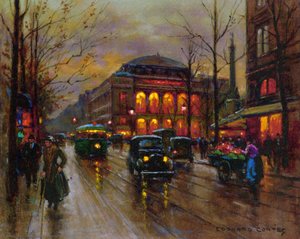
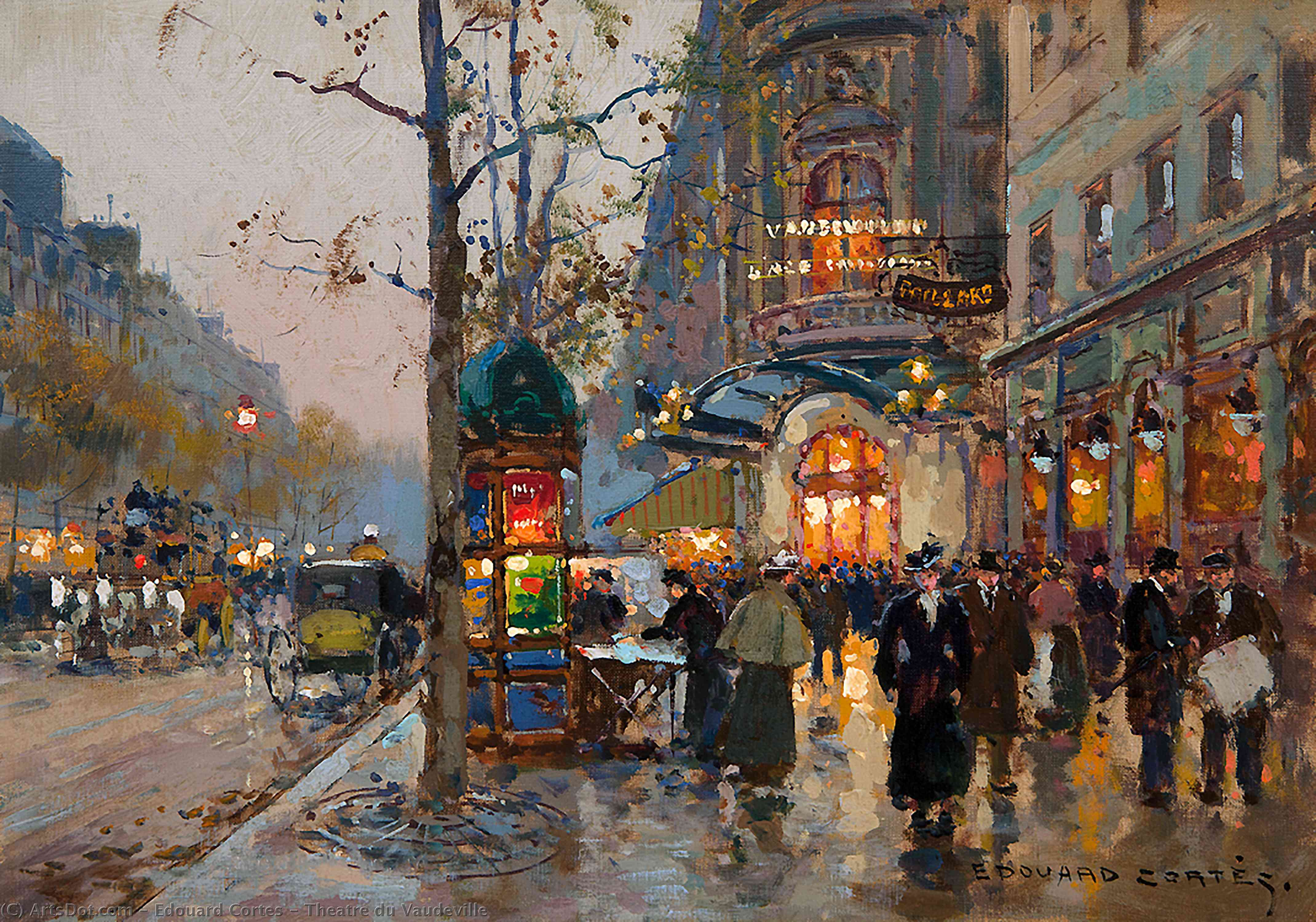
Theatre du Vaudeville


 Read More
Giclée / Art Print
Museum-quality giclée or canvas print with fast production and flexible finish options. ( Buy Hand Made Painting Buy Image)




P118B $10

P118H $10

P118W $10

P438Z $10

P508JH $12

P508YH $12

P805H $10

P805Z $10

P919BZ $10

P919G $10

P919XJ $10

P959ZH $10

P968JZ $12

W106C $8

W218G $10

W218JH $8

W218Y $10

W307PJ $10

W316G $10

W316PJ $8

W316Y $10

W398PJ $8

W4111J $10

W500HY $15

W500JH $15

W692G $12

W849H $8

W940BG $15

W953PJ $8




Pick from our preset sizes that match the artwork's original proportions.

You may enter your own dimensions to fit a specific frame or space. If your selected size does not match the original image's proportions, we will either crop the artwork or extend the image with a mirrored or solid-fill edge. A digital mockup will be sent for your approval before production begins.
Please note that the on-screen preview does not reflect the actual cropping or extension. Only the mockup will accurately show the final composition.
While custom sizes are available, we recommend selecting a dimension from the predefined list to preserve the original proportions.
Worldwide Delivery () in 2 weeks instead of standard 4/5 weeks. (16 August)

Free Worldwide Express Shipping

High-Quality Linen Canvas

Full Shipping Insurance

Customs Tax Refund Guarantee

True Color Matching Guarantee

60-Day Return Policy (Defects Only)

100% Money-Back Guarantee

Bulk Discount Offer
 Glass option is only available in size under 110 CM

Theatre du Vaudeville
Giclée / Art Print
Reproduction Size
-


Total Price
$ 63
Collectible Description
A Parisian Reverie Captured in Oil
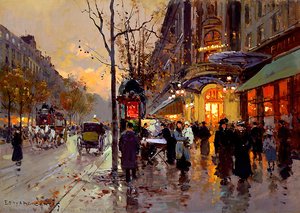
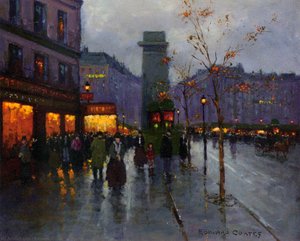
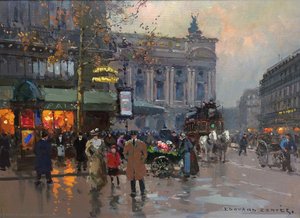
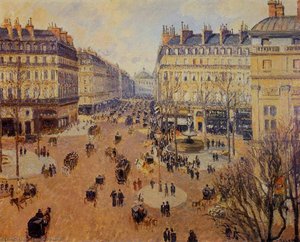
Edouard Cortès, a name often whispered with reverence among collectors of Post-Impressionist art, gifted us with a remarkable window into the heart of late 19th-century Paris. “Théâtre du Vaudeville,” a scene brimming with urban life and subtly infused with melancholy, isn’t merely a depiction of a rainy street; it's an evocation of a specific mood, a fleeting moment suspended in time. Cortès, born in Lagny-sur-Marne in 1882 – a town that nurtured his artistic spirit before he embraced the vibrant pulse of Paris – possessed a singular ability to translate the city’s energy onto canvas. His early work, like “La Labour,” already signaled a talent for capturing the essence of everyday life, and "Théâtre du Vaudeville" represents a culmination of this skill, showcasing his mastery of light, color, and composition.
- Subject Matter: The painting’s subject is deceptively simple – a bustling Parisian street during a downpour. Yet, Cortès elevates this commonplace scene through meticulous detail and an astute understanding of human behavior.
- Style & Technique: Clearly rooted in Post-Impressionism, the work demonstrates Cortès' characteristic brushwork—loose yet controlled, conveying movement and atmosphere with remarkable precision. The artist employs broken color to create a shimmering effect on the wet pavement and umbrellas, while his use of light is masterful, casting dramatic shadows that deepen the sense of depth and realism.
- Historical Context: Painted during a period of rapid industrialization and social change in Paris, “Théâtre du Vaudeville” offers a poignant glimpse into the lives of ordinary Parisians navigating their daily routines amidst the city’s growing complexities. The presence of the horse-drawn carriage speaks to a bygone era, while the figures themselves embody the spirit of a vibrant, evolving metropolis.
The Poetic Soul of a Parisian Painter
Édouard Cortès earned his moniker, “Le Poète Parisien de la Peinture,” not through grand pronouncements but through the quiet intensity and emotional resonance he brought to his work. His lineage – tracing back to a Spanish royal painter – instilled in him a deep appreciation for artistic tradition, yet he forged his own path with unwavering conviction. Cortès’s approach was deeply personal; he famously declared himself “a student of myself,” reflecting a commitment to self-discovery and an uncompromising pursuit of artistic truth. This dedication is palpably present in "Théâtre du Vaudeville," where the artist's eye for detail and his ability to capture human emotion are truly remarkable. The painting isn’t just about depicting a street scene; it’s about conveying a feeling – a sense of quiet contemplation amidst the chaos of urban life.
Symbolism and Emotional Impact
The rain itself is a crucial element, acting as more than just a meteorological backdrop. It symbolizes both cleansing and melancholy, reflecting the transient nature of life and the inevitable passage of time. The figures huddled beneath their umbrellas represent humanity’s shared vulnerability in the face of adversity – a universal theme that resonates across cultures and generations. The composition, with its diagonal lines and dynamic arrangement of figures, creates a sense of movement and energy, drawing the viewer into the heart of the scene. Cortès' masterful use of color—the muted tones of gray and brown punctuated by flashes of brighter hues—further enhances the painting’s emotional impact, creating a mood that is both beautiful and poignant.
Own a Piece of Parisian History
A handmade oil painting reproduction of “Théâtre du Vaudeville” offers an unparalleled opportunity to bring a masterpiece of Post-Impressionism into your home or office. Available through ArtsDot.com, this meticulously crafted reproduction captures the essence of Cortès’s original work with exceptional fidelity. It's more than just a print; it’s a tangible connection to a pivotal moment in art history and a testament to the enduring beauty of Parisian life.
Related Artworks

Artist Biography
The Parisian Poet: A Life in Light and Shadow
Édouard Léon Cortès, affectionately known as “Le Poète Parisien de la Peinture” – the Parisian Poet of Painting – wasn’t born into the glittering world he would so vividly capture on canvas. His origins lay in Lagny-sur-Marne, a quiet town east of Paris, where he arrived on August 6th, 1882. Though France was his birthplace, artistic lineage flowed through his veins from his Spanish father, Antonio Cortés, a painter who had once served the Spanish Royal Court. This heritage instilled within young Édouard an early appreciation for artistry and a dedication to honing his skills. He began formal studies at the École des Beaux-Arts in Paris at just seventeen, immersing himself in the techniques of the masters while simultaneously forging his own distinct path. Even then, Cortès possessed a fiercely independent spirit, playfully rebuffing suggestions that he was merely a student of any particular master, declaring himself “a student of myself only.” This self-reliance would become a hallmark of his career and artistic vision.Capturing the Soul of Paris
Cortès’s name became synonymous with Parisian cityscapes. He didn't simply paint buildings; he painted atmospheres – the soft glow of gas lamps on rain-slicked cobblestones, the bustling energy of boulevards teeming with life, the quiet intimacy of a café scene unfolding under a hazy sky. His work wasn’t about grand monuments or historical events, but rather the everyday poetry of Parisian existence. He possessed an uncanny ability to capture fleeting moments – a shaft of sunlight illuminating Notre Dame, the vibrant colors reflected in puddles after a shower, the hushed anticipation before a performance at the Opera. These weren't idealized visions; they were honest portrayals of a city brimming with life, beauty, and a touch of melancholy. His palette favored muted tones, skillfully blended to evoke mood and atmosphere, often employing shades of gray, blue, and ochre that perfectly mirrored the Parisian climate. He wasn’t interested in radical experimentation or abstract forms; his focus remained steadfastly on representing the world as he saw it – beautiful, transient, and deeply evocative.A Soldier's Brush: War and Resilience
The idyllic world Cortès painted was shattered by the outbreak of World War I. Despite being a committed pacifist, duty called, and at the age of thirty-two, he enlisted in the French Infantry Regiment. The horrors of war profoundly impacted him, yet even amidst the chaos and destruction, his artistic spirit endured. Wounded early in the conflict, he was reassigned to utilize his talent for sketching, tasked with mapping enemy positions. This experience, though harrowing, likely sharpened his observational skills and deepened his appreciation for the fragility of life – themes that would subtly permeate his later work. He refused the Légion d'Honneur offered by the French government, a testament to his unwavering pacifist beliefs. Personal tragedy also struck during this period; his first wife, Fernande Joyeuse, passed away in 1918, leaving him with their daughter, Jacqueline Simone. He later married Fernande’s sister, Lucienne Joyeuse, finding solace and companionship amidst the lingering shadows of war.Recognition and Legacy
Following the war, Cortès's career flourished. His work was first exhibited in North America in 1945, introducing his Parisian scenes to a wider audience and solidifying his international reputation. He continued to paint prolifically, capturing the evolving face of Paris while remaining true to his signature style. In his final year, 1969, he received the prestigious Prix Antoine-Quinson from the Salon de Vincennes – a fitting tribute to a lifetime dedicated to artistic expression. Cortès lived a remarkably simple life, surrounded by close friends and devoted to his craft. He passed away on November 26th, 1969, in Lagny-sur-Marne, leaving behind a vast body of work that continues to captivate art lovers worldwide. Today, a street bears his name in his hometown, a lasting testament to the “Parisian Poet” who immortalized the city’s soul on canvas. His paintings remain highly sought after, not merely as decorative pieces but as windows into a bygone era – glimpses of a Paris that exists now primarily through his evocative and enduring art.Influences and Artistic Kinship
While Cortès developed a uniquely personal style, echoes of other masters can be discerned within his work. The atmospheric effects and subtle play of light recall the Impressionists, particularly Camille Pissarro and Alfred Sisley. However, he lacked their focus on pure optical sensation, instead prioritizing narrative and emotional resonance. Post-Impressionist artists like Eugène Boudin also influenced his approach to capturing fleeting moments and atmospheric conditions. His dedication to depicting everyday life aligns him with Realist painters, yet his romanticized vision of Paris elevates his work beyond mere documentation. He wasn’t attempting to replicate reality precisely; he was striving to capture its essence, its mood, its poetry. Artists like Frederick Soulacroix and Paul Gauguin, though distinct in their styles, shared Cortès's fascination with capturing the spirit of a place and its people, imbuing their canvases with a sense of atmosphere and emotion. His legacy lies not in revolutionizing painting but in perfecting a particular vision – a deeply personal and profoundly moving portrayal of Paris that continues to resonate with audiences today.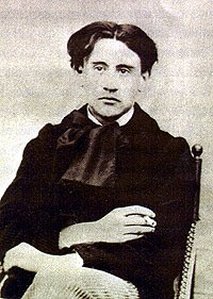
Edouard Cortès
1882 - 1969 , France
Quick Facts
- Artistic Movement Or Style: Post-Impressionism
- Date Of Birth: August 6, 1882
- Date Of Death: November 26, 1969
- Full Name: Edouard Leon Cortes
- Nationality: French
- Notable Artworks:
- The Draughtsman...
- Boulevard a Paris
- St.Martin
- Place Of Birth: Lagny-sur-Marne, France
Related Articles
Édouard Cortès: Capturing Parisian Life – A Comprehensive Study of the 'Painter of Paris'
Explore the captivating world of Édouard Cortès, 'The Painter of Paris'. Discover his iconic street scenes, unique style & lasting legacy. Expert insights for collectors and art enthusiasts.
Post-Impressionism's 10 Defining Masterpieces: Art for Your Home |
Journey through Post-Impressionism's 10 defining masterpieces – Van Gogh, Monet & more. Explore iconic paintings, art history & find museum-quality reproductions for your home at . Discover all masterpieces online!
Beyond Light & Color: Impressionism vs. Post-Impressionism for the Discerning Collector
Explore the nuances of Impressionism & Post-Impressionism with . Expert insights for collectors on style, investment, and acquiring museum-quality reproductions.
Beyond Impressionism: Exploring the Emotional Depth of Post-Impressionist Painting
Explore the profound emotional depth & innovative techniques of Post-Impressionism with ArtsDot. Discover Cézanne, Van Gogh, Gauguin & more – and their lasting impact on modern art.
Fleeting Moments & Radiant Light: Exploring the Enduring Legacy of Impressionism
Explore the captivating world of Impressionism! Discover its history, key artists like Monet & Renoir, defining techniques, and lasting impact on modern art. Expert insights for collectors.