 Preview
 Send
Send Share
Share
 Details

 Download
 Similars
 X-Ray
X-Ray Diaporama
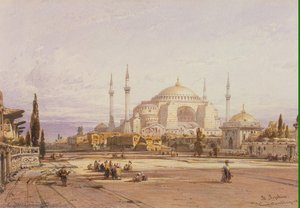
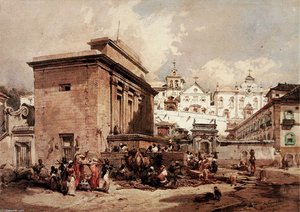
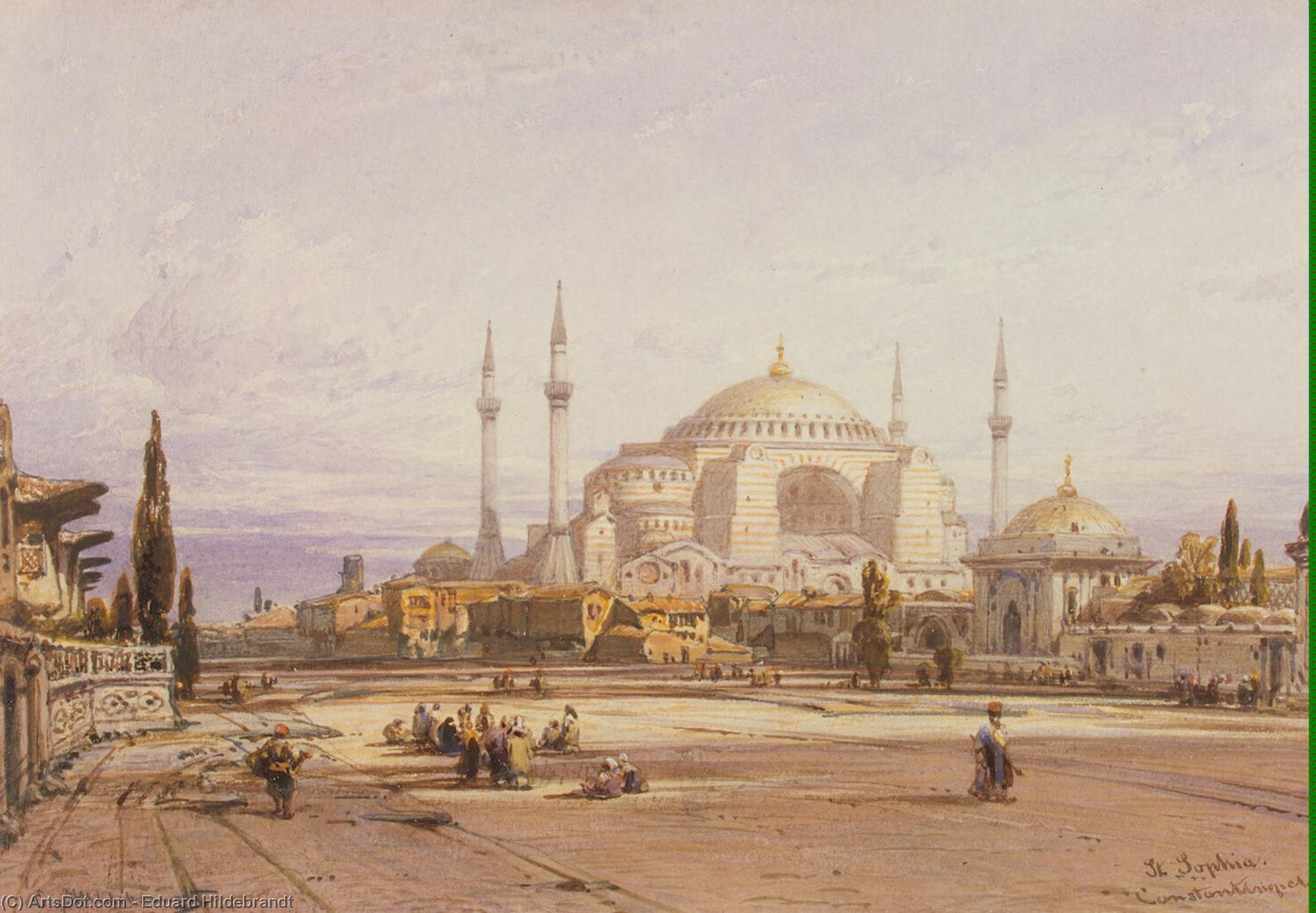
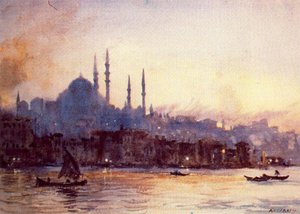
View of the Hagia Sophia in Constantinople
 Watercolor
- WallArt
- Romanticism
 1852
1852- 19th Century
 210.0 x 295.0 cm
 Hermitage Museum
 Read More
Hand Made Oil Reproduction
Hand-painted oil on canvas in your size and frame, made to order by our artists. ( Buy Print Buy Image)




P118B $10

P118H $10

P118W $10

P438Z $10

P508JH $12

P508YH $12

P805H $10

P805Z $10

P919BZ $10

P919G $10

P919XJ $10

P959ZH $10

P968JZ $12

W106C $8

W218G $10

W218JH $8

W218Y $10

W307PJ $10

W316G $10

W316PJ $8

W316Y $10

W398PJ $8

W4111J $10

W500HY $15

W500JH $15

W692G $12

W849H $8

W940BG $15

W953PJ $8




Pick from our preset sizes that match the artwork's original proportions.

You may enter your own dimensions to fit a specific frame or space. If your selected size does not match the original image's proportions, we will either crop the artwork or extend the painting with additional hand-painted elements. A digital mockup will be sent for your approval before production begins.
Please note that the on-screen preview does not reflect the actual cropping or extension. Only the mockup will accurately show the final composition.
While custom sizes are available, we recommend selecting a dimension from the predefined list to preserve the original proportions.
After order, ArtsDot.com team will email client for instructions and provide a mockup preview
Worldwide Delivery () in 3/4 weeks instead of standard 5 weeks. (30 August). No compromise on quality.

Free Worldwide Express Shipping

High-Quality Linen Canvas

Full Shipping Insurance

Customs Tax Refund Guarantee

True Color Matching Guarantee

60-Day Return Policy (Defects Only)

100% Money-Back Guarantee

Bulk Discount Offer
 Glass option is only available in size under 110 CM

View of the Hagia Sophia in Constantinople
Reproduction Medium
Reproduction Size
-


Total Price
$ 263
A Glimpse Through Time: The Majesty of Hagia Sophia
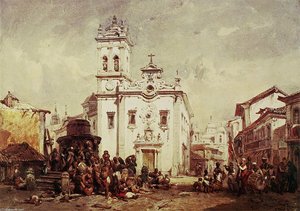
To gaze upon this watercolor rendering of the Hagia Sophia in Constantinople is to be transported across the veil of time, standing at the threshold of Byzantine grandeur. Eduard Hildebrandt captured not merely a building, but an enduring spirit—a monumental testament to human ambition, faith, and architectural genius. The scene unfolds with breathtaking scope; the massive structure dominates the composition, its multiple domes and soaring towers reaching toward an imagined celestial expanse. Yet, what elevates this piece beyond mere topographical record is the vibrant life woven into its periphery. Scattered across the foreground and middle ground are figures—dozens of them, engaged in the quiet rhythms of daily existence. They drift through the space like living accents against the permanence of stone, inviting the viewer to become a silent observer in a moment suspended between history and the present.
The Artistry of Light and Atmosphere
Hildebrandt’s mastery is most evident in his handling of light. This watercolor technique allows for an ethereal quality, making the sunlight seem both tangible and dreamlike as it washes over the aged stone. The artist possesses a remarkable gift for capturing atmosphere; one can almost feel the Mediterranean warmth and hear the distant murmur of voices echoing off the vast courtyards. While the architecture speaks of imperial power and deep religious history, Hildebrandt tempers this grandeur with delicate brushwork applied to the surrounding foliage and the subtle gestures of the people. This balance—between the immutable monument and the fleeting moment—is the hallmark of his genius.
Historical Resonance and Artistic Journey
Painted in 1852, this work situates itself within a period of intense European fascination with the Near East and the remnants of classical empires. For an artist like Eduard Hildebrandt, whose own journey involved absorbing the vibrant light studies of the French *École de Barbizon* while rooted in German academic tradition, Constantinople offered a perfect confluence of subject matter and technical challenge. The painting serves as a beautiful dialogue between Western artistic sensibilities—a love for atmospheric landscape and human narrative—and the unparalleled historical weight of Byzantine art. It is a record made with an artist’s heart, not just his eye.
Bringing Byzantium Home: Decorating with History
For the discerning collector or designer, this reproduction offers more than just wall decor; it offers a narrative anchor for any space. Imagine this scene rendered in exquisite detail within a drawing-room or gallery setting. The soft luminosity of the watercolor style pairs beautifully with both opulent and minimalist interiors, adding an immediate layer of cultured depth. It speaks to a sophisticated appreciation for global history and masterful travel art. Owning this piece is to curate a conversation starter—a quiet acknowledgment of enduring beauty that transcends borders and centuries.
Related Artworks

Artist Biography
Eduard Hildebrandt: A Pioneer of Global Landscapes
Eduard Hildebrandt, born in Gdańsk (then Danzig), Poland, on September 9, 1818, and tragically passing away in Berlin in 1868, stands as a compelling figure in 19th-century European art. Initially apprenticed to his father, a house painter, Hildebrandt’s artistic journey took an unexpected turn when he moved to Berlin at the tender age of twenty. There, under the tutelage of Wilhelm Krause, a seascape artist, he began to hone his skills, initially studying the established conventions of the Berlin Academy. However, it was a chance encounter with masterpieces displayed within the academy that ignited a fervent curiosity and a yearning for something beyond the rigid formalism of the school. This pivotal moment spurred him to travel to Paris, where he immersed himself in the vibrant atmosphere of the Isabey atelier, learning from the masters of the French *École de Barbizon* and absorbing their techniques of light, color, and atmospheric perspective.Early Influences and Parisian Training
Hildebrandt’s time in Paris proved transformative. He quickly mastered the nuances of brushwork and the secrets to capturing fleeting moments and dramatic effects – skills he diligently brought back to Germany. Crucially, his exposure to French art wasn't merely a superficial imitation; it fostered a spirit of innovation and a desire to move beyond mere replication. He developed an eye for detail, particularly in rendering figures within landscapes, a skill that would later become central to his distinctive style. The influence of the Parisian school is undeniable, yet Hildebrandt skillfully integrated these techniques with his own burgeoning artistic vision, creating works that possessed both technical proficiency and a palpable sense of observation.A World on Canvas: Travels and Artistic Evolution
The true turning point in Hildebrandt’s career arrived through a series of extraordinary journeys. Under the guidance of Alexander von Humboldt, a renowned naturalist and explorer, he embarked on extensive travels throughout South America, North America, the Middle East, India, and Asia. These expeditions weren't simply vacations; they were profound experiences that fundamentally reshaped his artistic perspective. He documented these vast landscapes – from the towering Andes to the bustling bazaars of Cairo – with an unprecedented level of detail and a remarkable ability to capture the essence of each location. His work during this period, particularly his watercolors, became renowned for their vibrant colors, dramatic lighting, and evocative atmosphere. Notably, he was commissioned by the Prussian King Frederick William IV to create a series of paintings depicting scenes from his travels, securing his position as a prominent artist of his time.Style and Legacy: Watercolors and the "Round the World" Collection
While Hildebrandt produced oil paintings throughout his career, he is most celebrated for his watercolors. These delicate yet powerful works capture the immediacy of observation, revealing a remarkable sensitivity to light, color, and texture. His style evolved over time, moving from meticulous detail to a more expressive approach that prioritized capturing the *feeling* of a place rather than an exact representation. His later work, particularly his sketches from his "Round the World" journey (1844-1851), is considered a landmark achievement in travel art. These watercolors, exhibited in London in 1866, offered viewers a breathtaking panorama of the world as seen through Hildebrandt’s eyes – a testament to his adventurous spirit and artistic skill. Despite a shift towards looser brushwork later in life, reflecting a desire for broader scenic views, his legacy rests primarily on these evocative sketches, representing a unique blend of observation, imagination, and technical mastery.Historical Significance and Lasting Impact
Eduard Hildebrandt’s work holds significant historical value as a visual record of 19th-century exploration and globalization. His paintings offer invaluable insights into the landscapes, cultures, and people of a world undergoing rapid transformation. While his later years were marked by a decline in meticulous detail due to a shift towards capturing expansive vistas, his earlier works—particularly those produced during his Parisian training and extensive travels—remain highly regarded for their technical skill, atmospheric depth, and captivating portrayal of the world. Hildebrandt’s legacy endures not only through his paintings but also as an exemplar of artistic exploration and the power of travel to shape an artist's vision.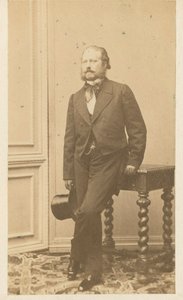
Eduard Hildebrandt
1818 - 1868 , Poland
Quick Facts
- Artistic Movement Or Style: Landscape painting
- Artists Or Movements Influenced By This Artist: ['French School Painting']
- Artists Who Influenced This Artist: ['Wilhelm Krause']
- Date Of Birth: September 9, 1818
- Date Of Death: October 25, 1868
- Full Name: Eduard Hildebrandt
- Nationality: German
- Notable Artworks:
- Rua Do Ouvidor, Rio de Janeiro
- San Vicente, Lisbon
- Place Of Birth: Danzig (Poland)
Related Articles

Watercolor Wonders: 10 Masterpieces That Redefined Art History | ArtsDot
Journey through 10 legendary watercolor masterpieces by Sargent, Turner & Homer! Explore iconic landscapes, portraits & floral art that redefined history. Find museum-quality reproductions and curated decor ideas at ArtsDot.com.

Ephemeral Visions: Exploring the Artistic Legacy & Contemporary Practice of Watercolor Painting
Explore the captivating world of watercolor painting! Discover its rich history, essential techniques, influential artists & collecting tips. A comprehensive guide for art enthusiasts from ArtsDot.

Ephemeral Visions: Exploring the History & Emotional Resonance of Watercolor Painting
Explore the captivating history of watercolor painting, from ancient techniques to modern masters like Kandinsky & Blake. Discover essential artists, collecting tips & the emotional power of this luminous medium. Expert insights for art enthusiasts.

Ephemeral Visions: Exploring the Artistic Legacy & Nuances of Watercolor Painting
Explore the captivating world of watercolor painting! Discover its rich history, essential techniques, influential artists & collecting tips from art experts. A comprehensive guide for enthusiasts.
The Enduring Appeal of Watercolor: History, Techniques & Contemporary Practice
Explore the captivating world of watercolor painting! Discover its rich history, essential techniques, influential artists, and collecting tips. A comprehensive guide for art enthusiasts.
![Paisagem com índios [Landscape with Indians]](/media/artworks/images-thumb/35/03/3503745761682c00edf657e3415924ad.jpg)
![Paisagem com negros [Landscape with Black People]](/media/artworks/images-thumb/3f/83/3f83602011978b246bb6da410c1181c3.jpg)