 Preview
 Send
Send Share
Share
 Details

 Download
 Similars
 X-Ray
X-Ray Diaporama
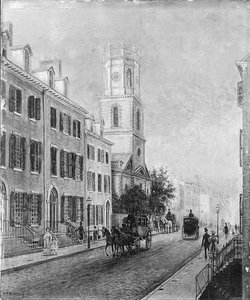
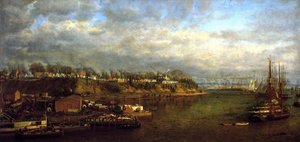
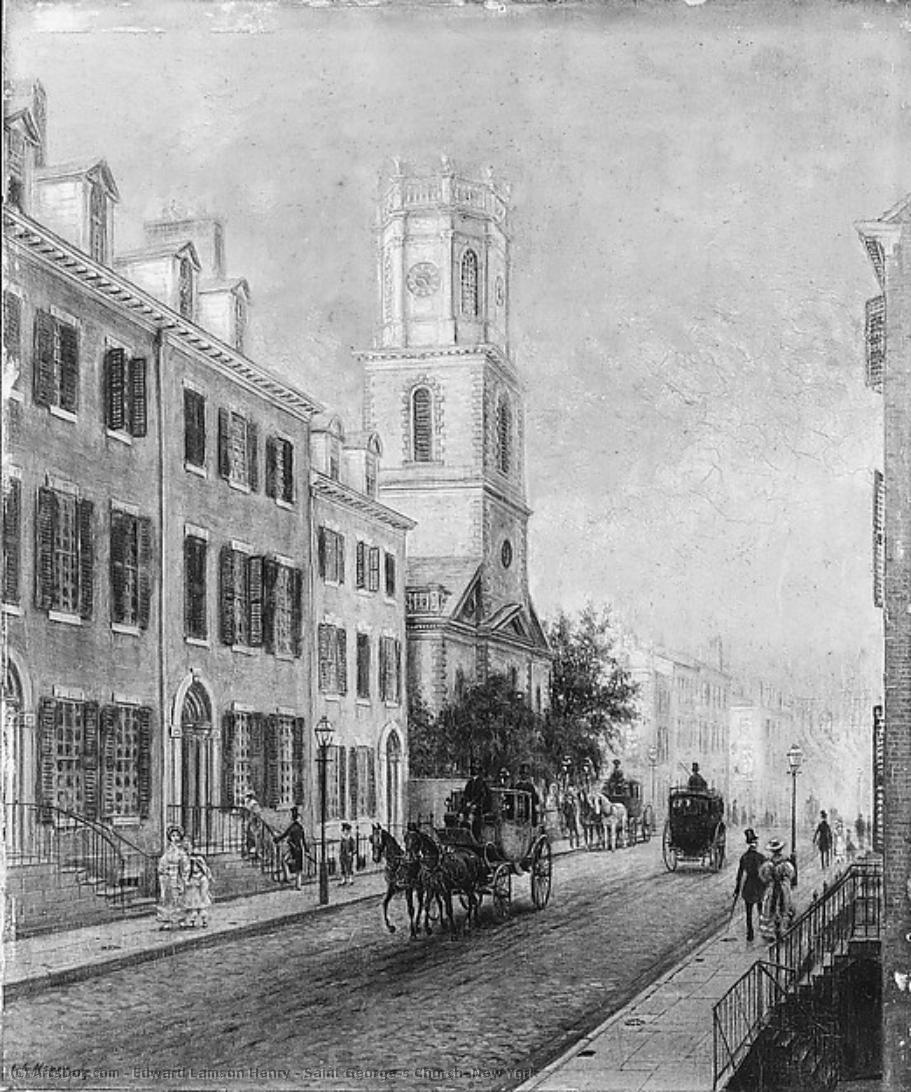
Saint George's Church, New York
 Lithograph
- WallArt
- Academic Realism
 1875
1875- 19th Century
 25.0 x 22.0 cm
 Metropolitan Museum of Art
 Read More
Giclée / Art Print
Museum-quality giclée or canvas print with fast production and flexible finish options. ( Buy Hand Made Painting Buy Image)




P118B $10

P118H $10

P118W $10

P438Z $10

P508JH $12

P508YH $12

P805H $10

P805Z $10

P919BZ $10

P919G $10

P919XJ $10

P959ZH $10

P968JZ $12

W106C $8

W218G $10

W218JH $8

W218Y $10

W307PJ $10

W316G $10

W316PJ $8

W316Y $10

W398PJ $8

W4111J $10

W500HY $15

W500JH $15

W692G $12

W849H $8

W940BG $15

W953PJ $8




Pick from our preset sizes that match the artwork's original proportions.

You may enter your own dimensions to fit a specific frame or space. If your selected size does not match the original image's proportions, we will either crop the artwork or extend the image with a mirrored or solid-fill edge. A digital mockup will be sent for your approval before production begins.
Please note that the on-screen preview does not reflect the actual cropping or extension. Only the mockup will accurately show the final composition.
While custom sizes are available, we recommend selecting a dimension from the predefined list to preserve the original proportions.
Worldwide Delivery () in 2 weeks instead of standard 4/5 weeks. (26 August)

Free Worldwide Express Shipping

High-Quality Linen Canvas

Full Shipping Insurance

Customs Tax Refund Guarantee

True Color Matching Guarantee

60-Day Return Policy (Defects Only)

100% Money-Back Guarantee

Bulk Discount Offer
 Glass option is only available in size under 110 CM

Saint George's Church, New York
Giclée / Art Print
Reproduction Size
-


Total Price
$ 63
Collectible Description
A Glimpse into Victorian Metropolis: Saint George's Church
To stand before this evocative print is to step directly into the vibrant, yet sepia-toned, heart of New York City circa 1875. Edward Lamson Henry, through his masterful rendering, has gifted us more than just a depiction of architecture; he has captured the very breath of a bygone era. The composition centers unwaveringly on Saint George's Church, its spire piercing the hazy expanse as a beacon against the dense tapestry of surrounding brick and mortar. One can almost hear the clatter of hooves on cobblestones and the murmur of countless conversations drifting from the bustling street below. It is a scene steeped in the palpable energy of progress, yet viewed through the gentle, nostalgic lens of an artist determined to preserve what was slipping away.
Mastery in Monochrome: Technique and Detail
The technical brilliance evident in this work is breathtaking. Executed likely as a lithograph or engraving, the piece showcases the meticulous skill required by 19th-century topographical artists. The entire palette is restricted to shades of gray, forcing the viewer's eye to appreciate the sheer virtuosity of line work. Observe how Henry uses fine hatching and cross-hatching not merely for shadow, but to build texture—the rough grit of aged brickwork contrasts beautifully with the implied smoothness of a passing carriage body. The artist’s command of linear perspective is profound; the street recedes in graceful lines toward a distant horizon, while atmospheric perspective softens the edges of the furthest buildings, lending an authentic depth that pulls the viewer into the scene.
Symbolism and the Weight of History
Beyond the mere documentation of structures, this print resonates with deep symbolic weight. The towering spire of Saint George's Church stands as a powerful emblem of enduring faith and community permanence amidst the relentless churn of urban modernity. Conversely, the throng of pedestrians and carriages speaks to the unstoppable momentum of human enterprise—the very definition of progress in the Victorian age. Henry masterfully juxtaposes these elements: the spiritual anchor against the material rush. It evokes a profound sense of looking back at a time when life moved with a discernible rhythm, a rhythm both exhilarating and deeply sentimental.
Bringing the Past Home: Decorating with Memory
For the discerning collector or designer, this reproduction offers an unparalleled opportunity to infuse a space with historical gravitas. Imagine this print gracing a library wall or adorning a formal drawing-room; it acts as an instant conversation starter and a quiet meditation on time's passage. The monochromatic nature allows it to harmonize with nearly any interior scheme, whether richly paneled in dark wood or styled with bright, modern accents. Owning this piece is not simply acquiring art; it is curating a tangible memory—a beautiful, enduring echo of 19th-century American life.
Related Artworks

Artist Biography
A Nostalgic Vision of America: The Life and Art of Edward Lamson Henry
Edward Lamson Henry, born in Charleston, South Carolina, in 1841, wasn’t merely a painter of scenes; he was a chronicler of a vanishing American identity. His canvases evoke a profound sense of nostalgia, meticulously reconstructing moments from the nation's past—from the bustling energy of early railroad travel to the quiet intimacy of domestic life and the lingering shadows of the Civil War. Though his early life was marked by tragedy – orphaned at the age of seven – this perhaps instilled in him a desire to preserve memories, to capture a world slipping away with each passing year. He moved to New York City to live with cousins, beginning his artistic journey amidst the burgeoning cultural landscape of the metropolis and later formalizing his training at the Pennsylvania Academy of Fine Arts in Philadelphia.Parisian Influences and the Seeds of Realism
The pivotal moment in Henry’s development arrived in 1860 with his relocation to Paris. This was a period of immense artistic ferment, and Henry found himself immersed in a circle of groundbreaking painters including Claude Monet, Pierre-Auguste Renoir, Frédéric Bazille, and Alfred Sisley—artists who would soon redefine the boundaries of art. He studied under Charles Gleyre, absorbing classical techniques, but it was Gustave Courbet’s unflinching realism that truly resonated with him. Courbet's commitment to depicting everyday life without idealization profoundly influenced Henry’s own artistic direction. While he wouldn’t fully embrace Impressionism like his contemporaries, the Parisian experience instilled in him a dedication to capturing authentic moments and a keen observation of light and atmosphere. This period was formative, laying the groundwork for his distinctive style—a blend of meticulous detail and evocative storytelling.Civil War Service and the Rise of Genre Painting
The outbreak of the American Civil War interrupted Henry’s artistic pursuits. He returned to the United States and served as a clerk on a Union transport ship, an experience that would deeply impact his later work. The war's aftermath fueled a series of paintings inspired by his observations—scenes not of grand battles but of everyday life touched by conflict. He settled in New York City, becoming part of the vibrant artistic community centered around the Tenth Street Studio Building, where he shared space with luminaries like Winslow Homer. It was during this time that Henry fully embraced genre painting – depicting scenes of ordinary people and their daily lives. He quickly gained recognition for his ability to recreate historical moments with remarkable accuracy and a touch of quaint humor. In 1869, his election to the National Academy of Design solidified his position within the American art world.A Master of Detail: Historical Fiction on Canvas
Henry’s paintings are characterized by an extraordinary attention to detail—a meticulous reconstruction of period costumes, architecture, and everyday objects. He wasn't simply painting scenes; he was building worlds. His subjects often revolved around colonial and early American themes, railroad travel, stagecoach journeys, and canal boat life. He became renowned for rendering these scenes on a minute scale, inviting viewers to immerse themselves in the intricacies of the past. However, it’s important to note that Henry's work wasn’t purely documentary. He freely admitted to artistic license, prioritizing atmosphere and narrative over strict historical accuracy—creating what contemporaries termed “historical fictions.” This willingness to embellish for emotional effect is a key element of his appeal; he wasn’t interested in simply recording history but in evoking a particular mood and sense of nostalgia. His wife, Frances Livingston Wells, played a crucial role in this process, ensuring the authenticity of details through extensive research using antiques, old photographs, and assorted Americana.Legacy and Historical Significance
Edward Lamson Henry’s work offers a unique window into 19th-century American culture—a romanticized vision of a simpler past. His paintings resonated with a public eager to embrace a sense of national identity and nostalgia for a bygone era. He was a member of the New-York Historical Society, further cementing his role as a visual historian. His dedication to detail led contemporaries to view his work as authentic reconstructions, even though he often prioritized artistic effect over strict accuracy. Later in life, Henry co-founded an artists’ colony in Cragsmoor, New York, fostering a community dedicated to preserving and celebrating American heritage. While perhaps not as widely recognized today as some of his Impressionist contemporaries, Edward Lamson Henry remains a significant figure in American art history—a master of genre painting whose evocative canvases continue to captivate viewers with their charm, detail, and enduring sense of nostalgia.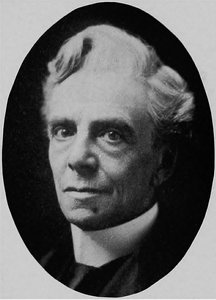
edward lamson henry
1841 - 1919 , United States of America
Quick Facts
- Artistic Movement Or Style: Genre painting
- Artists Who Influenced This Artist:
- Charles Gleyre
- Gustave Courbet
- Date Of Birth: January 12, 1841
- Date Of Death: May 9, 1919
- Full Name: Edward Lamson Henry
- Nationality: American
- Notable Artworks:
- Memories
- East Hampton Beach
- Parlor on Brooklyn Heights
- Place Of Birth: Charleston, USA
Related Articles
Engraving's Golden Age: 10 Masterpieces That Redefined Art | ArtsDot
Journey through art history with our Top 10 Legendary Engravings! Explore masterpieces by Dürer, Rembrandt & Goya. Discover the stories behind these iconic prints and find museum-quality reproductions for your home at ArtsDot.com.

Giclée Prints: Archival Quality & Aesthetic Nuances for the Discerning Collector
Explore the world of giclée prints with ArtsDot. Learn about archival quality, aesthetic nuances & investment potential. Expert guidance for discerning art collectors seeking museum-quality reproductions and lasting value.
Engraving: A Historical Survey of Technique, Artistic Expression & Enduring Legacy
Explore the rich history of engraving with ArtsDot. Discover techniques, iconic artists like Dürer & Callot, collecting tips, and expert guidance for preserving your art investment. Learn about intaglio printing & more!

19th Century Masterpieces: 10 Paintings That Defined an Era | ArtsDot
Journey through 19th century art with ArtsDot! Explore 10 iconic paintings – from Monet & Renoir to Courbet – and discover the stories behind Romanticism, Realism & Impressionism. Find museum-quality reproductions for your home decor. Explore the full collection online!

The Intricate World of Engraving: A Historical Survey of Technique, Artistic Expression & Enduring Legacy
Explore the rich history of engraving with ArtsDot. Discover techniques, iconic artists like Dürer & Callot, collecting tips, and expert guidance for preserving your art investment. Learn about intaglio printing & more!