Preview
 Send
Send Share
Share
 Details

 Download
 Similars
 X-Ray
X-Ray Diaporama
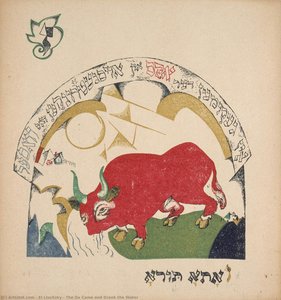
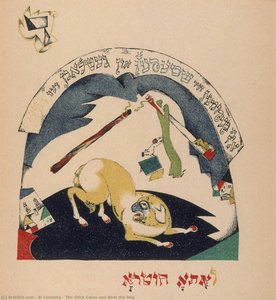
The Ox Came and Drank the Water
 Acrylic On Canvas
- WallArt
- Constructivism
 1919
1919- Early Medieval
 40.0 x 35.0 cm
 The Jewish Museum
 Read More
Hand Made Oil Reproduction
Hand-painted oil on canvas in your size and frame, made to order by our artists. ( Buy Print Buy Image)




P118B $10

P118H $10

P118W $10

P438Z $10

P508JH $12

P508YH $12

P805H $10

P805Z $10

P919BZ $10

P919G $10

P919XJ $10

P959ZH $10

P968JZ $12

W106C $8

W218G $10

W218JH $8

W218Y $10

W307PJ $10

W316G $10

W316PJ $8

W316Y $10

W398PJ $8

W4111J $10

W500HY $15

W500JH $15

W692G $12

W849H $8

W940BG $15

W953PJ $8




Pick from our preset sizes that match the artwork's original proportions.

You may enter your own dimensions to fit a specific frame or space. If your selected size does not match the original image's proportions, we will either crop the artwork or extend the painting with additional hand-painted elements. A digital mockup will be sent for your approval before production begins.
Please note that the on-screen preview does not reflect the actual cropping or extension. Only the mockup will accurately show the final composition.
While custom sizes are available, we recommend selecting a dimension from the predefined list to preserve the original proportions.
After order, ArtsDot.com team will email client for instructions and provide a mockup preview
Worldwide Delivery () in 3/4 weeks instead of standard 5 weeks. (16 August). No compromise on quality.

Free Worldwide Express Shipping

High-Quality Linen Canvas

Full Shipping Insurance

Customs Tax Refund Guarantee

True Color Matching Guarantee

60-Day Return Policy (Defects Only)

100% Money-Back Guarantee

Bulk Discount Offer
 Glass option is only available in size under 110 CM

The Ox Came and Drank the Water
Reproduction Medium
Reproduction Size
-


Total Price
$ 263
Artwork Description
A Surreal Narrative: Unpacking “The Ox Came and Drank the Water”
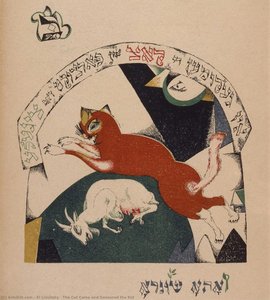
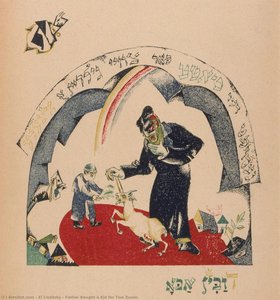
El Lissitzky’s 1919 painting, "The Ox Came and Drank the Water," is far more than a simple depiction of an animal at a water source. It's a vibrant distillation of the Aramaic folk song “The Had Gadya,” a deceptively complex narrative that has been interpreted across centuries as a parable of loss, transformation, and ultimately, acceptance. Lissitzky doesn’t simply illustrate the story; he translates it into a dynamic visual language, employing the tenets of Constructivism to create an arresting composition brimming with symbolic weight. The painting immediately draws the eye to the imposing red bull, its horns proudly raised as it drinks from the earth – a gesture simultaneously powerful and slightly absurd, hinting at both primal strength and a fundamental need.

Constructivist Geometry and a Fragmented World
Lissitzky’s signature style, deeply rooted in Constructivism, is powerfully evident here. The painting abandons traditional representational techniques in favor of geometric abstraction. Bold lines define the bull, the mountain, and the scattered figures, creating a sense of dynamism and movement. The composition isn't static; it feels like a carefully orchestrated sequence of shapes and forms, mirroring the fragmented nature of the “Had Gadya” itself – each verse building upon the last in an increasingly bizarre chain of events. Lissitzky’s use of color is equally deliberate: the dominant red of the bull commands attention, while the muted tones of the background emphasize its presence. The arrangement of the animals—the two birds soaring above, the three cows positioned strategically—further contributes to the painting's layered symbolism and visual complexity.
The Song’s Enduring Mystery & Jewish Roots
“The Had Gadya” is a song steeped in folklore and open to multiple interpretations. Originally a German ballad about a goat, it was adopted by Jewish communities and transformed into a humorous yet poignant tale of escalating animal encounters. Lissitzky's painting captures this spirit of playful absurdity while simultaneously hinting at deeper themes. The ox drinking from the ground can be seen as a symbol of sustenance, perhaps even a metaphor for life itself – drawing nourishment from the very earth. The presence of people within the scene suggests an audience to this strange spectacle, inviting us to contemplate the story’s meaning alongside them. This connection to Jewish tradition and folklore is crucial to understanding Lissitzky's artistic vision.
A Reproduction for Your Space – Bringing Lissitzky Home
ArtsDot offers meticulously crafted hand-painted reproductions of “The Ox Came and Drank the Water,” allowing you to bring this captivating artwork into your home or office. Our skilled artists replicate Lissitzky’s distinctive style with exceptional accuracy, capturing the painting's vibrant colors, dynamic composition, and underlying symbolism. Available in a range of sizes – from 40 x 35 cm to larger formats – our reproductions are printed on high-quality archival canvas using premium pigments for lasting beauty. Whether you appreciate Lissitzky’s pioneering work or simply admire its striking visual impact, a ArtsDot reproduction is a thoughtful and sophisticated addition to any collection. Explore other works by El Lissitzky at ArtsDot, where you can discover the full breadth of his artistic legacy.
Related Artworks
Artist Biography
A Revolutionary Vision: The Life and Art of El Lissitzky
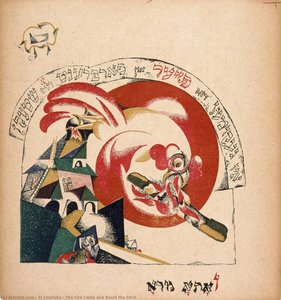
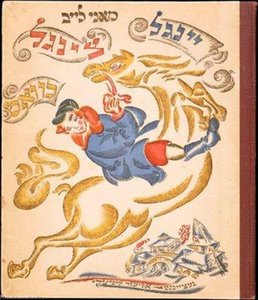
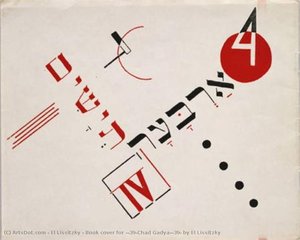
El Lissitzky, born Lazar Markovich Lissitzky in 1890 in the small Russian town of Pochinok, emerged as a pivotal figure in the tumultuous landscape of early 20th-century art. His journey was one of constant reinvention, driven by a fervent belief in the power of art to shape society and reflect the dynamism of the modern world. From his initial training as an architect and engineer – pursuits hampered by restrictions placed upon Jewish students – Lissitzky’s path diverged towards artistic expression, initially through illustrations steeped in Jewish folklore. These early works, like his cover for ‘Chad Gadya’, reveal a nascent talent already grappling with narrative and visual storytelling, hinting at the profound cultural roots that would continue to inform his aesthetic. A move to Berlin and Darmstadt broadened his horizons, but it was upon returning to Russia that Lissitzky truly found his artistic voice, becoming inextricably linked with the revolutionary fervor sweeping through the nation.The Embrace of Abstraction: Suprematism and Proun
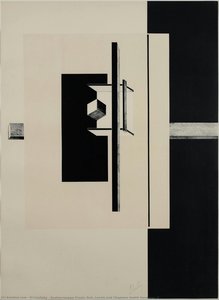
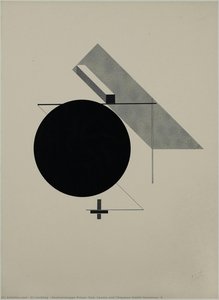
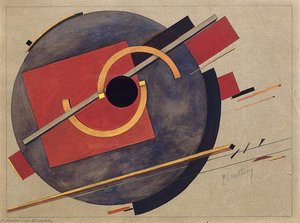
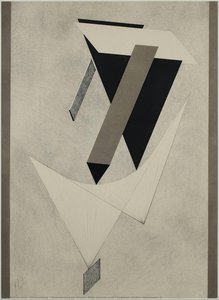
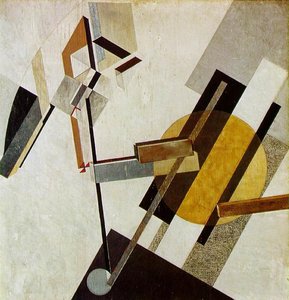
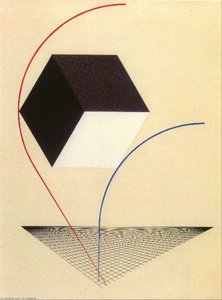
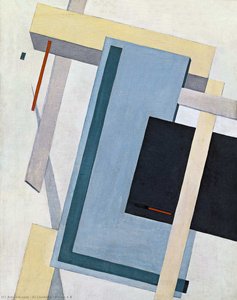
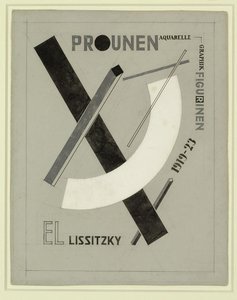
A defining moment arrived with his encounter with Kazimir Malevich and the embrace of Suprematism. This radical movement, dedicated to pure geometric abstraction, resonated deeply with Lissitzky’s desire to transcend representational art and tap into a universal visual language. He became a key member of UNovis, the Suprematist group established in Vitebsk, actively disseminating its principles through teaching and artistic production. However, Lissitzky didn't simply replicate Malevich’s style; he forged his own distinct path with the development of *Proun*. This unique series, born from a fusion of Suprematism and Constructivism, explored spatial relationships and geometric forms in dynamic compositions that often resembled architectural blueprints or exploded diagrams. Proun wasn't merely painting; it was an investigation into the very structure of space itself, a premonition of future architectural possibilities. These works, with their floating planes and intersecting lines, embodied Lissitzky’s belief in art as a force capable of constructing new realities. The influence of his engineering background is palpable here, lending a structural logic to the abstract forms.Art as Propaganda and Social Commentary
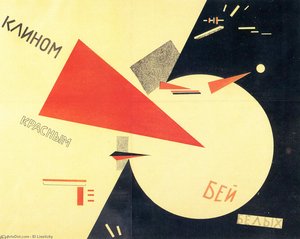
Lissitzky's artistic vision extended far beyond the canvas. He passionately believed that art should serve a social purpose, actively engaging with political ideologies and seeking ways to integrate design into everyday life. This conviction led him to become deeply involved in Soviet propaganda efforts, creating powerful posters and graphic designs intended to mobilize public support for the Bolshevik regime. His 1941 poster calling for tank construction stands as a testament to this commitment – a stark, impactful image reflecting the urgency of wartime. Beyond propaganda, Lissitzky revolutionized typography, exhibition design, and photomontage. He understood that effective communication required innovative visual strategies, and he fearlessly experimented with new techniques to convey his message. His photomontages, such as ‘The Constructor’ (1924), are particularly striking – self-portraits that blend photography with geometric abstraction, offering a complex commentary on identity and the role of the artist in society.A Cultural Ambassador: Spreading Constructivist Ideals
Lissitzky's influence transcended national borders. He served as a crucial cultural ambassador for Soviet art, disseminating Constructivist ideas throughout Western Europe, particularly in Germany. His innovative exhibition designs challenged traditional gallery spaces, creating immersive environments that actively engaged viewers. These exhibitions weren’t simply displays of artwork; they were carefully constructed experiences designed to provoke thought and inspire action. His work had a profound impact on the Bauhaus and De Stijl movements, influencing generations of artists and designers with its emphasis on geometric abstraction, functionalism, and social responsibility. He collaborated with figures like Kurt Schwitters and Theo van Doesburg, fostering a cross-cultural exchange that enriched the artistic landscape of the era.Legacy and Enduring Influence
El Lissitzky’s life was tragically cut short in 1941 in Moscow, but his legacy continues to resonate today. He bridged the gap between art and architecture, abstraction and social purpose, leaving behind a body of work that is both intellectually stimulating and visually captivating. The establishment of the Lissitzky Foundation in 2014 underscores the ongoing commitment to preserving his artistic heritage and preparing a comprehensive catalogue raisonné of his creations. His innovations in typography, exhibition design, and photomontage continue to inspire contemporary artists and designers, while his unwavering belief in the power of art as a force for social change remains profoundly relevant.- His work is held in numerous international collections
- Museums featuring his works include the Taganrog Art Museum and Novokuznetsk Art Museum.
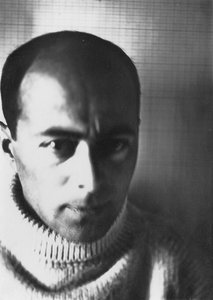
El Lissitzky
1890 - 1941 , Russia
Quick Facts
- Artistic Movement Or Style:
- Suprematism
- Constructivism
- Proun
- Artists Or Movements Influenced By This Artist:
- Bauhaus
- De Stijl
- Artists Who Influenced This Artist: ['Kazimir Malevich']
- Date Of Birth: Nov 23, 1890
- Date Of Death: Dec 30, 1941
- Full Name: El Lissitzky
- Nationality: Russian
- Notable Artworks:
- The Constructor
- Chad Gadya cover
- Proun series
- Place Of Birth: Pochinki, Russia
Related Articles

El Greco's Masterpieces: Explore 25 Iconic Paintings & Spiritual Visions | ArtsDot
Journey through El Greco's 25 most iconic paintings! Explore the spiritual depth & dramatic beauty of this Spanish Renaissance master. Discover art history, techniques & find museum-quality reproductions for your home at ArtsDot.com.
Fluid Reflections: Exploring Water's Symbolism in Art History – From Myth to Impressionism
Explore the rich symbolism of water in art history – from ancient myths to Impressionism's fleeting beauty. Discover masterpieces & find your perfect serene artwork with ArtsDot.com.
Constructivism: A Revolutionary Aesthetic – Ideology, Form & Impact on 20th-Century Art
Explore the revolutionary world of Constructivism! Discover key artists like Malevich & Lissitzky, its impact on modern art & design, and guidance for building a valuable collection. Expert insights at ArtsDot.
El Greco: Spirituality, Style & Innovation – A Renaissance Master's Legacy
Explore the captivating world of El Greco! Discover his unique style, spiritual intensity, and lasting impact on art history. Learn about this Renaissance master's life, iconic paintings & legacy.
Kazimir Malevich: 25 Masterpieces of Suprematism & Abstract Art | ArtsDot
Explore 25 iconic artworks by Kazimir Malevich, pioneer of Suprematism & abstract art. Discover the stories behind 'Black Square' and more! Find museum-quality prints & elevate your home decor with ArtsDot.com.