 Preview
 Send
Send Share
Share
 Details

 Download
 Similars
 X-Ray
X-Ray Diaporama
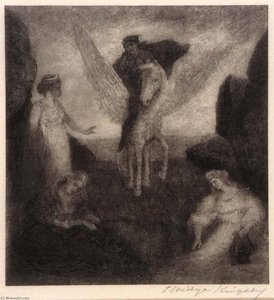
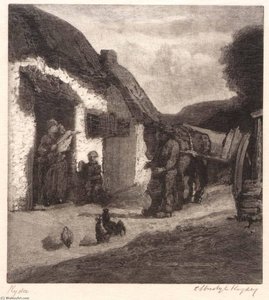
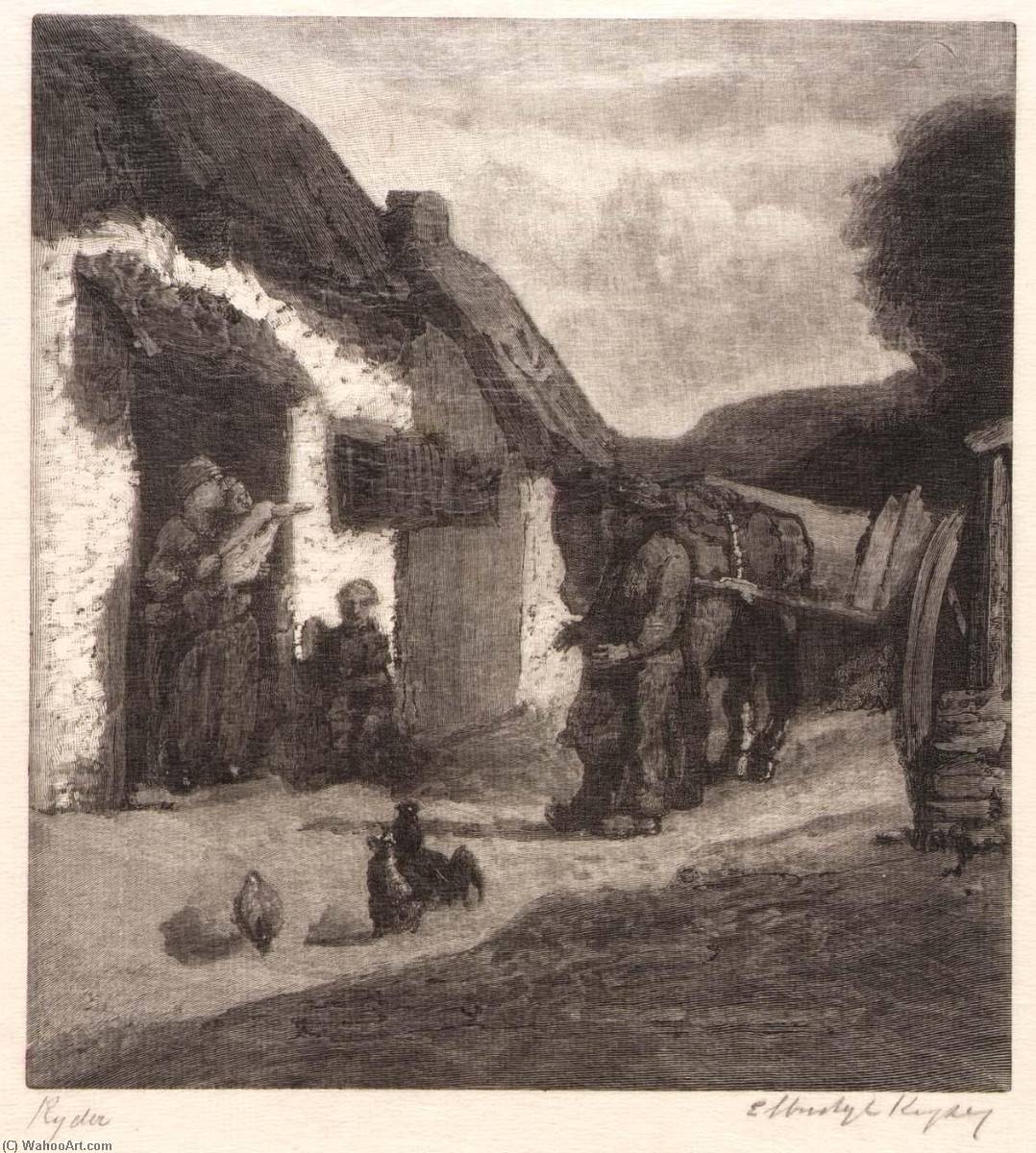
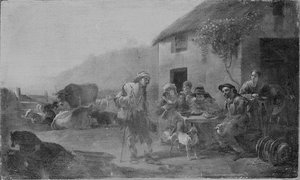
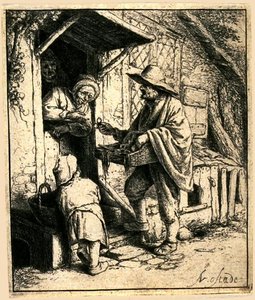
The Barnyard
 Realism
 14.0 x 13.0 cm
 Read More
Hand Made Oil Reproduction
Hand-painted oil on canvas in your size and frame, made to order by our artists. ( Buy Print Buy Image)




































Pick from our preset sizes that match the artwork's original proportions.

You may enter your own dimensions to fit a specific frame or space. If your selected size does not match the original image's proportions, we will either crop the artwork or extend the painting with additional hand-painted elements. A digital mockup will be sent for your approval before production begins.
Please note that the on-screen preview does not reflect the actual cropping or extension. Only the mockup will accurately show the final composition.
While custom sizes are available, we recommend selecting a dimension from the predefined list to preserve the original proportions.
After order, ArtsDot.com team will email client for instructions and provide a mockup preview
Worldwide Delivery () in 3/4 weeks instead of standard 5 weeks. (17 August). No compromise on quality.

Free Worldwide Express Shipping

High-Quality Linen Canvas

Full Shipping Insurance

Customs Tax Refund Guarantee

True Color Matching Guarantee

60-Day Return Policy (Defects Only)

100% Money-Back Guarantee

Bulk Discount Offer
 Glass option is only available in size under 110 CM

The Barnyard
Reproduction Medium
Reproduction Size
-


Total Price
$ 263
Related Artworks
Artist Biography
Elbridge Kingsley: Weaver of Myth and Victorian Vision
Elbridge Kingsley (1842-1918) wasn’t merely an engraver; he was a conjurer of dreams, a translator of myth into meticulously rendered images. Born in Carthage, Ohio, to a family steeped in New England wealth and tradition, his early life offered a comfortable yet somewhat sheltered existence. However, a chance encounter with architectural drawings in France ignited a lifelong passion for the visual arts, leading him away from law studies at Yale and towards a career dedicated to capturing the ethereal beauty of wood engravings.
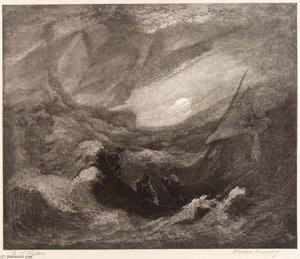
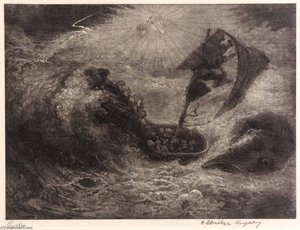
Kingsley’s artistic journey began modestly, but quickly gained recognition within the burgeoning American art scene. He established an engraving school in 1880, fostering a new generation of artists while simultaneously honing his own distinctive style. His work wasn't simply technical; it possessed a profound sense of atmosphere and narrative – qualities that set him apart from many of his contemporaries. He was deeply influenced by the Pre-Raphaelites, particularly their fascination with medieval legends and romantic landscapes, as well as the German Romantic tradition’s emphasis on the sublime and the supernatural. This influence is powerfully evident in his most celebrated works, such as “The Flying Dutchman,” a haunting depiction of the legendary ship eternally adrift at sea, and “Jonah,” a dramatic portrayal of the biblical prophet cast upon the shore.
Kingsley’s artistic output spanned a remarkable range of subjects. He excelled at allegorical paintings, often imbued with symbolic meaning, and produced numerous evocative biblical scenes. However, it was his exploration of fantastical imagery – pirates, sea monsters, and mythical creatures – that truly cemented his reputation as a visionary artist. His engravings weren't illustrations in the traditional sense; they were carefully constructed narratives designed to transport the viewer to another realm. He frequently employed intricate detail and subtle shading to create a palpable sense of depth and atmosphere, drawing heavily on Japanese woodblock printing techniques, which he studied extensively during his travels.
The Techniques of a Master Engraver
Kingsley’s skill as an engraver was legendary. He possessed an extraordinary ability to translate his artistic vision onto the wood block with remarkable precision and nuance. His process began with meticulous sketching, followed by transferring the design onto the wood using a technique known as “matrixing.” This involved creating a reverse image of the drawing on a metal plate, which was then used to carve into the surface of the wood block. The finer details were achieved through painstaking use of small gouges and tools, requiring immense patience and control.
He experimented extensively with different inks and printing techniques, seeking to achieve the richest possible tonal range. Kingsley’s work is characterized by a remarkable subtlety of shading – a testament to his mastery of the engraving process. He was particularly adept at creating atmospheric effects, using delicate lines and subtle variations in tone to evoke mood and atmosphere. His use of Japanese woodblock printing techniques—particularly the *kento* method for achieving smooth tonal gradations—added another layer of sophistication to his work.
A Legacy of Myth and Symbolism
Elbridge Kingsley’s legacy extends far beyond his individual works. He played a significant role in shaping the landscape of American art at the turn of the 20th century, introducing a new level of narrative complexity and visual richness to wood engraving. His influence can be seen in the work of subsequent generations of artists, including illustrators and graphic designers.
His depictions of mythical figures—particularly “The Flying Dutchman”—have become iconic images, capturing the imagination of audiences for over a century. Kingsley’s ability to imbue these fantastical subjects with psychological depth and emotional resonance elevated them beyond mere illustrations, transforming them into powerful symbols of human experience. His work continues to be exhibited and studied today, testament to its enduring beauty and artistic merit.
Notable Works & Recognition
Among Kingsley's most celebrated works are:
- The Flying Dutchman: A dramatic depiction of the legendary ship, embodying themes of fate, isolation, and redemption.
- Jonah: A powerful portrayal of the biblical prophet’s ordeal, exploring themes of despair, faith, and divine mercy.
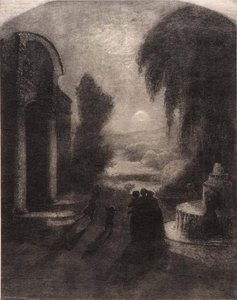
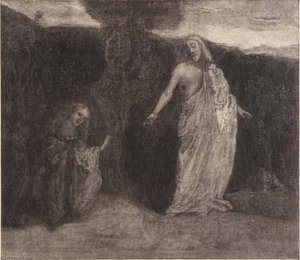
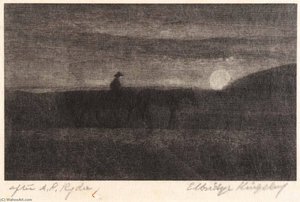
- The Barnyard: A detailed and evocative scene of rural life, showcasing Kingsley's mastery of tonal shading and atmospheric effects.
- Numerous allegorical prints depicting classical myths and legends.
Kingsley’s work received critical acclaim throughout his career, including medals at the Paris Exposition of 1889, the World’s Columbian Exposition in Chicago in 1893, and the California Midwinter Expo in San Francisco in 1894. He was also a member of several prominent art organizations, including the Society of Wood Engravers and the Ruskin Art Club.
A Disappearance & A Lasting Impact
Elbridge Kingsley vanished without a trace in July 1933 while visiting Inishbofin Island off the coast of Ireland. His disappearance remains one of the great unsolved mysteries of American art history. Despite his untimely demise, Kingsley’s artistic legacy endures, and his work continues to inspire artists and viewers alike. The University of Wisconsin-Milwaukee currently hosts an exhibition dedicated to his life's work, ensuring that this remarkable artist will not be forgotten.
elbridge kingsley
1842 - 1918
Quick Facts
- Artistic Movement Or Style: Wood engraving
- Artists Or Movements Influenced By This Artist: ['Ruskin Art Club']
- Artists Who Influenced This Artist: ['Arthur Kingsley Porter']
- Date Of Birth: Sept 17, 1842
- Date Of Death: Aug 28, 1918
- Full Name: Elbridge Kingsley
- Nationality: American
- Notable Artworks:
- The Flying Dutchman
- The Barnyard
- Jonah
- Place Of Birth: Carthage, Ohio
Related Articles

John Constable's Masterpieces: Explore 25 Iconic Landscapes for Your Home
Journey through John Constable's 25 most celebrated landscapes. Explore Romanticism, Dedham Vale & his masterful use of light in iconic paintings like 'Hay Wain'. Find museum-quality art reproductions and elevate your home decor on ArtsDot.com.

Beyond the Horizon: 10 Landscape Masterpieces for Your Home Decor
Journey through 10 breathtaking landscape paintings by Monet, Van Gogh & more! Explore iconic artworks, artistic techniques & find inspiration for your home decor. Museum-quality reproductions at ArtsDot.com. Discover all masterpieces on ArtsDot.com

Echoes of Arcadia: Nostalgia & Transformation in Vintage Landscape Art
Explore the evocative world of vintage landscape art! Discover the history, artists & emotional power behind masterpieces from the Hudson River School & beyond. Expert insights for collectors & enthusiasts.

Etching Masters: 10 Legendary Prints That Revolutionized Art | ArtsDot
Journey through 10 legendary etching masterpieces by Rembrandt, Dürer & Goya. Explore the history of printmaking and discover timeless art for your home. Find museum-quality reproductions at ArtsDot.com.

Cultivating Visions: A Historical Journey Through Rural Landscapes in Art
Explore the rich history of rural landscape painting with ArtsDot. Discover Impressionist masterpieces, key artists & movements. Find your perfect serene artwork and bring nature's beauty home.