 Preview
 Send
Send Share
Share
 Details

 Download
 Similars
 X-Ray
X-Ray Diaporama
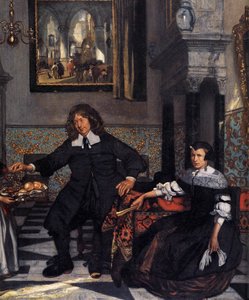
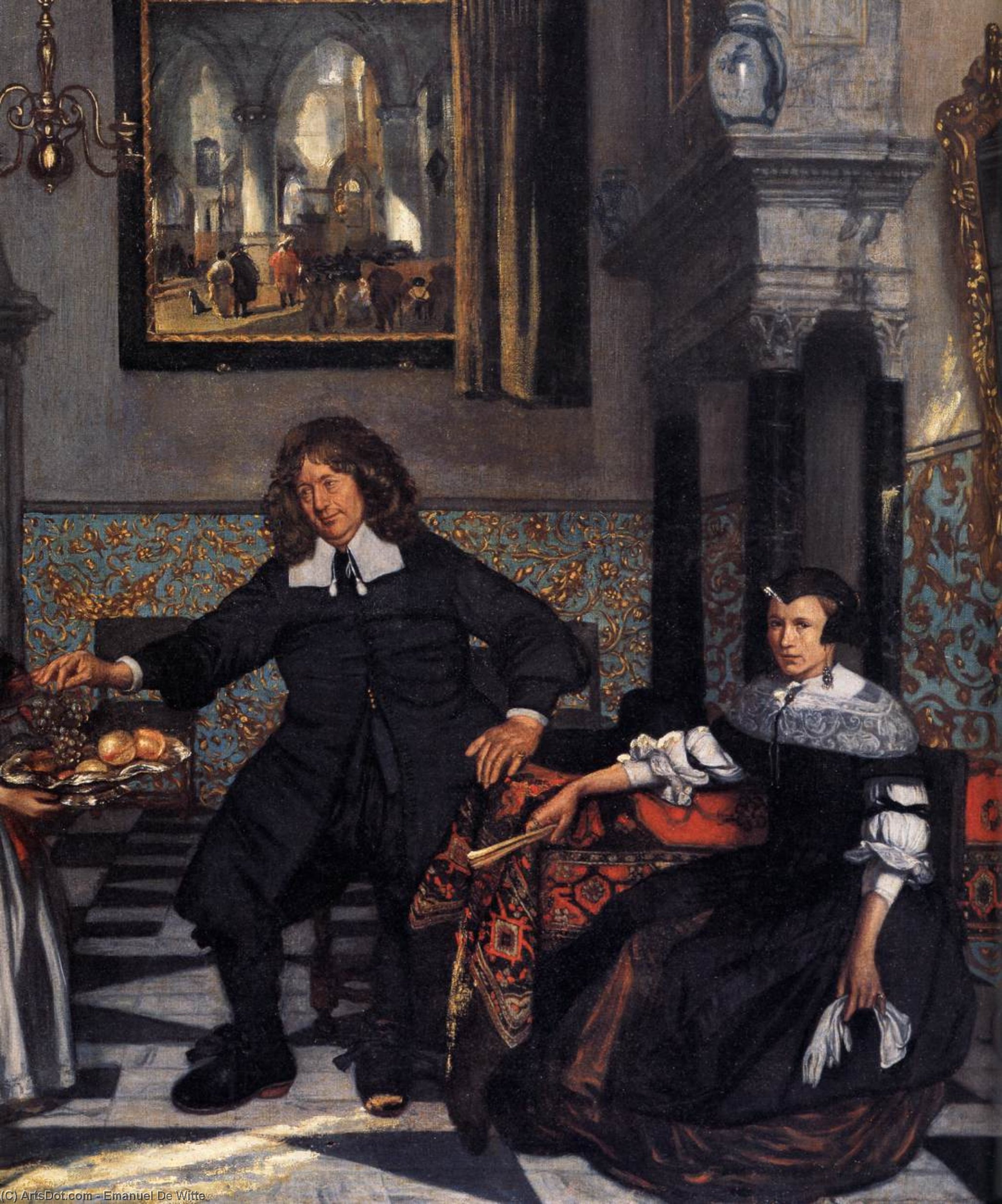
Portrait of a Family in an Interior (detail)


 Read More
Hand Made Oil Reproduction
Hand-painted oil on canvas in your size and frame, made to order by our artists. ( Buy Print Buy Image)




P118B $10

P118H $10

P118W $10

P438Z $10

P508JH $12

P508YH $12

P805H $10

P805Z $10

P919BZ $10

P919G $10

P919XJ $10

P959ZH $10

P968JZ $12

W106C $8

W218G $10

W218JH $8

W218Y $10

W307PJ $10

W316G $10

W316PJ $8

W316Y $10

W398PJ $8

W4111J $10

W500HY $15

W500JH $15

W692G $12

W849H $8

W940BG $15

W953PJ $8




Pick from our preset sizes that match the artwork's original proportions.

You may enter your own dimensions to fit a specific frame or space. If your selected size does not match the original image's proportions, we will either crop the artwork or extend the painting with additional hand-painted elements. A digital mockup will be sent for your approval before production begins.
Please note that the on-screen preview does not reflect the actual cropping or extension. Only the mockup will accurately show the final composition.
While custom sizes are available, we recommend selecting a dimension from the predefined list to preserve the original proportions.
After order, ArtsDot.com team will email client for instructions and provide a mockup preview
Worldwide Delivery () in 3/4 weeks instead of standard 5 weeks. (16 August). No compromise on quality.

Free Worldwide Express Shipping

High-Quality Linen Canvas

Full Shipping Insurance

Customs Tax Refund Guarantee

True Color Matching Guarantee

60-Day Return Policy (Defects Only)

100% Money-Back Guarantee

Bulk Discount Offer
 Glass option is only available in size under 110 CM

Portrait of a Family in an Interior (detail)
Reproduction Medium
Reproduction Size
-


Total Price
$ 288
Artwork Description
A Glimpse into Dutch Golden Age Domesticity
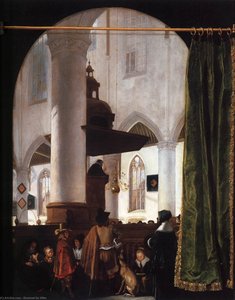
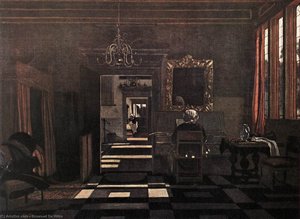
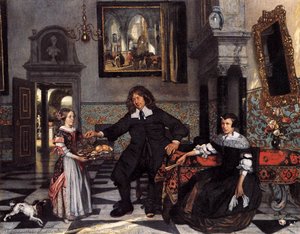
Emanuel de Witte's “Portrait of a Family in an Interior” (1678) isn’t merely a depiction of a wealthy household; it’s a carefully constructed tableau vivant, a frozen moment brimming with quiet dignity and subtle narrative. Painted during the height of the Dutch Golden Age, this oil on canvas offers a rare glimpse into the lives of a prosperous family within their richly appointed home—a space designed to project status, comfort, and an idealized vision of domesticity. De Witte, unlike his contemporary Pieter Saenredam who meticulously documented church interiors, eschewed architectural precision in favor of capturing the *feeling* of space – the diffused light, the sense of contained warmth, and the quiet drama of everyday life within a private setting.
The scene unfolds with an almost theatrical restraint. A man, seated and radiating authority, occupies the left side of the composition, while his wife, positioned gracefully beside him, commands attention on the right. Their poses are formal, suggesting a carefully cultivated image of respectability and social standing – hallmarks of 17th-century portraiture. The inclusion of a large painting hanging on the wall, depicting an outdoor scene with horses or carriages, hints at a broader world beyond their domestic sphere, subtly connecting them to a lineage of wealth and privilege. The table before them, laden with apples and oranges, is not simply a decorative element; it’s a potent symbol of abundance and prosperity – a visual testament to the family's financial security.
Masterful Technique: Light, Perspective, and Texture
De Witte’s technical skill is immediately apparent in the painting’s luminous quality. He expertly manipulates light, creating an atmosphere of diffused warmth that seems to emanate from an unseen source. This isn't a harsh, dramatic illumination; rather, it’s a gentle glow that softens the forms and imbues the scene with a sense of intimacy. The artist employs linear perspective to create depth within the room, guiding the viewer’s eye towards the distant painting on the wall – a clever device that expands the spatial boundaries of the canvas. Close inspection reveals a mastery of texture; from the smooth sheen of the polished furniture to the rougher surface of the stone fireplace and the glossy ripeness of the fruit, De Witte meticulously renders a diverse range of materials.
The brushstrokes themselves are generally blended seamlessly, contributing to the painting’s overall smoothness. However, subtle variations in texture – particularly in the drapery and the details of the clothing – hint at the artist's deliberate hand. The use of oil paint allowed for layering and blending, creating a rich, complex surface that captures both light and shadow with remarkable accuracy.
Symbolism and Context: A Window into Dutch Society
“Portrait of a Family in an Interior” is more than just a likeness; it’s a carefully constructed statement about wealth, status, and the values of 17th-century Dutch society. The abundance of fruit on the table – apples and oranges – carries symbolic weight, representing fertility, prosperity, and good fortune. The formal poses of the figures suggest dignity and composure, reflecting the importance placed on social decorum during that era. The inclusion of the distant painting adds another layer to the narrative, hinting at a family history rooted in land ownership and aristocratic connections.
Painted in 1678, the work reflects the flourishing artistic climate of the Dutch Golden Age – a period marked by economic prosperity, intellectual curiosity, and a burgeoning interest in realism. De Witte’s focus on capturing the *feeling* of space and atmosphere aligns with a broader shift away from purely representational art towards a more subjective and emotionally resonant style.
A Legacy of Atmospheric Interiors
Emanuel de Witte, born in Alkmaar in 1617 and tragically dying in Amsterdam in 1692, remains a somewhat enigmatic figure within the pantheon of Dutch Golden Age masters. While his name may not be as widely recognized as those of Rembrandt or Vermeer, his contributions to the genre of interior painting are significant. His ability to evoke a sense of space, light, and atmosphere—a skill he honed by studying geometry and perspective—sets him apart. “Portrait of a Family in an Interior” stands as a testament to his artistic vision, offering a captivating glimpse into the world of 17th-century Dutch domesticity and solidifying his place as a master of atmospheric painting.
Related Artworks
Artist Biography
A Life in Perspective: The World of Emanuel de Witte
Emanuel de Witte, a name perhaps less instantly recognizable than some of his Dutch Golden Age contemporaries, nevertheless occupies a significant and fascinating niche within the pantheon of 17th-century masters. Born in Alkmaar in 1617, De Witte’s artistic journey was one marked by both remarkable talent and considerable personal turmoil – a duality that seems to subtly infuse itself into the very atmosphere of his paintings. He wasn't driven by meticulous architectural documentation like Pieter Saenredam; instead, he sought to capture the *feeling* of space, the quality of light, and the subtle drama unfolding within sacred interiors. His canvases aren’t merely representations of churches; they are immersive experiences, inviting viewers into a world of quiet contemplation and spiritual resonance.From Delft Training to Amsterdam's Embrace
De Witte’s early life provided a solid foundation for his artistic pursuits. His father, a schoolmaster, instilled in him an appreciation for learning and intellectual curiosity – qualities that would later manifest in his careful observation of perspective and light. He formally entered the art world by joining the Guild of St Luke in Alkmaar in 1636, but it was his subsequent apprenticeship with Evert van Aelst in Delft that proved particularly formative. Van Aelst, a renowned still-life painter, imparted to De Witte a keen eye for detail and a masterful command of light and shadow – skills that would become hallmarks of his mature style. Initially, De Witte explored various genres—portraits, mythological scenes, religious narratives—but it was upon relocating to Amsterdam in 1651 that he truly found his calling. The city’s wealth of magnificent churches provided an inexhaustible source of inspiration, and he began to specialize in depicting their awe-inspiring interiors.Master of Atmosphere and Imaginary Spaces
Amsterdam proved pivotal for De Witte's artistic development. He didn’t simply replicate existing church spaces; rather, he skillfully synthesized elements from different buildings, creating idealized interiors that felt both familiar and subtly otherworldly. The Oude Kerk in Amsterdam became a frequent subject, appearing repeatedly on his canvases from various vantage points. But these weren’t straightforward depictions. De Witte manipulated perspective, played with light and shadow, and populated the spaces with carefully arranged figures to evoke a specific mood or atmosphere. As Walter Liedtke observed, his primary interest lay not in the architecture itself but in “the space itself – its light, color, sheer extent, and mood.” This emphasis on atmospheric effect distinguishes him from more rigidly topographical painters of the era. He wasn’t concerned with precise accuracy; he was interested in creating a *feeling* of grandeur, reverence, and spiritual depth.A Life Marked by Shadows
Despite his artistic success, De Witte's personal life was plagued by hardship. The death of his first wife brought profound grief, and subsequent legal troubles involving his second wife and daughter cast a long shadow over his later years. Financial difficulties led him to the humiliating position of indentured servitude to an art dealer, Joris de Wijs, a situation he ultimately breached, leading to further complications. Contemporary accounts paint a picture of a volatile temperament – a man prone to shouting at clients and engaging in disputes. This inner turmoil perhaps contributed to the unevenness of his later work, but it also adds another layer of complexity to our understanding of the artist and his creations. Tragically, De Witte’s life came to a devastating end in 1692 when he reportedly attempted suicide by hanging himself from a canal bridge; the rope broke, and he drowned. It was a grim finale for a man who had dedicated his life to capturing the beauty and serenity of sacred spaces.Legacy and Enduring Influence
Emanuel de Witte stands as an important figure in the last phase of architectural painting in the Netherlands, bridging the gap between meticulous documentation and atmospheric interpretation. His innovative use of light and perspective influenced subsequent generations of artists, and his paintings continue to offer valuable insights into 17th-century Dutch religious life and social customs. Today, works by De Witte are held in prestigious collections worldwide – at the Metropolitan Museum of Art, the National Gallery of Art, and the Rijksmuseum, among others—testifying to his enduring legacy as a master of perspective, atmosphere, and emotional resonance. He reminds us that art is not merely about what we see but how we *feel* when we look.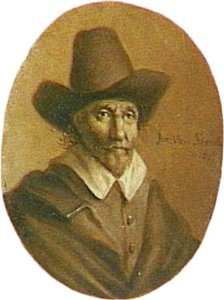
Emanuel de Witte
1617 - 1692 , Netherlands
Quick Facts
- Artistic Movement Or Style: Baroque art
- Artists Or Movements Influenced By This Artist: ['Later artists']
- Artists Who Influenced This Artist: ['Evert van Aelst']
- Date Of Birth: 1617
- Date Of Death: 1692
- Full Name: Emanuel de Witte
- Nationality: Dutch
- Notable Artworks:
- Oude Kerk in Amsterdam...
- Interior of the Oude Kerk
- Protestant Gothic Church
- Place Of Birth: Alkmaar, Netherlands
Related Articles

Demandes Commerciales
APS ofrece reproducciones de bellas artes y encargos personalizados desde 2004. Confían en nosotros corporaciones, hoteles y coleccionistas selectos para obras de arte de calidad museística, servicio discreto y soluciones artísticas completas. ¡Póngase en contacto con nosotros para obtener un presupuesto personalizado!

Dutch Masters: 10 Golden Age Paintings That Still Inspire |
Journey into the Dutch Golden Age! Explore 10 iconic paintings by Rembrandt, Vermeer & Hals. Discover the stories behind these Baroque masterpieces and find museum-quality art reproductions to elevate your home decor on .
Pieter de Hooch: Illuminating Dutch Domestic Life & Golden Age Charm
Explore the captivating world of Pieter de Hooch, a master of Dutch Golden Age painting. Discover his innovative use of light, intimate domestic scenes, and lasting influence on art history. Learn more at ArtsDot.
Willem van de Velde the Elder: Master of Maritime Painting & Chronicler of the Dutch Golden Age
Discover the captivating maritime paintings of Willem van de Velde the Elder, a master chronicler of the Dutch Golden Age. Explore his unparalleled realism and lasting influence on naval art history.

Golden Age Reflections: Dutch Baroque Painting & Cultural Innovation
Explore the Dutch Golden Age of painting! Discover key artists like Vermeer & ter Borch, their innovative techniques, and the rich cultural context behind these Baroque masterpieces. Learn about collecting & appreciating this iconic art period.