 Preview
 Send
Send Share
Share
 Details

 Download
 Similars
 X-Ray
X-Ray Diaporama
Dress with Knitted Coat


 Read More
Hand Made Oil Reproduction
Hand-painted oil on canvas in your size and frame, made to order by our artists. ( Buy Print Buy Image)




P118B $10

P118H $10

P118W $10

P438Z $10

P508JH $12

P508YH $12

P805H $10

P805Z $10

P919BZ $10

P919G $10

P919XJ $10

P959ZH $10

P968JZ $12

W106C $8

W218G $10

W218JH $8

W218Y $10

W307PJ $10

W316G $10

W316PJ $8

W316Y $10

W398PJ $8

W4111J $10

W500HY $15

W500JH $15

W692G $12

W849H $8

W940BG $15

W953PJ $8




Pick from our preset sizes that match the artwork's original proportions.

You may enter your own dimensions to fit a specific frame or space. If your selected size does not match the original image's proportions, we will either crop the artwork or extend the painting with additional hand-painted elements. A digital mockup will be sent for your approval before production begins.
Please note that the on-screen preview does not reflect the actual cropping or extension. Only the mockup will accurately show the final composition.
While custom sizes are available, we recommend selecting a dimension from the predefined list to preserve the original proportions.
After order, ArtsDot.com team will email client for instructions and provide a mockup preview
Worldwide Delivery () in 3/4 weeks instead of standard 5 weeks. (21 August). No compromise on quality.

Free Worldwide Express Shipping

High-Quality Linen Canvas

Full Shipping Insurance

Customs Tax Refund Guarantee

True Color Matching Guarantee

60-Day Return Policy (Defects Only)

100% Money-Back Guarantee

Bulk Discount Offer
 Glass option is only available in size under 110 CM

Dress with Knitted Coat
Reproduction Medium
Reproduction Size
-


Total Price
$ 263
Artwork Description
Émile Friant’s ‘Dress with Knitted Coat’: A Study in Quiet Realism
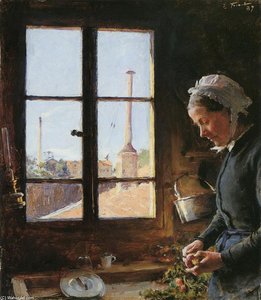
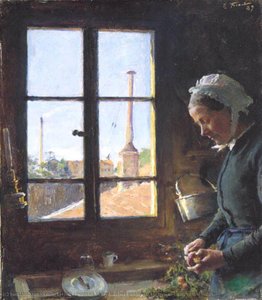
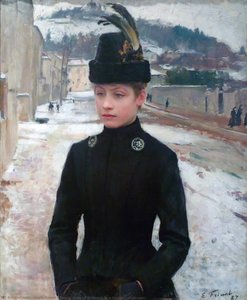
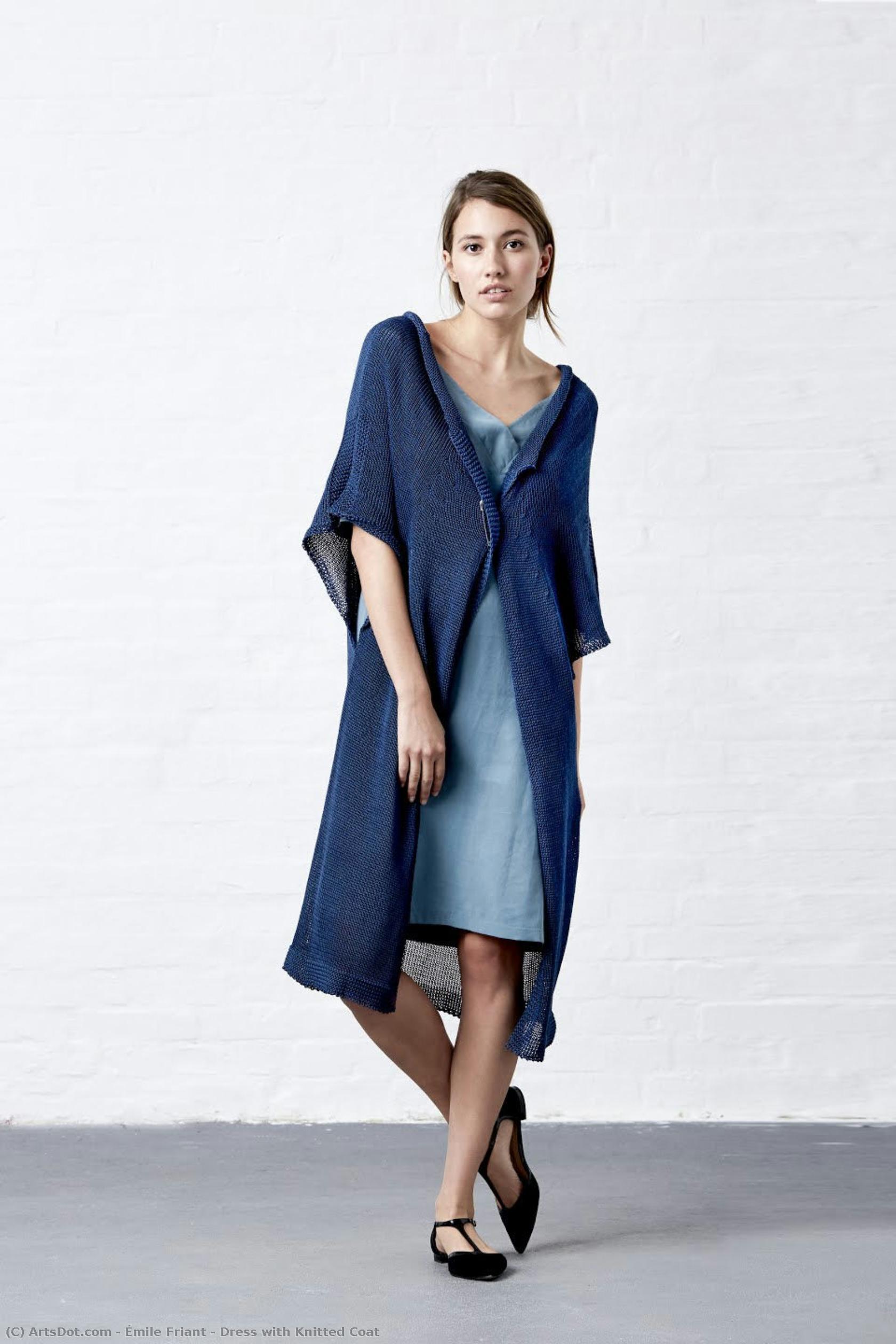
The photograph captures a moment of serene contemplation embodied by a woman draped in the simple elegance of a blue dress and a knitted coat. This work, attributed to the French artist Émile Friant (1863-1932), offers a poignant glimpse into the realism that defined his artistic practice during a period of significant social and political transformation in France. Friant’s oeuvre is characterized by an unwavering commitment to depicting everyday life with remarkable accuracy and emotional resonance, qualities particularly evident in this intimate portrait.
The Artist's Context: Realism Amidst Change
Émile Friant emerged as a key figure at the turn of the 20th century, navigating the transition from the established tenets of 19th-century realism to the nascent influences of modern art. His formative years were profoundly shaped by the Franco-Prussian War and its aftermath, an experience that instilled in him a deep sense of displacement and a desire to preserve the essence of French identity through his art. His training under Louis-Théodore Devilly, a staunch advocate for direct observation and meticulous detail, solidified Friant’s approach – one rooted in capturing not just appearances but also the subtle nuances of human emotion and psychological state. This dedication to realism was further fueled by his family's relocation following the annexation of their hometown, a journey that instilled within him a profound understanding of displacement and resilience.
Technique and Composition: A Study in Texture
- The photograph showcases Friant’s masterful command of texture. The knitted coat, rendered with painstaking detail, invites the viewer to appreciate the tactile quality of the wool – a deliberate choice reflecting his commitment to representing the tangible world with honesty and precision.
- The muted color palette—primarily blues and whites—contributes to the work’s contemplative mood. Friant's use of light is particularly noteworthy, subtly illuminating the woman’s form and emphasizing the folds of her dress and coat, adding depth and volume to the composition.
- The simple background – a stark white wall – serves to isolate the subject, drawing attention to her posture and expression. This minimalist approach reinforces the work's focus on individual character and emotional state.
Symbolism and Emotional Impact: A Portrait of Quietude
The woman’s pose – hands gently placed on her hips – conveys a sense of quiet confidence and self-possession. While the scene appears devoid of external narrative, it speaks volumes about inner strength and resilience. The knitted coat itself can be interpreted as a symbol of protection and warmth, perhaps reflecting the challenges faced by individuals during times of uncertainty. Friant’s ability to evoke such profound emotion from a seemingly simple subject underscores his artistic genius – he transforms an everyday scene into a powerful meditation on human experience.
Replicas and Applications
ArtsDot offers meticulously crafted hand-painted reproductions of Émile Friant’s ‘Dress with Knitted Coat’, ensuring the preservation of the artist's original vision. These reproductions are ideal for interior design projects, art collectors seeking to expand their collections, or anyone captivated by Friant’s evocative realism. The high level of detail and artistic skill involved in each reproduction guarantees a stunning addition to any space.
Related Artworks

Artist Biography
A Life Rooted in Realism: The World of Émile Friant
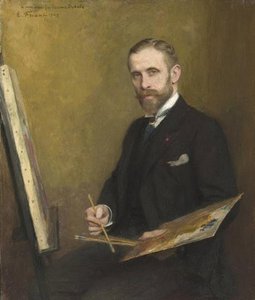
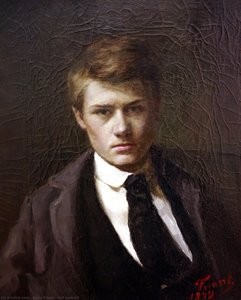
Émile Friant, born in the small commune of Dieuze in 1863, emerged as a pivotal figure bridging the gap between 19th-century realism and the burgeoning artistic movements of the early 20th century. His life story is one deeply intertwined with the political and social upheavals of his time. The Franco-Prussian War cast a long shadow over his childhood; the family’s flight to Nancy following the annexation of Dieuze by Prussia instilled in him a sense of displacement that perhaps fueled his dedication to capturing the essence of French life and identity within his art. Though initially steered towards a scientific path, Friant's innate artistic talent quickly asserted itself, nurtured first by private tutors and then under the guidance of Louis-Théodore Devilly in Nancy. Devilly’s emphasis on direct observation and meticulous detail laid the foundation for Friant’s signature style—a realism imbued with emotional depth and psychological insight. Even a youthful self-portrait, “Le Petit Friant,” at just fifteen years old, garnered attention and secured him permission to pursue formal studies in Paris, marking the beginning of his ascent within the art world.Parisian Training and Early Salon Successes
The Parisian artistic landscape proved both stimulating and disillusioning for the young Friant. Studying under Alexandre Cabanel, a celebrated academic painter, exposed him to established techniques but ultimately left him feeling constrained by the rigid atelier system. While he diligently practiced oil sketches of historical works, Friant yearned for a more personal and authentic approach. This desire led him back to Nancy, where he continued to hone his skills while exhibiting regularly at both Parisian and local salons. His early Salon submissions, including “The Prodigal Son” and “Studio Interior,” demonstrated a burgeoning talent for narrative painting and an ability to capture the nuances of human emotion. A second-place finish in the prestigious Prix de Rome competition further solidified his reputation, followed by third and then second-class honors at subsequent Salon presentations. Crucially, Friant cultivated lasting friendships with actors Ernest and Benoit Coquelin, which led to a series of compelling portrait commissions that would become a hallmark of his oeuvre. A grant from the 1886 Salon enabled travel to the Netherlands, where he encountered the works of Dutch Masters—an experience that profoundly influenced his use of light and shadow and his attention to everyday life.Mature Works: Portraits, Genre Scenes, and North African Influences
Friant’s mature work is characterized by evocative portraits and genre scenes depicting the lives of ordinary people in Nancy and beyond. He possessed an extraordinary ability to capture not just physical likeness but also the inner character and psychological state of his subjects. This talent reached its zenith with “La Toussaint” (All Saints' Day), a poignant depiction of a family mourning at a graveside, which earned him a Gold Medal at the 1889 Universal Exhibition—a testament to his growing acclaim. Beyond portraiture, Friant found inspiration in North Africa, making multiple journeys to Algeria and Tunisia. These travels infused his landscapes with a vibrant palette and a sense of exoticism, while also providing compelling subjects for portraits that reflected the cultural diversity of the region. In 1923, he was appointed professor of painting at the École des Beaux-Arts in Paris, a position that acknowledged his established reputation and influence within the art world. His contributions were further recognized with promotion to Commander in the Legion of Honor and membership in the Institut de France—the highest honors bestowed upon artists in France.A Legacy of Realism and Photographic Precision
Émile Friant’s artistic legacy rests firmly on his commitment to realism, a style he embraced while simultaneously transcending its limitations. While initially shaped by Devilly's emphasis on direct observation and Cabanel’s academic techniques, Friant developed a distinctive voice that moved beyond strict adherence to either approach. He was not merely interested in replicating reality; rather, he sought to imbue his paintings with emotional resonance and psychological depth. His innovative use of photography as a preparatory tool—a practice increasingly common among artists of the time—demonstrates an engagement with emerging technologies and a desire for accuracy in representation. He represents a crucial link between 19th-century naturalism and the artistic innovations of the early 20th century, contributing to the evolution of French painting while remaining true to his core principles. Some consider him one of the last great naturalists, preserving a tradition of meticulous observation and emotional honesty in an era of rapid change. His tragic death in 1932—falling from a height in Paris—brought an abrupt end to a remarkable career, but his paintings continue to captivate audiences with their beauty, sensitivity, and enduring relevance. Friant’s work serves as a powerful reminder of the importance of capturing the human experience with both precision and compassion.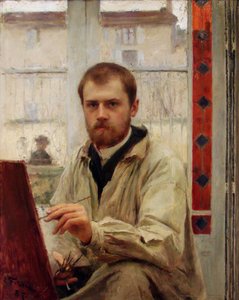
Émile Friant
1863 - 1932 , France
Quick Facts
- Artistic Movement Or Style: Realism
- Artists Or Movements Influenced By This Artist: Early 20th century art
- Artists Who Influenced This Artist:
- Devilly
- Cabanel
- Date Of Birth: April 16, 1863
- Date Of Death: June 9, 1932
- Full Name: Émile Friant
- Nationality: French
- Notable Artworks:
- La Toussaint
- Self-portrait
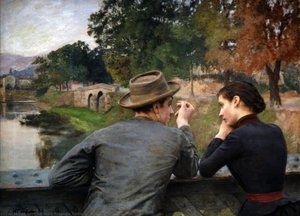
- The Lovers
- Place Of Birth: Dijon, France
Related Articles

Slate Blue Masterpieces: 10 Iconic Paintings & Timeless Home Decor Ideas
Immerse yourself in the captivating world of slate blue! Explore 10 iconic paintings by Monet, Van Gogh & Renoir. Discover their stories, techniques & find museum-quality art reproductions for your home at .

Serene Blue Backgrounds: Discover Soulful Art to Transform Your Space with Timeless Elegance
Transform your home with soulful blue art. From serene Monet impressions to modern textured sculptures, discover curated masterpieces designed to inspire calm. Explore expert art consultations and bespoke hand-painted reproductions to create your personal sanctuary.
Giclée Prints: Archival Quality & Aesthetic Nuances for the Discerning Collector
Explore the world of giclée prints with ArtsDot. Learn about archival quality, aesthetic nuances & investment potential. Expert guidance for discerning art collectors seeking museum-quality reproductions and lasting value.
Azure Visions: Exploring Representations of the Blue Dress in Western Art History
Explore the rich history of the blue dress in Western art! Discover its symbolism, from Renaissance masterpieces to modern interpretations by artists like Martin & Schiele. Uncover cultural meanings and artistic techniques.
The Allure of Azure: Exploring the Symbolic & Aesthetic Depths of Blue in Art History
Explore the rich history of blue in art! Discover its symbolism, from ancient pigments to modern masterpieces by Kandinsky & Seurat. Uncover the psychological impact and cultural meanings behind this captivating hue.