 Preview
 Send
Send Share
Share
 Details

 Download
 Similars
 X-Ray
X-Ray Diaporama
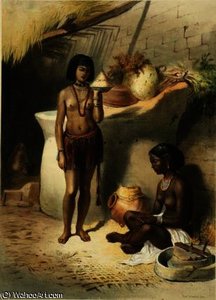
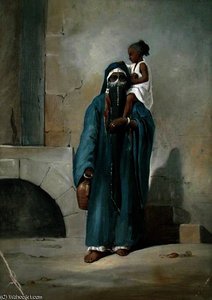
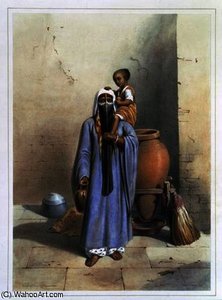
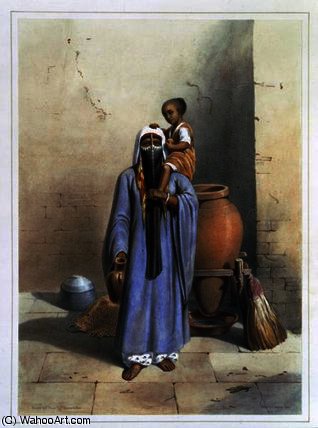
Fellah Woman and Child

 Read More
Hand Made Oil Reproduction
Hand-painted oil on canvas in your size and frame, made to order by our artists. ( Buy Print Buy Image)




































Pick from our preset sizes that match the artwork's original proportions.

You may enter your own dimensions to fit a specific frame or space. If your selected size does not match the original image's proportions, we will either crop the artwork or extend the painting with additional hand-painted elements. A digital mockup will be sent for your approval before production begins.
Please note that the on-screen preview does not reflect the actual cropping or extension. Only the mockup will accurately show the final composition.
While custom sizes are available, we recommend selecting a dimension from the predefined list to preserve the original proportions.
After order, ArtsDot.com team will email client for instructions and provide a mockup preview
Worldwide Delivery () in 3/4 weeks instead of standard 5 weeks. (16 August). No compromise on quality.

Free Worldwide Express Shipping

High-Quality Linen Canvas

Full Shipping Insurance

Customs Tax Refund Guarantee

True Color Matching Guarantee

60-Day Return Policy (Defects Only)

100% Money-Back Guarantee

Bulk Discount Offer
 Glass option is only available in size under 110 CM

Fellah Woman and Child
Reproduction Medium
Reproduction Size
-


Total Price
$ 288
Related Artworks
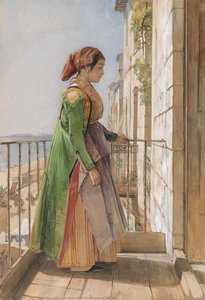
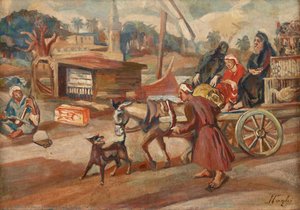
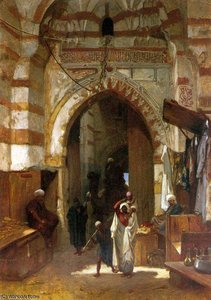
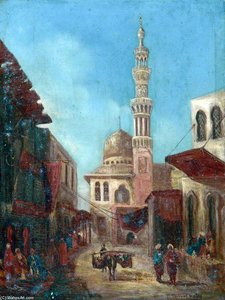
Artist Biography
The Architect of an Oriental Vision
Born into the quiet nobility of Avesnes-sur-Helpe, Achille Constant Théodore Émile Prisse d’Avennes was destined for a life defined by intellectual rigor and a profound curiosity about the world beyond Europe. While his early education under the watchful guidance of his grandfather pointed toward the structured realms of law and the analytical precision of the École Polytechnique, his heart was drawn to a much more ancient and sun-drenched horizon. In 1827, the trajectory of his life shifted irrevocably as he arrived in Egypt, not merely as a traveler, but as a civil engineer commissioned by the ambitious Muhammad Ali Pasha. This period of his life was characterized by a profound cultural metamorphosis; Prisse d’Avennes did not simply observe Egypt from the periphery, but immersed himself so deeply that he adopted the name Idriss-effendi, mastered the Arabic language, and embraced the customs of the land. This intimate connection to the Nile allowed him to perceive the nuances of Egyptian society with a clarity that remained invisible to many of his Western contemporaries.
A Meticulous Chronicle of Nile Valley Life
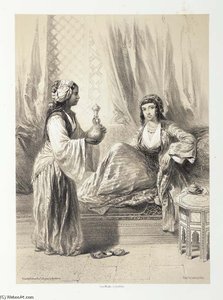
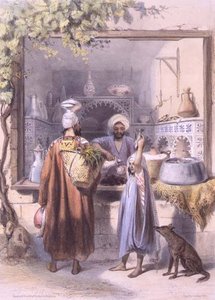
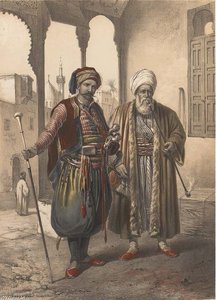
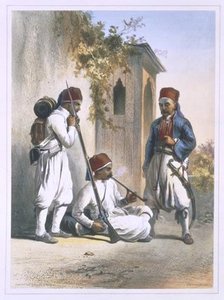
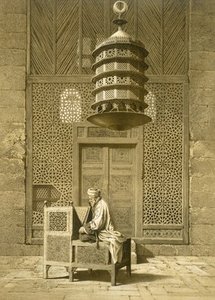
As his professional role as an engineer evolved into that of a scholar and artist, Prisse d’Avennes began to document the ephemeral beauty of the Nile Valley with unparalleled precision. His work was never merely about documentation; it was an act of preservation through art. Through intricate lithographs and detailed watercolors, he captured the vibrant textures of 19th-century costumes, the architectural majesty of Islamic monuments, and the rhythmic pulse of daily life in Nubia and Egypt. One of his most significant contributions remains the Oriental Album, a collection of lithographic images that serves as a breathtaking window into the customs and attire of the people living along the Nile. His ability to blend the scientific accuracy required of an archaeologist with the romantic sensibility of a fine artist created a unique visual language—one where every fold of fabric and every carved stone tells a story of historical continuity and cultural grandeur.
The Enduring Legacy of a Visual Historian
The significance of Prisse d’Avennes extends far beyond the aesthetic beauty of his prints; he was a foundational figure in the development of Egyptian art history. His scholarly publications, such as L'art arabe d'après les monuments du Kaire, provided much-needed documentation of Islamic architecture from the 7th to the 18th century, bridging the gap between archaeological discovery and public appreciation. His life’s work stands as a testament to the power of the artist-explorer, proving that through the lens of meticulous observation, one can resurrect the grandeur of lost civilizations. Today, his legacy lives on in the archives of the world's greatest museums, where his depictions continue to inspire awe and provide an essential, tactile connection to the ancient and medieval worlds of the Middle East and Africa.
émile prisse d'avennes
1807 - 1879 , France
Quick Facts
- Artistic Movement Or Style: Romanticism
- Artists Who Influenced This Artist: ['Théodule Charles Devéria']
- Date Of Birth: January 27, 1807
- Full Name: Achille-Constant-Théodore-Émile Prisse d'Avennes
- Nationality: French
- Notable Artworks:
- Fellah Woman & Child
- Coming Home From Church
- Place Of Birth: Avesnes-sur-Helpe, France
Related Articles

Carl Haag: Orientalist Visions & Victorian Spirituality in Watercolor
Explore the captivating Orientalist paintings of Carl Haag (1820-1915). Discover his detailed watercolors, Victorian landscapes & spiritual themes. Expert insights for collectors and art enthusiasts at ArtsDot.
The Alluring Gaze: Orientalism in 19th-Century Art – Representation, Reception & Construction of the 'Orient'
Explore the complex history of Orientalism in 19th-century art. Discover how Western artists depicted the 'Orient,' its cultural impact, and Edward Said's critical analysis. A deep dive for art lovers & historians.
Marianne North's Masterpieces: 25 Botanical Paintings That Bloom With Adventure | ArtsDot
Journey through the vibrant world of Marianne North’s botanical paintings! Explore 25 iconic artworks from this Victorian artist, celebrating exotic flora & travel. Find museum-quality reproductions and curated decor ideas at ArtsDot.com.
Beyond Exoticism: Unveiling the Complex Legacy of Orientalist Painting
Explore the fascinating & complex world of Orientalist painting! Discover its history, key artists like Gérôme & Lewis, and Edward Said's influential critique. Uncover nuance beyond stereotypes with ArtsDot.
John Frederick Lewis: Orientalism, Detail & Genre Painting in 19th-Century British Art
Explore the captivating Orientalist paintings of John Frederick Lewis! Discover his mastery of detail, genre scenes & influence on 19th-century British art. Learn about his life, techniques & legacy at ArtsDot.