 Preview
 Send
Send Share
Share
 Details

 Download
 Similars
 X-Ray
X-Ray Diaporama
 Stats
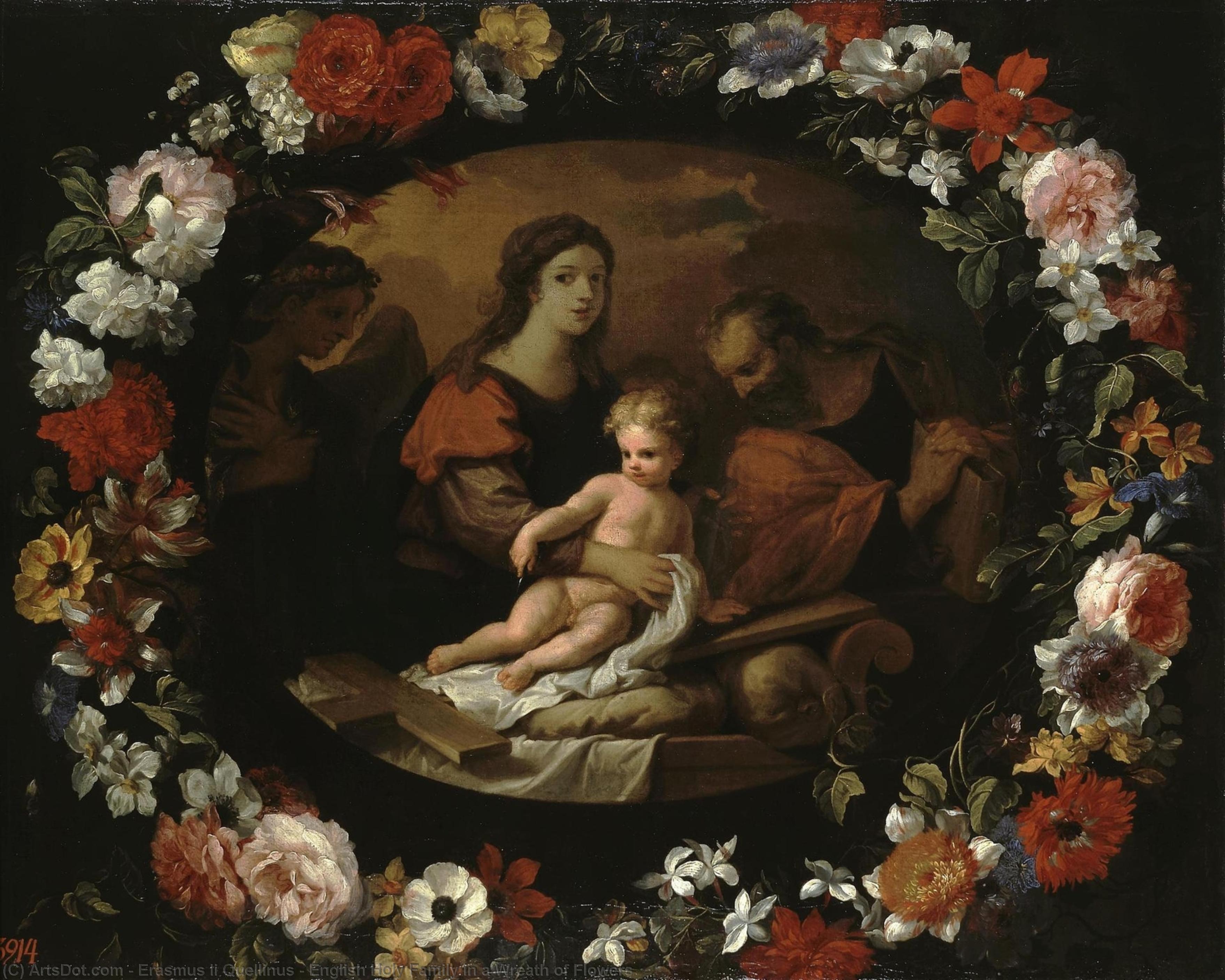
StatsEnglish Holy Family in a Wreath of Flowers


 Read More
Giclée / Art Print
Museum-quality giclée or canvas print with fast production and flexible finish options. ( Buy Hand Made Painting Switch to Digital Image)




P118B $10

P118H $10

P118W $10

P438Z $10

P508JH $12

P508YH $12

P805H $10

P805Z $10

P919BZ $10

P919G $10

P919XJ $10

P959ZH $10

P968JZ $12

W106C $8

W218G $10

W218JH $8

W218Y $10

W307PJ $10

W316G $10

W316PJ $8

W316Y $10

W398PJ $8

W4111J $10

W500HY $15

W500JH $15

W692G $12

W849H $8

W940BG $15

W953PJ $8




Pick from our preset sizes that match the artwork's original proportions.

You may enter your own dimensions to fit a specific frame or space. If your selected size does not match the original image's proportions, we will either crop the artwork or extend the image with a mirrored or solid-fill edge. A digital mockup will be sent for your approval before production begins.
Please note that the on-screen preview does not reflect the actual cropping or extension. Only the mockup will accurately show the final composition.
While custom sizes are available, we recommend selecting a dimension from the predefined list to preserve the original proportions.
Worldwide Delivery () in 2 weeks instead of standard 4/5 weeks. (7 September)

Free Worldwide Express Shipping

High-Quality Linen Canvas

Full Shipping Insurance

Customs Tax Refund Guarantee

True Color Matching Guarantee

100-Day Return Policy (Defects Only)

100% Money-Back Guarantee

Bulk Discount Offer
 Glass option is only available in size under 110 CM

English Holy Family in a Wreath of Flowers
Giclée / Art Print
Reproduction Size
-


Total Price
$ 63
A Baroque Embrace: Exploring Erasmus Quellinus II's 'English Holy Family'
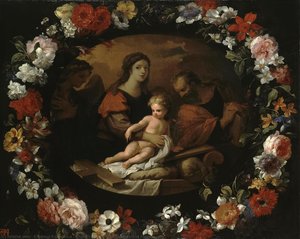
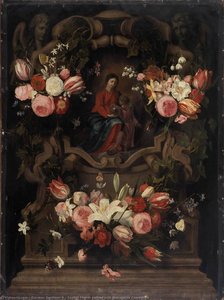
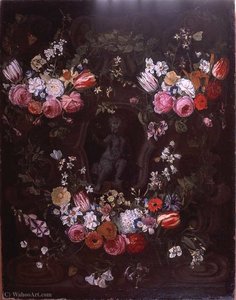
Erasmus Quellinus II’s “English Holy Family in a Wreath of Flowers,” painted in 1636, is more than just a depiction of the sacred; it’s a vibrant testament to the burgeoning Baroque style and a poignant reflection on familial devotion within a complex historical context. Created during a period of intense religious fervor and artistic innovation in Antwerp – then a pivotal center for Northern European art – this painting offers a glimpse into the world of a master craftsman deeply influenced by the legacy of Peter Paul Rubens, yet forging his own distinctive path.
The scene unfolds with remarkable intimacy: Mary, rendered with a gentle serenity, cradles the infant Jesus in her arms. His gaze is direct and innocent, drawing the viewer into the heart of the composition. Beside her stands Joseph, depicted with quiet dignity, embodying both earthly authority and paternal affection. The figures are not presented as isolated individuals but rather as a unified whole, enveloped within a lush profusion of flowers – roses, lilies, and violets intertwine to create a swirling halo around them, symbolizing purity, grace, and the divine presence.
The Painter’s Hand: Technique and Style
Quellinus II demonstrates a masterful command of oil paint on panel. The brushwork is loose yet controlled, creating a sense of movement and texture within the floral arrangement. Notice how he uses light to sculpt the forms – highlighting Mary's face and hands while subtly receding into shadow, adding depth and realism to the scene. The color palette leans towards rich jewel tones—deep reds, blues, and greens—characteristic of the Antwerp Baroque style, but tempered with a delicate luminosity that prevents the painting from feeling overly heavy or dramatic. The artist’s attention to detail is evident in the rendering of the fabrics, the intricate floral patterns, and the subtle expressions on each figure's face.
A Window into 17th-Century Antwerp
To understand “English Holy Family,” one must consider the artistic climate of Antwerp in the mid-17th century. Rubens’s influence permeated every corner of the city’s art scene, shaping the aesthetic sensibilities of a generation of artists. Quellinus II, having studied directly under Rubens, absorbed many of his techniques and compositional principles – particularly his dynamic use of light and color, and his ability to infuse religious subjects with emotional intensity. However, Quellinus II also developed a more intimate and nuanced style, often focusing on smaller-scale works that prioritized psychological depth over grand spectacle. The painting’s subject matter—a domestic scene centered around the Holy Family—reflects a growing emphasis on human relationships within the context of faith during this period.
Symbolism and Emotional Resonance
Beyond its formal qualities, “English Holy Family” is rich in symbolic meaning. The wreath of flowers serves as a potent metaphor for divine grace and protection surrounding the sacred family. The inclusion of figures beyond the immediate family – suggesting angels or other religious observers – hints at the universality of faith and the importance of witnessing this holy event. The painting’s overall effect is one of profound serenity and warmth, inviting viewers to contemplate the enduring power of love, devotion, and familial bonds. It's a piece that speaks not just to the eye but also to the heart, offering a timeless meditation on the mysteries of faith and family.
Further Research: For more information about Erasmus Quellinus II and his work, please visit The State Hermitage Museum’s online collection.
Related Artworks
Artist Biography
The Legacy of Erasmus Quellinus II: A Master of Antwerp’s Golden Age
In the vibrant, bustling heart of seventeenth-century Antwerp, a period defined by unparalleled artistic splendor, Erasmus Quellinus II emerged as a central figure of the Flemish Baroque. Born in 1607 into a distinguished lineage of creators, his very foundation was steeped in the traditions of craftsmanship and visual storytelling. As the son of the renowned sculptor Erasmus Quellinus I, his upbringing provided more than just a name; it offered an intimate connection to the pulse of the Southern Netherlands' artistic community. This familial environment, shared with his brothers Artus and Hubertus, fostered a unique ecosystem of creativity that would eventually allow him to transcend local recognition and become a cornerstone of European art.
The trajectory of Quellini’s career was irrevocably altered by his encounter with the titan of the age, Peter Paul Rubens. Around 1633, Quellinus entered the orbit of Rubens' workshop, a transformative period that served as his true artistic baptism. Under this mentorship, he did not merely learn technique; he absorbed a revolutionary visual language characterized by dramatic chiaroscuro, sweeping compositions, and an almost palpable sense of movement. He became a trusted collaborator in some of the era's most ambitious decorative projects, notably contributing to the grand celebrations for Cardinal Ferdinand Habsburg. This period of intense collaboration allowed Quellinus to master the art of blending classical poise with the exuberant energy that defines the Baroque spirit.
A Versatile Visionary: From Myth to Devotion
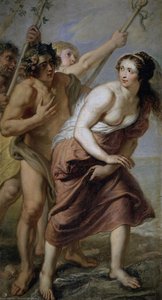
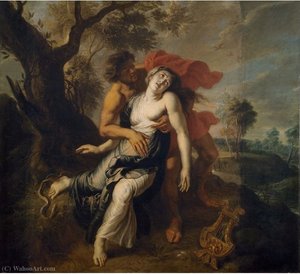
Following the passing of Rubens in 1640, Quellinus did not merely step into a vacuum; he ascended to become Antwerp’s most prolific and influential painter. His ability to navigate diverse genres allowed him to command the attention of both the church and the nobility. He possessed a rare versatility, moving seamlessly between the visceral intensity of battle scenes and the profound, quiet dignity of religious portraiture. In his mythological works, such as The Death of Eurydice, one can observe a deep engagement with classical themes, where emotional gravity is rendered through masterful brushwork and a sophisticated understanding of human pathos.
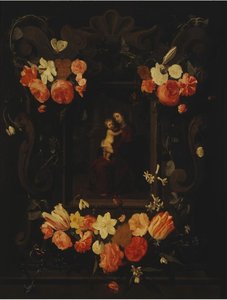
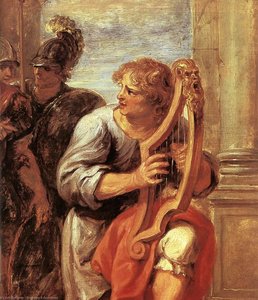
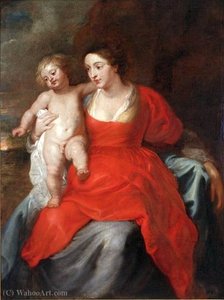
His religious compositions often reflected the complex spiritual landscape of the Counter-Reformation. In pieces like his English Madonna and Child Framed a Garland of Flowers, Quellinus demonstrated an exquisite ability to marry delicate naturalism with grander theological narratives. The use of vibrant floral borders serves not just as decoration, but as a symbolic bridge between the earthly beauty of the Flemish landscape and the divine grace of the subjects. Whether capturing the serene musicality in details of Saul and David or executing monumental altarpieces, his work remained anchored in a profound respect for classical ideals, even as he embraced the theatricality of his time.
Historical Significance and Artistic Endurance
The historical importance of Erasmus Quellinus II lies in his role as a bridge between the revolutionary era of Rubens and the evolving tastes of the mid-to-late seventeenth century. He was a custodian of the Flemish tradition, ensuring that the grandeur of the Baroque continued to flourish even as the political and social tides of Europe shifted. His prolific output—spanning history paintings, portraits, and intricate tapestry designs—ensured that his influence permeated nearly every facet of visual culture in Antwerp.
Today, the works of Quellinus serve as vital windows into a lost world of opulence and intellectual depth. His legacy is defined by several key contributions:
- The Preservation of the Rubensian Style: He successfully translated the dynamic energy of Rubens into a refined, classical language that sustained the Antwerp school.
- Genre Versatility: His mastery over disparate subjects, from the epic scale of battle scenes to the intimate detail of floral garlands, showcased the breadth of Baroque capability.
- Humanist Integration: He effectively wove classical mythology and humanist philosophy into the religious and civic fabric of his era.
Through his meticulous technique and emotive power, Erasmus Quellinus II remains an indispensable figure for anyone seeking to understand the soul of the Flemish Golden Age.
erasmus quellinus ii
1607 - 1678 , Belgium
Quick Facts
- Artistic Movement Or Style: Baroque
- Artists Or Movements Influenced By This Artist: Rubens
- Artists Who Influenced This Artist: Peter Paul Rubens
- Date Of Birth: 1607 Antwerp Belgium
- Date Of Death: 1678
- Full Name: Erasmus Quellinus II
- Nationality: Flemish
- Notable Artworks:
- The Death of Eurydice
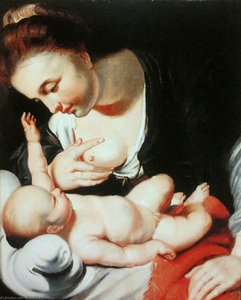
- English Madonna and Child Framed a Garland of Flowers
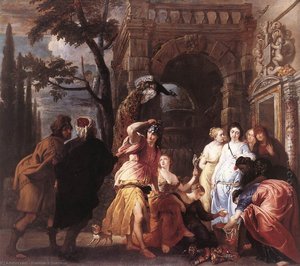
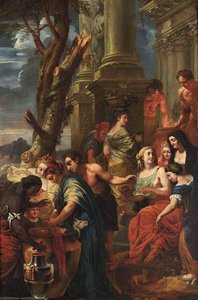
- Achilles among the Daughters of Lycomedes
- Place Of Birth: Antwerp Belgium
Related Articles

Baroque Masterpieces: 10 Paintings That Defined an Era |
Journey through the drama & grandeur of Baroque art! Explore 10 masterpieces by Caravaggio, Rembrandt, Rubens & more. Discover stunning oil paintings, rich colors & timeless stories. Find museum-quality reproductions at .

Theatricality & Triumph: Baroque Drama in Painting & Sculpture
Explore the dramatic world of Baroque art! Discover its history, defining characteristics, & lasting influence on painting & sculpture. Expert insights into Caravaggio, Zurbarán, and Bernini – plus high-quality reproductions at ArtsDot.

Baroque Drama: Bringing Opulence & Emotion into Contemporary Interiors
Explore the opulent world of Baroque interior design! Discover key elements, modern applications & how to bring dramatic elegance into your home with ArtsDot.com's authentic reproductions.

The Golden Age Reforged: Dramatic Realism & Religious Zeal in Spanish Baroque Art
Explore the dramatic world of Spanish Baroque art! Discover masters like Zurbarán & the powerful influence of religious zeal on painting techniques – a guide for collectors and enthusiasts.

The Dramatic Flourish: Exploring the Baroque Movement's Enduring Legacy in Art History
Explore the dramatic world of Baroque art! Discover iconic artists like Caravaggio & Rubens, defining techniques, and its lasting impact on art history. Expert insights for collectors & enthusiasts at ArtsDot.