 Preview
 Send
Send Share
Share
 Details

 Download
 Similars
 X-Ray
X-Ray Diaporama
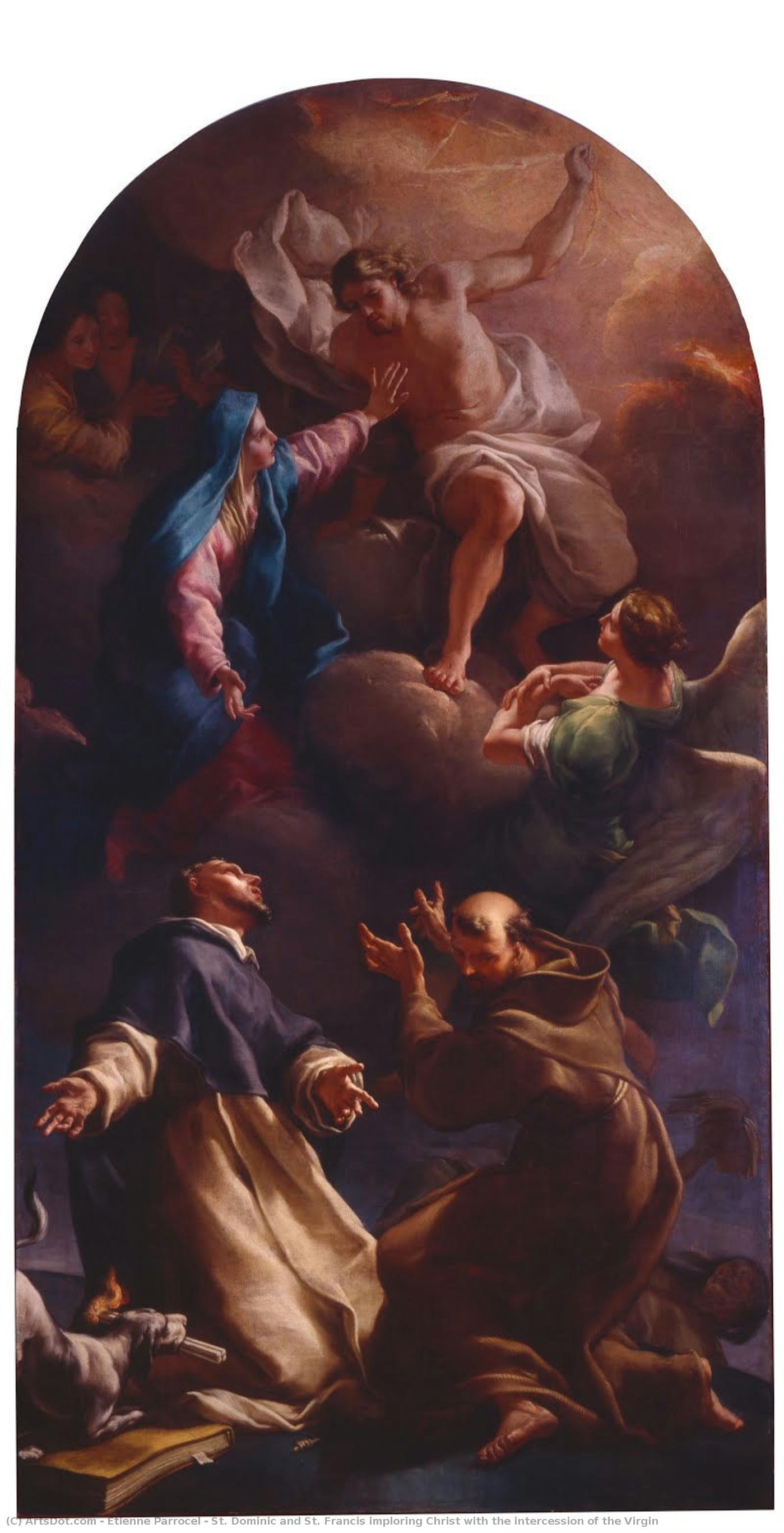
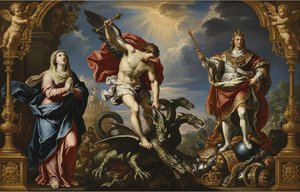
St. Dominic and St. Francis imploring Christ with the intercession of the Virgin
 Oil On Canvas
- WallArt
- Baroque
 1730
1730 328.0 x 244.0 cm
 Palace of Mafra
 Read More
Hand Made Oil Reproduction
Hand-painted oil on canvas in your size and frame, made to order by our artists. ( Buy Print Buy Image)




P118B $10

P118H $10

P118W $10

P438Z $10

P508JH $12

P508YH $12

P805H $10

P805Z $10

P919BZ $10

P919G $10

P919XJ $10

P959ZH $10

P968JZ $12

W106C $8

W218G $10

W218JH $8

W218Y $10

W307PJ $10

W316G $10

W316PJ $8

W316Y $10

W398PJ $8

W4111J $10

W500HY $15

W500JH $15

W692G $12

W849H $8

W940BG $15

W953PJ $8




Pick from our preset sizes that match the artwork's original proportions.

You may enter your own dimensions to fit a specific frame or space. If your selected size does not match the original image's proportions, we will either crop the artwork or extend the painting with additional hand-painted elements. A digital mockup will be sent for your approval before production begins.
Please note that the on-screen preview does not reflect the actual cropping or extension. Only the mockup will accurately show the final composition.
While custom sizes are available, we recommend selecting a dimension from the predefined list to preserve the original proportions.
After order, ArtsDot.com team will email client for instructions and provide a mockup preview
Worldwide Delivery () in 3/4 weeks instead of standard 5 weeks. (16 August). No compromise on quality.

Free Worldwide Express Shipping

High-Quality Linen Canvas

Full Shipping Insurance

Customs Tax Refund Guarantee

True Color Matching Guarantee

60-Day Return Policy (Defects Only)

100% Money-Back Guarantee

Bulk Discount Offer
 Glass option is only available in size under 110 CM

St. Dominic and St. Francis imploring Christ with the intercession of the Virgin
Reproduction Medium
Reproduction Size
-


Total Price
$ 313
Artwork Description
A Symphony of Faith and Light: Étienne Parrocel’s St. Dominic and St. Francis
The artwork "St. Dominic and St. Francis imploring Christ with the intercession of the Virgin," attributed to Étienne Parrocel, stands as a testament to the Baroque aesthetic—a style defined by its dramatic flair, emotional intensity, and masterful manipulation of light and shadow. Painted in 1730, this monumental canvas transcends mere depiction; it aspires to convey profound spiritual contemplation and embodies the core tenets of Catholic piety during the Enlightenment era.The Dramatic Composition: Baroque Grandeur
Parrocel’s artistic vision is immediately evident in the painting's ambitious pyramidal structure. At its apex resides Christ ascending into heaven, bathed in an ethereal golden luminescence—a deliberate echo of Giovanni Battista Tiepolo’s pioneering use of chiaroscuro, a technique championed by Tiepolo as “the architect of light.” This radiant glow serves not only to illuminate the central figure but also to draw the viewer's gaze upwards, fostering a sense of awe and elevating the spiritual experience. Below Christ, Mary Magdalene kneels in fervent prayer alongside St. Francis of Assisi, their postures conveying unwavering devotion. The inclusion of additional figures—a woman and a man—further reinforces the idea of a collective witness to this sacred event, amplifying the painting’s emotional resonance. Diagonal lines crisscross the canvas, injecting dynamism into the composition and mirroring the upward trajectory of Christ's ascent.Technique and Material: Layers of Luminosity
The execution of “St. Dominic and St. Francis” exemplifies Baroque artistry through meticulous brushwork and glazing techniques—a painstaking process that resulted in a surface rich with texture and imbued with luminosity. Oil paints were applied in multiple layers, allowing for subtle gradations of color and creating an illusion of depth. The artist skillfully employed chiaroscuro to sculpt the forms of the saints and Christ, emphasizing musculature and drapery folds while simultaneously highlighting areas of radiant light. This technique—inherited from Venetian masters like Tiepolo—was instrumental in achieving the painting’s dramatic impact and conveying its spiritual significance.Symbolism: Echoes of Theological Significance
Beyond its visual splendor, “St. Dominic and St. Francis” is laden with symbolic meaning. St. Dominic and St. Francis represent contrasting facets of Christian spirituality – Dominic embodying intellectual contemplation and papal authority, while Francis embodies humility and pastoral care. Their pleading posture before Christ underscores the importance of intercession—the belief that saints can pray for humanity—and highlights the Virgin Mary’s role as mediator between God and humankind. The overarching theme is the Ascension of Christ, a pivotal moment in Christian theology signifying divine triumph over death and offering eternal salvation.Emotional Impact: A Window into Baroque Spirituality
Ultimately, Parrocel's masterpiece succeeds in capturing the fervor and solemn beauty of Baroque spirituality. The painting’s luminous palette, coupled with its dynamic composition and masterful use of chiaroscuro, evokes a profound sense of reverence and inspires contemplation on themes of faith, redemption, and divine grace. It stands as an enduring symbol of artistic excellence—a captivating reproduction would undoubtedly enrich any interior space and serve as a poignant reminder of the power of art to communicate spiritual truths.Related Artworks
Artist Biography
Giovanni Battista Tiepolo: The Architect of Light
Giovanni Battista Tiepolo, a name synonymous with the dazzling brilliance and theatrical grandeur of 18th-century Venetian painting, was more than just an artist; he was a master architect of light and space. Born in Venice in 1696, into a family steeped in maritime tradition—his father a small shipping merchant—Tiepolo’s artistic journey began unexpectedly, guided by his mother's decision to entrust him to the tutelage of Gregorio Lazzarini, a decorator known for his academic style. This early training, though seemingly conventional, laid the groundwork for Tiepolo’s later embrace of a revolutionary approach to fresco decoration, one that would forever alter the landscape of European art.
His formative years were marked by a complex and multifaceted artistic education. He absorbed influences from both Venetian masters like Piazzetta and Ricci, who instilled in him a love for dramatic chiaroscuro and robust modeling, alongside the more classical styles of Veronese, whose monumental scale and opulent color palettes captivated young Tiepolo. Crucially, he also studied the works of older painters, demonstrating an intellectual curiosity that fueled his constant experimentation and evolution. This diverse exposure shaped his distinctive style—a harmonious blend of Baroque drama, Rococo elegance, and a profound understanding of perspective and composition.
The Rise to Prominence: Frescoes as Stagecraft
Tiepolo’s career took off with remarkable speed. His early works, such as the ‘Sacrifice of Isaac’ (1716), showcased his burgeoning talent for dramatic storytelling and masterful use of light and shadow. However, it was his commission to decorate the Ca’ Dolfin in Venice around 1726-29 that truly catapulted him to fame. This vast cycle of canvases depicting ancient battles and triumphs—a veritable spectacle of heroic figures and exotic costumes—established his reputation as a leading decorative painter. These weren't merely paintings; they were meticulously designed sets, intended to transform the reception room into a stage for visual drama.
This innovative approach to fresco decoration became the hallmark of Tiepolo’s career. He didn’t simply paint on a wall; he built an entire world within it—a world of mythic grandeur and theatrical spectacle. His collaboration with Girolamo Mengozzi Colonna, a specialist in perspective, was instrumental in achieving this effect. Colonna devised a complex system of vanishing points and calculated viewpoints, allowing Tiepolo to create the illusion of depth and space that characterized his most celebrated ceiling frescoes.
The Grand Manner: Würzburg and Beyond
Tiepolo’s influence extended far beyond Venice. In 1750, he accepted a monumental commission in Würzburg, Germany—a testament to his international acclaim—to decorate the Residenz palace for Prince-Bishop Carl Philipp von Greiffenklau. This project, culminating in the magnificent ‘Apollo and the Planets’ fresco (1752-53), is considered the pinnacle of Tiepolo's career. The sheer scale of the composition, combined with its dynamic energy and masterful use of light and color, established a new standard for grand decorative painting—a style often referred to as the “Grand Manner.”
His work in Würzburg showcased his ability to seamlessly blend classical mythology with contemporary sensibilities. The fresco is not merely a depiction of the gods; it’s an invitation to participate in a vibrant, imaginative world. Subsequent commissions followed across Europe—in Madrid, Spain, and Stockholm, Sweden—demonstrating his versatility and enduring appeal. He continued to refine his technique, experimenting with new approaches to composition and color, always striving for a sense of lightness and airiness that defined his unique style.
Legacy: A Revolution in Fresco Painting
Giovanni Battista Tiepolo’s legacy is profound and multifaceted. He revolutionized fresco painting by elevating it from a purely decorative art form to a sophisticated medium capable of conveying complex narratives, evoking powerful emotions, and creating immersive visual experiences. His innovative use of perspective, his mastery of light and color, and his willingness to embrace theatricality profoundly influenced generations of artists who followed.
His work continues to captivate audiences today, not only for its aesthetic beauty but also for its historical significance. Tiepolo’s frescoes are a testament to the power of art to transport us to other worlds—worlds of myth and legend, of grandeur and spectacle. He remains one of the most celebrated figures in the history of Venetian painting, an architect of light who transformed the way we perceive and experience art.
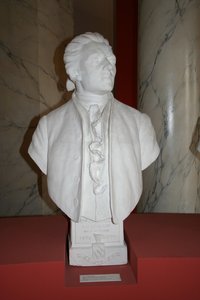
étienne parrocel
1696 - 1775 , France
Quick Facts
- Artistic Movement Or Style: Rococo, Venetian school
- Artists Or Movements Influenced By This Artist:
- Girolamo Mengozzi Colonna
- Rococo painting
- Artists Who Influenced This Artist:
- Gregorio Lazzarini
- Paolo Veronese
- Date Of Birth: March 5, 1696
- Date Of Death: March 27, 1770
- Full Name: Giovanni Battista Tiepolo
- Nationality: Italian
- Notable Artworks:
- Allegory with Venus and Time
- Meeting of Antony and Cleopatra
- Banquet of Antony and Cleopatra
- Place Of Birth: Venice, Italy
Related Articles
Francis Bacon's Masterpieces: Exploring 25 Iconic Paintings | ArtsDot
Delve into the haunting world of Francis Bacon with ArtsDot. Explore 25 iconic paintings, from his visceral portraits to powerful triptychs. Discover the stories behind these masterpieces & find museum-quality art reproductions for your home. Explore the full collection online!
El Greco's Masterpieces: Explore 25 Iconic Paintings & Spiritual Visions | ArtsDot
Journey through El Greco's 25 most iconic paintings! Explore the spiritual depth & dramatic beauty of this Spanish Renaissance master. Discover art history, techniques & find museum-quality reproductions for your home at ArtsDot.com.

The Dramatic Flourish: Exploring the Baroque Movement's Enduring Legacy in Art History
Explore the dramatic world of Baroque art! Discover iconic artists like Caravaggio & Rubens, defining techniques, and its lasting impact on art history. Expert insights for collectors & enthusiasts at ArtsDot.
Fra Angelico's Masterpieces: 25 Renaissance Paintings for Your Home | ArtsDot
Explore 25 breathtaking masterpieces by Fra Angelico, a Renaissance master. Discover the stories behind his iconic frescoes, Annunciations & religious art. Find museum-quality reproductions and elevate your home decor with ArtsDot.com.
The Dramatic Flourish: Exploring Themes of Power, Faith & Emotion in Baroque Artworks
Explore the dramatic world of Baroque art! Discover masters like Zurbarán & the powerful influence of religious zeal on painting techniques. Expert insights for collectors and enthusiasts.