 Preview
 Send
Send Share
Share
 Details

 Download
 Similars
 X-Ray
X-Ray Diaporama
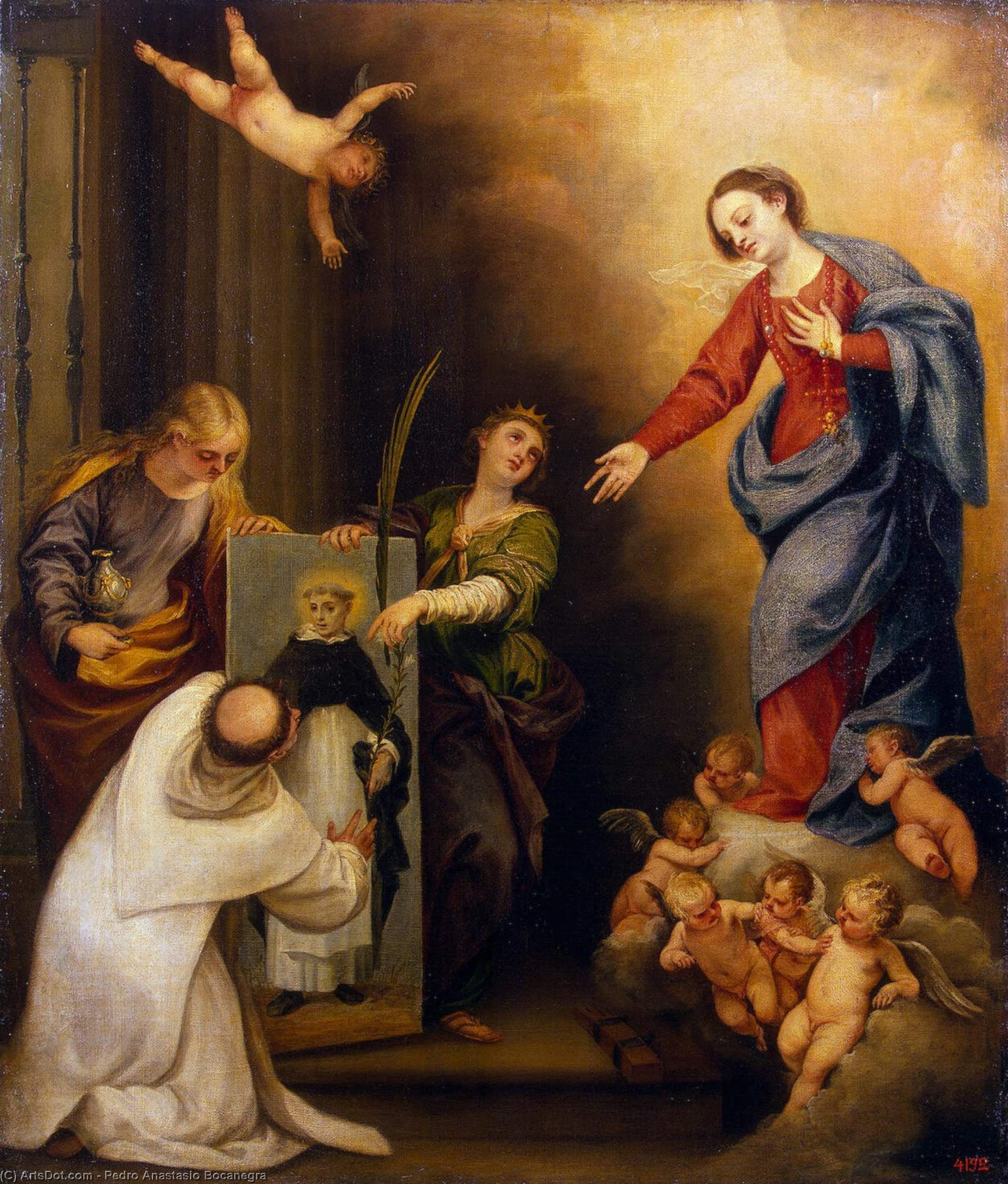
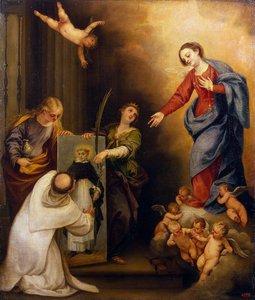
St Dominic in Soriano
 Acrylic On Canvas
- WallArt
- Baroque
 1660
1660 120.0 x 103.0 cm
 Hermitage Museum
 Read More
Hand Made Oil Reproduction
Hand-painted oil on canvas in your size and frame, made to order by our artists. ( Buy Print Buy Image)




P118B $10

P118H $10

P118W $10

P438Z $10

P508JH $12

P508YH $12

P805H $10

P805Z $10

P919BZ $10

P919G $10

P919XJ $10

P959ZH $10

P968JZ $12

W106C $8

W218G $10

W218JH $8

W218Y $10

W307PJ $10

W316G $10

W316PJ $8

W316Y $10

W398PJ $8

W4111J $10

W500HY $15

W500JH $15

W692G $12

W849H $8

W940BG $15

W953PJ $8




Pick from our preset sizes that match the artwork's original proportions.

You may enter your own dimensions to fit a specific frame or space. If your selected size does not match the original image's proportions, we will either crop the artwork or extend the painting with additional hand-painted elements. A digital mockup will be sent for your approval before production begins.
Please note that the on-screen preview does not reflect the actual cropping or extension. Only the mockup will accurately show the final composition.
While custom sizes are available, we recommend selecting a dimension from the predefined list to preserve the original proportions.
After order, ArtsDot.com team will email client for instructions and provide a mockup preview
Worldwide Delivery () in 3/4 weeks instead of standard 5 weeks. (16 August). No compromise on quality.

Free Worldwide Express Shipping

High-Quality Linen Canvas

Full Shipping Insurance

Customs Tax Refund Guarantee

True Color Matching Guarantee

60-Day Return Policy (Defects Only)

100% Money-Back Guarantee

Bulk Discount Offer
 Glass option is only available in size under 110 CM

St Dominic in Soriano
Reproduction Medium
Reproduction Size
-


Total Price
$ 263
Artwork Description
Pedro Anastasio Bocanegra’s “St Dominic in Soriano”: A Testament to Baroque Faith
Pedro Anastasio Bocanegra (1638-1689) remains a figure shrouded in relative obscurity compared to the titans of his era – Velázquez and Zurbarán – yet his contribution to Granada’s artistic heritage is undeniable. This painting, “St Dominic in Soriano,” exemplifies the fervent piety characteristic of the Spanish Baroque period and showcases Bocanegra's mastery of technique and compositional artistry. Produced around 1660, it transcends mere depiction; it embodies a profound spiritual aspiration rooted in Dominican theology.Subject Matter and Narrative Composition
The artwork portrays St. Dominic Savio, revered as the patron saint of Soriano, Italy – a location imbued with Marian devotion—seated alongside Mary holding the infant Jesus. The scene unfolds within an architectural setting featuring a staircase, subtly reinforcing the notion of ascent towards divine grace. Angels surround the holy family, gazing upon Jesus with expressions of adoration and reverence. Furthermore, additional figures populate the composition, adding depth and dynamism to the narrative. Bocanegra skillfully utilizes perspective to create a believable space, guiding the viewer’s eye toward the central focal point – the Virgin Mary cradling Christ – thereby emphasizing the sanctity of the moment.Baroque Style and Artistic Technique
Bocanegra's style aligns perfectly with the Baroque aesthetic: characterized by dramatic lighting, rich color palettes, and meticulous attention to detail. The painting employs chiaroscuro—the interplay between light and shadow—to sculpt form and heighten emotional impact. Warm hues dominate the palette – predominantly reds, yellows, and golds – symbolizing divine illumination and majesty. Bocanegra’s brushwork is remarkably smooth and controlled, demonstrating a dedication to realism while simultaneously elevating the scene beyond mere representation. The artist meticulously renders textures, from the drapery of Mary's robes to the delicate folds of the angels’ wings, conveying an unparalleled sense of materiality.Historical Context and Symbolic Significance
“St Dominic in Soriano” emerged during a period marked by intense religious fervor within Spain—the Counter-Reformation—following the Protestant Reformation. The Catholic Church actively sought to reaffirm its authority through art, commissioning works that communicated theological truths and inspired piety. St. Dominic Savio’s veneration stemmed from his unwavering faith and devotion to Mary, representing the Virgin Mother as a symbol of purity and compassion. The depiction of Jesus as an infant underscores the incarnation—the divine Logos becoming flesh—a cornerstone of Christian belief. The staircase serves as a visual metaphor for spiritual pilgrimage toward God's glory.Emotional Impact and Artistic Legacy
Ultimately, Bocanegra’s “St Dominic in Soriano” succeeds in conveying a palpable sense of serenity and reverence. The luminous colors and masterful execution evoke feelings of awe and contemplation. It stands as a testament to the Baroque tradition’s ability to fuse artistic skill with spiritual conviction. Reproductions of this artwork continue to resonate with audiences today, offering a glimpse into the profound religious beliefs that shaped European art history—a timeless masterpiece deserving of admiration and appreciation.Related Artworks
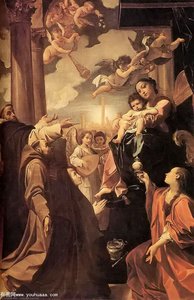
Artist Biography
A Master of Granada’s Baroque Soul
In the golden, sun-drenched landscape of seventeenth-century Spain, few names resonate with the spiritual gravity and technical grace of Pedro Anastasio Bocanegra. Born in Granada in 1638, Bocanegra emerged not merely as a painter, but as a visual poet capable of translating the profound mysteries of the Catholic faith into breathtaking canvases. His life was deeply intertwined with the artistic pulse of his native city, where he rose to become the most active and sought-after painter of his era. To walk through the halls of Granada’s great cathedrals is to encounter his legacy, a testament to an artist who could command both the monumental scale of religious devotion and the delicate intimacy of human emotion.
The foundations of Bocanegra’s genius were laid under the watchful eye of the legendary Alonso Cano. This early apprenticeship was transformative; from Cano, Bocanegra inherited a meticulous reverence for classical proportions and a sculptural approach to the human form. Yet, he was never a mere imitator. As his career matured, he sought out the broader horizons of the Spanish Baroque, absorbing the vibrant, painterly nuances of Juan de Sevilla Romero and refining his mastery of color by studying the works of Pedro de Moya and the incomparable Anthony van Dyck. This synthesis of influences allowed him to develop a style that married the structural discipline of his training with a new, luminous softness—a technique characterized by a gentle modeling of flesh and a sentimental depth that moved the viewer toward piety.
The Drama of Light and Devotion
Bocanegra’s oeuvre is a profound exploration of the Baroque aesthetic, where light serves as a divine protagonist. His works often utilize dramatic chiaroscuro to pull figures from the shadows, creating an illusionistic space that feels both theatrical and sacred. One cannot discuss his greatness without mentioning St Dominic in Soriano, currently held in the prestigious Museo del Prado. In this masterpiece, the artist achieves a sublime balance of movement and stillness, using vigorous compositions to convey the spiritual fervor of the saint. His ability to manipulate light does not merely illuminate a scene; it sanctifies it, turning every brushstroke into an act of worship.
His prolific output was driven by significant ecclesiastical commissions that shaped the visual identity of Andalusia. Between 1670 and 1673, Bocanegra undertook monumental tasks, such as painting the life of the Virgin for the Charterhouse in Granada and creating works for the convent of the Discalced Trinitarians. These large-scale cycles showcased his ability to manage complex, multi-figure compositions that utilized dynamic movement to guide the eye through sacred narratives. Whether depicting the Adoration of the Magi or the Conversion of St. Paul, Bocanegra possessed a unique talent for infusing even the most grandiloquent scenes with a sense of palpable, human tenderness.
Legacy and the Weight of Ambition
Despite his immense success and the high regard in which he was held by the Archbishops of Granada, Bocanegra’s personal narrative was marked by a complex temperament. Historical accounts suggest an artist possessed of a formidable, perhaps even arrogant, ego—a man who boasted of his superiority over his contemporaries. This ambition eventually led him to the royal courts of Seville and Madrid, where he achieved the prestigious status of court painter in 1676. However, the pressures of competition and the challenges of maintaining his reputation in the capital proved taxing, leading to a retreat from the intense scrutiny of the Madrid art scene.
Ultimately, Bocanegra’s contribution to the Spanish Baroque remains an indelible part of European art history. While some critics have noted that his immense productivity occasionally led him to prioritize quantity over the meticulous quality of his youth, the sheer breadth and emotional resonance of his surviving works are undeniable. He remains a pivotal figure who bridged the gap between the classical traditions of Alonso Cano and the more emotive, fluid styles of the late seventeenth century. Through his hands, the spiritual aspirations of an age were given form, color, and an eternal, luminous life.
pedro anastasio bocanegra
1638 - 1689 , Spain
Quick Facts
- Artistic Movement Or Style: Baroque
- Artists Or Movements Influenced By This Artist: ['Mathias de Torres']
- Artists Who Influenced This Artist:
- Alonso Cano
- Pedro Moya
- Juan de Sevilla Romero
- Date Of Birth: 1638 Granada Spain
- Date Of Death: 1689
- Full Name: Pedro Anastasio Bocanegra
- Nationality: Spanish
- Notable Artworks:
- St Dominic in Soriano
- Triumph of David
- Virgin and Child with Saints Isabel and Hyacinth
- Place Of Birth: Granada Spain
Related Articles

The Golden Age Reforged: Dramatic Realism & Religious Zeal in Spanish Baroque Art
Explore the dramatic world of Spanish Baroque art! Discover masters like Zurbarán & the powerful influence of religious zeal on painting techniques – a guide for collectors and enthusiasts.

The Dramatic Flourish: Exploring the Baroque Movement's Enduring Legacy in Art History
Explore the dramatic world of Baroque art! Discover iconic artists like Caravaggio & Rubens, defining techniques, and its lasting impact on art history. Expert insights for collectors & enthusiasts at ArtsDot.
The Dramatic Flourish: Exploring Themes of Power, Faith & Emotion in Baroque Artworks
Explore the dramatic world of Baroque art! Discover masters like Zurbarán & the powerful influence of religious zeal on painting techniques. Expert insights for collectors and enthusiasts.

El Greco's Masterpieces: Explore 25 Iconic Paintings & Spiritual Visions | ArtsDot
Journey through El Greco's 25 most iconic paintings! Explore the spiritual depth & dramatic beauty of this Spanish Renaissance master. Discover art history, techniques & find museum-quality reproductions for your home at ArtsDot.com.
Theatricality & Triumph: Baroque Drama in Painting & Sculpture
Explore the dramatic world of Baroque art! Discover its history, defining characteristics, & lasting influence on painting & sculpture. Expert insights into Caravaggio, Zurbarán, and Bernini – plus high-quality reproductions at ArtsDot.