 Preview
 Send
Send Share
Share
 Details

 Download
 Similars
 X-Ray
X-Ray Diaporama
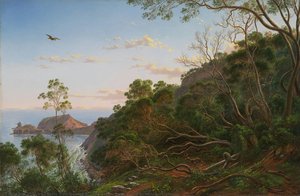
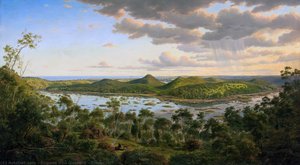
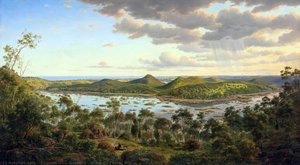
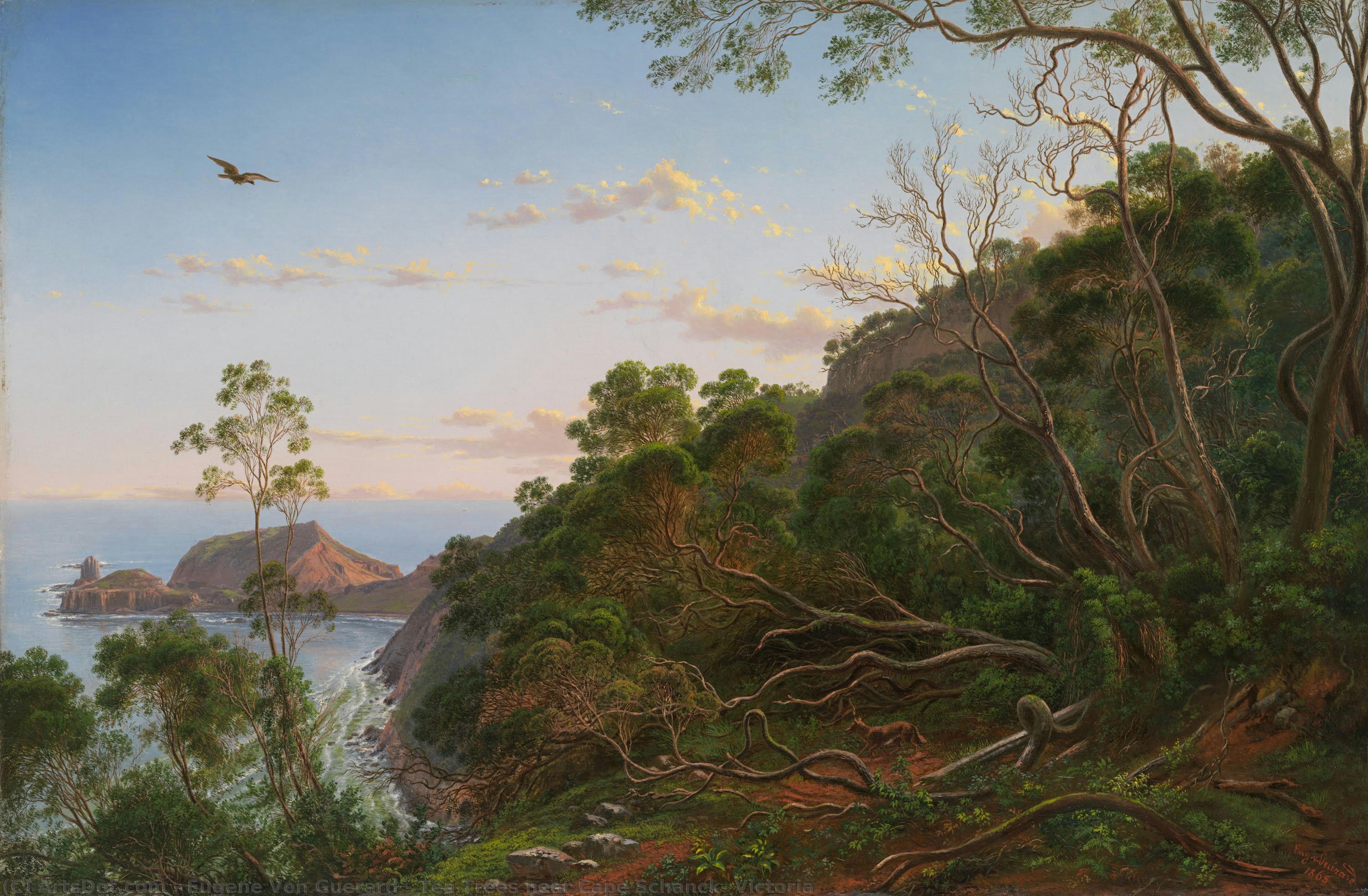
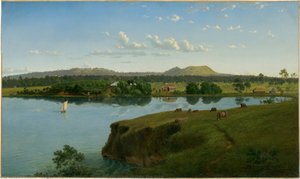
Tea Trees near Cape Schanck, Victoria
 Acrylic On Canvas
- WallArt
- Düsseldorf School of Painting
 1865
1865 61.0 x 91.0 cm
 National Gallery of Victoria
 Read More
Hand Made Oil Reproduction
Hand-painted oil on canvas in your size and frame, made to order by our artists. ( Buy Print Buy Image)




P118B $10

P118H $10

P118W $10

P438Z $10

P508JH $12

P508YH $12

P805H $10

P805Z $10

P919BZ $10

P919G $10

P919XJ $10

P959ZH $10

P968JZ $12

W106C $8

W218G $10

W218JH $8

W218Y $10

W307PJ $10

W316G $10

W316PJ $8

W316Y $10

W398PJ $8

W4111J $10

W500HY $15

W500JH $15

W692G $12

W849H $8

W940BG $15

W953PJ $8




Pick from our preset sizes that match the artwork's original proportions.

You may enter your own dimensions to fit a specific frame or space. If your selected size does not match the original image's proportions, we will either crop the artwork or extend the painting with additional hand-painted elements. A digital mockup will be sent for your approval before production begins.
Please note that the on-screen preview does not reflect the actual cropping or extension. Only the mockup will accurately show the final composition.
While custom sizes are available, we recommend selecting a dimension from the predefined list to preserve the original proportions.
After order, ArtsDot.com team will email client for instructions and provide a mockup preview
Worldwide Delivery () in 3/4 weeks instead of standard 5 weeks. (25 August). No compromise on quality.

Free Worldwide Express Shipping

High-Quality Linen Canvas

Full Shipping Insurance

Customs Tax Refund Guarantee

True Color Matching Guarantee

60-Day Return Policy (Defects Only)

100% Money-Back Guarantee

Bulk Discount Offer
 Glass option is only available in size under 110 CM

Tea Trees near Cape Schanck, Victoria
Reproduction Medium
Reproduction Size
-


Total Price
$ 263
Artwork Description
A Window Into the Australian Dream: Eugene von Guérard’s *Tea Trees near Cape Schanck*
Eugene von Guérard's 1865 painting, *Tea Trees near Cape Schanck*, is more than a landscape; it’s a meticulously crafted portal into a nascent Australian identity. Born in Vienna and arriving in Victoria during the height of the gold rush, von Guérard wasn’t simply documenting the rugged coastline – he was actively shaping how Australians began to perceive their own land. This work, rendered with his signature Düsseldorf school precision, transcends mere topographical representation, offering a complex dialogue between European artistic tradition and the burgeoning character of the Australian wilderness.
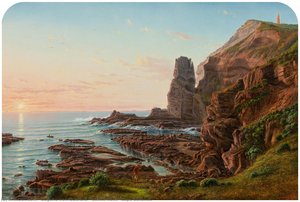
The scene unfolds dramatically against the imposing basalt cliffs of Cape Schanck, a sentinel guarding the entrance to Port Phillip Bay. The foreground is dominated by a dense thicket of tea trees – an exotic species then largely unfamiliar to European eyes. These aren’t merely trees; they writhe and surge forward with a primal energy, their sinuous trunks resembling snakes coiling towards the cliff edge, creating a dynamic diagonal that anchors the composition. This deliberate use of negative space, a technique borrowed from Italianate masters like Salvator Rosa, establishes a powerful tension between the ordered structure of the landscape and its untamed spirit.
Echoes of Italy: A Hybrid Style
Von Guérard’s artistic lineage is deeply rooted in 19th-century Europe. Trained in Düsseldorf, he absorbed the principles of “Sturm und Drang” – a Romantic movement emphasizing emotional intensity and dramatic landscapes. However, his time in Rome exposed him to classical influences, particularly the works of Claude Lorrain and Nicolas Poussin, which informed his meticulous attention to light, color, and composition. *Tea Trees near Cape Schanck* brilliantly synthesizes these diverse influences. The careful rendering of light, reminiscent of Italianate masters, contrasts sharply with the distinctly Australian subject matter – a landscape utterly foreign to the artist’s European training.
The inclusion of an imported European fox prowling amongst the tea trees is a particularly intriguing detail. It serves as a subtle yet potent symbol: a visual representation of the ecological disruption caused by European colonization. The fox, a creature entirely out of place in this Australian setting, embodies the unintended consequences of introducing foreign species into an indigenous ecosystem – a theme that resonates powerfully even today.
A Pioneering Vision
Von Guérard’s approach to landscape painting was remarkably prescient. He anticipated the rise of “plein air” naturalism—the practice of painting outdoors directly from nature—which would become a defining characteristic of Australian art in the late 19th century. His detailed observations and his willingness to depict the rugged, often challenging aspects of the Australian environment were groundbreaking for his time. The painting’s composition, with its strong diagonals and dramatic lighting, foreshadows the work of later Australian landscape artists who sought to capture the unique beauty and spirit of their homeland.
Timeless Beauty & Reproduction
*Tea Trees near Cape Schanck* is a testament to von Guérard's artistic skill and his profound understanding of both European tradition and the burgeoning identity of Australia. A hand-painted reproduction captures the depth, texture, and evocative atmosphere of the original with unparalleled fidelity. This artwork offers a captivating glimpse into a pivotal moment in Australian art history – a moment when an Austrian artist helped to shape the way Australians saw themselves and their land. It’s a piece that speaks volumes about the enduring power of landscape painting and its ability to transcend time and place.
Related Artworks
![Palácio Imperial De Petrópolis [imperial Palace At Petrópolis] — Agostinho José Da Mota, Landscape Realism](/media/artworks/images-thumb/4e/a5/4ea5b59dbff977a2832e47ecaeb49d71.jpg)
Artist Biography
A Pioneer of the Australian Landscape
Johann Joseph Eugen von Guérard, known to generations as Eugene von Guérard, occupies a pivotal position in the story of Australian art. Born in Vienna in 1811, his journey was one that spanned continents and artistic movements, ultimately culminating in a profound contribution to how Australia itself came to be visualized and understood. He wasn’t merely a painter *of* landscapes; he helped forge an Australian landscape tradition, blending meticulous European techniques with the unique character of the Southern Hemisphere's vistas. His legacy isn’t simply found in the numerous works gracing major public galleries across Australia, but also in the very way Australians began to perceive their own land – not as a wilderness to be conquered, but as a place of sublime beauty and scientific interest worthy of careful observation and reverent depiction.From European Roots to Australian Shores
Von Guérard’s artistic lineage was firmly established from the outset. His father, Bernhard von Guérard, was a painter of miniatures at the court of Emperor Francis I of Austria, instilling in young Eugen an early appreciation for precision and detail. This foundation was broadened by extensive travels throughout Italy with his father beginning in 1826, exposing him to the masterpieces of Renaissance and Baroque art. He immersed himself within artistic communities in Rome during the 1830s, encountering influential figures like Johann Anton Koch and members of the Nazarene movement – a group seeking a spiritual revival in art through a return to earlier styles. These early experiences shaped his aesthetic sensibilities, fostering a deep respect for classical composition and a commitment to representing nature with fidelity. However, it was his formal training at the Kunstakademie Düsseldorf from 1841 that truly defined his artistic approach. Under Johann Wilhelm Schirmer, he embraced the principles of the Düsseldorf School – an emphasis on “elevated” subject matter presented with “truthful” realism, combining historicism, lingering Romanticism, and a burgeoning visual accuracy rooted in direct observation. This rigorous training provided him with the technical skills and philosophical framework that would underpin his later work. The lure of gold brought von Guérard to Victoria, Australia, in 1852, but it was quickly apparent that his true fortune lay not in mining, but in capturing the beauty of this new land on canvas.Documenting a Continent: Style and Themes
Initially, von Guérard’s Australian experience manifested in insightful studies of goldfields life – scenes markedly different from the grand landscapes he would later become known for. However, he soon transitioned to commissioned work, documenting the estates of wealthy pastoralists, which allowed him to explore the broader Australian landscape. By the 1860s, he had established himself as the foremost landscape artist in the colonies, embarking on extensive tours throughout southeastern Australia and New Zealand in pursuit of striking vistas. His paintings are characterized by an extraordinary level of detail, a testament to his Düsseldorf training and his dedication to accurate observation. He wasn’t simply recreating what he saw; he was meticulously recording it, almost as if undertaking a scientific survey. This is particularly evident in his masterpiece, “View of Tower Hill” (1856), a scientifically precise depiction of the volcanic landscape in southwestern Victoria that later proved invaluable when the area was reclaimed and transformed into a state park. Von Guérard’s work reveals a sensitive perception of the natural environment, reflecting influences from European Romanticism – an appreciation for the grandeur and power of landscapes – and potentially even the environmental theories of Alexander von Humboldt, who emphasized the interconnectedness of all things in nature. His paintings often feature dramatic lighting effects, creating a sense of atmosphere and depth that draws the viewer into the scene.Legacy and Enduring Influence
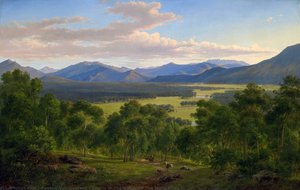
Eugene von Guérard’s impact on Australian art extends far beyond his individual canvases. He helped establish a distinct national landscape tradition, one that balanced European artistic techniques with uniquely Australian subject matter. The State Library of New South Wales holds an invaluable collection of 32 sketchbooks documenting his 28 years in Australia and earlier travels, offering profound insights into his working methods and observational skills. His paintings continue to command significant prices – “View of Geelong” sold for A$3.8 million in 2006 – underscoring his enduring popularity and historical importance.- Key Works: "View of Tower Hill" (1856), "Valley of the Mitta Mitta" (1866), “Mount Kosciusko” (1870), “Waterfall, Strath Creek” (1862) & “Sydney Heads” (1865).
- Influences: Düsseldorf School realism, Romanticism, Alexander von Humboldt’s theories.
- Major Collections: National Gallery of Victoria, Art Gallery of New South Wales, State Library of New South Wales.
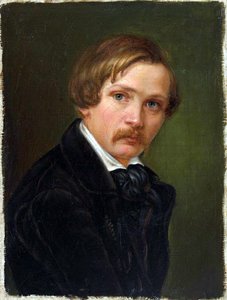
Eugene von Guérard
1811 - 1901 , Austria
Quick Facts
- Artistic Movement Or Style: Düsseldorf School realism
- Artists Or Movements Influenced By This Artist: Australian landscape tradition
- Artists Who Influenced This Artist:
- Claude Lorrain
- Nicolas Poussin
- Salvator Rosa
- Johann Anton Koch
- Date Of Birth: 1811
- Date Of Death: 1901
- Full Name: Eugene von Guérard
- Nationality: Austrian-born
- Notable Artworks:
- View of Tower Hill
- Valley of the Mitta Mitta
- Mount Kosciusko
- Yalla-y-poora
- Place Of Birth: Vienna, Austria
Related Articles

Romantic Landscapes: 10 Masterpieces for Your Home | ArtsDot
Journey through 10 Romantic landscape masterpieces by Friedrich, Turner & Cole. Explore emotional art, sublime nature scenes & iconic 19th-century paintings. Find museum-quality reproductions for your home at ArtsDot.com – discover the full collection online!

Evocations of Place: A Historical Journey Through Landscape Art
Explore the rich history of landscape art with ArtsDot. Discover renowned artists, movements like Impressionism & Romanticism, and expert guidance for collecting timeless pieces. Find your perfect serene escape today!
Eugen von Blaas: Capturing Alpine Life & Sentiment in 19th-Century Austrian Painting
Discover the captivating world of Eugen von Blaas! Explore his exquisite 19th-century paintings capturing Venetian life & Alpine beauty. Learn about his Academic Classicism style and find museum-quality reproductions at ArtsDot.

John Constable's Masterpieces: Explore 25 Iconic Landscapes for Your Home
Journey through John Constable's 25 most celebrated landscapes. Explore Romanticism, Dedham Vale & his masterful use of light in iconic paintings like 'Hay Wain'. Find museum-quality art reproductions and elevate your home decor on ArtsDot.com.

Evocations of Place: A Historical Journey Through Landscape Art
Explore the rich history of landscape art with ArtsDot. Discover renowned artists, movements like Impressionism & tonalism, and expert guidance for collecting timeless pieces. Find your perfect serene escape today!