 Preview
 Send
Send Share
Share
 Details

 Download
 Similars
 X-Ray
X-Ray Diaporama
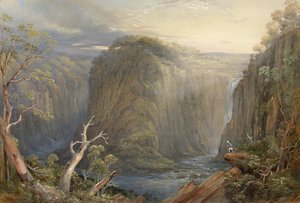
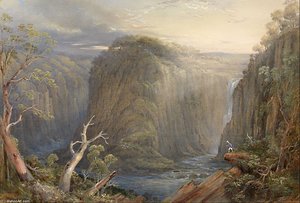
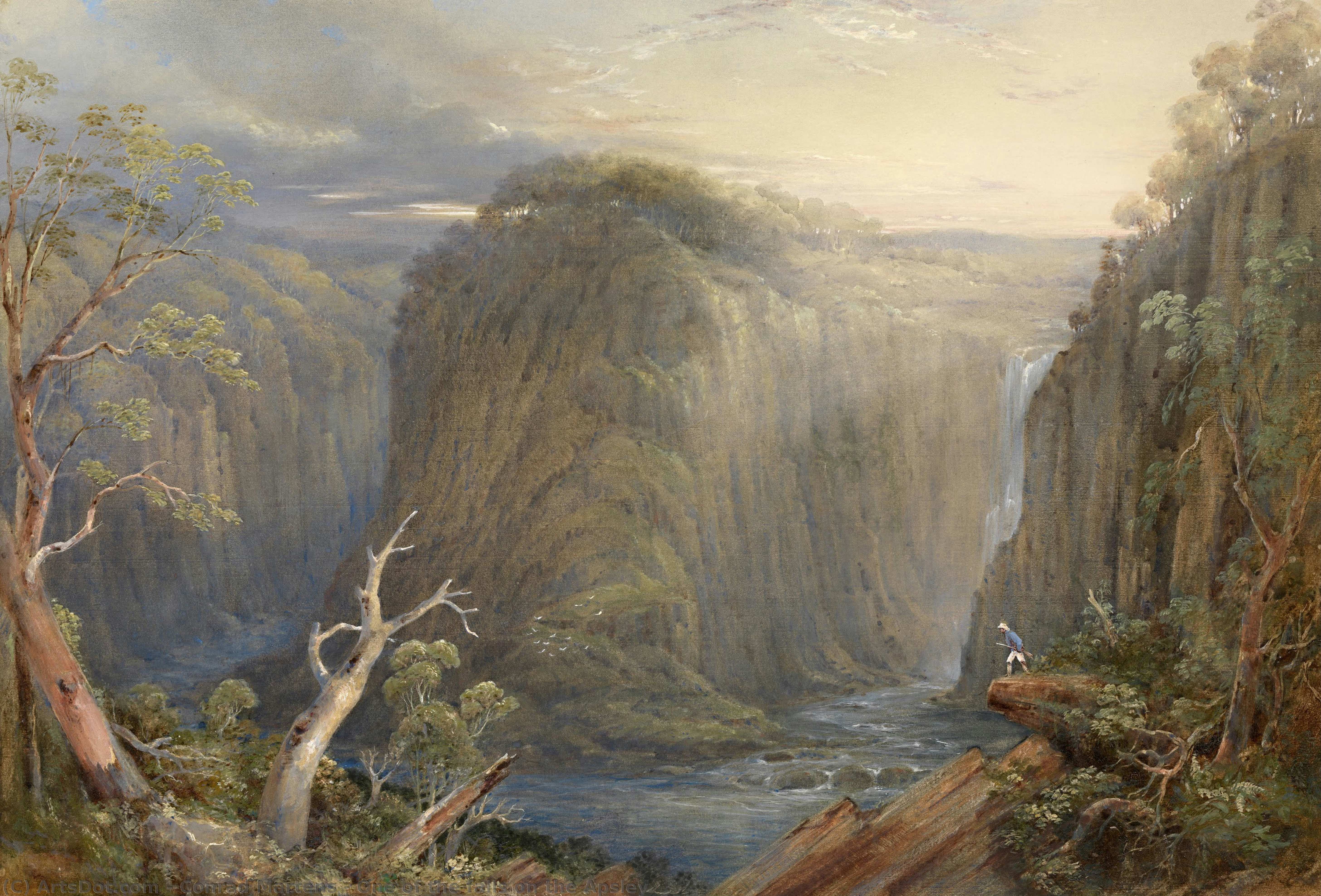
One of the falls on the Apsley
 Acrylic On Canvas
- WallArt
- Romantic Landscape
 1873
1873 46.0 x 66.0 cm
 National Gallery of Victoria
 Read More
Hand Made Oil Reproduction
Hand-painted oil on canvas in your size and frame, made to order by our artists. ( Buy Print Buy Image)




P118B $10

P118H $10

P118W $10

P438Z $10

P508JH $12

P508YH $12

P805H $10

P805Z $10

P919BZ $10

P919G $10

P919XJ $10

P959ZH $10

P968JZ $12

W106C $8

W218G $10

W218JH $8

W218Y $10

W307PJ $10

W316G $10

W316PJ $8

W316Y $10

W398PJ $8

W4111J $10

W500HY $15

W500JH $15

W692G $12

W849H $8

W940BG $15

W953PJ $8




Pick from our preset sizes that match the artwork's original proportions.

You may enter your own dimensions to fit a specific frame or space. If your selected size does not match the original image's proportions, we will either crop the artwork or extend the painting with additional hand-painted elements. A digital mockup will be sent for your approval before production begins.
Please note that the on-screen preview does not reflect the actual cropping or extension. Only the mockup will accurately show the final composition.
While custom sizes are available, we recommend selecting a dimension from the predefined list to preserve the original proportions.
After order, ArtsDot.com team will email client for instructions and provide a mockup preview
Worldwide Delivery () in 3/4 weeks instead of standard 5 weeks. (17 August). No compromise on quality.

Free Worldwide Express Shipping

High-Quality Linen Canvas

Full Shipping Insurance

Customs Tax Refund Guarantee

True Color Matching Guarantee

60-Day Return Policy (Defects Only)

100% Money-Back Guarantee

Bulk Discount Offer
 Glass option is only available in size under 110 CM

One of the falls on the Apsley
Reproduction Medium
Reproduction Size
-


Total Price
$ 263
Artwork Description
The Majesty of Apsley Falls – Conrad Martens’ Romantic Vision
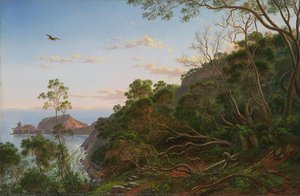
Conrad Martens' "One of the Falls on the Apsley," painted in 1873, isn’t merely a landscape; it’s an immersive experience, a testament to the burgeoning Romantic movement’s fascination with untamed nature and the sublime. This watercolor captures a pivotal moment in colonial Australia – the encounter with a raw, almost overwhelming beauty that would forever shape the nation's artistic identity. The scene unfolds within the Apsley Falls region of New South Wales, a location already celebrated by explorer John Oxley for its dramatic geological formations and sheer power. Martens, deeply influenced by the prevailing aesthetic sensibilities of his time, elevates this natural wonder to an almost mythical scale, imbuing it with a sense of grandeur and spiritual significance.
A Painter’s Observation – Technique and Detail
Martens' skill lies not just in depicting the landscape but in meticulously rendering its textures and light. The work is executed in delicate watercolor, layered with gouache for added depth and gum arabic to create a luminous sheen. He employs a precise, almost photographic technique, capturing every jagged rock face, every cascade of water, and every ripple on the pool below. Yet, this realism isn’t cold or detached; Martens infuses his observation with an emotional intensity. Notice how he uses subtle gradations of color to suggest the mist rising from the falls – a hazy veil that softens the harshness of the stone and creates an atmosphere of ethereal beauty. The composition itself is carefully balanced, drawing the eye towards the central cascade while anchoring it within the imposing presence of the surrounding mountains.
Historical Context: Colonial Australia and the Romantic Ideal
To understand "One of the Falls on the Apsley," one must consider its historical context. The mid-19th century witnessed a surge in interest in both landscape painting and scientific exploration within colonial Australia. Explorers like Oxley were charting new territories, documenting their natural wonders, and fueling a growing sense of national identity. Martens, having arrived in Sydney in 1836, quickly established himself as the colony’s most prominent artist. He was deeply influenced by Charles Lyell's "Principles of Geology," which promoted the idea that landscapes were shaped by gradual processes over immense periods of time – a concept perfectly aligned with the Romantic fascination with nature’s power and longevity. The painting reflects this intellectual climate, suggesting a profound respect for the natural world and its inherent majesty.
Symbolism and Emotional Resonance
Beyond its technical brilliance, "One of the Falls on the Apsley" resonates with powerful symbolic meaning. The falls themselves represent both the raw power and the delicate beauty of nature – a potent combination that speaks to the Romantic ideal. The small figure in the foreground, seemingly dwarfed by the scale of the landscape, serves as a reminder of humanity’s place within the vastness of the natural world. It evokes a sense of awe, humility, and perhaps even a touch of melancholy. The painting isn't simply a depiction of a waterfall; it’s an invitation to contemplate our relationship with nature, our own insignificance in the face of geological time, and the enduring allure of the sublime.
This artwork is a captivating window into 19th-century Australia, offering a glimpse of a landscape both wild and beautiful. Reproductions capture the essence of Martens’ vision, bringing this iconic scene to life in any setting – from grand living rooms to serene study spaces.
Related Artworks

Artist Biography
Early Life and Artistic Foundations
Conrad Martens emerged as a significant figure in 19th-century art, bridging the worlds of European artistic tradition and the burgeoning landscape painting scene of colonial Australia. Born in London in 1801, his lineage was marked by international connections – his father, J.C.H. Martens, was an Austrian-born merchant who served as Austrian Consul, instilling a cosmopolitan atmosphere within the family. Following his father’s passing in 1816, Conrad dedicated himself to the pursuit of art, embarking on formal training under Copley Fielding, a celebrated watercolourist. This apprenticeship proved pivotal, grounding Martens in the established techniques and aesthetic principles of the English watercolor school. Fielding's influence instilled within him a reverence for light, atmosphere, and meticulous observation – qualities that would become hallmarks of his distinctive style. These early years laid the foundation for a career defined by both technical skill and a romantic sensibility towards the natural world.Voyage on the Beagle and Darwinian Connections
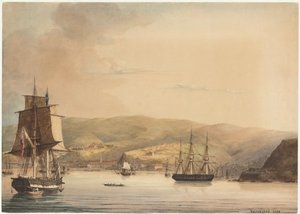
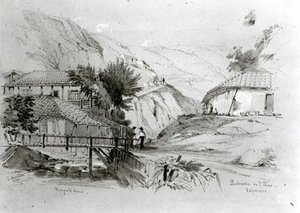
A turning point in Martens’ life arrived with an invitation to join HMS Hyacinth as a topographical artist in 1832, charting landscapes during a cruise to India. However, fate intervened when he was subsequently selected to replace Augustus Earle aboard the second voyage of HMS Beagle in 1833. This association would forever link his name to one of history’s most influential scientific expeditions and forge an enduring friendship with Charles Darwin. For over a year, Martens documented the diverse terrains encountered by the Beagle, from the coasts of South America to remote Pacific islands. The experience broadened his artistic horizons immeasurably, exposing him to new light conditions, geological formations, and exotic flora and fauna. More importantly, it fostered a collaborative spirit with Darwin, whose keen eye for detail and scientific curiosity resonated deeply with Martens’ own observational approach. Leaving the Beagle at Valparaiso in 1834, he continued his travels through the South Sea Islands before finally arriving in Sydney, Australia, in 1835 – a destination that would become both his home and artistic focus for the remainder of his life.Establishing an Australian Identity
Upon settling in Sydney, Conrad Martens quickly established himself as one of the colony’s most proficient and prolific landscape artists. He embraced the challenge of capturing the unique beauty and character of the Australian environment, particularly the dramatic vistas of Sydney Harbour. Commissions flowed from both private patrons and institutions, including continued support from Darwin and Captain Fitzroy who requested works following their return to England. However, the 1840s presented economic hardships, prompting Martens to diversify his income through lithography. His popular print, “Sydney from St. Leonards,” exemplifies this period, demonstrating his ability to translate his watercolor skills into a reproducible medium and reach a wider audience. Marriage to Jane Carter in 1837, the daughter of a prominent barrister, provided stability but did not diminish his dedication to artistic pursuits. Martens’s work during these years reflects a growing sense of place – an attempt to define an authentically Australian aesthetic while remaining rooted in European traditions.Artistic Style and Enduring Legacy
Martens' artistic style was a fascinating synthesis of influences, drawing inspiration from the 17th-century landscapes of Claude Lorrain with their atmospheric perspective and idealized compositions, as well as the innovative use of light and color championed by JMW Turner. He skillfully adapted these academic foundations to the specific qualities of the Australian landscape – its intense sunlight, rugged terrain, and unique vegetation. His paintings are characterized by dramatic lighting effects, picturesque arrangements, and a romanticized vision of nature that appealed to colonial sensibilities. Beyond technical prowess, Martens emphasized rigorous study and keen observation, principles he articulated in lectures at the Sydney Sketching Club. In 1862, securing financial stability as assistant librarian in the parliamentary library allowed him to continue painting despite declining health. Conrad Martens passed away in 1878, leaving behind a substantial body of work that now positions him as Australia’s pre-eminent 19th-century landscape painter. His paintings are not merely beautiful depictions of scenery; they are invaluable historical records, offering glimpses into early Australian life and landscapes, imbued with both artistic merit and enduring cultural significance. His legacy continues to inspire artists and captivate audiences today.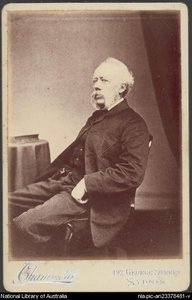
Conrad Martens
1801 - 1878 , United Kingdom
Quick Facts
- Artistic Movement Or Style: Romanticism
- Artists Who Influenced This Artist:
- Claude Lorrain
- JMW Turner
- Copley Fielding
- Date Of Birth: 1801
- Date Of Death: 1878
- Full Name: Conrad Martens
- Nationality: British-Australian
- Notable Artworks:
- Sydney from St. Leonards
- Elizabeth Bay
- View of the Heads
- Place Of Birth: London, UK
Related Articles

Watercolor Wonders: 10 Masterpieces That Redefined Art History | ArtsDot
Journey through 10 legendary watercolor masterpieces by Sargent, Turner & Homer! Explore iconic landscapes, portraits & floral art that redefined history. Find museum-quality reproductions and curated decor ideas at ArtsDot.com.

Ephemeral Visions: Exploring the Artistic Legacy & Contemporary Practice of Watercolor Painting
Explore the captivating world of watercolor painting! Discover its rich history, essential techniques, influential artists & collecting tips. A comprehensive guide for art enthusiasts from ArtsDot.

Ephemeral Visions: Exploring the History & Emotional Resonance of Watercolor Painting
Explore the captivating history of watercolor painting, from ancient techniques to modern masters like Kandinsky & Blake. Discover essential artists, collecting tips & the emotional power of this luminous medium. Expert insights for art enthusiasts.

Ephemeral Visions: Exploring the Artistic Legacy & Nuances of Watercolor Painting
Explore the captivating world of watercolor painting! Discover its rich history, essential techniques, influential artists & collecting tips from art experts. A comprehensive guide for enthusiasts.
The Enduring Appeal of Watercolor: History, Techniques & Contemporary Practice
Explore the captivating world of watercolor painting! Discover its rich history, essential techniques, influential artists, and collecting tips. A comprehensive guide for art enthusiasts.