 Preview
 Send
Send Share
Share
 Details

 Download
 Similars
 X-Ray
X-Ray Diaporama
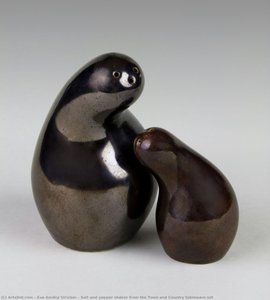
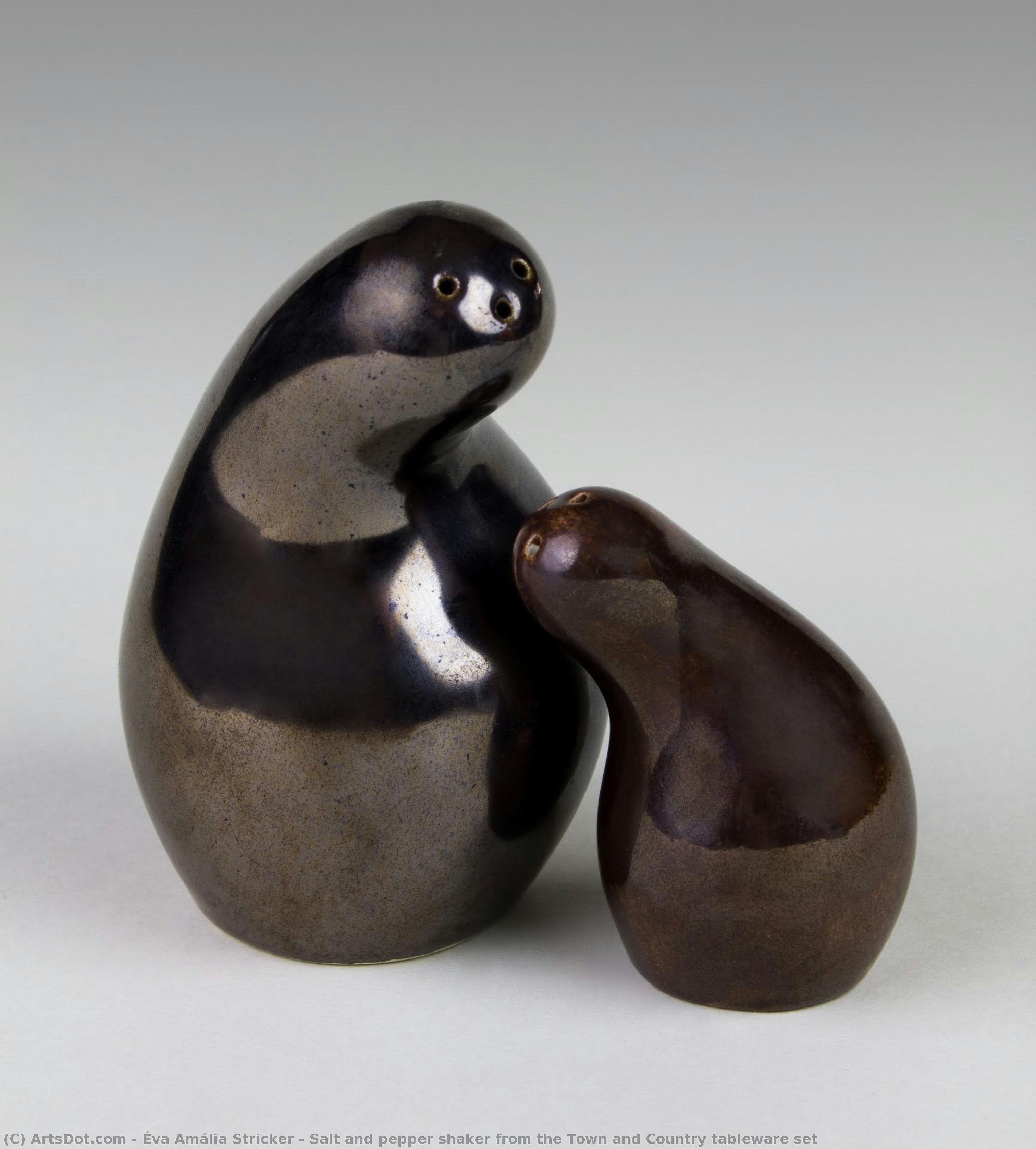
Salt and pepper shaker from the Town and Country tableware set
 Acrylic
- WallArt
- Modern European Trends
 1945
1945 2.0 x 8.0 cm
 Museum of Applied Arts
 Read More
Hand Made Oil Reproduction
Hand-painted oil on canvas in your size and frame, made to order by our artists. ( Buy Print Buy Image)




P118B $10

P118H $10

P118W $10

P438Z $10

P508JH $12

P508YH $12

P805H $10

P805Z $10

P919BZ $10

P919G $10

P919XJ $10

P959ZH $10

P968JZ $12

W106C $8

W218G $10

W218JH $8

W218Y $10

W307PJ $10

W316G $10

W316PJ $8

W316Y $10

W398PJ $8

W4111J $10

W500HY $15

W500JH $15

W692G $12

W849H $8

W940BG $15

W953PJ $8




Pick from our preset sizes that match the artwork's original proportions.

You may enter your own dimensions to fit a specific frame or space. If your selected size does not match the original image's proportions, we will either crop the artwork or extend the painting with additional hand-painted elements. A digital mockup will be sent for your approval before production begins.
Please note that the on-screen preview does not reflect the actual cropping or extension. Only the mockup will accurately show the final composition.
While custom sizes are available, we recommend selecting a dimension from the predefined list to preserve the original proportions.
After order, ArtsDot.com team will email client for instructions and provide a mockup preview
Worldwide Delivery () in 3/4 weeks instead of standard 5 weeks. (1 September). No compromise on quality.

Free Worldwide Express Shipping

High-Quality Linen Canvas

Full Shipping Insurance

Customs Tax Refund Guarantee

True Color Matching Guarantee

60-Day Return Policy (Defects Only)

100% Money-Back Guarantee

Bulk Discount Offer
 Glass option is only available in size under 110 CM

Salt and pepper shaker from the Town and Country tableware set
Reproduction Medium
Reproduction Size
-


Total Price
$ 263
A Study in Quiet Elegance: Exploring Éva Zeisel’s Town & Country Salt Shaker
The salt shaker and pepper pot from the Town & Country tableware set, created by Hungarian-born Éva Zeisel in 1945, stands as a testament to minimalist design principles married with subtle artistic expression. More than just functional objects, these pieces embody the spirit of postwar American optimism and represent a pivotal moment in ceramic art history—a legacy cemented by the discerning eye of Eliot Noyes and championed by Castleton China Company. Zeisel’s innovative approach to ceramics design, influenced by European modernist trends arriving late in America, captivated audiences and established her as a trailblazing figure for women in the creative arts.- Form and Function: The shaker's bulbous silhouette—reminiscent of bent gourds or amoebae—immediately speaks to organic forms, reflecting Zeisel’s fascination with natural shapes. This deliberate departure from ornate Victorian styles aligns perfectly with the broader aesthetic movement prioritizing simplicity and understated beauty.
- Material & Technique: Crafted from snow-white porcelain, the shaker’s unadorned surface underscores its intended purpose – to serve as vessels for seasoning food without distraction. The glaze achieves a delicate metallic sheen, highlighting the meticulous craftsmanship involved in achieving this luminous finish.
Historical Context: Modernism Takes Root in America
The creation of the Town & Country set coincided with a significant shift in artistic sensibilities across the Atlantic. Eliot Noyes’s influence at MoMA played a crucial role in introducing European modernist ideas to American design circles. Recognizing Zeisel's talent and her students’ innovative explorations, Noyes championed her vision for creating a contemporary dining service that prioritized elegance and functionality—a reaction against the excesses of prewar decorative arts.Symbolism Beyond Utility: The Face Motif
Adding an unexpected layer of visual interest is the whimsical face drawn onto the black shaker. This seemingly playful element transcends mere decoration; it subtly references Cézanne’s exploration of human form and emotion, mirroring his broader ambition to imbue everyday objects with a sense of personality and contemplation. The face serves as a reminder that even the most utilitarian items can hold profound artistic resonance.Emotional Impact & Artistic Legacy
Ultimately, the Town & Country salt shaker embodies Zeisel’s commitment to creating art that elevates the ordinary—a philosophy beautifully articulated by Noyes's endorsement of her work. Its quiet elegance and refined simplicity continue to inspire designers today, demonstrating how a masterful understanding of form, material, and technique can yield enduring artistic achievements. The piece’s debut at MoMA in 1946 solidified Zeisel’s position as an icon of modern design and cemented the Town & Country set's place within the canon of postwar American art.Related Artworks
Artist Biography
Paul Cézanne: Bridging Impressionism and Modernity
Born in Aix-en-Provence, France, on January 19, 1839, Paul Cézanne remains a pivotal figure in the transition from late 19th-century Impressionism to the burgeoning movements of early 20th-century art. His life was one of quiet dedication to his craft, marked by a relentless pursuit of formal structure and a profound exploration of color and light. While initially influenced by the vibrant palettes and fleeting moments captured by Impressionists like Monet and Renoir, Cézanne ultimately forged his own distinct path—a path that would fundamentally reshape how artists perceived and represented the world around them.
Cézanne’s early artistic development was shaped by a strong familial connection to art. His father, Antoinette Cézanne, was a banker and avid collector of paintings, fostering an environment rich in artistic appreciation from a young age. He received his initial training at the École des Beaux-Arts in Paris, where he studied under Jean-Léon Gérôme, but found himself increasingly disillusioned with the rigid academic traditions. It was during this period that he began to immerse himself in the Impressionist circle, absorbing their techniques of capturing light and atmosphere. However, Cézanne’s interest wasn't merely superficial; he recognized the limitations of Impressionism’s focus on fleeting impressions and sought a deeper understanding of form and structure.
His most famous subjects—particularly the Mont Sainte-Victoire mountain range near Aix—became recurring motifs throughout his career. These landscapes weren’t simply depictions of nature, but rather explorations of geometric forms, spatial relationships, and the underlying architecture of the scene. Cézanne meticulously studied these subjects over decades, returning to them repeatedly with subtle variations, constantly refining his approach and pushing the boundaries of representation. He famously stated, “I do not paint what I see, but what I feel,” a sentiment that encapsulates his artistic philosophy—a move away from objective observation towards subjective interpretation.
The Development of Cézanne’s Style
Cézanne's style evolved dramatically over time. Initially influenced by Impressionism, he gradually moved toward a more structured and analytical approach. He began to break down objects into their fundamental geometric components—planes, cylinders, cones—and to depict them with an emphasis on solidity and volume. This process is evident in his still lifes, such as *The Card Players* (1896-98), where he meticulously rendered the forms of the furniture and playing cards, creating a sense of three-dimensionality that transcends mere representation.
His brushstrokes became increasingly deliberate and controlled. Rather than blending colors smoothly, as Impressionists often did, Cézanne employed short, broken strokes of contrasting hues—a technique known as *cloisonnism*. This created a mosaic-like effect, emphasizing the individual elements of the composition and contributing to the sense of structure and solidity. He also experimented with color theory, using complementary colors to create vibrant contrasts and heighten the visual impact of his paintings.
Furthermore, Cézanne’s exploration of perspective was revolutionary. He rejected traditional linear perspective, which relies on converging lines to create the illusion of depth. Instead, he employed a system of “multiple perspectives,” depicting objects from various viewpoints simultaneously within a single painting. This technique challenged conventional notions of space and representation, paving the way for Cubism and other abstract movements.
Influence and Legacy
Cézanne’s influence on 20th-century art is immeasurable. His emphasis on form, structure, and color profoundly impacted artists such as Pablo Picasso and Georges Braque, who would later develop Cubism in response to his work. Picasso himself famously stated that Cézanne “cut up nature at the joints.”
Beyond its direct influence on Cubism, Cézanne’s innovations extended to a broader range of artistic practices. His exploration of color and light anticipated developments in Fauvism and Expressionism, while his emphasis on formal structure influenced Constructivism and other abstract movements. His work demonstrated that art could be more than just a representation of reality; it could be an investigation into the very nature of perception and form.
Cézanne died in Aix-en-Provence on October 22, 1906, leaving behind a relatively small body of work. However, his paintings—characterized by their bold colors, dynamic compositions, and revolutionary approach to representation—continue to captivate viewers and inspire artists today. He is remembered not just as a painter, but as a pioneer who fundamentally altered the course of modern art.
Key Works
- Mont Sainte-Victoire series (1887–1906): A collection of paintings depicting the iconic mountain range near Aix-en-Provence, showcasing Cézanne’s exploration of form and perspective.
- The Card Players (1896–98): A seminal work that exemplifies Cézanne's interest in solidifying forms and creating a sense of three-dimensionality through meticulous observation and structured brushstrokes.
- Still Life with Apples and Peaches (1893): Demonstrates his mastery of color and composition, utilizing contrasting hues to create visual harmony and depth.
- The Bathers (c. 1906): A late work that reflects Cézanne’s evolving style, incorporating elements of Impressionism and Post-Impressionism while retaining his emphasis on form and structure.
Cézanne's Place in Art History
Paul Cézanne occupies a unique position in art history. He is often considered a bridge between the Impressionist era and the rise of modern art, yet he never fully embraced any single movement. His work defies easy categorization, blending elements of Impressionism, Post-Impressionism, and proto-Cubism. He was a solitary figure, largely uninterested in the social and political currents of his time, dedicating himself entirely to his artistic vision. This unwavering commitment to formal exploration—his relentless pursuit of structure and color—ultimately cemented his legacy as one of the most influential artists of the late 19th and early 20th centuries.

éva amália stricker
1906 - 2011 , Hungary
Quick Facts
- Artistic Movement Or Style: Post-Impressionism
- Artists Or Movements Influenced By This Artist:
- Cubism
- Impressionism
- Artists Who Influenced This Artist:
- Jean-Auguste Dominique Ingres
- William-Adolphe Bouguereau
- Date Of Birth: 19 January 1839
- Date Of Death: 22 October 1906
- Full Name: Paul Cézanne
- Nationality: French
- Notable Artworks:
- The Card Players
- The Bathers
- Mont Sainte-Victoire
- Place Of Birth: Paris, France
Related Articles

Geometric Abstraction's 10 Defining Masterpieces | Art for Your Home - ArtsDot
Explore 10 defining masterpieces of Geometric Abstraction! Discover Kandinsky, Mondrian & Malevich’s iconic works. Find museum-quality art reproductions and curated decor ideas to elevate your home at ArtsDot.com.
Geometric Design in Art: A Historical Survey & Contemporary Appeal for Collectors
Explore the enduring legacy of geometric abstraction! Discover key artists, historical movements & investment insights for discerning art collectors. Expert guidance from ArtsDot.
Beyond Form & Color: Geometric Abstraction's Evolution in 20th/21st Century Art
Explore the evolution of geometric abstraction from Cubism to contemporary art. Discover key artists like Malevich & Mondrian, investment insights, and expert collecting advice at ArtsDot.
Beyond Form & Function: A History of Geometric Art's Enduring Appeal
Explore the captivating history of geometric abstraction, from its revolutionary origins to contemporary masters. Expert insights for art collectors & investors. Discover key artists and build your collection with ArtsDot.
Beyond Form & Color: Geometric Abstraction's Enduring Legacy in Art History
Explore the captivating world of geometric abstraction! Discover its origins, key artists like Malevich & Mondrian, and why this movement remains highly valued by art collectors today. Expert insights at ArtsDot.