 Preview
 Send
Send Share
Share
 Details

 Download
 Similars
 X-Ray
X-Ray Diaporama
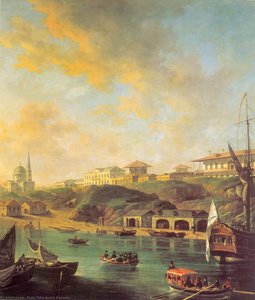
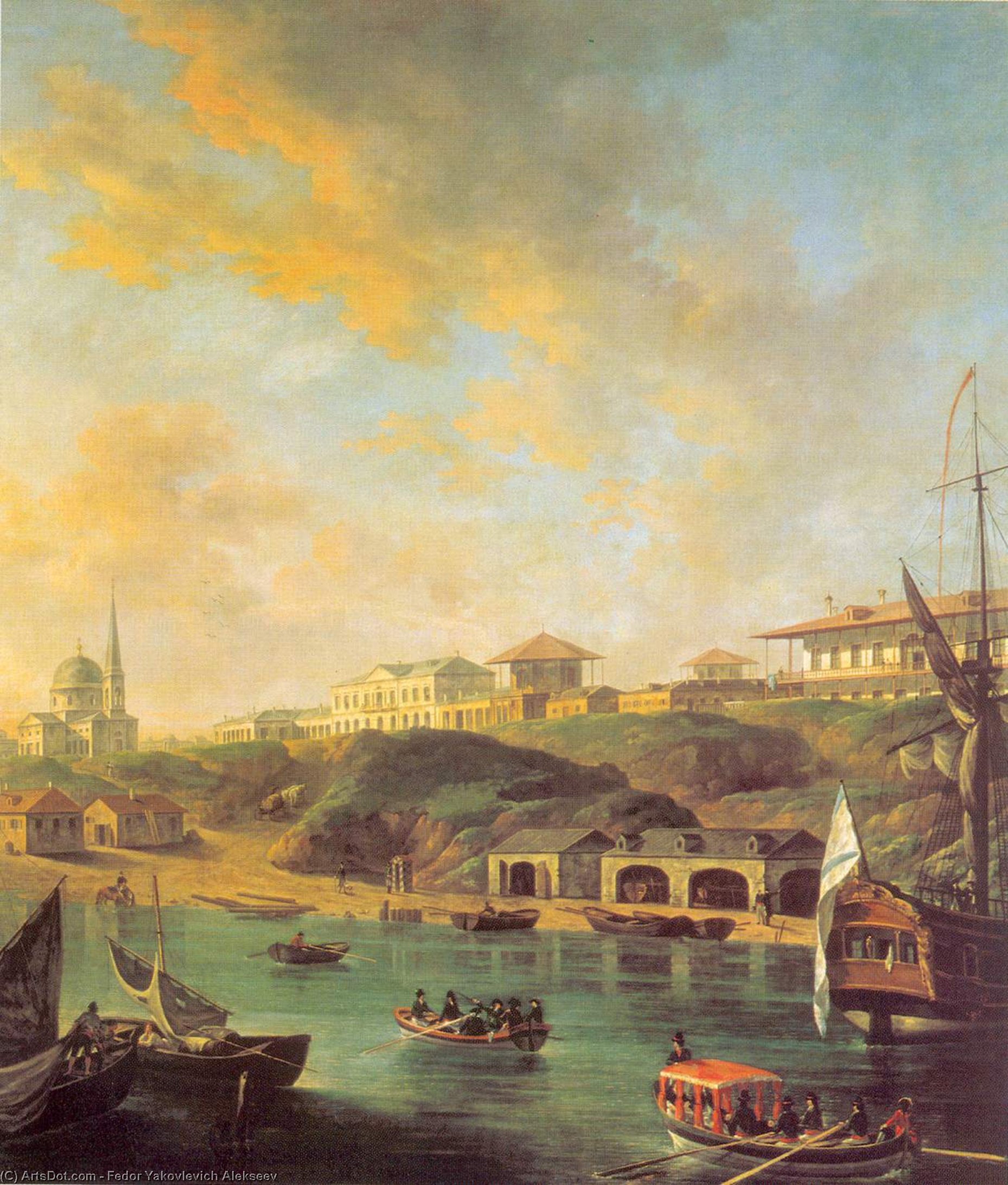
View of the town Nikolaev
 Oil On Canvas
- WallArt
- Neoclassicism
 1799
1799- Early Modern
 197.0 x 178.0 cm
 Tretyakov Gallery
 Read More
Giclée / Art Print
Museum-quality giclée or canvas print with fast production and flexible finish options. ( Buy Hand Made Painting Buy Image)




P118B $10

P118H $10

P118W $10

P438Z $10

P508JH $12

P508YH $12

P805H $10

P805Z $10

P919BZ $10

P919G $10

P919XJ $10

P959ZH $10

P968JZ $12

W106C $8

W218G $10

W218JH $8

W218Y $10

W307PJ $10

W316G $10

W316PJ $8

W316Y $10

W398PJ $8

W4111J $10

W500HY $15

W500JH $15

W692G $12

W849H $8

W940BG $15

W953PJ $8




Pick from our preset sizes that match the artwork's original proportions.

You may enter your own dimensions to fit a specific frame or space. If your selected size does not match the original image's proportions, we will either crop the artwork or extend the image with a mirrored or solid-fill edge. A digital mockup will be sent for your approval before production begins.
Please note that the on-screen preview does not reflect the actual cropping or extension. Only the mockup will accurately show the final composition.
While custom sizes are available, we recommend selecting a dimension from the predefined list to preserve the original proportions.
Worldwide Delivery () in 2 weeks instead of standard 4/5 weeks. (23 August)

Free Worldwide Express Shipping

High-Quality Linen Canvas

Full Shipping Insurance

Customs Tax Refund Guarantee

True Color Matching Guarantee

60-Day Return Policy (Defects Only)

100% Money-Back Guarantee

Bulk Discount Offer
 Glass option is only available in size under 110 CM

View of the town Nikolaev
Giclée / Art Print
Reproduction Size
-


Total Price
$ 63
Collectible Description
A Serene Glimpse into 18th-Century Russian Life
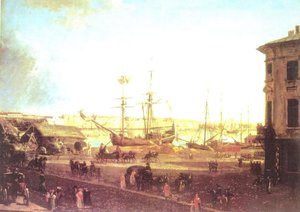
To gaze upon Fedor Yakovlevich Alekseev’s View of the town Nikolaev is to step directly across the threshold of late 18th-century Russia. This oil on canvas, executed in 1799, is far more than a mere depiction of architecture; it is a meticulously preserved moment of civic life and tranquil grandeur. The painting captures the picturesque harmony where human settlement meets the vast expanse of water. One can almost hear the gentle lapping of waves against the quayside and sense the distant murmur of commerce emanating from the harbor. Alekseev, celebrated for his masterful vedute—the view paintings that defined European landscape traditions—has gifted us a scene imbued with both documentary accuracy and profound artistic romance.
Mastery in Composition and Light
The composition itself is a lesson in visual balance. The eye is gently guided by the artist’s hand, moving from the lively foreground where boats drift and figures engage in daily activities, up towards the solid, reassuring presence of the central church spire. This pyramidal structure anchors the entire scene, lending an inherent stability that speaks to the enduring nature of faith and community. Alekseev employs a sophisticated handling of light; it is diffused, creating a soft, almost ethereal glow across the buildings and water. Notice how the artist contrasts the sharp, angular lines defining the sturdy architecture—the rectangles of the town walls—with the softer, more organic curves suggested by the water and distant hills. This interplay between rigid geometry and fluid nature is what gives the piece its breath.
Technique: The Illusion of Depth
Examining the surface reveals a painter’s dedication to craft. While the overall impression is one of smooth, almost photographic clarity in the painted surfaces of the stone buildings, closer inspection unveils the visible brushwork, particularly in the atmospheric treatment of the sky and water. This subtle suggestion of impasto adds a tangible texture that prevents the scene from feeling flat. Alekseev’s perspective, while adhering to the conventions of historical painting, achieves depth through careful layering—the foreground elements overlap the middle ground structures, which in turn recede into the hazy distance. The palette itself, dominated by muted yellows, earthy browns, and cool blues, contributes significantly to this sense of historical distance and quiet contemplation.
Symbolism and Enduring Appeal
Beyond its technical brilliance, the painting resonates with deeper symbolic meaning. The prominent church spire stands as a powerful emblem of spiritual authority amidst the bustle of daily life, while the harbor itself serves as a potent symbol of connection—the vital link between the town and the wider world of trade. For the modern collector or designer, this piece offers an unparalleled infusion of historical gravitas into any space. Reproducing Alekseev’s vision allows one to curate not just a painting, but an entire atmosphere: one of ordered beauty, enduring culture, and serene passage through time.
Related Artworks



Artist Biography
The Russian Canaletto: The Visionary World of Fedor Alekseev
Fedor Yakovlevich Alekseev (1753-1824) stands as a cornerstone of 18th-century Russian art, recognized primarily for his breathtaking depictions of Moscow and St. Petersburg—landscapes that earned him the prestigious moniker “The Russian Canaletto.” This title serves as a profound testament to his unparalleled skill in capturing the grandeur and serenity of the European vedute tradition. Born in Saint Petersburg during an era of immense cultural transformation, Alekseev’s artistic journey unfolded against the backdrop of Russia's burgeoning Enlightenment. His life was dedicated to documenting the architectural soul of a nation, translating the stone and mortar of imperial monuments into luminous, breathing canvases that captured both the physical reality and the atmospheric spirit of his time.
The foundations of Alekseev’s mastery were laid during his formative years in the imperial capital. While the specific details of his early childhood remain somewhat elusive, his professional trajectory was significantly shaped by his apprenticeship under Mikhail Vasilievich Zabolotsky. A celebrated figure in the Petersburg art scene, Zabolotsky instilled in Alekseev the rigorous principles of Neoclassicism and the necessity of meticulous observation. This training became the bedrock of his oeuvre, allowing him to approach a landscape not merely as a scenic view, but as a structured composition governed by mathematical precision and light. Through this disciplined lens, Alekseev learned to balance the architectural accuracy required by the era with a poetic sensibility that breathed life into every street corner and riverbank.
A Legacy of Imperial Grandeur and Architectural Splendor
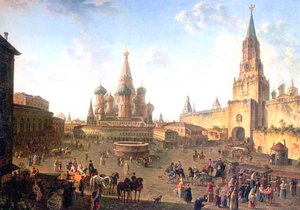
Alekseev’s fame solidified through his monumental series of paintings documenting the architectural splendor of Moscow. These canvases, imbued with a palpable sense of civic pride, meticulously rendered the Kremlin, St. Basil’s Cathedral, and various bustling squares. His approach mirrored that of his Venetian counterparts, prioritizing an astonishing level of detail alongside compositional harmony. In these works, one does not simply see buildings; one experiences the weight of history and the rhythmic pulse of a city. His Moscow landscapes serve as vital historical documents, capturing a version of the city that remains frozen in time, showcasing the intricate textures of stone and the dramatic interplay of shadow and sunlight.
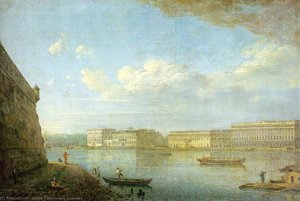
Parallel to his Muscovite triumphs were his equally impressive depictions of St. Petersburg—a city undergoing rapid, often radical, transformation during his lifetime. Reflecting the intellectual optimism of the Enlightenment, Alekseev skillfully portrayed the waterfront palaces and sweeping embankments that defined the imperial capital. His paintings of the Admiralty and the Palace Embankment are particularly noted for their subtle tonal gradations and masterful use of perspective. By capturing the way light dances across the Neva River and reflects off the neoclassical facades, he mirrored the era's fascination with progress and innovation. Whether documenting the Stock Exchange or the view from the Fortress of St. Peter and Paul, his work consistently projected an image of imperial Russia’s power, stability, and aesthetic sophistication.
Technique, Style, and Historical Significance
The enduring allure of Alekseev’s work lies in his painstaking technique and execution. His process was characterized by a disciplined, layered approach to glazing, which allowed him to achieve a luminous depth that few of his contemporaries could replicate. This method enabled him to capture the atmospheric nuances of the Russian climate—the soft, hazy light of a summer morning or the crisp, biting clarity of a winter afternoon. His ability to render complex architectural details while maintaining a sense of atmospheric unity is what truly distinguishes his hand. Every brushstroke was an exercise in precision, designed to guide the viewer's eye through the vast perspectives of his urban vistas.
Ultimately, the historical significance of Fedor Alekseev extends far beyond mere documentation. He was a bridge between the classical traditions of Europe and the emerging national identity of Russia. Through his eyes, the sprawling landscapes of Moscow, St. Petersburg, and even Kherson were elevated to the status of high art, worthy of the same reverence afforded to the great Italian masters. His legacy lives on in the way we perceive the historical architecture of Russia today; he did not just paint cities, he crafted an enduring visual memory of an empire at its zenith. For collectors and historians alike, his paintings remain windows into a lost world of imperial elegance and architectural triumph.
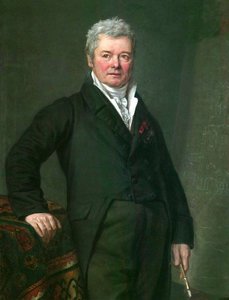
fedor yakovlevich alekseev
1753 - 1824 , Russia
Quick Facts
- Artistic Movement Or Style: Neoclassical
- Artists Or Movements Influenced By This Artist: ['Venetian Painting']
- Artists Who Influenced This Artist: ['Canaletto']
- Date Of Birth: Saint Petersburg, Russia (1753)
- Date Of Death: 1824
- Full Name: Fedor Yakovlevich Alekseev
- Nationality: Russian
- Notable Artworks:
- View of Nikolaev
- The Cathedral Square in the Moscow Kremlin
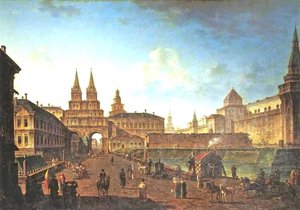
- View of Voskresenskie and Nikolskie Gate
- Place Of Birth: Saint Petersburg
Related Articles

Ivan Bilibin: A Synthesis of Folklore, Modernism & National Identity in Russian Illustration
Explore the enchanting world of Ivan Bilibin, a master Russian illustrator who synthesized folklore, Art Nouveau & national identity. Discover his iconic fairy tale illustrations and legacy with ArtsDot.

Victor Vasnetsov: Myth, Nationalism & the Revival of Russian Fairy Tale Painting
Explore the captivating world of Victor Vasnetsov, a co-founder of Russian folklorist painting. Discover his iconic works, influence on national identity, and lasting legacy in this expert guide.
Vladimir Makovsky: Realism, Social Commentary & Russian Life in Late 19th-Century Painting
Explore the captivating world of Vladimir Makovsky, a leading Russian realist painter. Discover his insightful depictions of 19th-century life, social commentary & legacy with ArtsDot.

Mikhail Nesterov: Spiritual Quests & Symbolic Landscapes of Russian Symbolism
Explore the captivating world of Mikhail Nesterov, a pioneer of Russian Symbolism. Discover his spiritual themes, iconic paintings like 'The Hermit,' and lasting influence on Russian art history. Learn more at ArtsDot.

Fyodor Rokotov: Intimacy & Enlightenment in Russian Portraiture
Explore the captivating portraits of Fyodor Rokotov, a master of 18th-century Russian art. Discover his unique psychological realism, Rococo elegance, and lasting influence on portrait painting. Learn about his iconic works & aristocratic patrons.